Reading guide
Content guideOverview
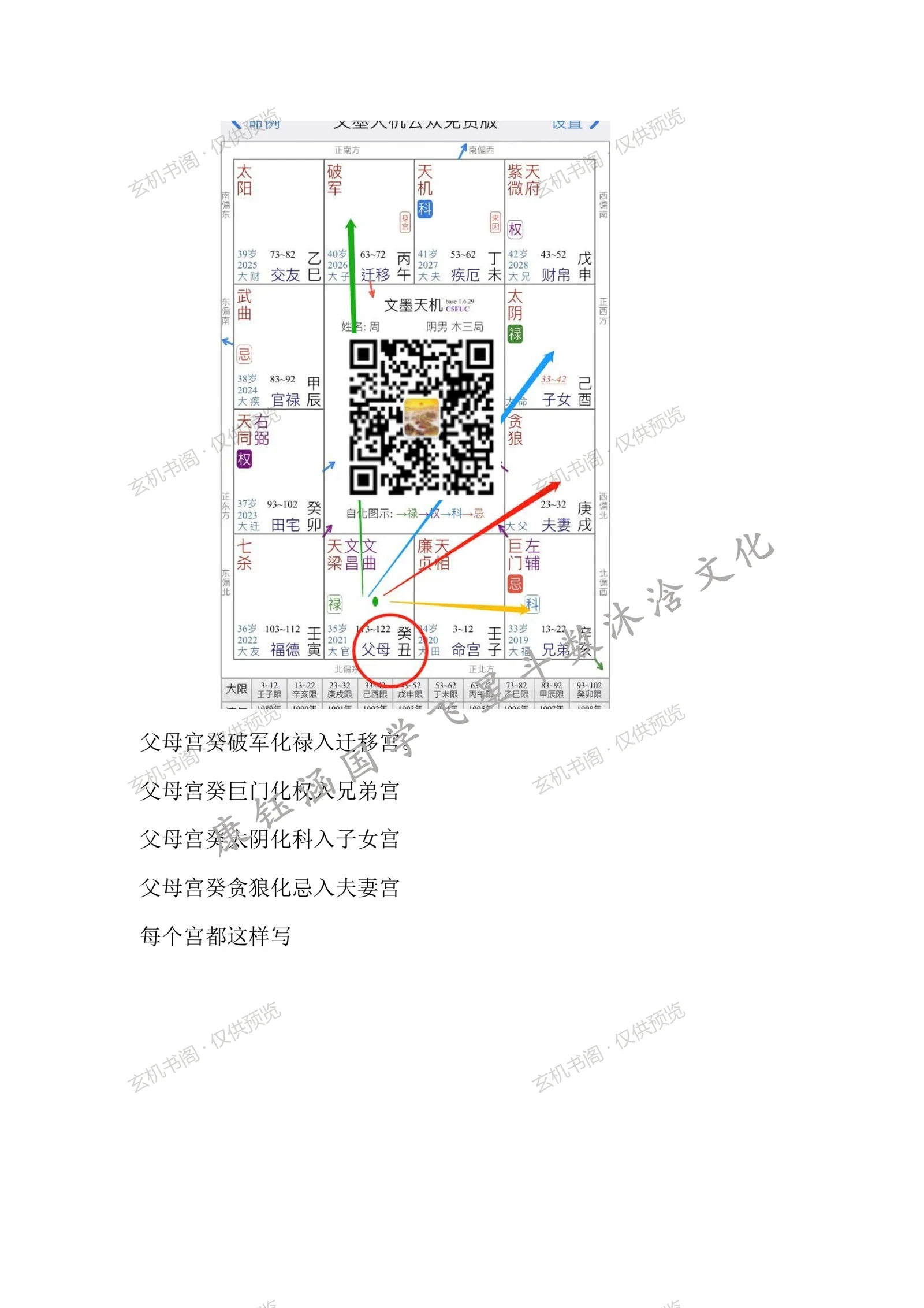
This six-page handout is one lesson from an intermediate Zi Wei Dou Shu course, devoted to the technique of 'lu turned into ji.' It first defines the pattern: palace A transforms lu into palace B, and palace B then transforms ji into palace C, which is treated as equivalent to A's lu reaching C, with B serving merely as a corridor. The purpose is to trace where the benefit of a lu finally lands. The text distinguishes two sources of lu: time-based transformations (birth-year lu and yearly stem transformations) and space-based transformations triggered by the stems of the twelve palaces. A worked example follows—the Spouse palace's jia stem sending lian zhen lu into the Wealth palace, whose ren stem then sends wu qu ji into the Life palace—read as a spouse who helps with money and brings romantic fortune. Further charts generated with the Wenmo Tianji software show how yearly stem transformations (e.g., gui year: po jun lu, ju men quan, tai yin ke, tan lang ji) are layered onto palace-level flying transformations, and the text closes with the standard sentence pattern for recording each palace's four transformations.
Contents
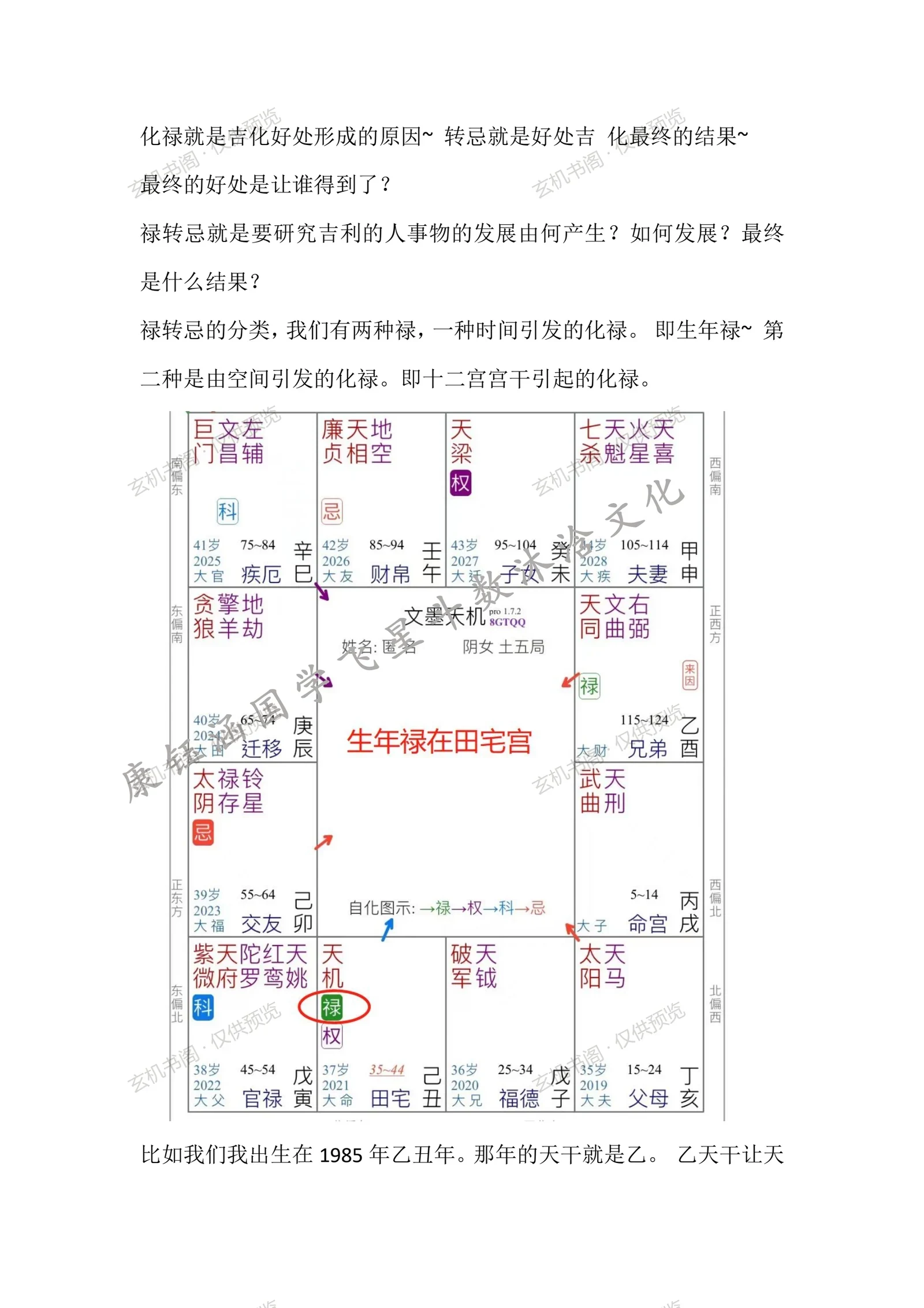
Basic concept: A's lu into B, B's ji into C
Goal: locating where the benefit ends up
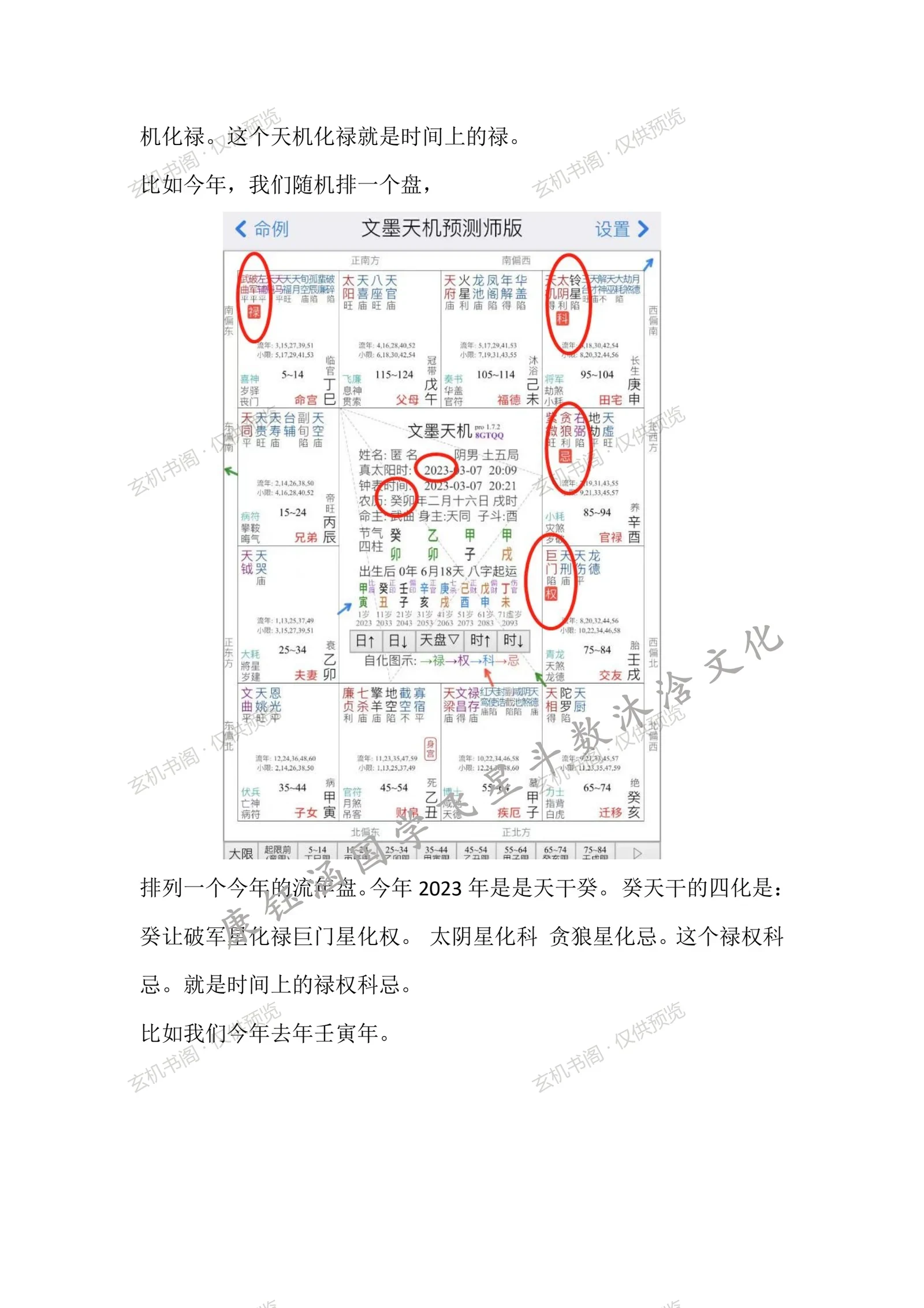
Two kinds of lu: birth-year and yearly stem (time)
Lu triggered by the twelve palace stems (space)
Case: spouse lu via wealth ji into life palace
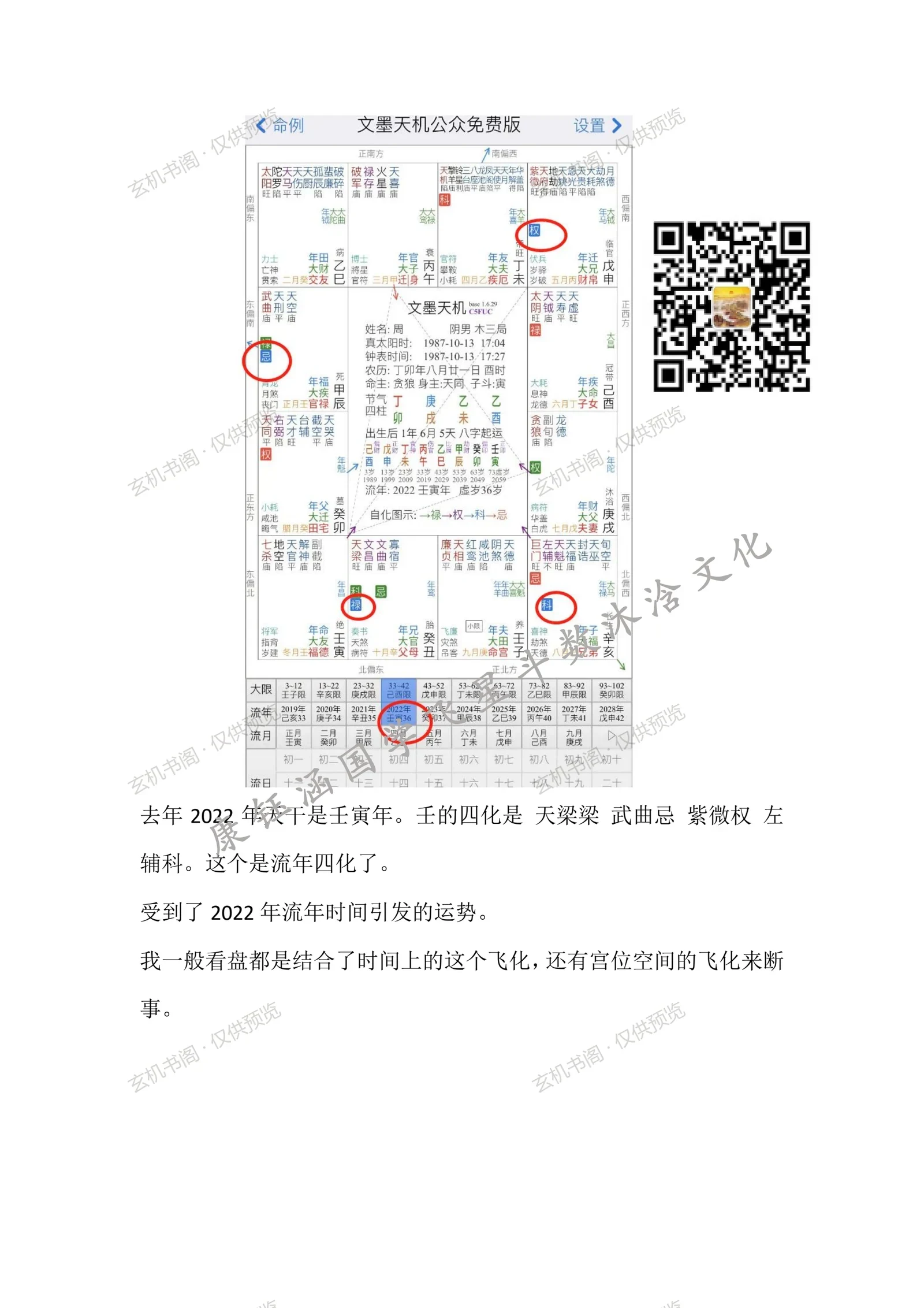
Combining yearly transformations with palace flying
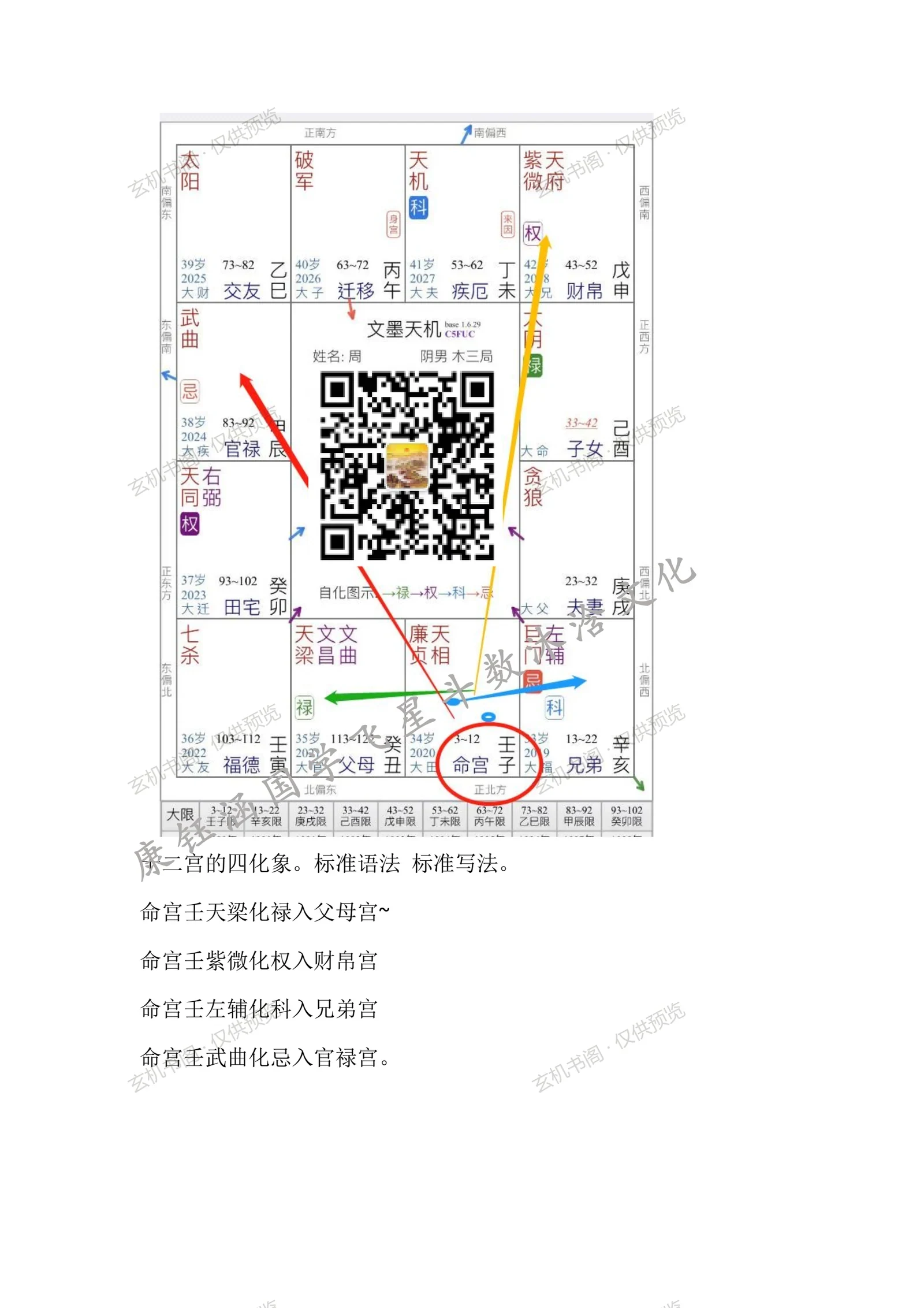
Standard phrasing for each palace's transformations
Key Points
Lu-turned-ji means A→lu→B→ji→C, read as A's lu reaching C through B
The aim is to trace the origin, development, and final result of an auspicious transformation
Lu has two sources: time (birth year, yearly stem) and space (palace stems)
Judgments require layering yearly stem transformations onto palace-level flying
Each palace is written in the fixed form 'palace X, stem Y, star Z transforms into ... palace'