Reading guide
Content guideOverview
This text works through Eight Mansions (Bazhai) feng shui for dwellings. The opening section is a question-and-answer discussion of how trigram positions such as Qian, Kun, Gen and Dui combine, with interpretations of Yannian, Wugui, Liusha and Jueming and the illnesses, disputes and family troubles they are said to bring. A second section asks how the fuwei position should be fixed under the Dayounian method, comparing door-based, sitting-mountain-based, balcony-based and window-based approaches. The author argues that besides the qi field and magnetic field one must consider the 'human field', i.e. the three-yuan minggua of the occupants and whether their East/West four-mansion grouping matches the house and door orientations. Later sections give criteria for judging field effects large and small, list auspicious and inauspicious door-facing combinations for East and West four-mansion persons, and rank the door, master room and stove. Several real cases and the Song-dynasty Xuanji Fu are appended.
Contents
Q&A on trigram combinations in Eight Mansions
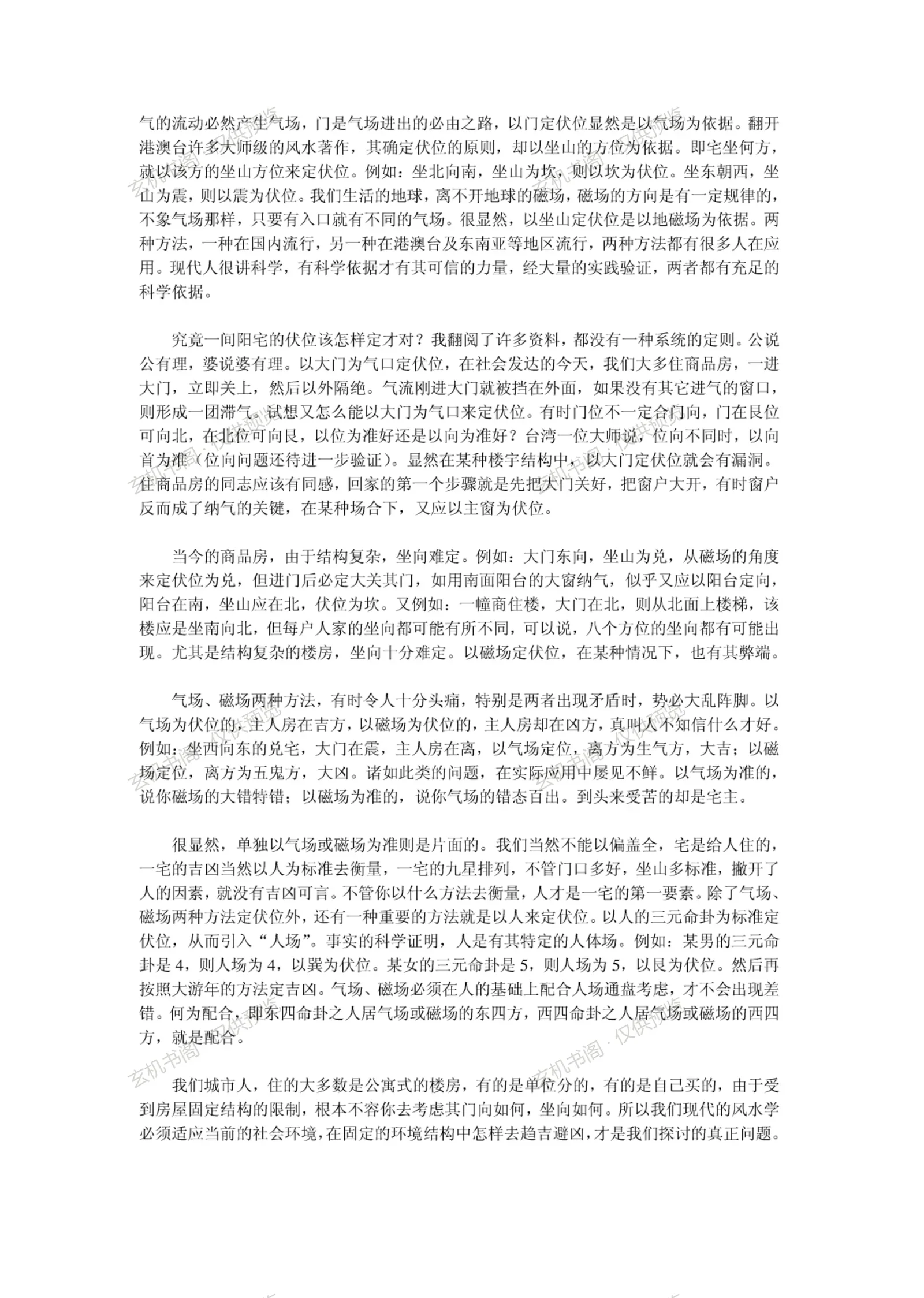
Determining fuwei under the Dayounian method
Qi field, magnetic field and human field
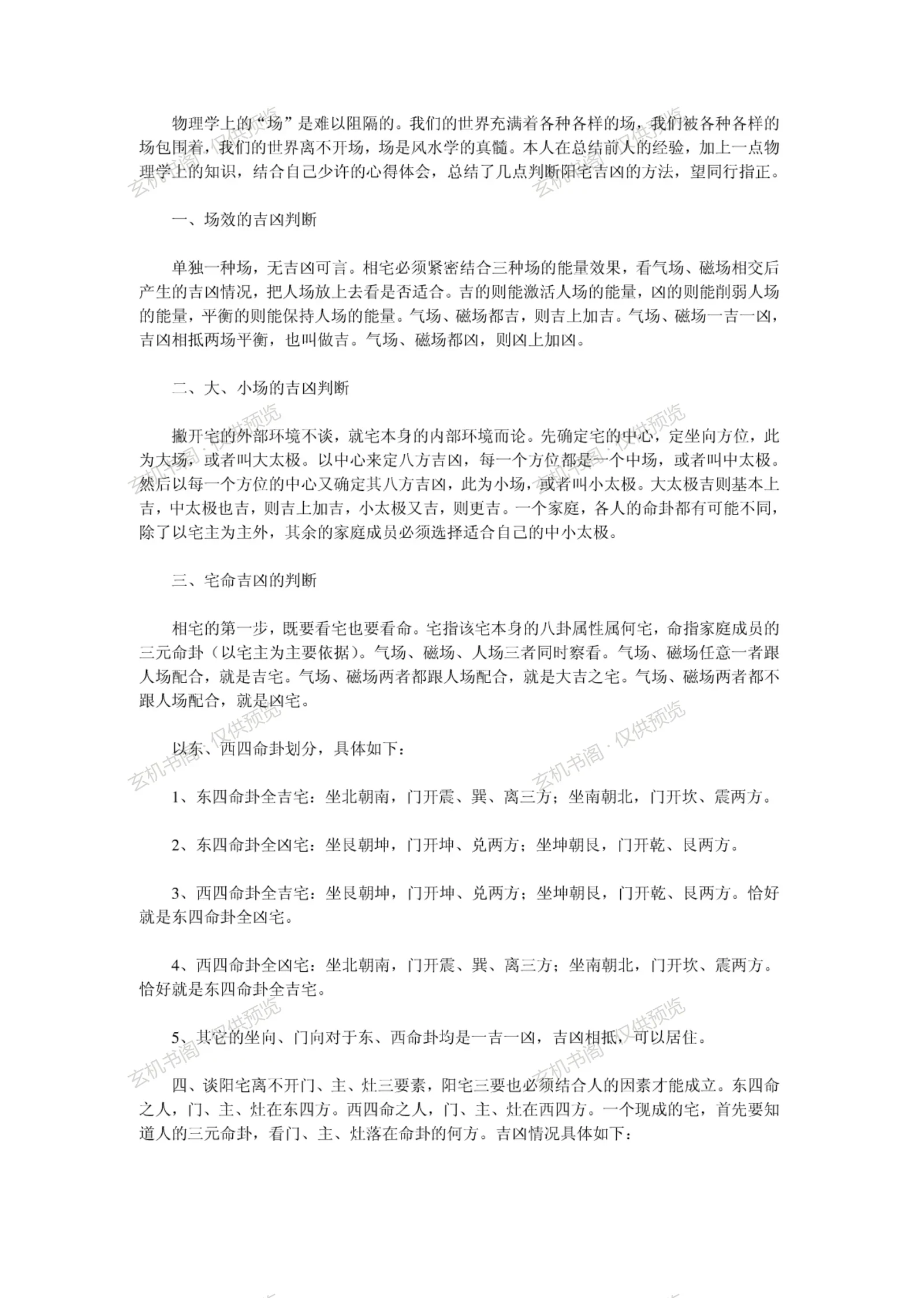
Judging large and small fields; house and minggua
Coordinating door, master room and stove
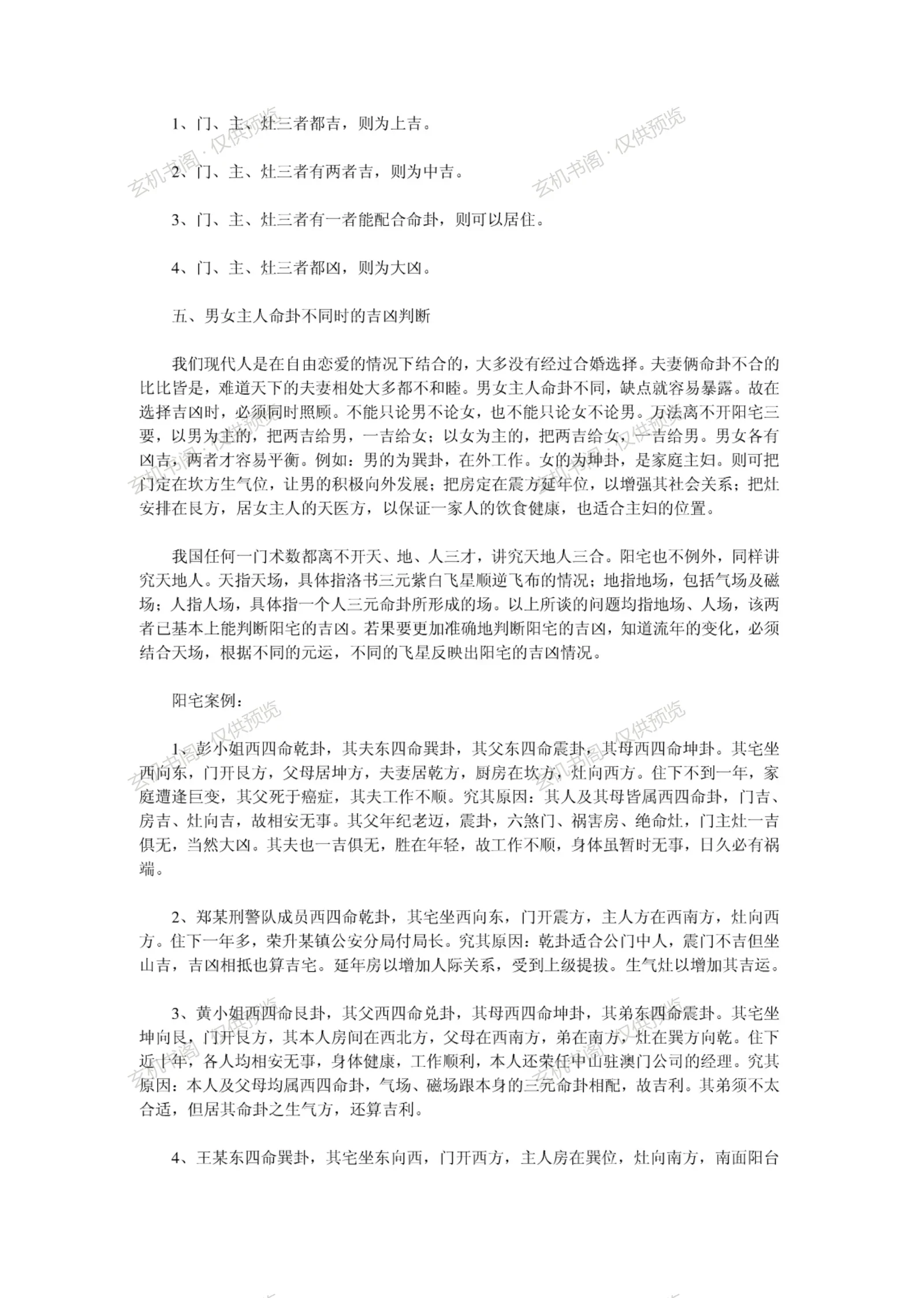
When husband and wife have different minggua
Case studies of dwellings
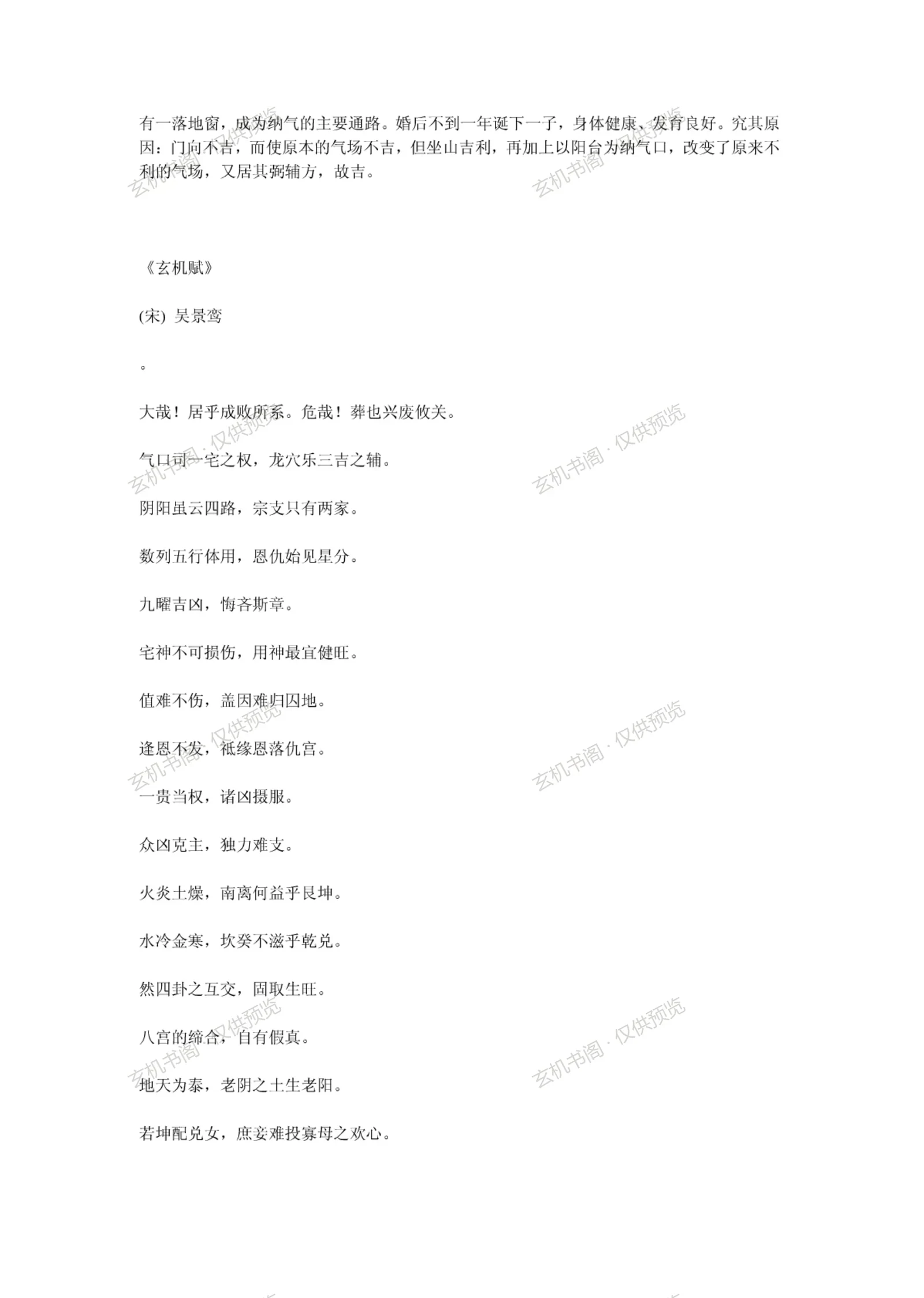
Appendix: Xuanji Fu
Key Points
Fuwei may be fixed by door, sitting mountain, balcony or window
Proposes a three-field framework: qi, magnetic and human
Lists fully auspicious and fully inauspicious door orientations by minggua
Ranks door, master room and stove as top, middle, livable or dire
Appends the Xuanji Fu for reference