Reading guide
Content guideOverview
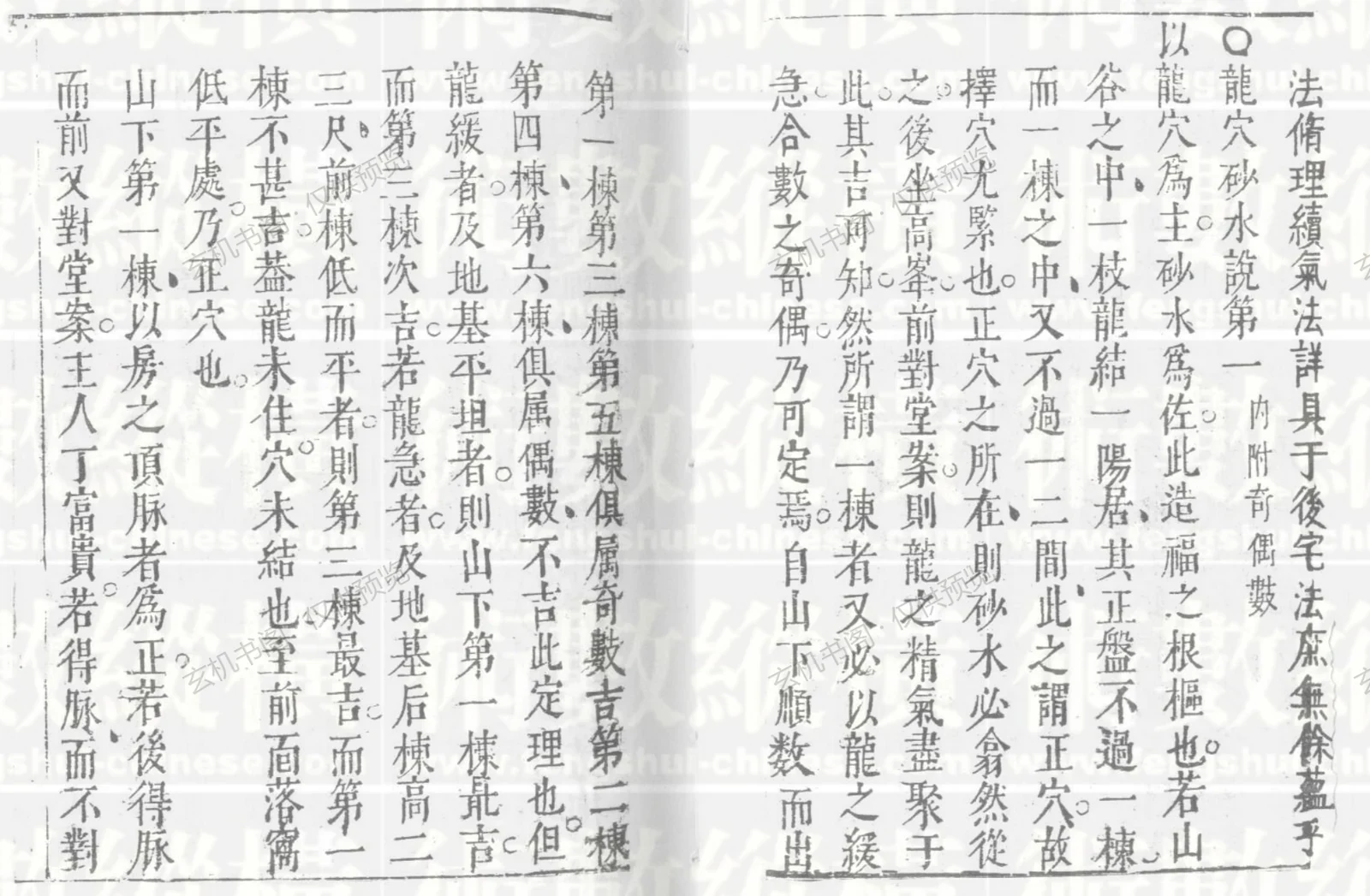
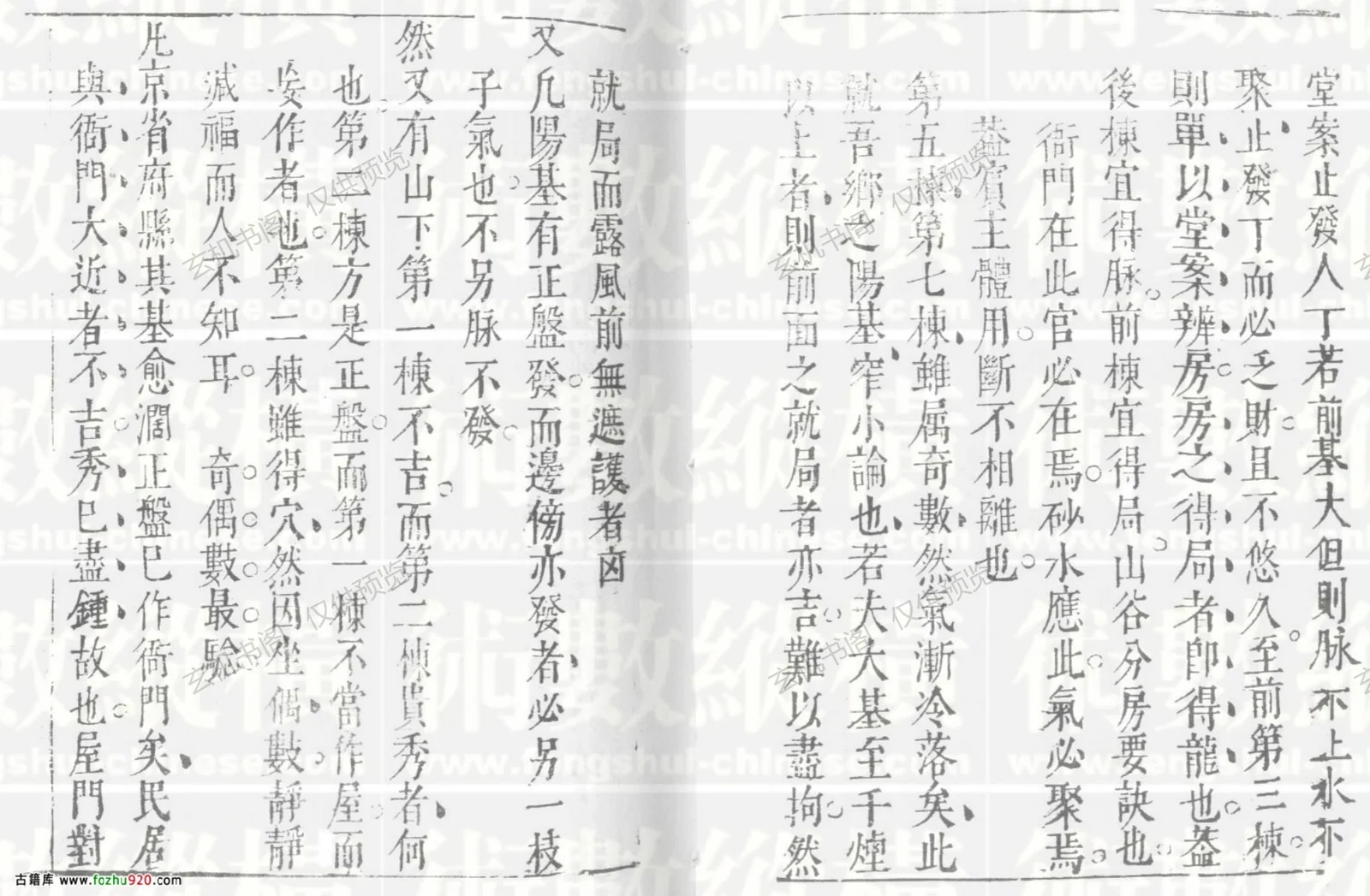
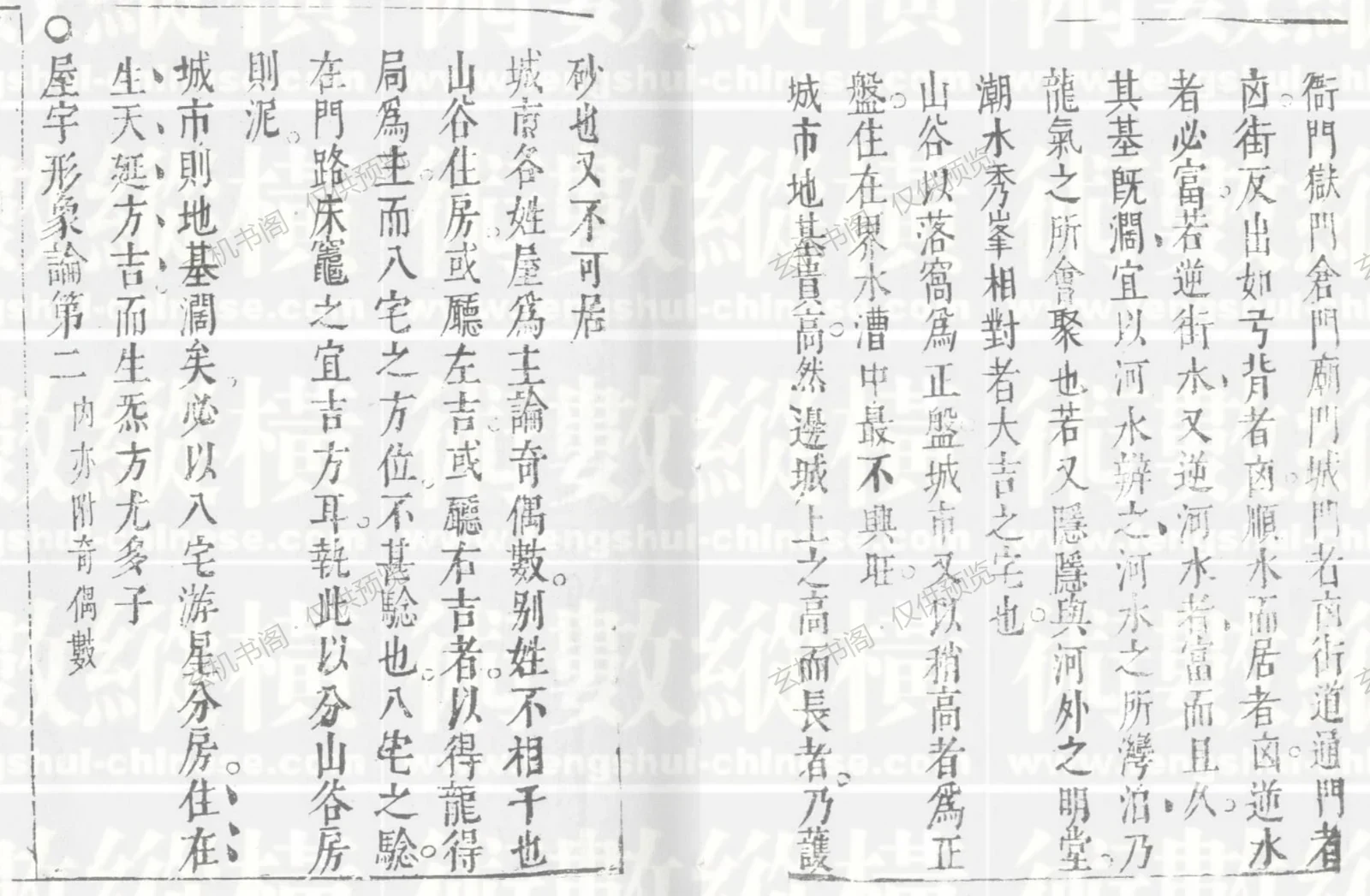
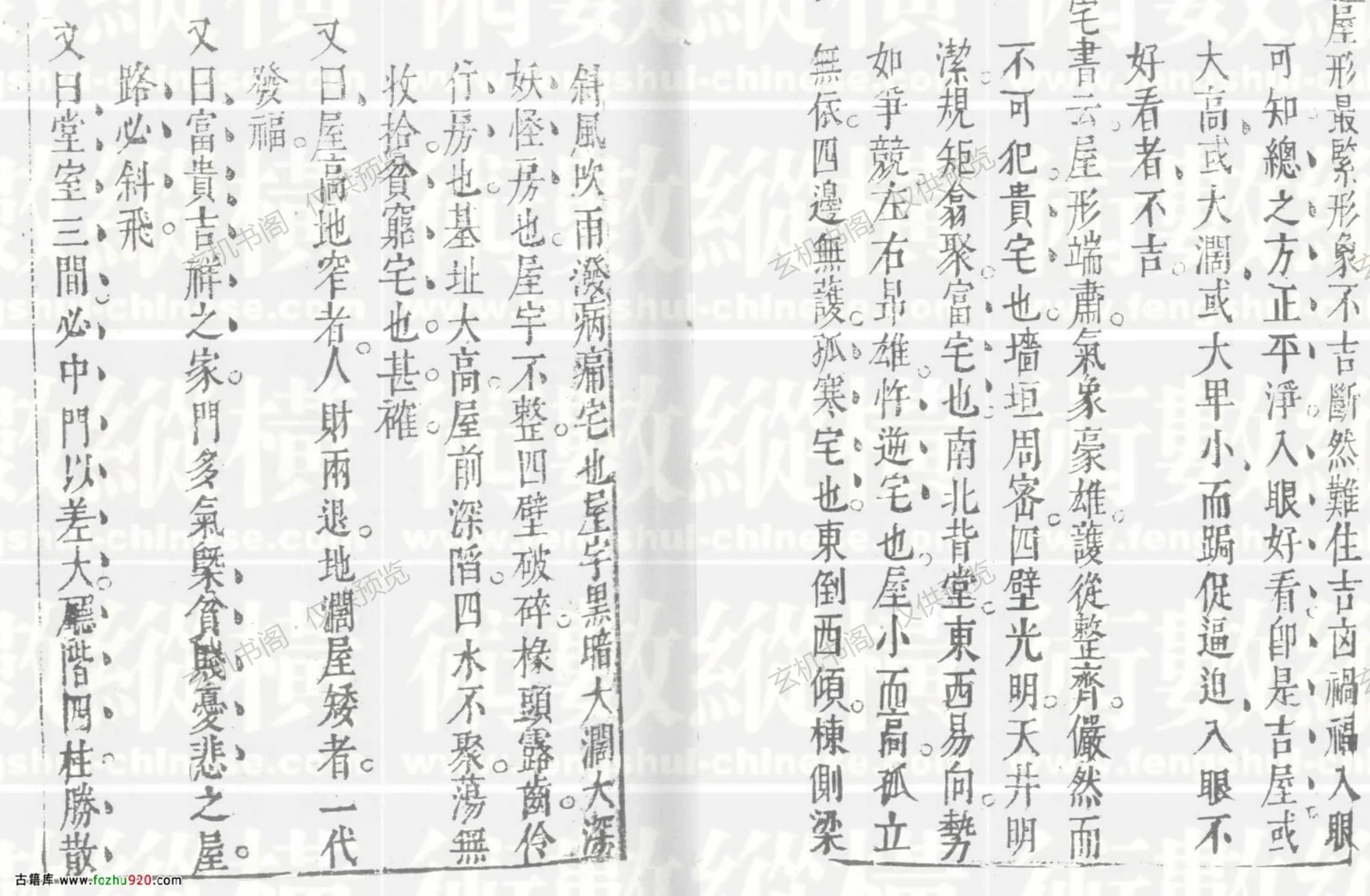
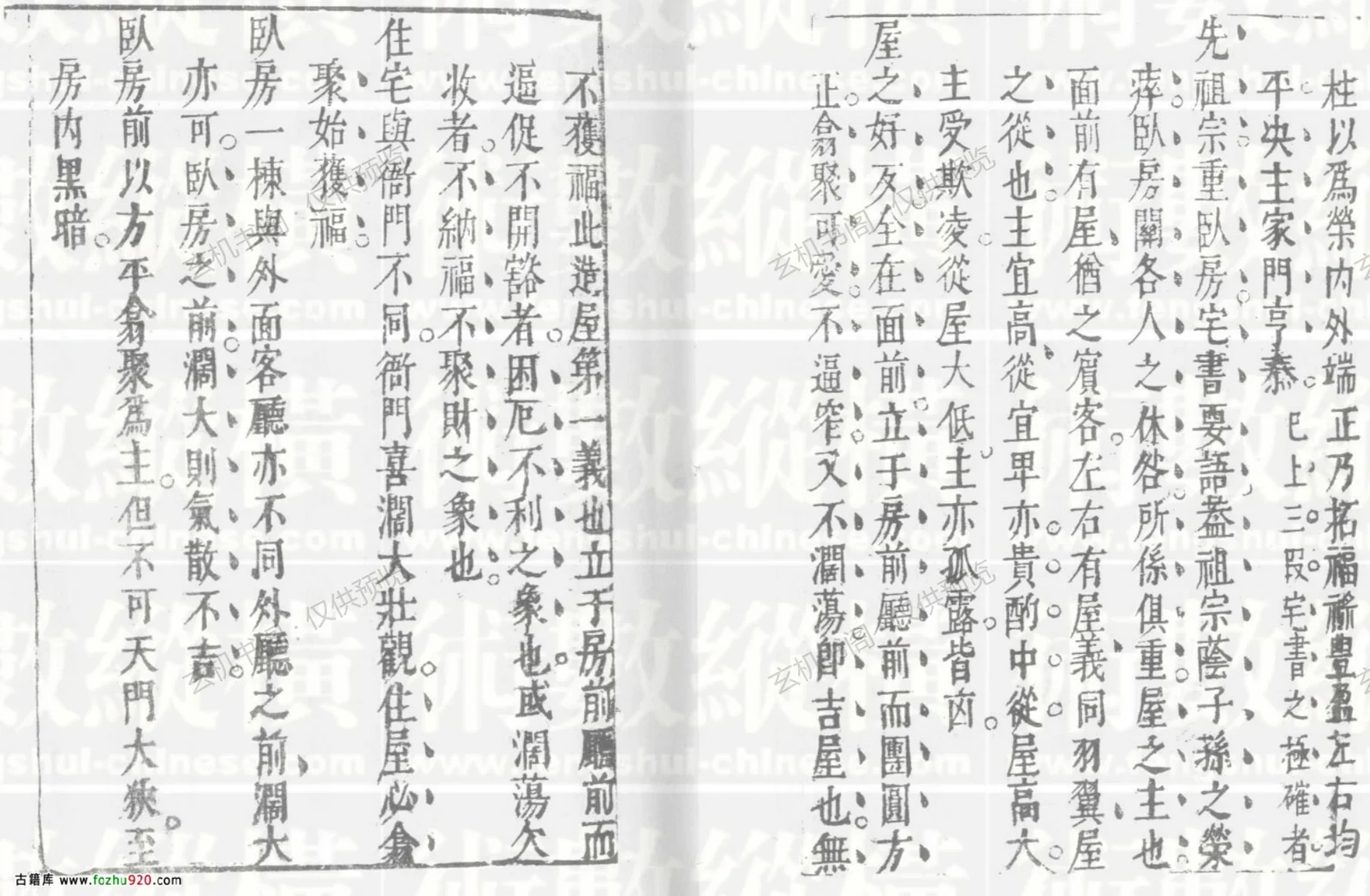
This is the upper volume of The Eight Mansion Book of Blessing and House-Building, a classical feng shui text on yang-dwelling (residential) practice centered on the Eight Mansion method. The opening page credits Huang Yifeng of Xiajiang as compiler, with later supplements by Gong Juzhong and revisions by Liu Kongdun, indicating a layered recension. The text begins with a discourse on dragon,穴, sand, and water, taking the dragon and穴 as primary and sand and water as auxiliary, and explains how to locate the central穴 in a one- or two-bay house, how front and rear halls and cases correspond, and how each family branch obtains its proper position. It then discusses bay counts and parity—first, third, and fifth bays versus second, fourth, and sixth—relating odd and even numbers to the顺逆 of the dragon vein and the gathering or scattering of sand and water. Further sections treat sites in cities, valleys, and plains, and the roles of gates, paths, bright halls, water channels, and enclosing walls. The latter part turns to house-form typology, distinguishing upright and dignified forms that gather wealth from isolated, cold, tilted, broken, or dark forms, with judgments on offspring, wealth, rank, illness, and litigation. Written in mnemonic-style clauses, the book proceeds from dragon and穴 to bay counts, foundations, and house forms, and is a significant source for studying Eight Mansion form methods and branch-by-branch allocation theory.
Contents
Discourse on dragon,穴, sand, and water
Bay-count parity: odd and even bays and their fortunes
Central穴 and hall cases: front-rear correspondence and branch allocation
City, valley, and plain sites: key points for different foundations
Gates, paths, bright halls, and water channels
House-form typology: dignified versus isolated and tilted
Form judgments: offspring, wealth, rank, illness, litigation
Key Points
Eight Mansion framework with dragon and穴 primary, sand and water auxiliary
Bay-count parity combined with dragon-vein direction to judge fortune
Branch allocation: each branch must obtain proper vein and configuration
House-form typology: dignified and gathering forms are auspicious; broken and tilted forms are not
Concrete judgments on offspring, wealth, rank, illness, and litigation