Reading guide
Content guideOverview
This is the lecture-notes portion of Hu Yiming's Comprehensive BaZi Course. The visible pages focus on foundational Four Pillars work: the idea that heavenly stems have attributes but no fixed direction until paired with earthly branches; yin-yang and five-element clashes; the use of branch-based month and hour derivation; and detailed worked examples for forward and reverse luck-pillar sequences. The text explains how to count days from birth to the relevant solar term, convert three days to one year, one day to four months, and one double-hour to ten days, then determine the exact year when a new luck period takes over. Later pages question whether three-combination and three-meeting configurations really strengthen water qi, arguing instead for straightforward five-element generation and control, and touch on the Ten Gods, family relations, and health correspondences. The material is practical and calculation-heavy, suited to readers checking their own chart and luck-pillar math.
Contents
Stem-branch attributes and yin-yang five elements
Deriving year, month, day, and hour pillars
Worked examples of forward and reverse luck pillars
Calculating the year of luck-pillar transition
Three-combinations vs. straightforward five-element control
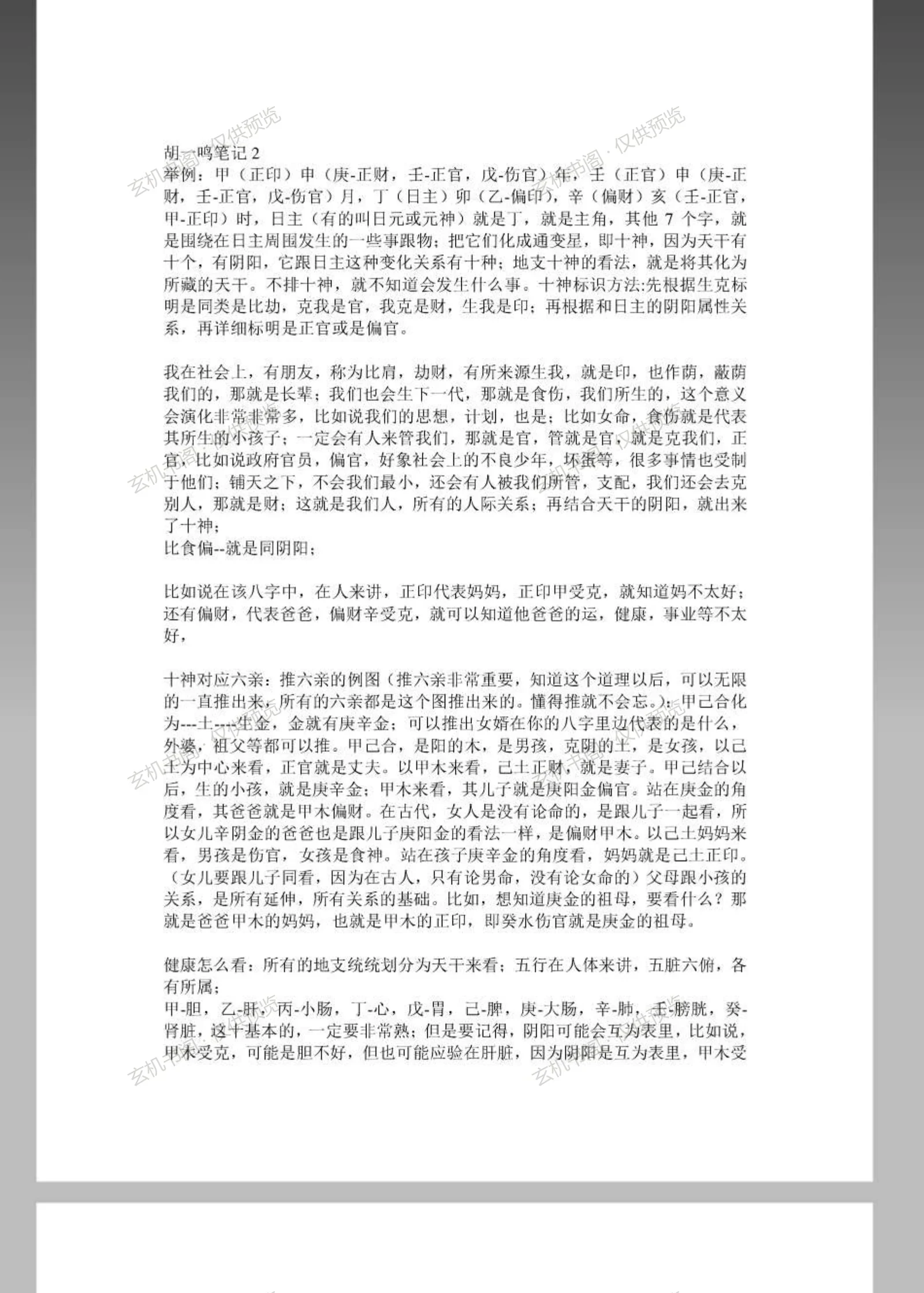
Ten Gods, family relations, and health
Key Points
Stems gain direction and yin-yang clashes only when paired with branches.
Month and hour pillars are derived with traditional stem-branch formulas, bounded by solar terms.
Luck-pillar start is calculated as three days per year, one day per four months, one double-hour per ten days.
Luck transitions must be computed against solar terms and the year stem.
The author argues three-combinations do not automatically strengthen qi; plain five-element control prevails.