Reading guide
Content guideOverview
This is a correspondence course text on Blind-School Bazi. It first introduces the school's three laws—principle, imagery, and technique—along with core concepts such as guest-host, substance-function, useful and wasted gods. It then explains palace imagery and auspicious or inauspicious judgments, followed by Ten Gods imagery and the meaning of 'empty transparency,' illustrated with examples of wealth and official stars. The course next turns to the method of reading a chart: whether the day stem or day branch performs 'work,' and how the scale of that work determines wealth and status. It details the ten stems, stem-branch configurations, the five combinations, the six harmonies, three harmonies, hidden combinations, and the punitive, clashing, harmful, breaking, and tomb relationships among the twelve branches. Finally it discusses the ways of performing work and structural control, including combinations, clashes, restraints, and penetrations. The emphasis is on principle, with imagery and technique treated more briefly.
Contents
Introduction to the Blind-School Bazi system
Palace imagery in the four pillars
Ten Gods imagery and empty transparency
How to read a chart and grade wealth and status
Detailed stems and branches and their configurations
Five combinations and branch harmonies, clashes, punishments
Ways of performing work and structural control
Control methods: combination, clash, restraint, penetration
Key Points
Blind-School reading rests on three laws: principle, imagery, and technique, with principle emphasized.
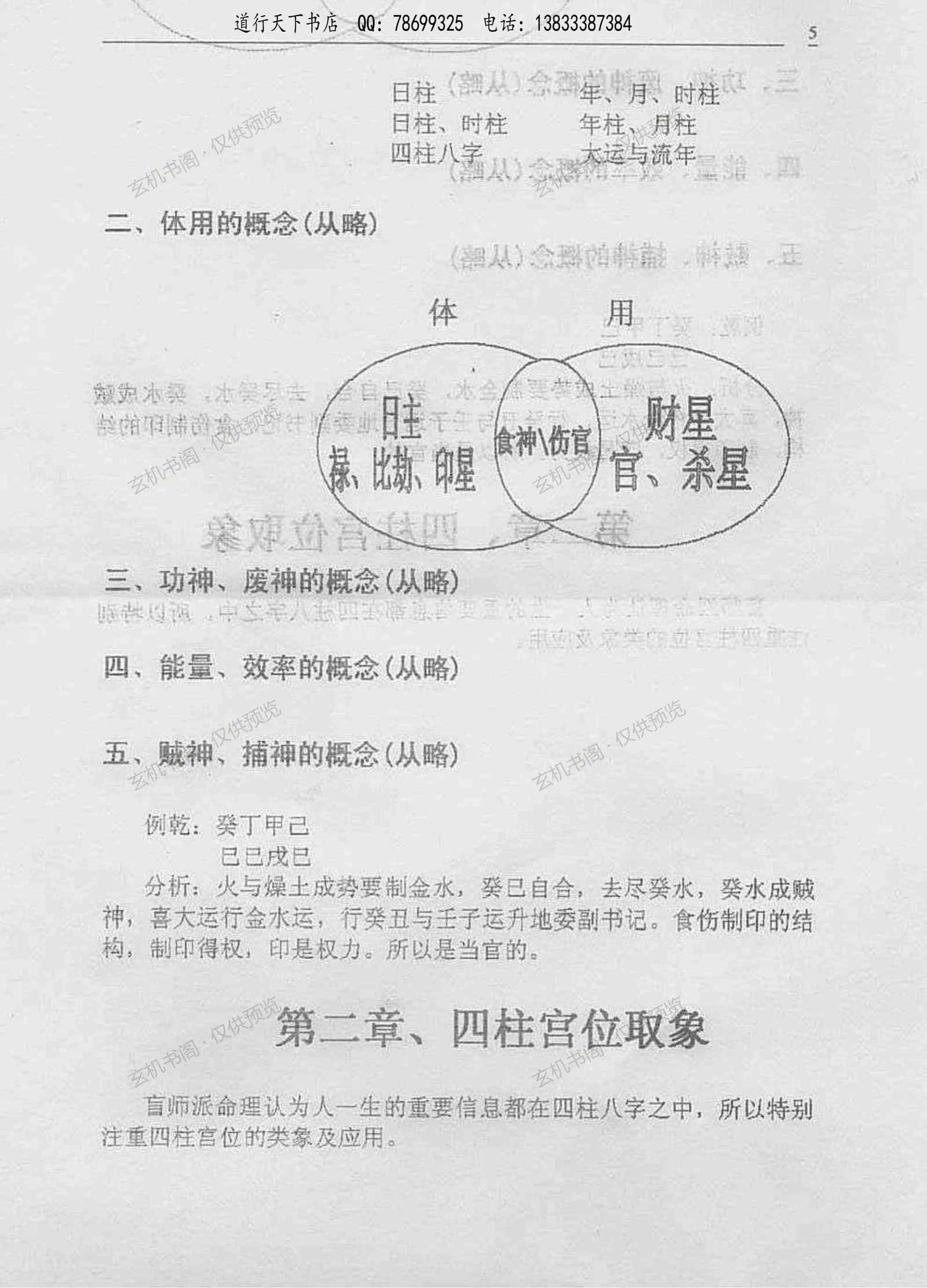
Core concepts include guest-host, substance-function, useful and wasted gods, energy and efficiency.
Reading begins with whether the day stem or branch performs work; the scale of work determines status.
Ten Gods imagery requires distinguishing empty transparency from solid presence.
Stem-branch configurations, combinations, harmonies, and clashes are explained systematically.
Work patterns are summarized as structural controls, such as peers controlling wealth or officials controlling peers.