Reading guide
Content guideOverview
This is the first chapter of advanced course notes for the Northern School Zi Wei Dou Shu Liang Yi Xiang Shu Self-Transformation System, titled Overview of Xiang Shu. It first places Xiang Shu at the center of Dou Shu reasoning, following the sequence of qi, number, image, principle, method, and technique. The notes then focus on the Hetu: its original diagram, classical textual sources, and the Song-dynasty reorganizations by Chen Tuan, Liu Mu, and Cai Yuanding. The Hetu is explained as black and white dots representing yin-yang, the five phases, and the four images, and as a correspondence to the four directions and twenty-eight lunar mansions. The text sets out the generating and completing numbers, explains that completing numbers are generating numbers plus five, and discusses yin-yang pairing and the total of fifty-five. The final sections link the Hetu to the heavenly stems and explain stem combinations, emphasizing that combination follows the rule of meeting five and contains overcoming within harmony. The material is foundational for readers with basic Dou Shu knowledge who want to understand the numerical and cosmological basis of the self-transformation system.
Contents
Overview of Xiang Shu and the order of qi, number, and image
The Hetu diagram and classical textual references
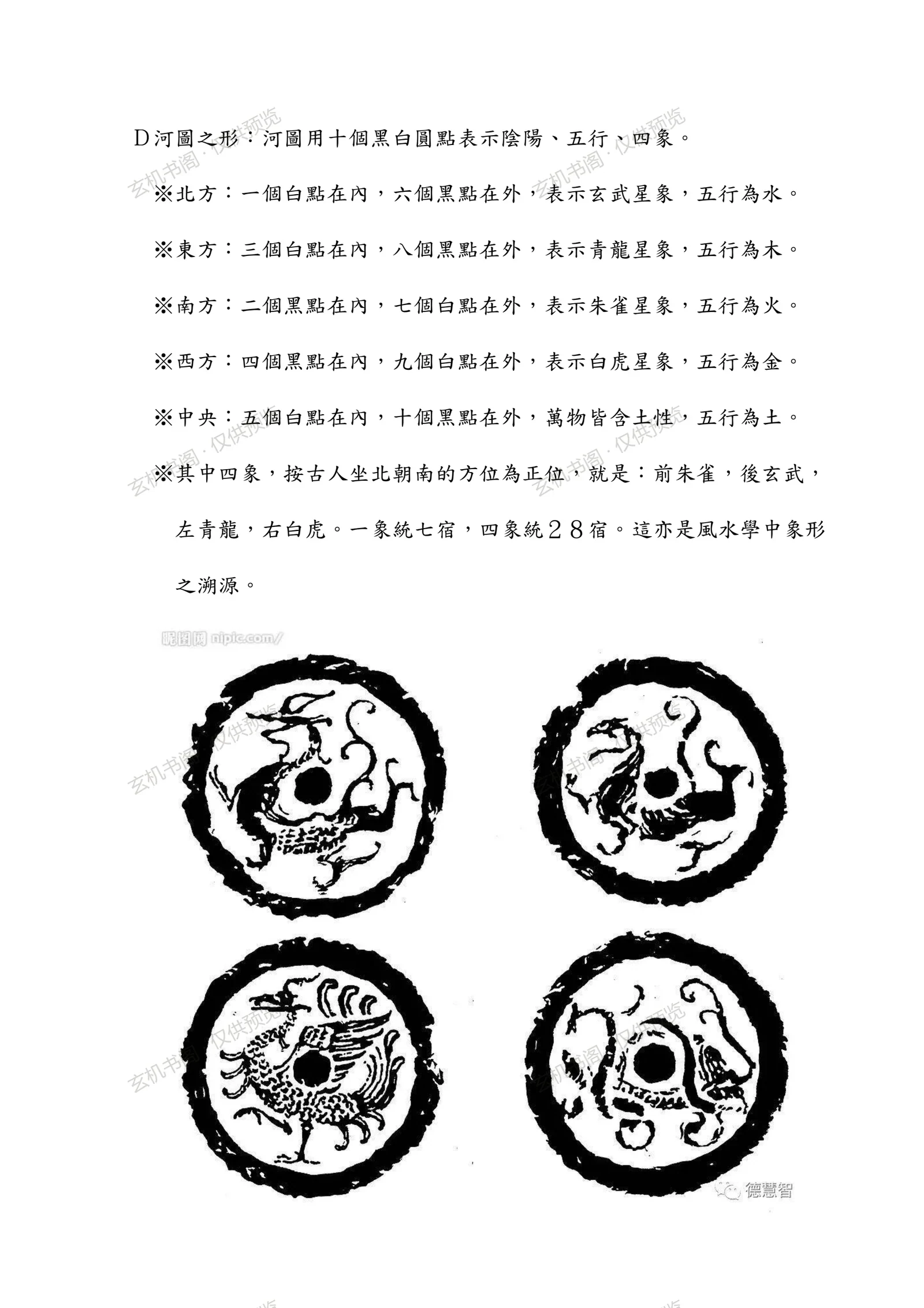
Hetu form: dots, four directions, and five phases
Hetu key formulas: generating and completing numbers
Hetu numbers and the total of fifty-five
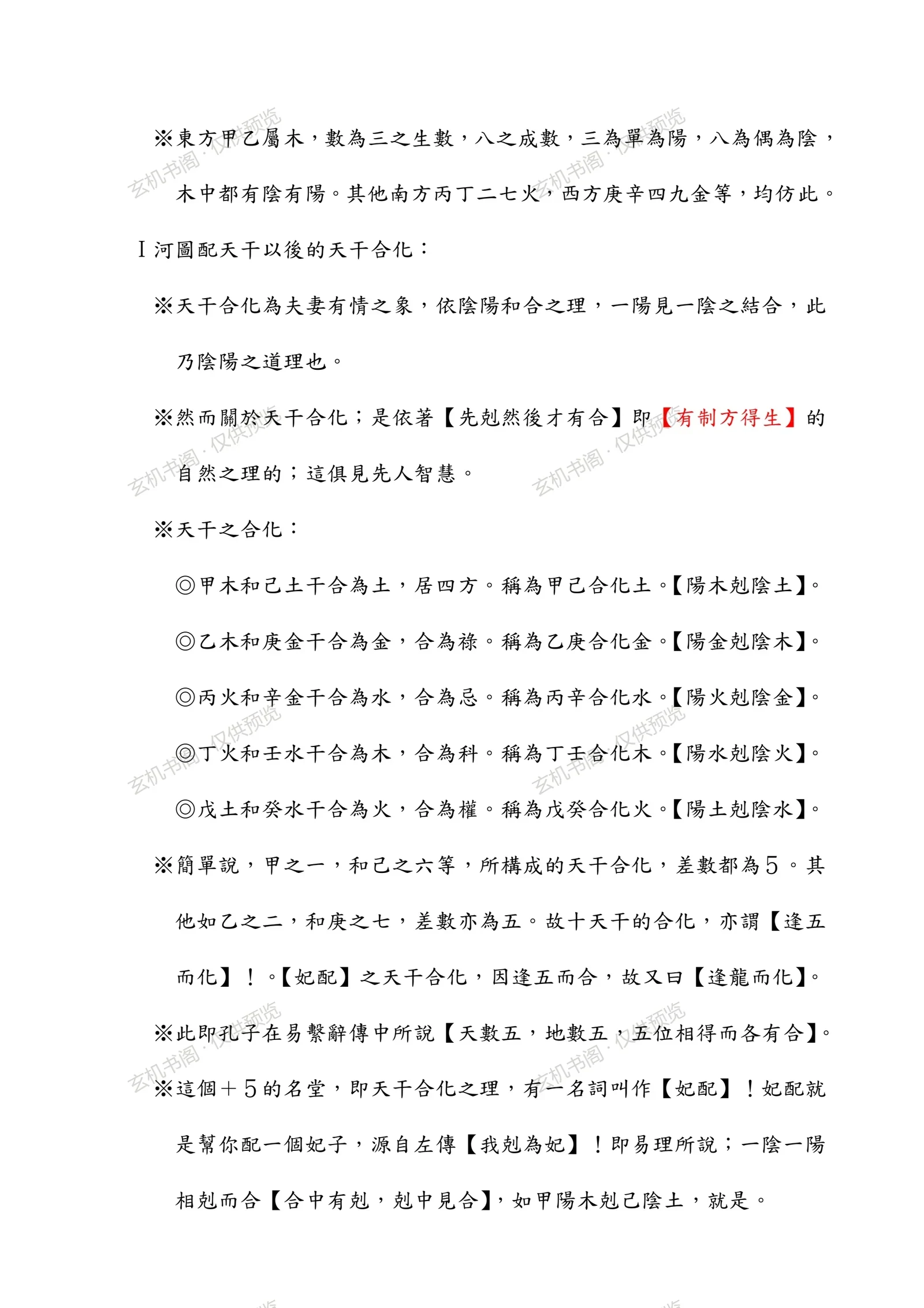
Hetu and heavenly stems, stem combination rules
Key Points
Dou Shu centers on the movement of qi; numbers and images serve principle and method.
The Hetu uses black and white dots for yin-yang, five phases, and four images.
Completing numbers are generating numbers plus five; odd and even numbers pair as yin and yang.
The Hetu totals ten, the Luoshu totals nine, and the combined total is fifty-five.
Heavenly stem combination follows meeting five and contains overcoming within harmony.