Reading guide
Content guideOverview
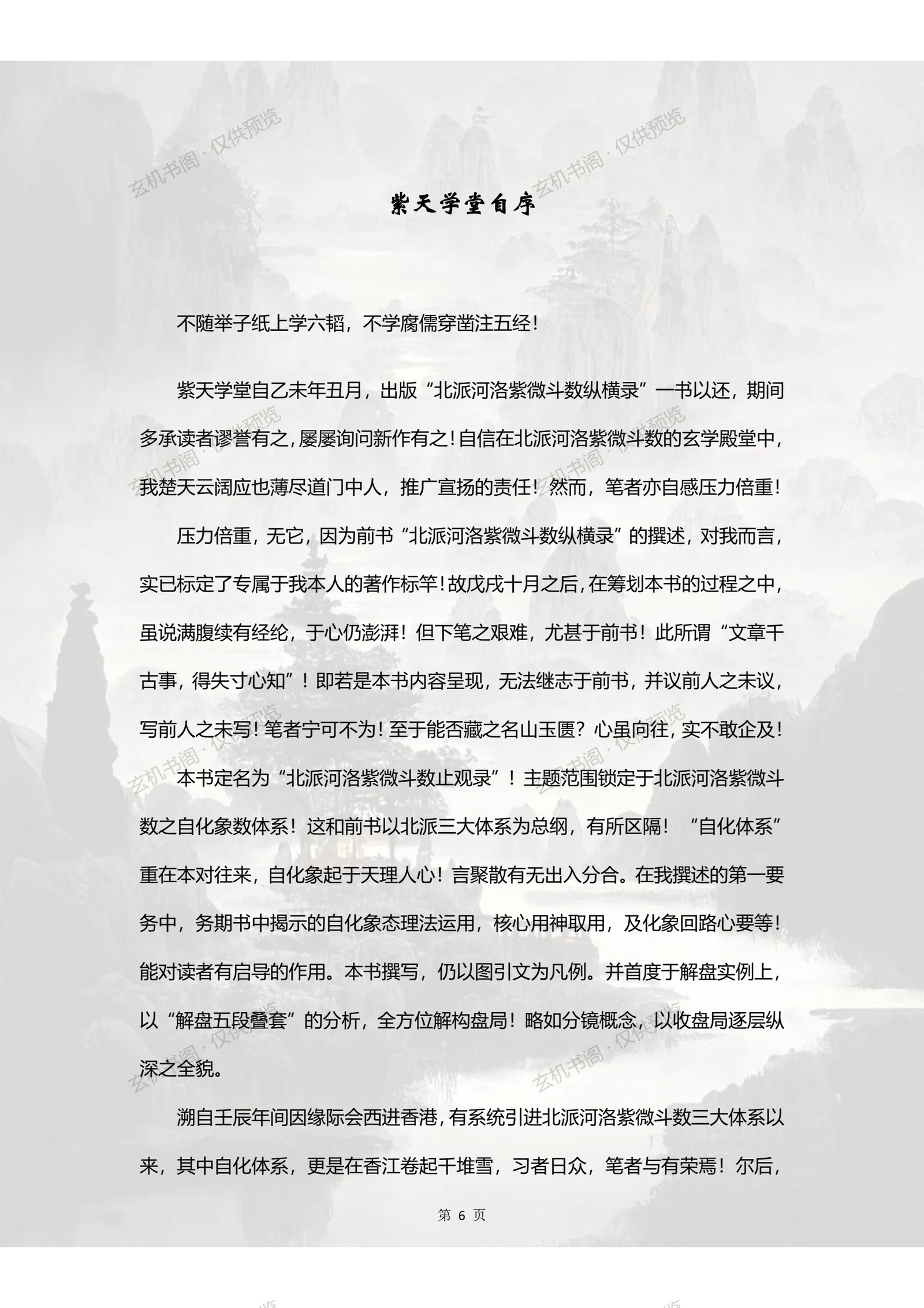
This book by Chu Tian Yun Kuo (Zitian Xuetang) focuses on the 'self-transformation image-number system' (zihua xiangshu tixi) within Beipai Heluo Zi Wei Dou Shu. It is divided into seven sections: the first explains the fate-calculating mechanism of the self-transformation system and the three-in-one structure of palace, star and transformation; the second treats self-transformation images as the use-deities of the four transformations (lu, quan, ke, ji), stressing the qualitative and quantitative relation between birth-year images and self-transformation images and the core notion of 'sympathetic resonance'; the third lays the foundation of palace-star-transformation, covering Hetu four-image generation numbers, the naming and nine rules of the laiyin palace, the original meanings of the twelve palaces, the fourteen main stars and the twelve basic charts; the fourth devotes extensive space to diagramming self-transformation image states, including centripetal and centrifugal forces, qualitative-quantitative change, chaining, double images, heterogeneous groups and same-palace opposite directions; the fifth gives essentials for selecting the core use-deity; the sixth lists eight keys of the transformation-image circuit (inner-outer, toward-away, split-combine, forward-reverse, before-after, far-near, close-distant, host-guest); and the seventh applies the 'five-stage nested chart-reading method' to three complete case studies. The preface notes that this volume differs from the author's earlier Zongheng Lu, concentrating on the self-transformation system's 'original-versus-opposite' interaction and the tendencies of heavenly principle and human heart.
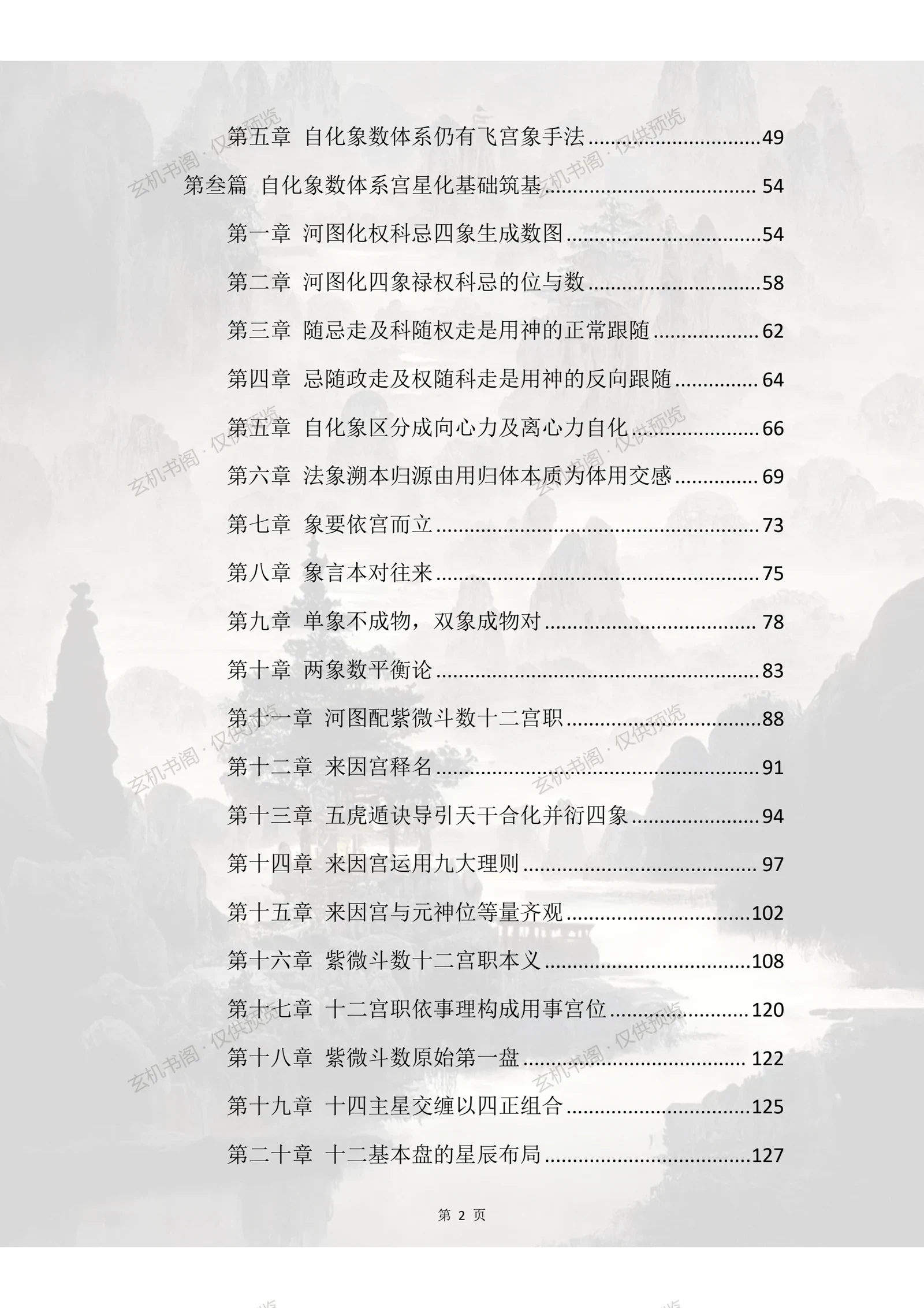
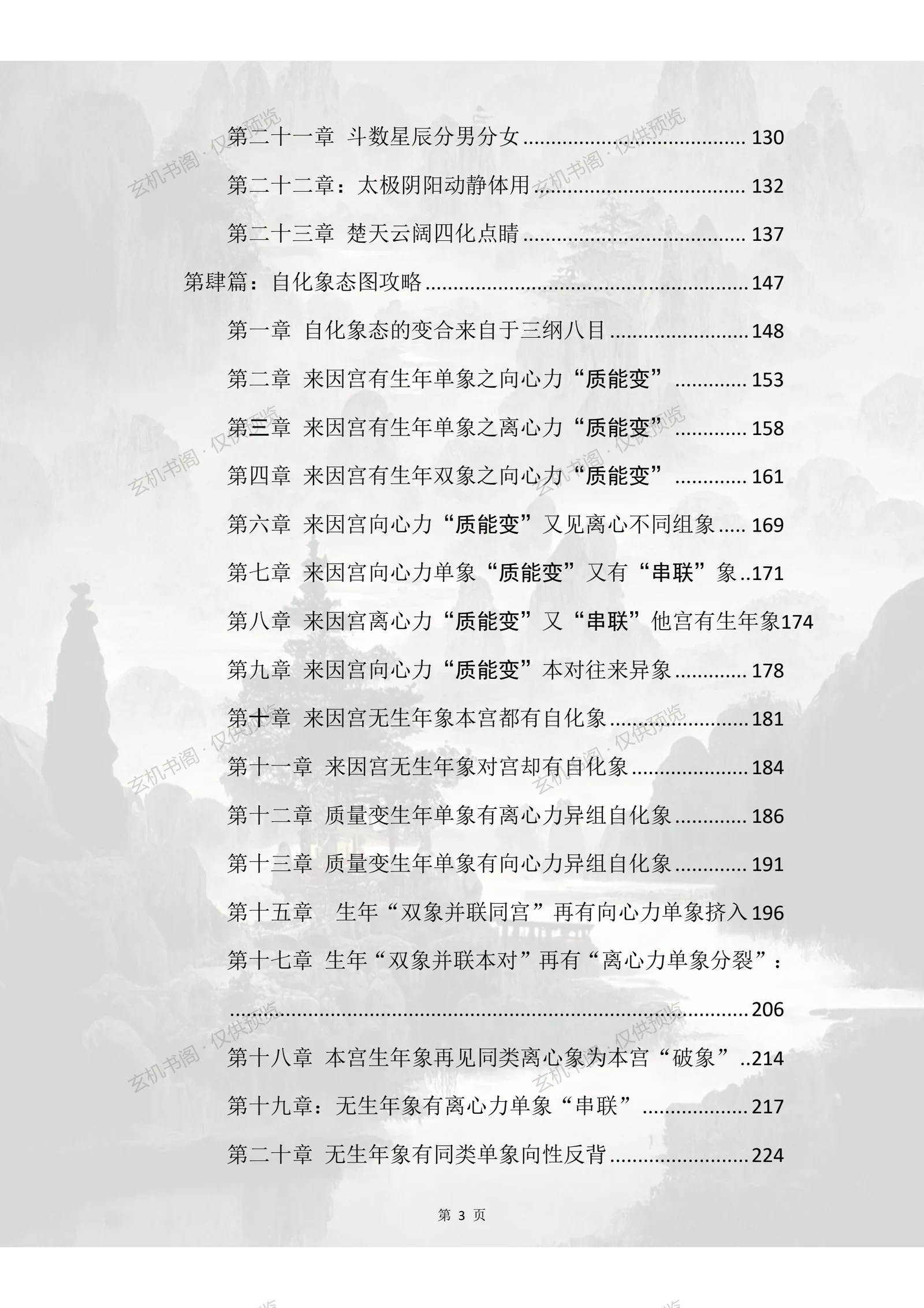
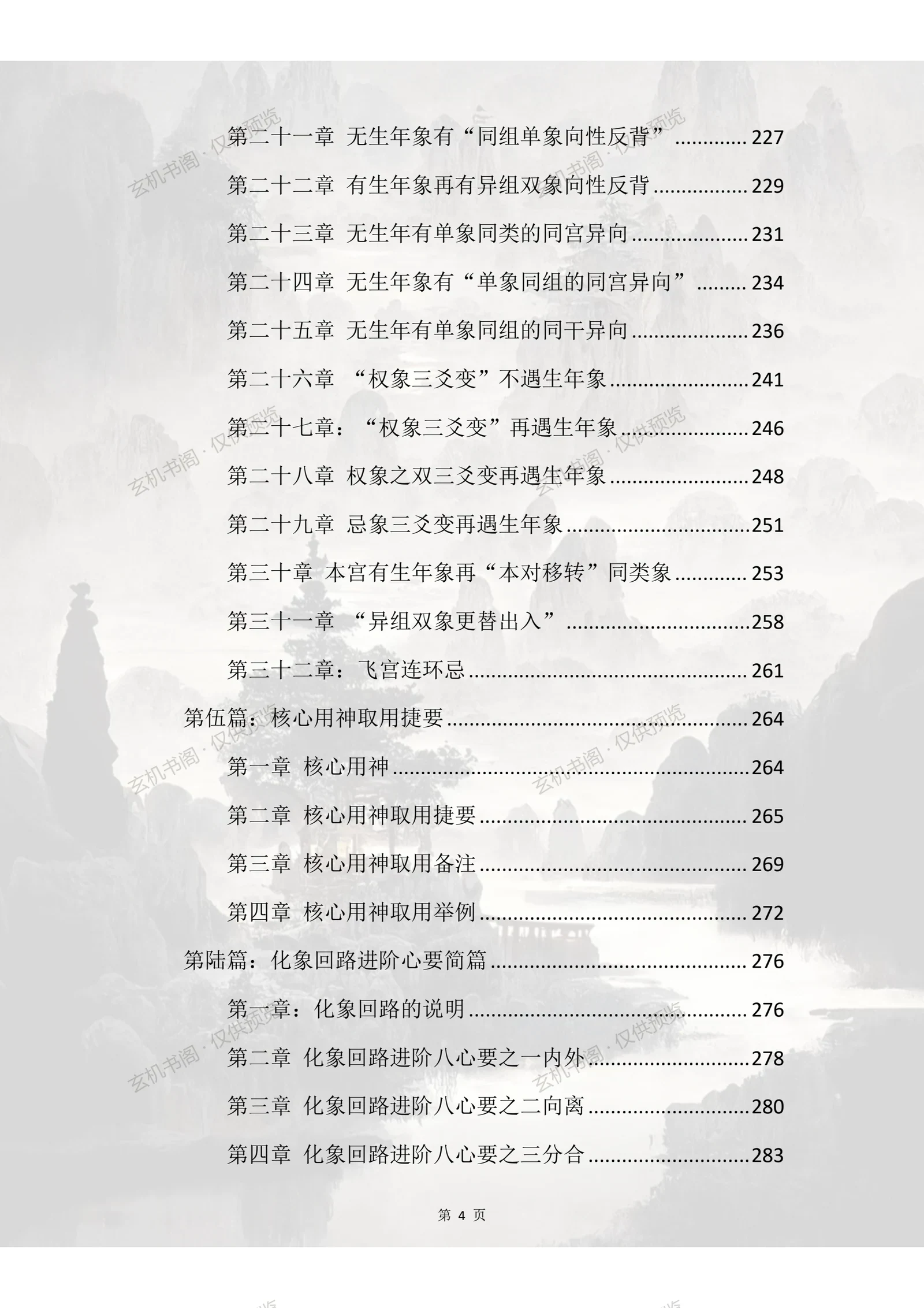
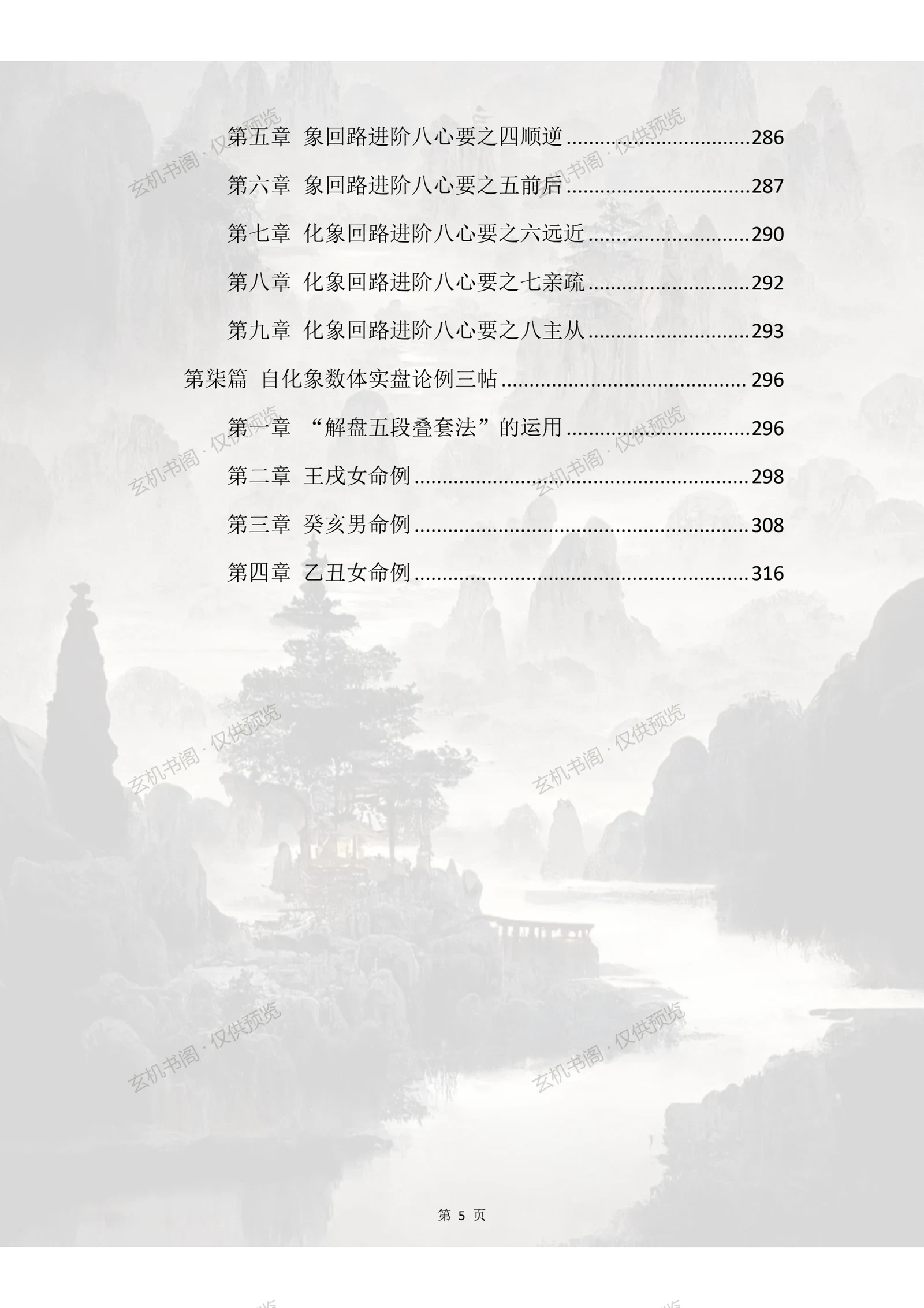
Contents
Preface and editorial notes
Part 1: Mechanism of the self-transformation system
Part 2: Self-transformation images as four-transformation use-deities
Part 3: Foundations of palace, star and transformation
Part 4: Diagrams of self-transformation image states
Part 5: Essentials of use-deity selection
Part 6: Eight keys of the transformation-image circuit
Part 7: Five-stage chart-reading method and three cases
Key Points
Centers on the self-transformation image-number system, distinct from a general outline of the three major Beipai systems.
Stresses the three-in-one of palace, star and transformation, with quan, ke and ji as use-deities.
Distinguishes centripetal and centrifugal forces, and the qualitative-quantitative relation between birth-year and self-transformation images.
Summarizes eight keys of the transformation-image circuit: inner-outer, toward-away, split-combine, forward-reverse, before-after, far-near, close-distant, host-guest.
Provides a five-stage nested chart-reading method and three complete case studies.