Reading guide
Content guideOverview
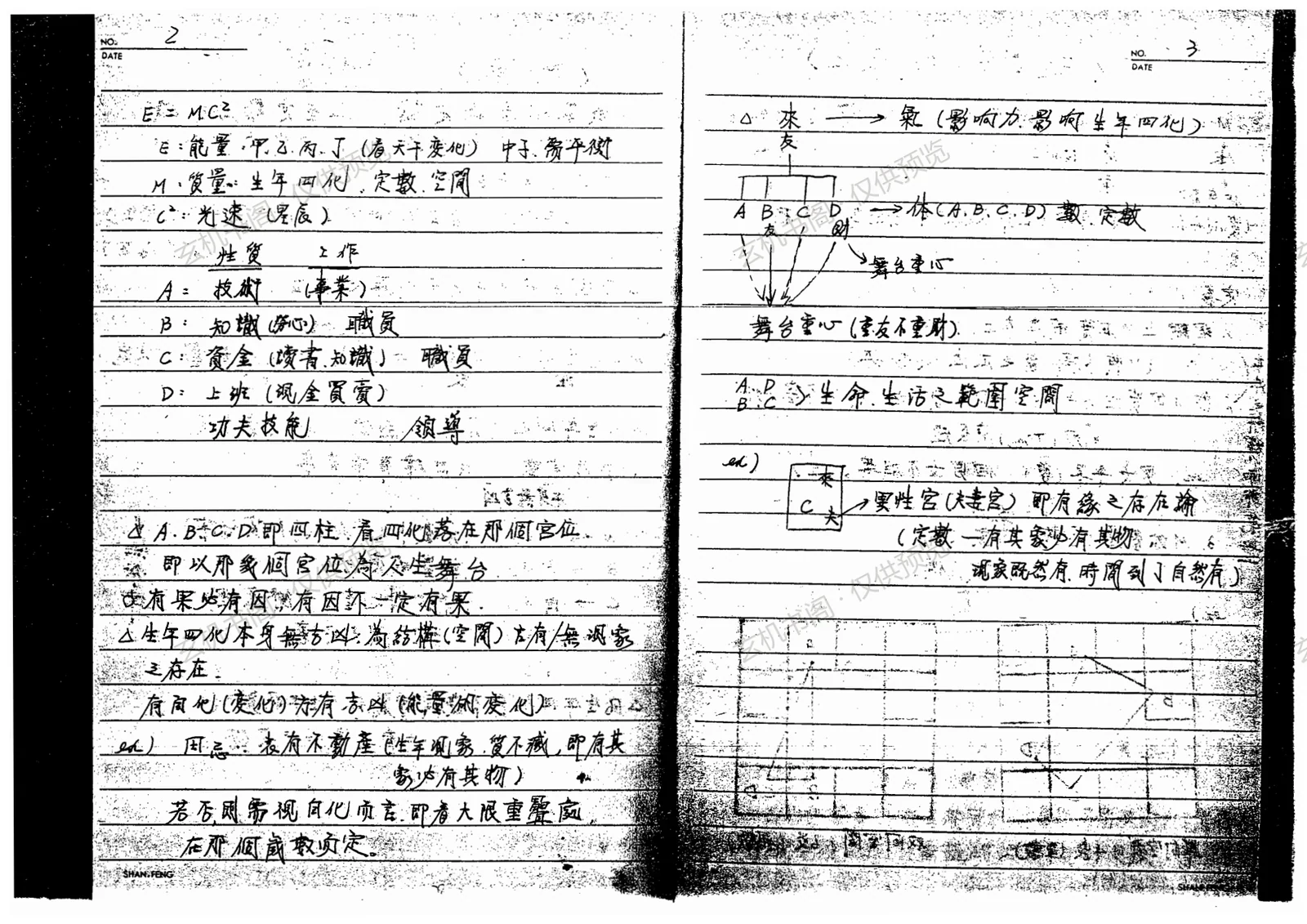
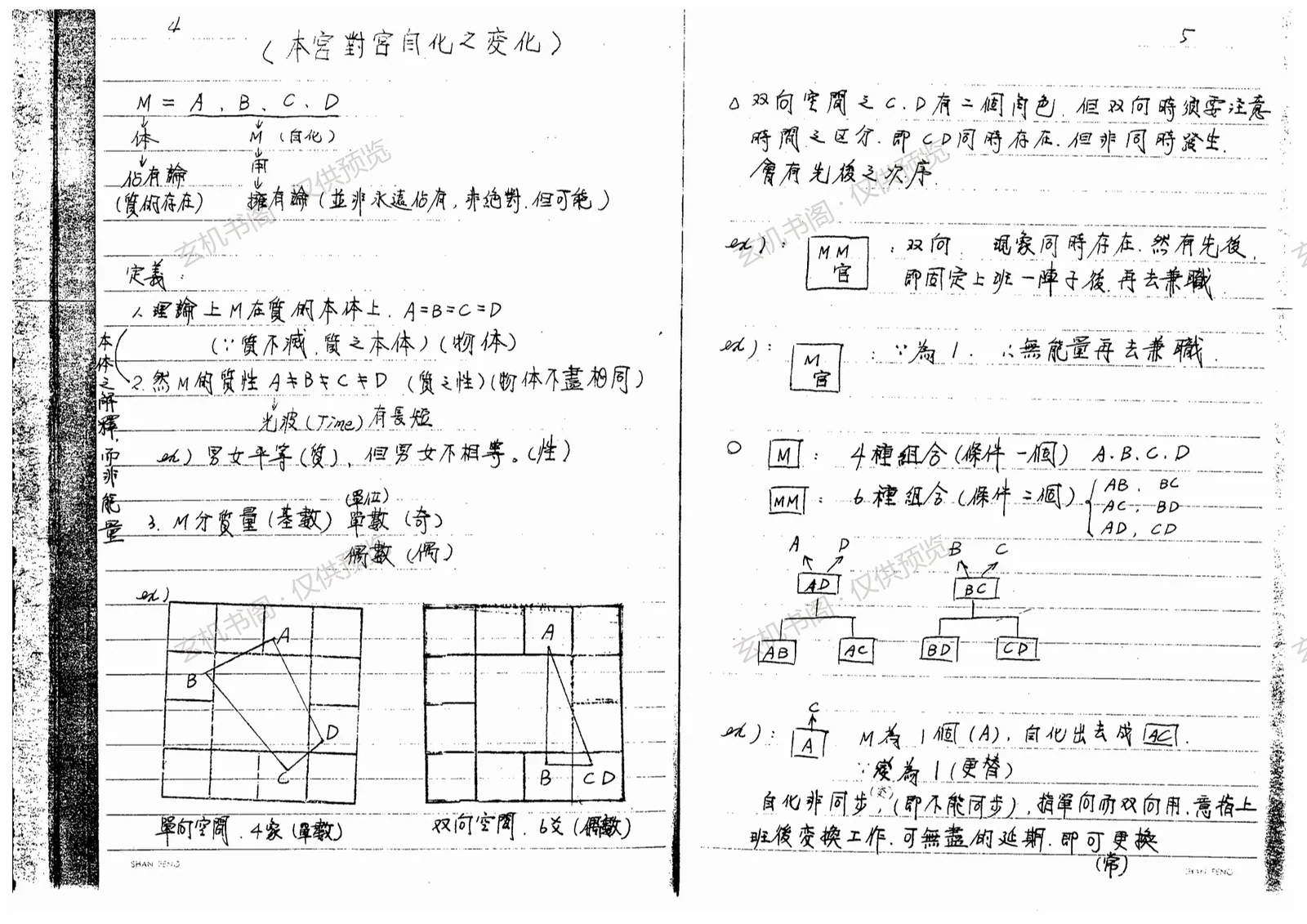
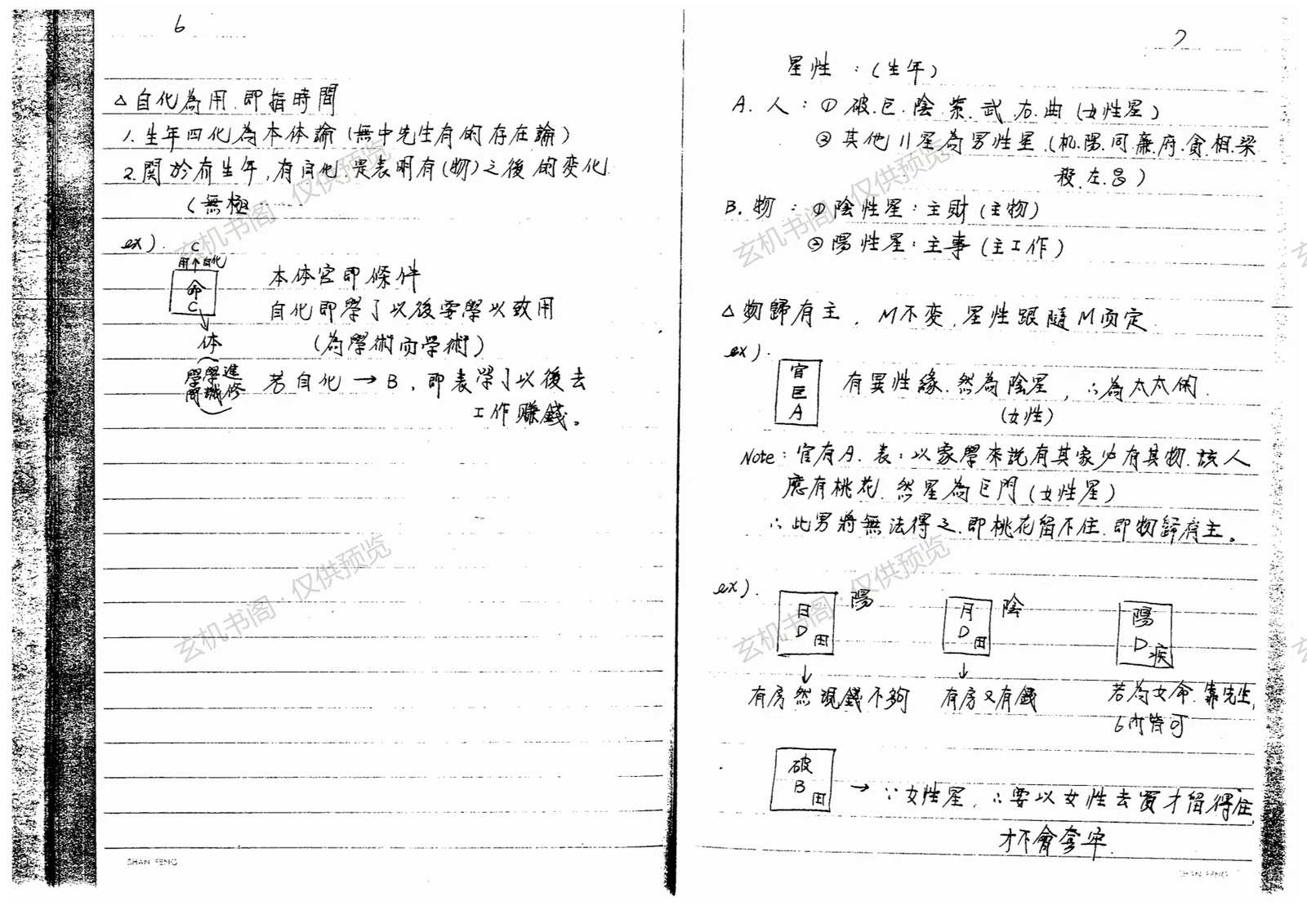
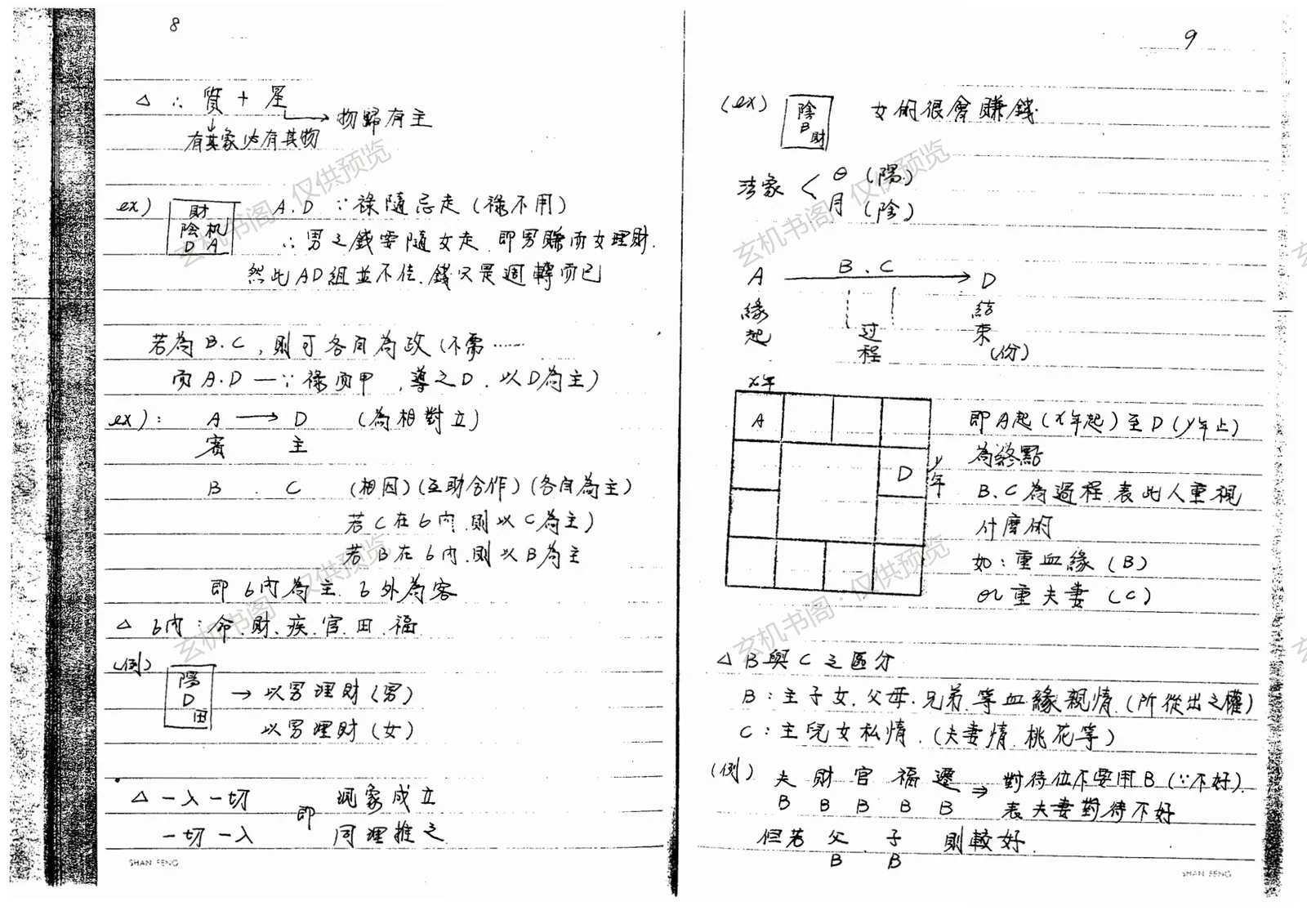
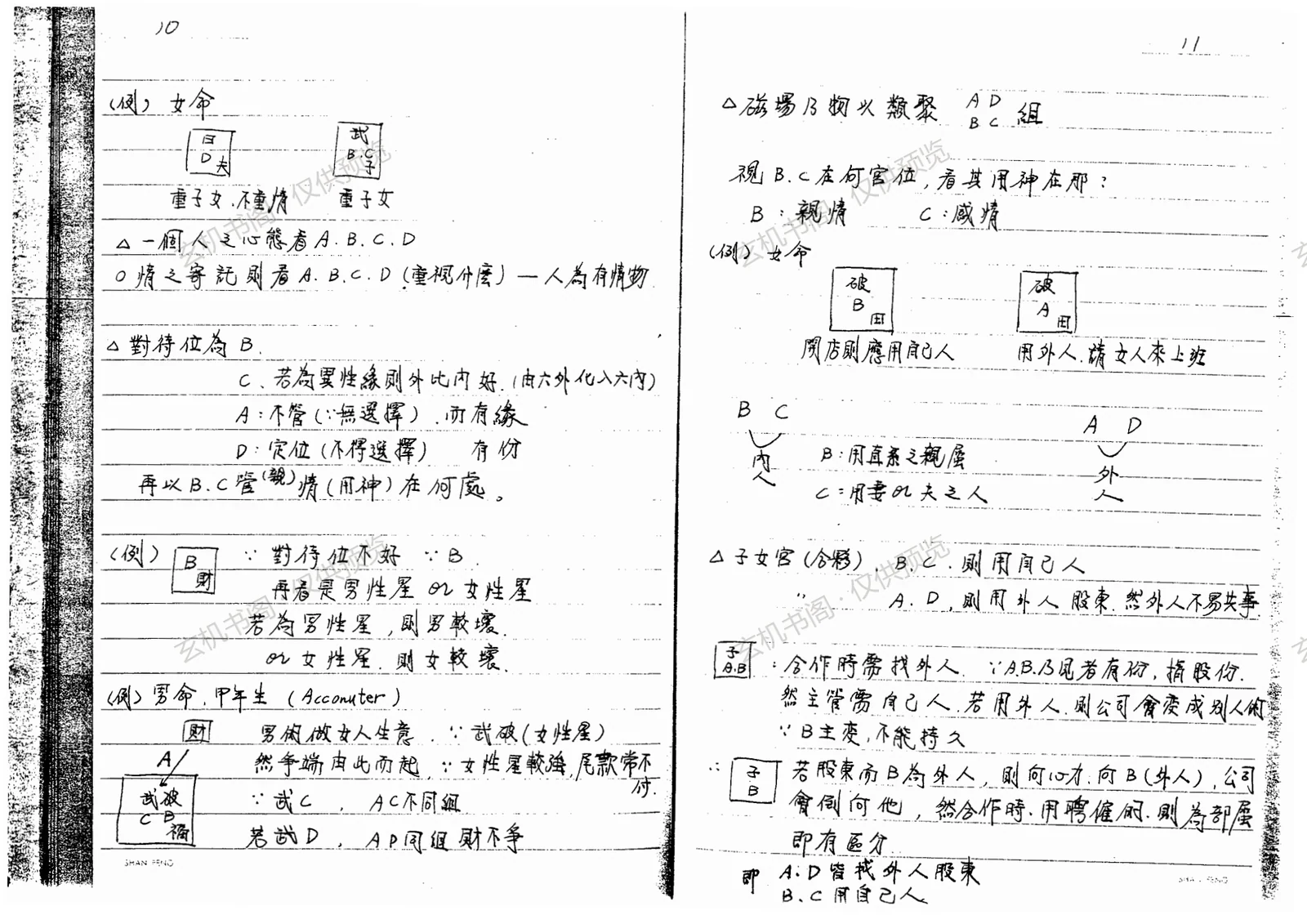
These are Cai Minghong's classroom notes from 1981 on the Qintian Four-Transformations school of Zi Wei Dou Shu. Opening with the principle of 'fa-xiang' (image-dharma), the notes argue that where an image lands determines its fixed point, and that shared images imply shared phenomena. The birth-year four transformations are treated as the 'body' (ti), while self-transformation of the opposite palace is the 'function' (yong) that marks time and change. The author uses A, B, C, D for the four transformations alongside symbols such as M (mass), E (energy), and C (light speed) to discuss combinations, odd and even numbers, one-way and two-way spaces, and the six inner versus six outer palaces. Later sections combine yin-yang star nature, male and female stars, and examples involving children, partnerships, and shareholders to show how four-transformation placements can be used to read relatives, wealth, work, and business associates. The text is a working notebook with dense symbols and abrupt examples, best suited to readers who already know basic Zi Wei Dou Shu and want to study the Qintian approach.
Contents
Fa-xiang and fixing the image point
Birth-year four transformations as ti, opposite-palace self-transformation as yong
A, B, C, D with energy, mass, and light speed
One-way four-image and two-way six-line combinations
Yin-yang star nature, male/female stars, and property ownership
Six inner and six outer palaces, host and guest
Examples of children palaces, partnerships, and hiring
Key Points
The rule 'shared images imply shared phenomena' runs throughout.
Birth-year four transformations are ti; self-transformation marks time and change.
A, B, C, D and M, E, C symbols model four-transformation combinations.
Distinguishes six inner palaces from six outer palaces in host-guest terms.
Uses star yin-yang to read relatives, money, and partnerships.