Reading guide
Content guideOverview
This book presents the traditional practice of cezi, or character divination, in which the form, meaning, and sound of Chinese characters are used to infer fortune and misfortune. It begins with the historical development of the practice, citing anecdotes about figures such as Li Chunfeng and Xie Shi, then sets out introductory remarks, rules, and twelve secret methods. These include techniques named after adding a head, joining feet, piercing the center, enclosing, breaking open, adding strokes, and removing strokes, followed by methods such as the Six Methods of Mind-Yi, xiangxing (form), huiyi (meaning), jiajie (loan), xiesheng (sound), zhishi (indication), zhuanzhu (transfer), bagua, jiugong, guanmei, zhaizi, and duiguan. The book also discusses side-radicals, the Six Spirits verse, what is auspicious or taboo in divination, what is seen and heard, seasonal and five-element correspondences, and ends with case studies on marriage, childbirth, illness, examinations, lost objects, travelers, and lawsuits, plus an appendix on Korean character-breaking.
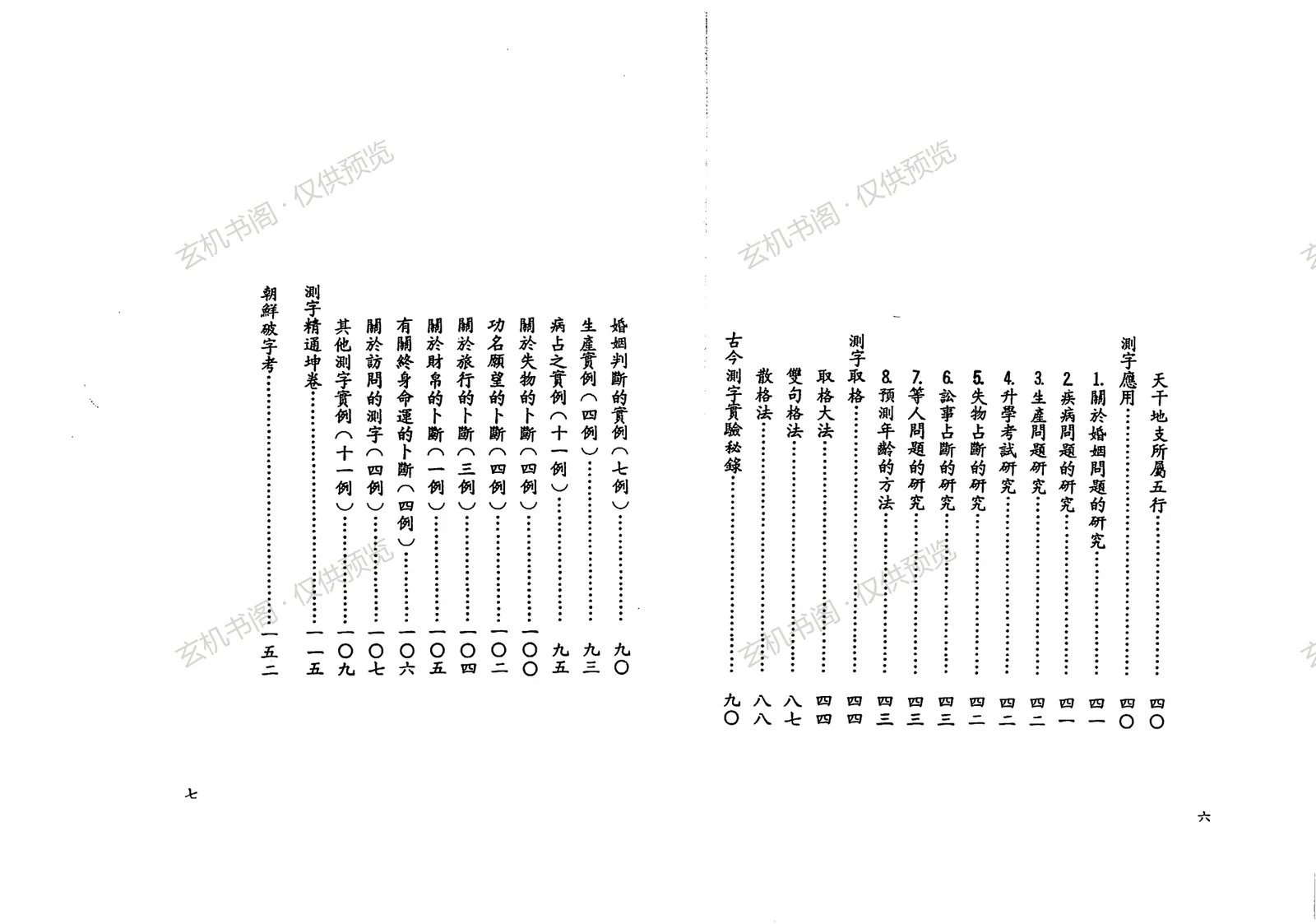
Contents
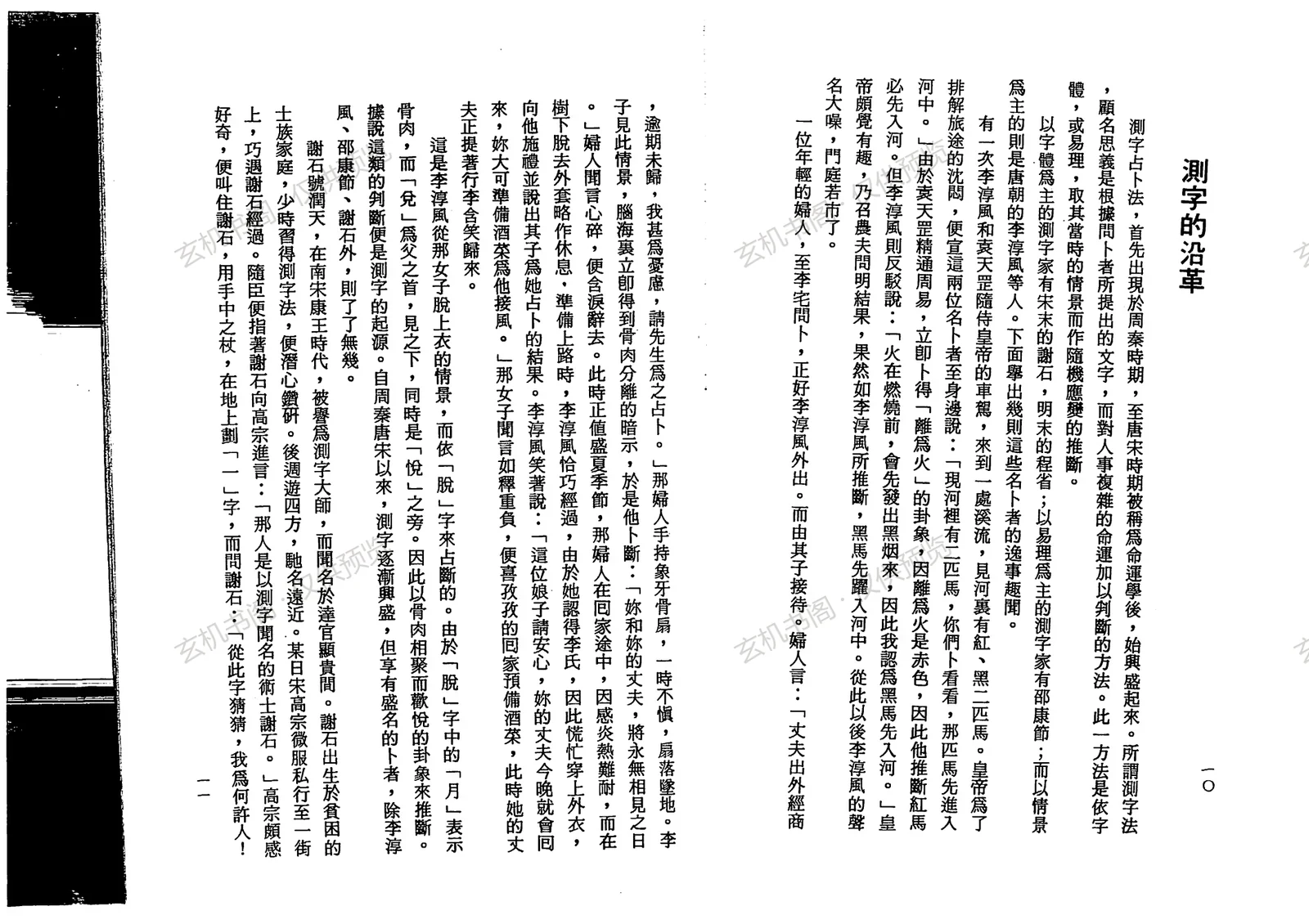
History and anecdotes of character divination
Introduction, rules, and twelve secret methods
Adding head, joining feet, piercing center, enclosing
Mind-Yi six methods, bagua, jiugong, guanmei
Auspicious and taboo signs, what is seen and heard
Five elements, seasons, and prosperity-decline judgments
Case studies on marriage, illness, fame, lost objects
Appendix: Kun volume and Korean character-breaking
Key Points
Judgments rely on character form, meaning, and sound combined with immediate circumstances.
Summarizes twelve techniques such as adding head, joining feet, piercing center, enclosing, and breaking open.
Draws on Mind-Yi six methods, bagua, jiugong, guanmei, zhaizi, and duiguan.
Emphasizes external responses: what is seen or heard, natural omens, and five-element cycles.
Illustrates concrete judgments through cases on marriage, illness, fame, and lost objects.