Reading guide
Content guideOverview
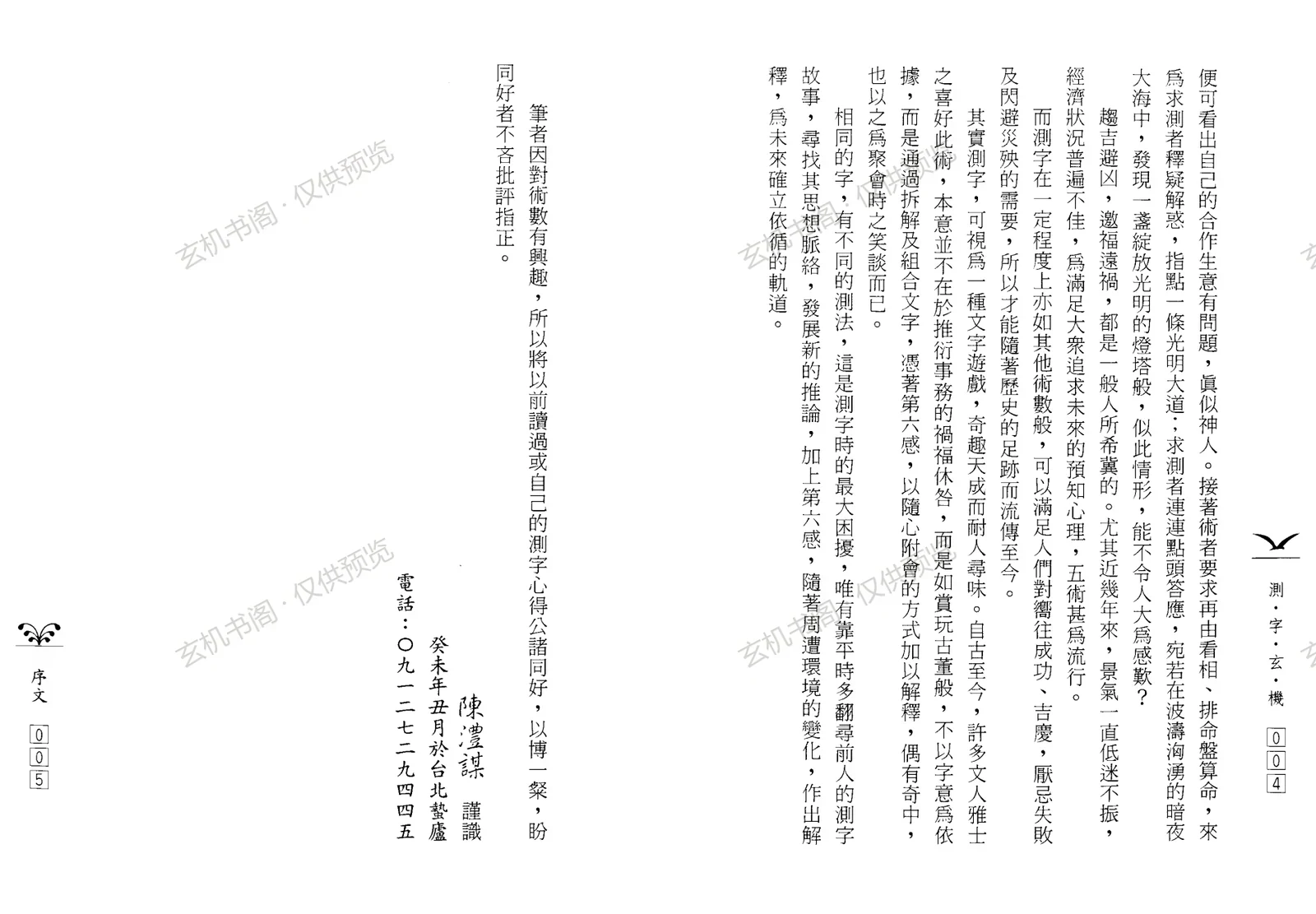
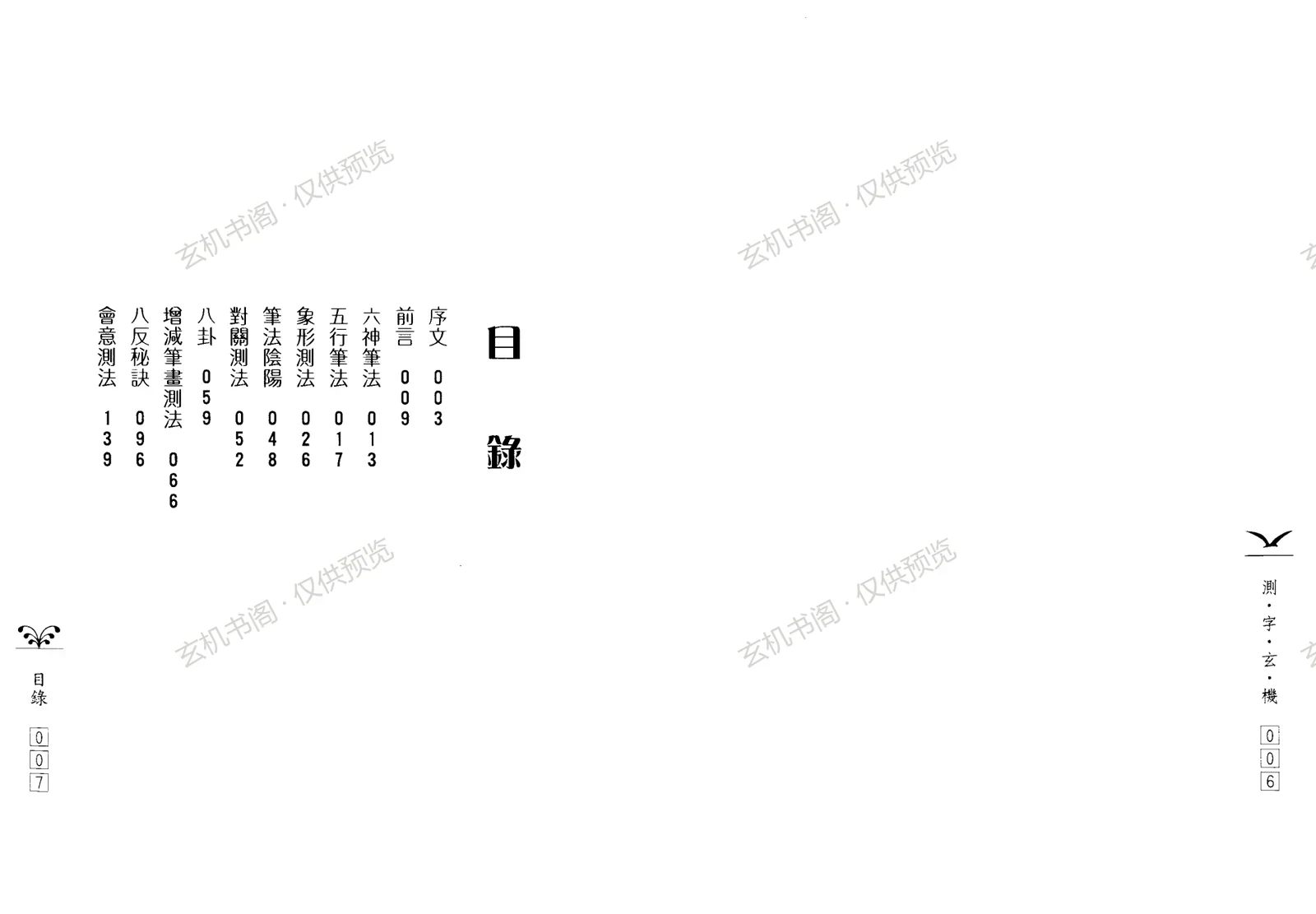
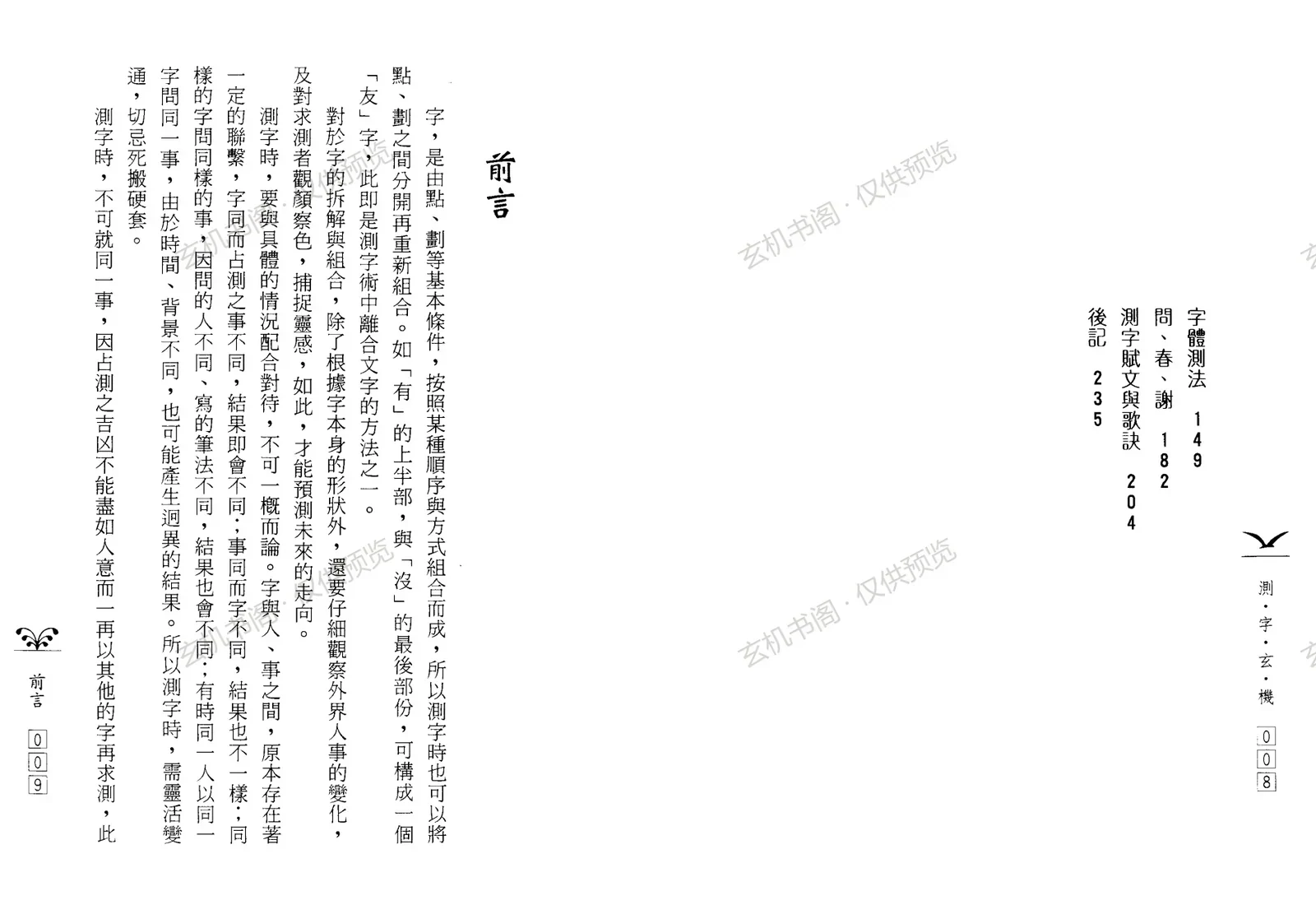
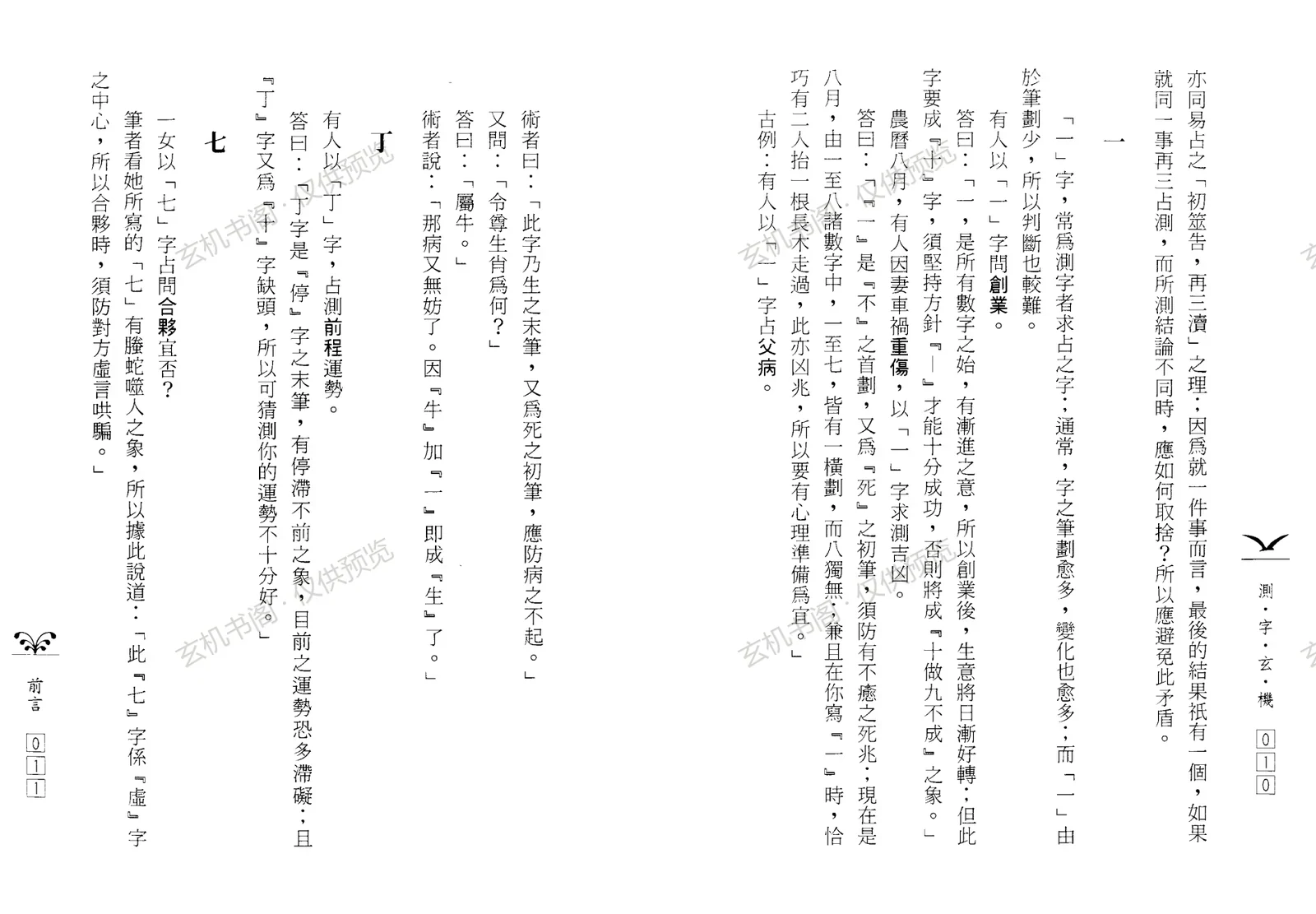
The Mystery of Character Divination by Chen Limou introduces the traditional art of interpreting Chinese characters for fortune-telling. The preface traces character divination back to the Qin and Han periods and notes its long-standing place between folk practice and literati amusement. The author treats it as a method of inferring fortune by decomposing and recombining written characters. The table of contents covers nine major approaches, including the Six Spirits stroke method, Five Elements stroke method, pictographic interpretation, yin-yang stroke analysis, paired-gate method, bagua, stroke addition and subtraction, the Eight Reversals secret, and meaning-based interpretation. The introductory text stresses that practitioners should observe the outward form of the character and the client's facial expression rather than applying rigid formulas. Sample cases include characters such as yi, shi, ding and qi, showing how strokes are split and combined to infer outcomes in everyday situations.
Contents
Preface: origins of character divination and purpose of the book
Introduction: observe form and expression, avoid rigid formulas
Six Spirits, Five Elements, and pictographic stroke methods
Yin-yang stroke analysis, paired-gate method, and bagua
Stroke addition/subtraction and the Eight Reversals secret
Meaning-based interpretation
Key Points
Infers fortune by decomposing characters, altering strokes and analyzing structure
Emphasizes matching interpretation with the client's expression and context
Presents several stroke-based systems: Six Spirits, Five Elements, pictographic and yin-yang
Clear table of contents covering basic methods, bagua, and case-based interpretation