Reading guide
Content guideOverview
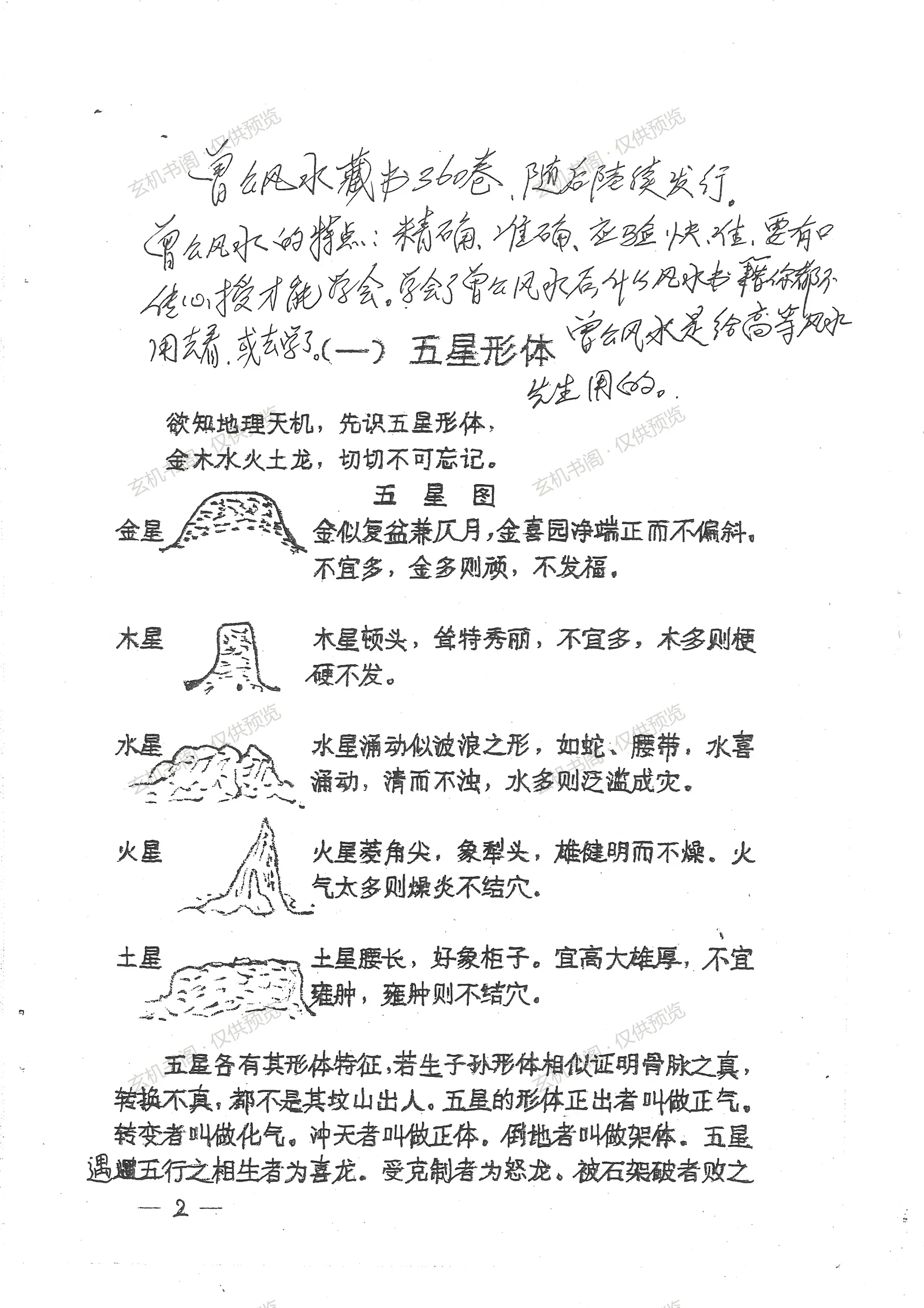
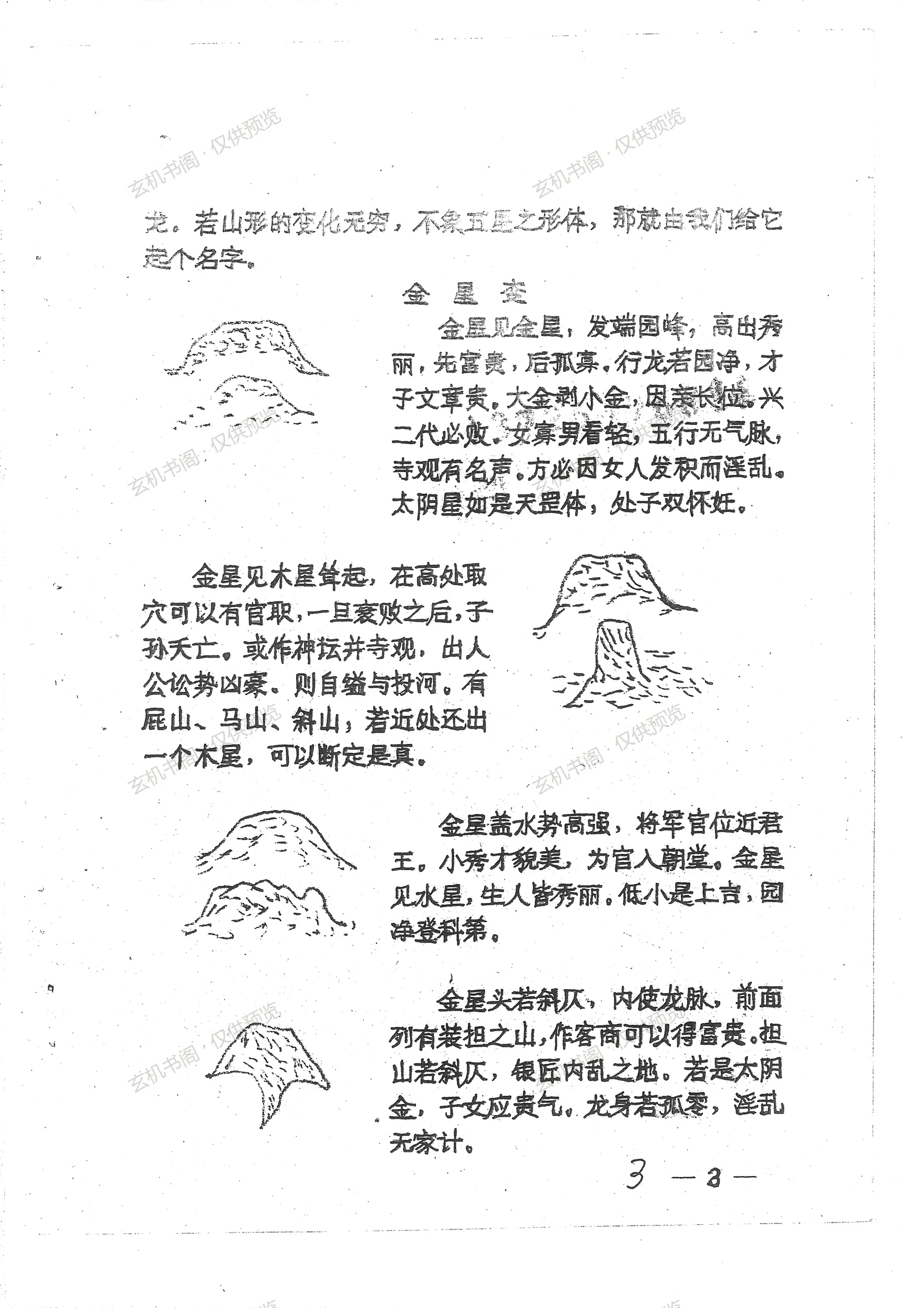
This combined volume (14 and 15) of Master Zeng's Feng Shui by Zeng Jinquan focuses on the essentials of acupoint selection. The preface frames the work in traditional claims that good grave sites bring prosperity to descendants and stresses the precision of Master Zeng's method. The main text begins with the Five-Element mountain forms—Metal, Wood, Water, Fire and Earth—each illustrated and described with its proper and improper traits: Metal should be round, clean and upright, Wood tall and elegant, Water flowing and clear, Fire pointed but not scorched, Earth high, broad and solid. It then discusses transformations and combinations of these forms and their supposed effects on rank, wealth, solitude, moral disorder or decline. The table of contents lists methods for judging mountain forms, selecting acupoints, diagrams of inauspicious sites, dragon and sand methods, the twenty-four mountain sand-cutting formulas, yin-yang water methods, eight-bureau water diagrams, and chants on the luopan. The work is image-heavy and practical, centered on landform analysis rather than abstract theory.
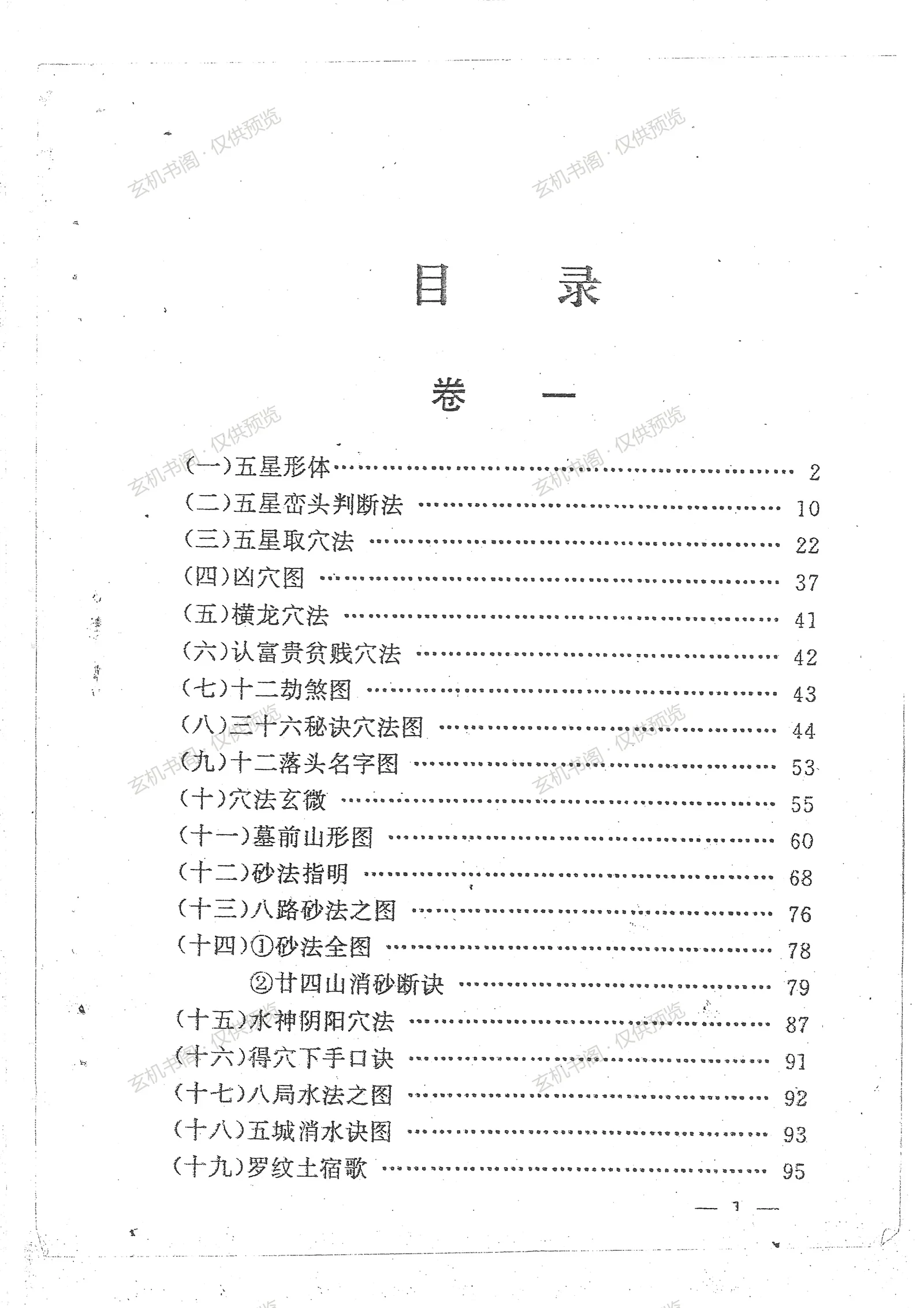
Contents
Five-Element mountain forms and diagrams
Methods for judging forms and selecting acupoints
Inauspicious sites, cross-dragon and wealth-rank acupoints
Twelve kalpa diagrams and thirty-six secret acupoint charts
Essentials of acupoint method and mountain profiles
Sand methods, eight-road sand diagrams and 24-mountain formulas
Yin-yang water methods and water-discharge diagrams
Luopan chants, borrowing treasury method and dragon form charts
Key Points
Starts from Five-Element mountain forms before judging acupoints
Links form transformations and elemental relations to auspicious or adverse outcomes
Combines sand and water diagrams with practical 24-mountain formulas
Includes inauspicious and wealth-rank acupoint diagrams for comparison
Heavily illustrated, emphasizing visual landform appraisal over pure theory