Reading guide
Content guideOverview
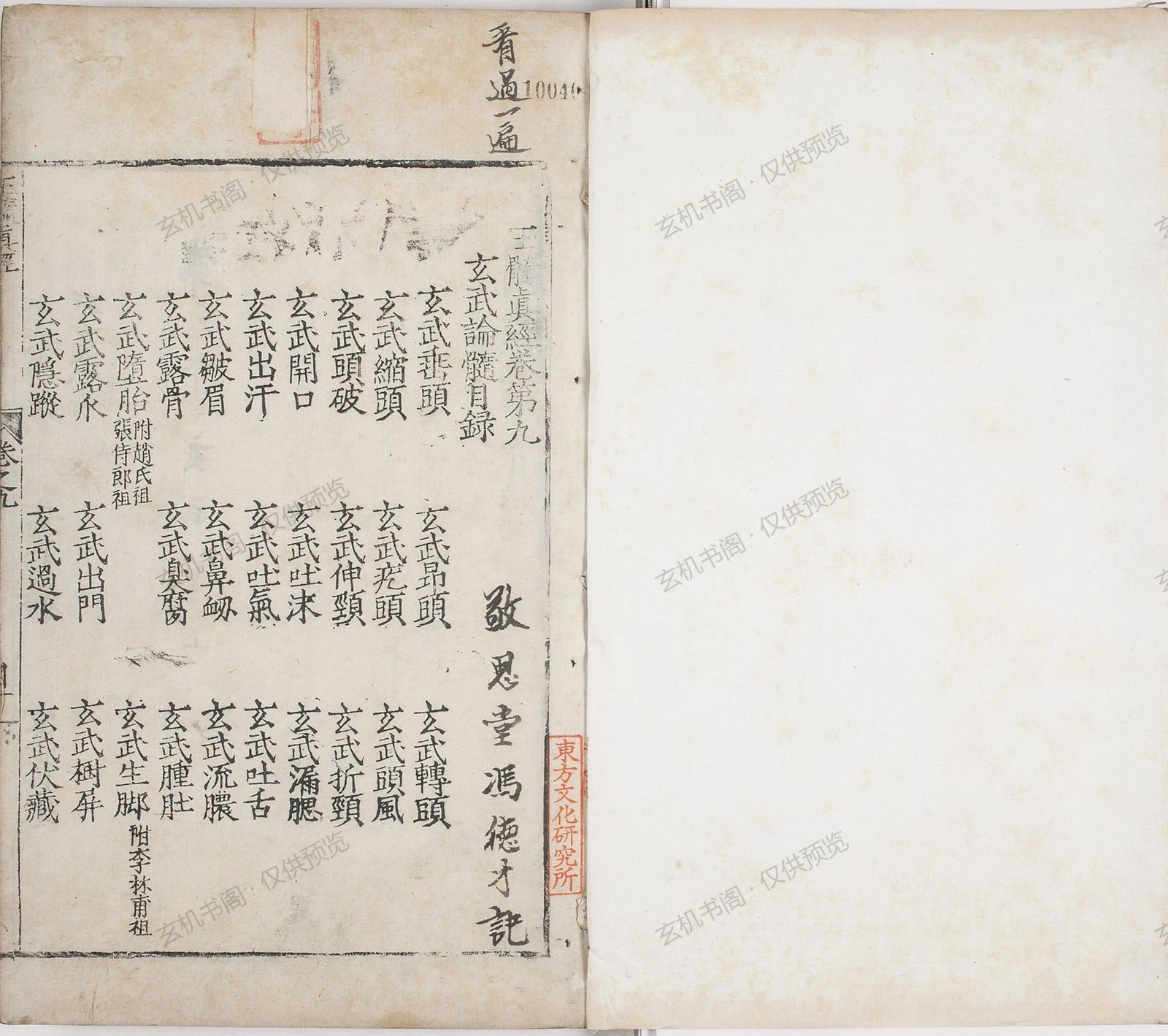
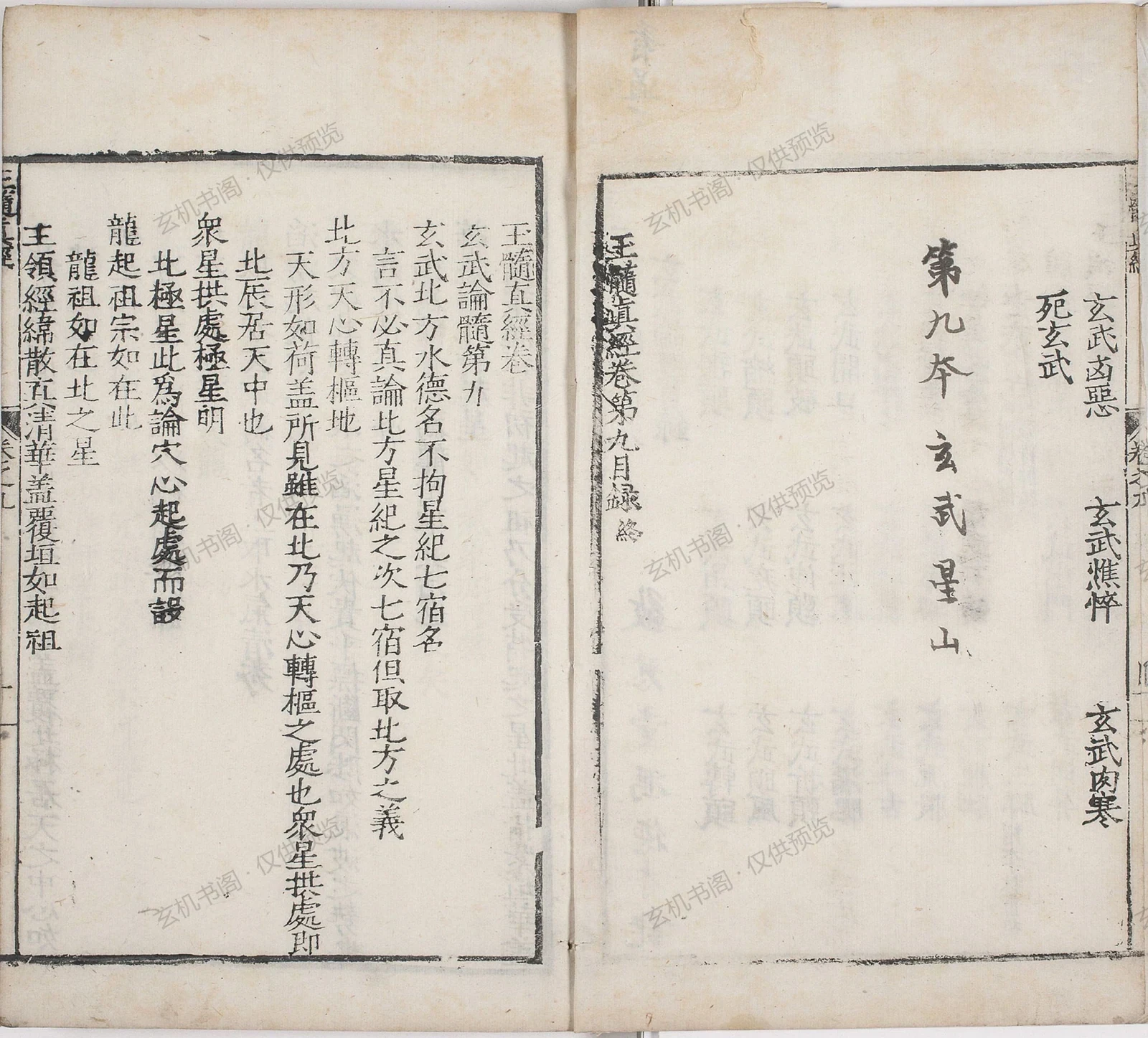
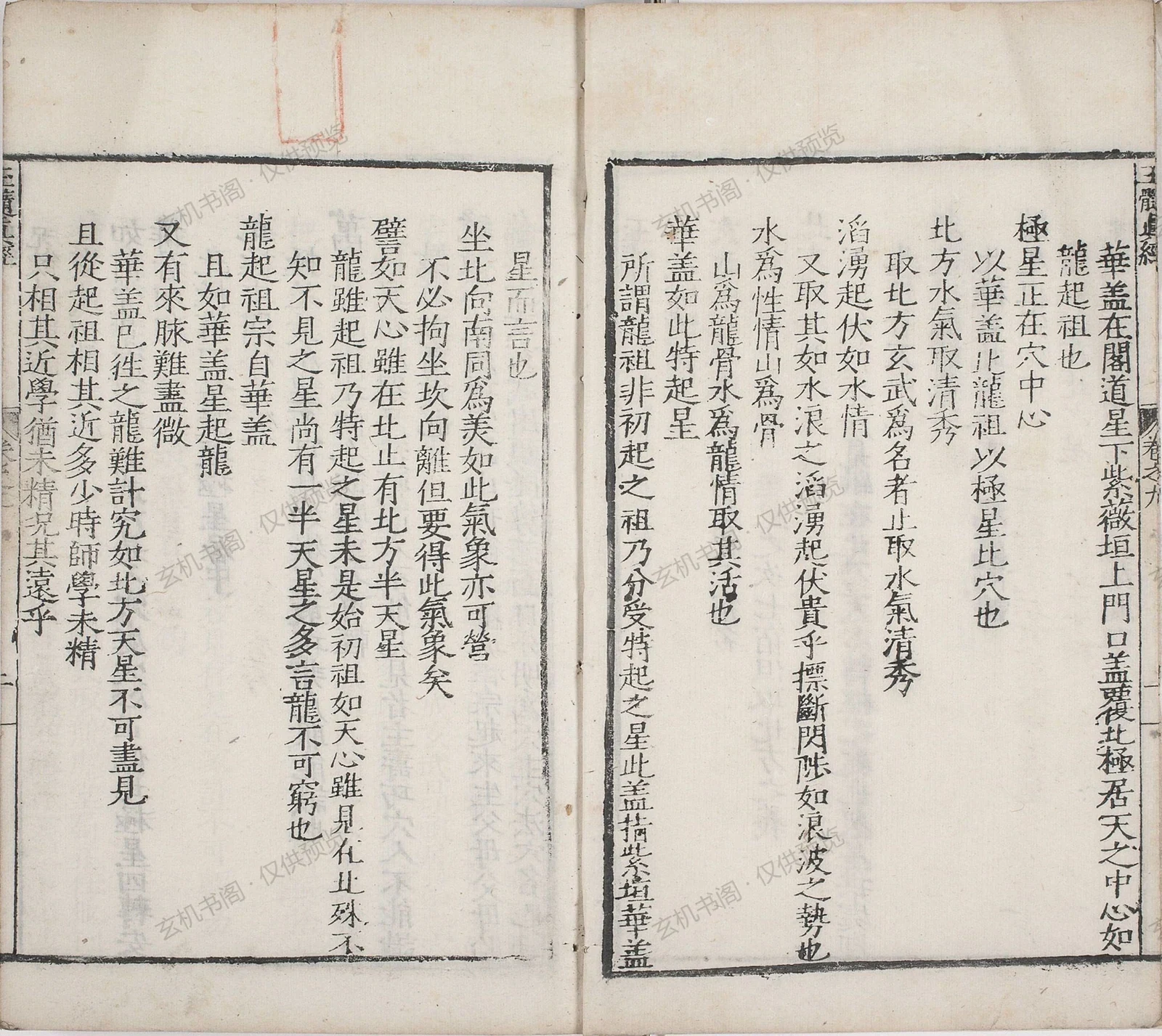
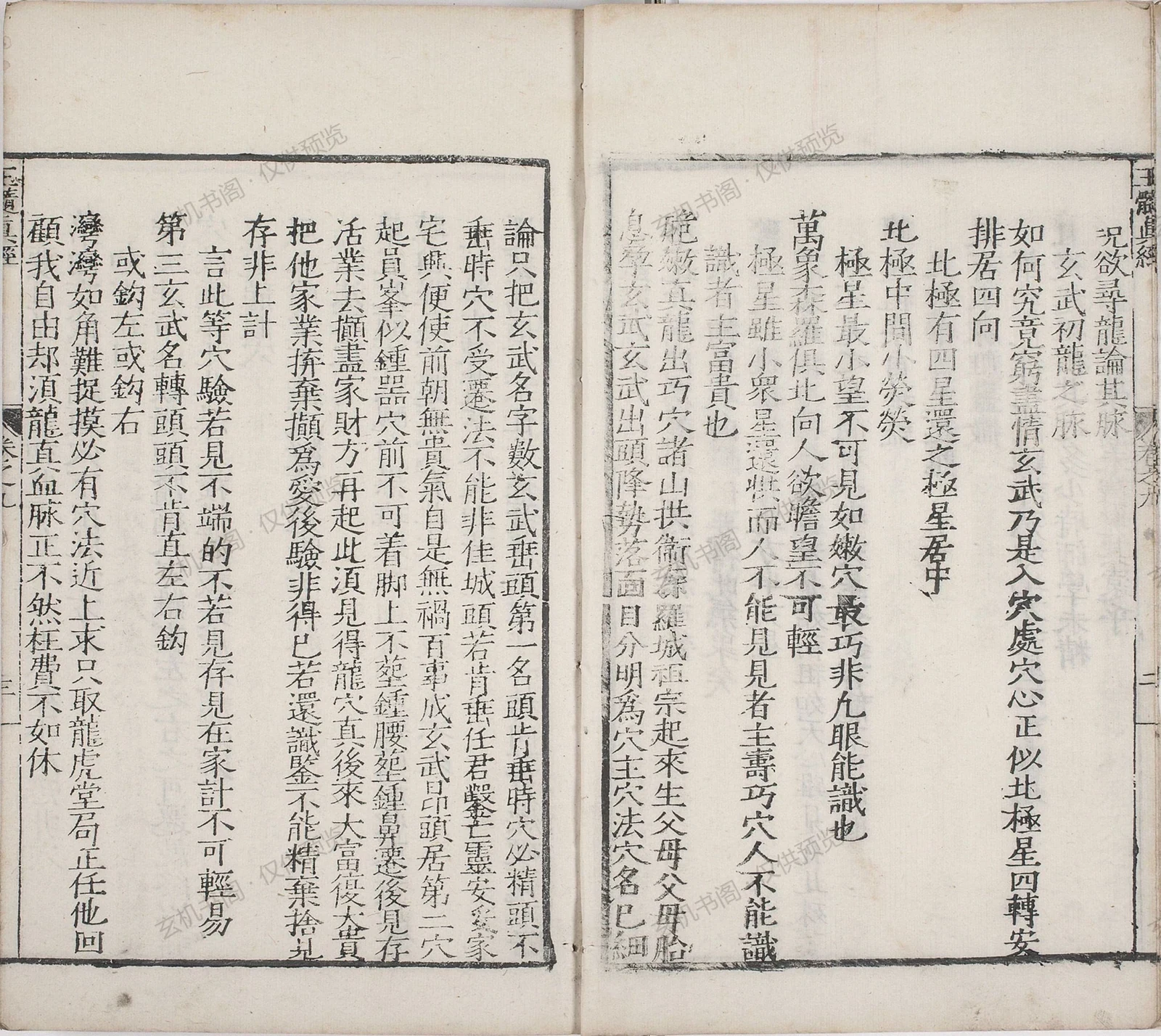
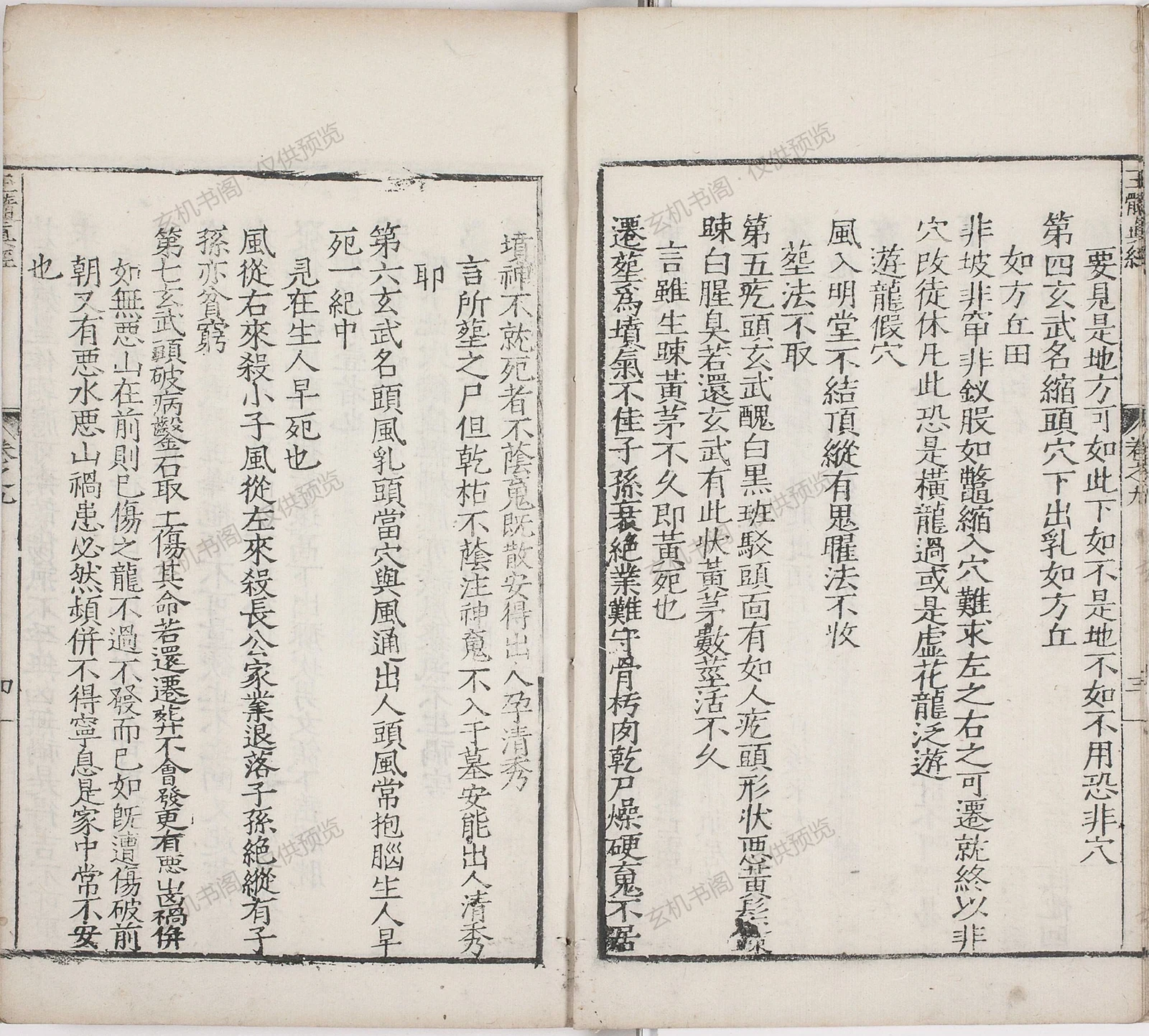
Yusui Zhenjing is a well-known Song-dynasty text on fengshui landform analysis, attributed to Zhang Dongxuan, annotated by Liu Yunzhong and expanded by Cai Yuanding, with later supplementary juan by Fang Zheng and others. The present images show juan 9, titled 'Xuanwu lun sui mulu' (Contents of the Xuanwu Discourse). The contents list twenty-four xuanwu mountain forms—such as hanging head, shrinking head, raising head, broken head, open mouth, sweating, furrowed brow, exposed bone, miscarriage, exposed claw, hidden trace, crossing water, hidden storage, growing feet, swollen belly, running pus, protruding tongue, leaking cheek, broken neck, facing wind, turning head, and generating wind—each discussed in terms of good and bad form. The main text opens with the northern water virtue and the seven lunar mansions, citing the North Star, celestial heart, and canopy to explain the origin of dragon ancestors, and argues that sitting north facing south is auspicious. It concludes with mnemonic verses on naming xuanwu forms, turning heads, choosing穴 sites, and predicting fortunes. The edition is the Ming Jiajing 29th year (1550) Chen Shaoyue imprint, with white margins, double fish tails, and regular script. It is a valuable source for studying Ming-dynasty fengshui and textual transmission.
Contents
Juan 9 title page and contents: Xuanwu Discourse
Discourse on xuanwu: northern water virtue and seven mansions
Polar star, celestial heart, canopy, and dragon ancestors
Xuanwu forms: hanging, shrinking, raising, broken heads, etc.
Site selection and prognostic verses
Key Points
Interprets mountain forms through xuanwu star imagery and northern water virtue
Lists twenty-four xuanwu forms with auspicious and inauspicious judgments
Cites North Star, celestial heart, and canopy to explain dragon origins
Prognostic verses link forms to family, property, offspring, and illness
Ming Jiajing Chen Shaoyue imprint with distinctive typography