Reading guide
Content guideOverview
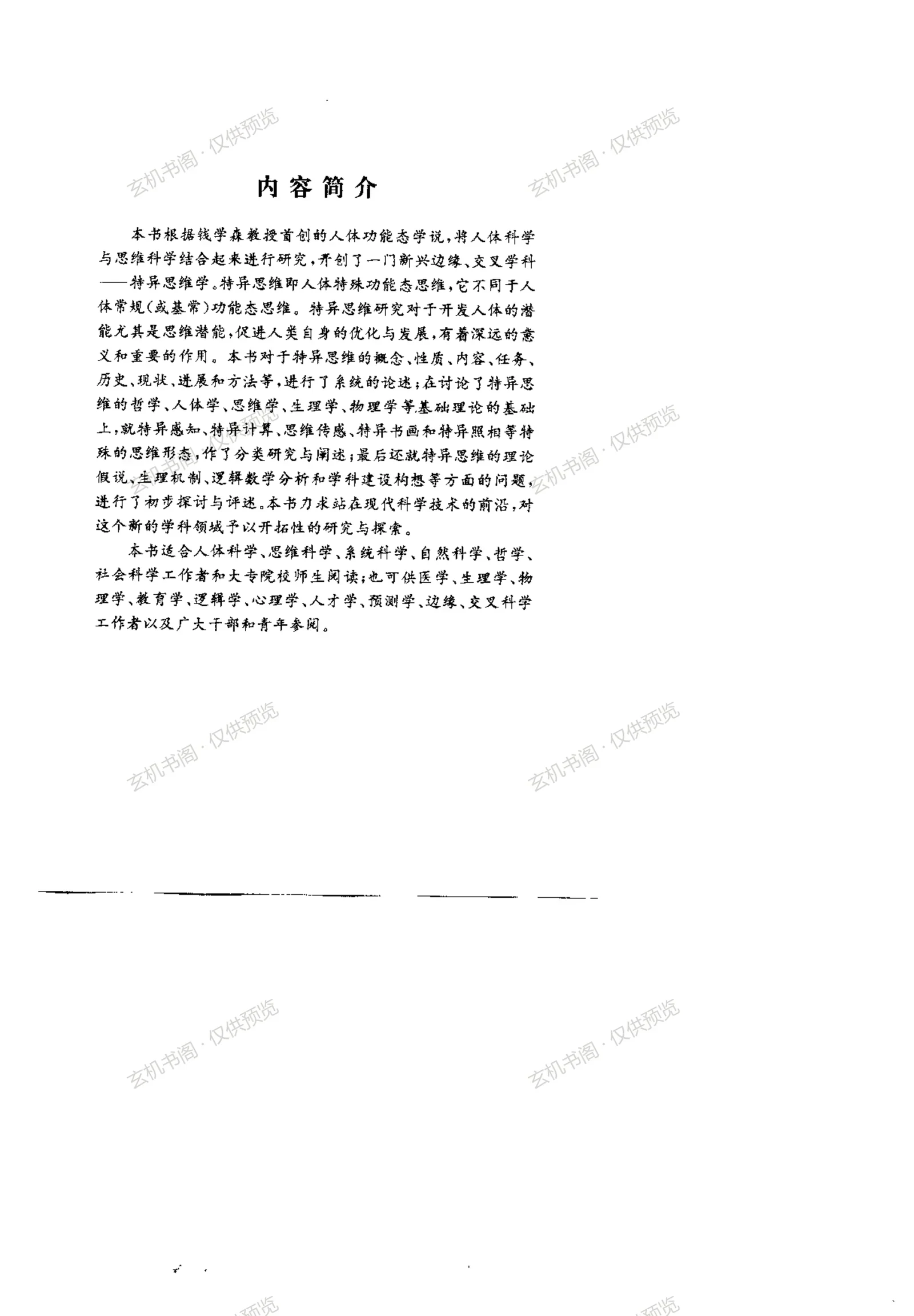
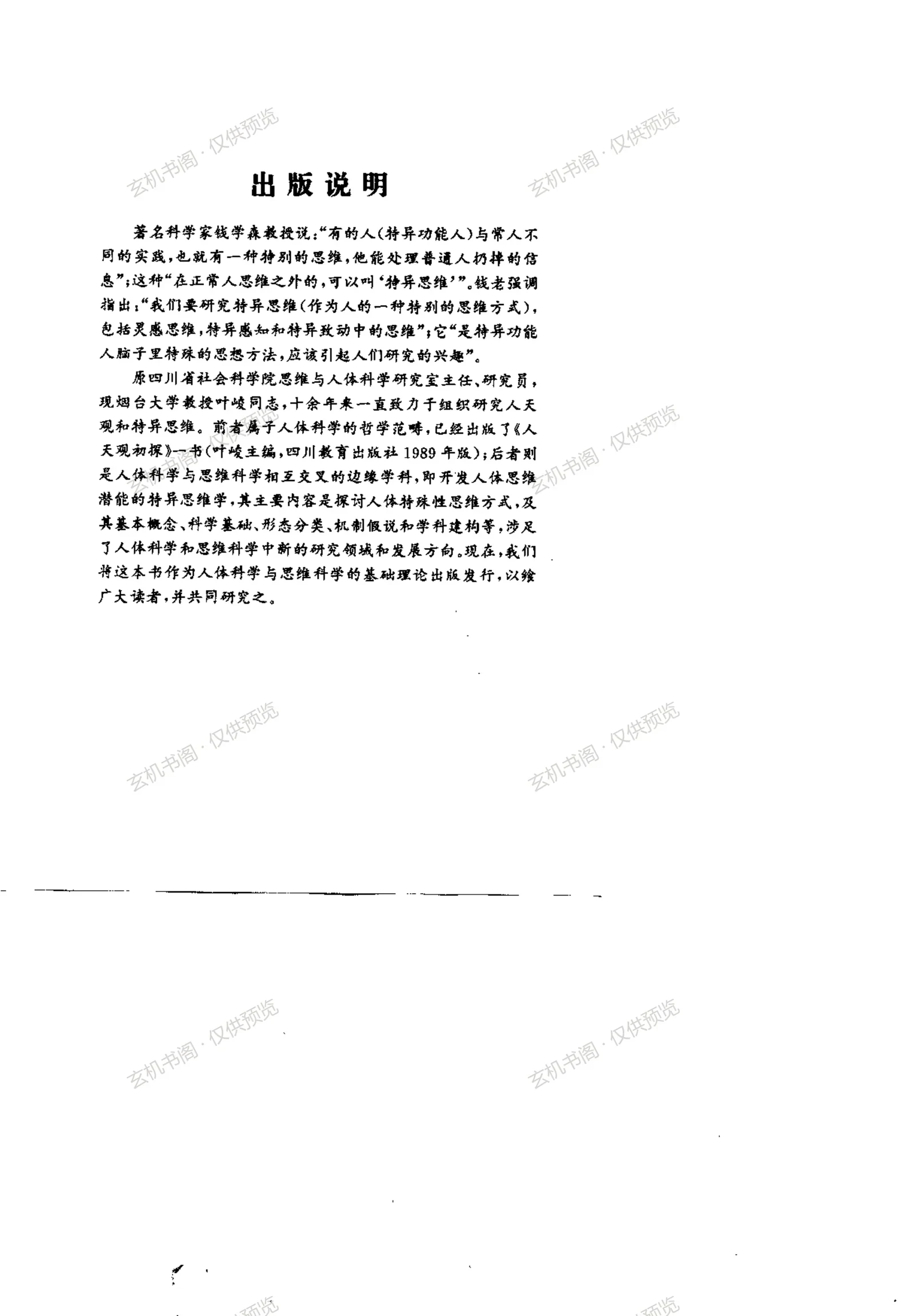
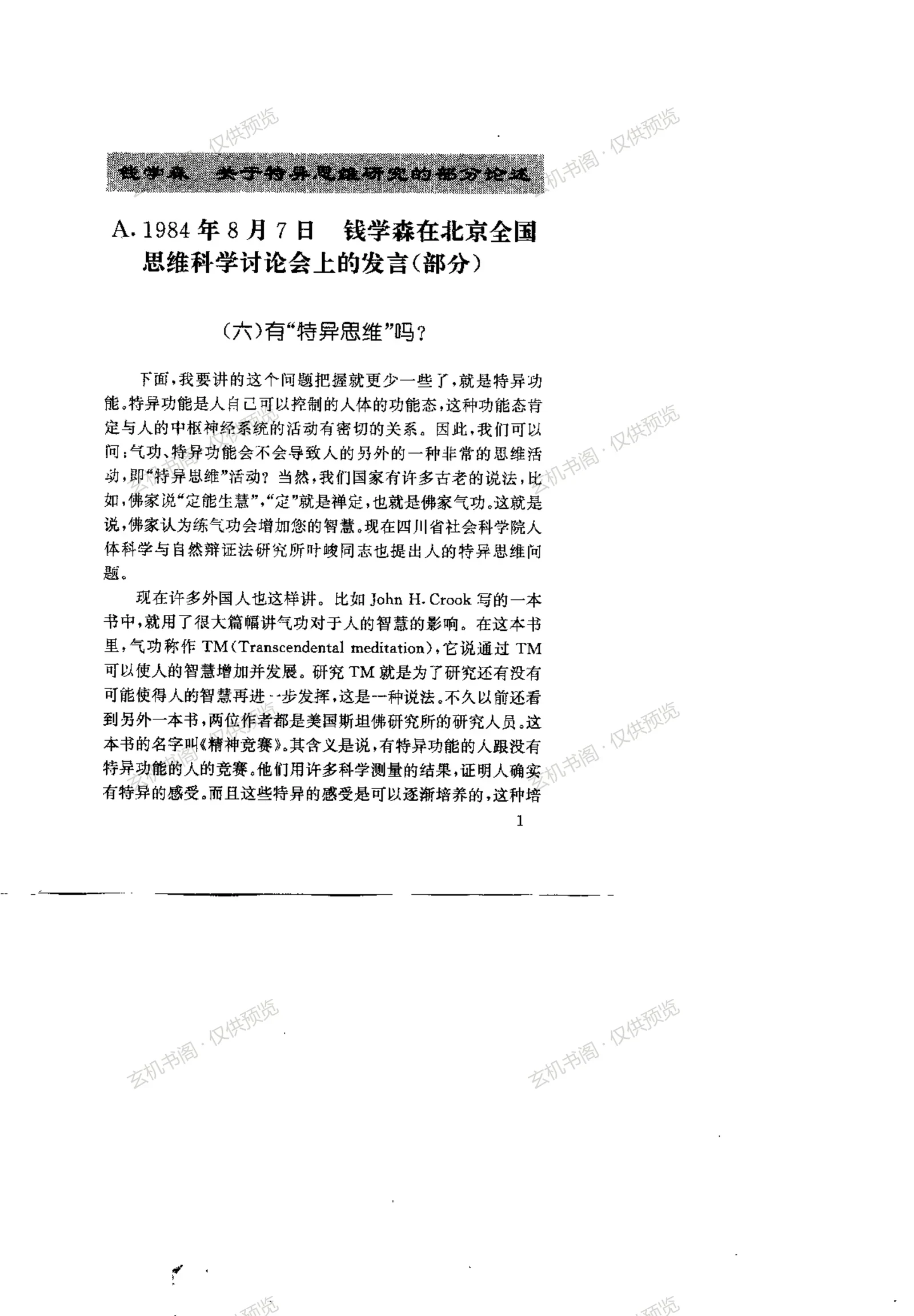
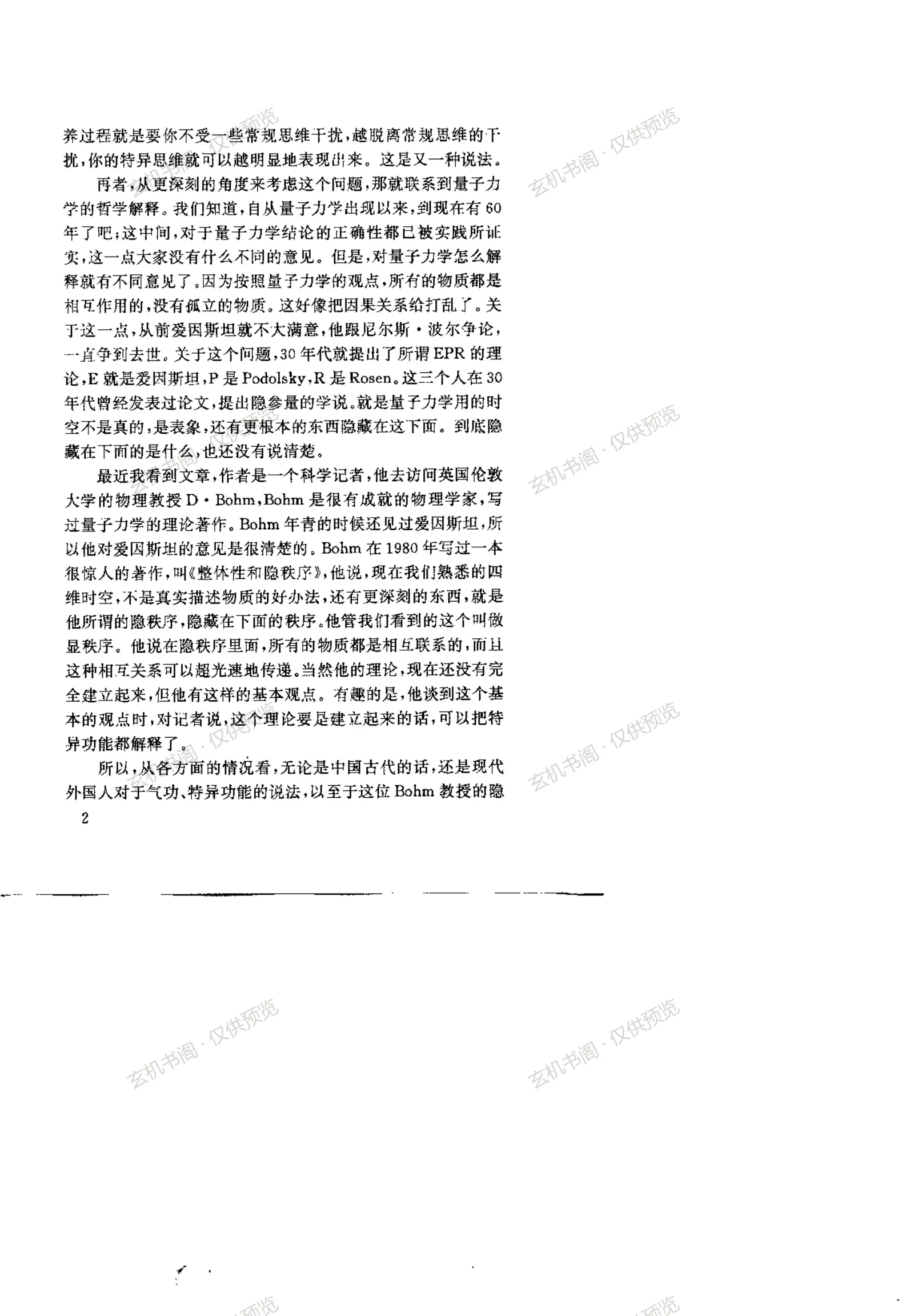
This book centers on 'exceptional thinking' as an emerging interdisciplinary field, combining human science and thinking science in line with Qian Xuesen's theory of human functional states. The content introduction states that the book systematically discusses the concept, nature, content, tasks, history, current status, progress, and methods of exceptional thinking. Drawing on philosophy, somatics, thinking science, physiology, and physics, it classifies and examines exceptional perception, exceptional calculation, thought transmission, exceptional painting and calligraphy, and exceptional photography. It concludes with theoretical hypotheses, physiological mechanisms, logical-mathematical analysis, and ideas for disciplinary construction. The publication note mentions Ye Jun's long-term research in human science, and the book includes Qian Xuesen's 1984 speech on 'exceptional thinking,' touching on qigong, TM meditation, quantum mechanics, hidden order, and Bohm's theories.
Contents
Content introduction and publication note
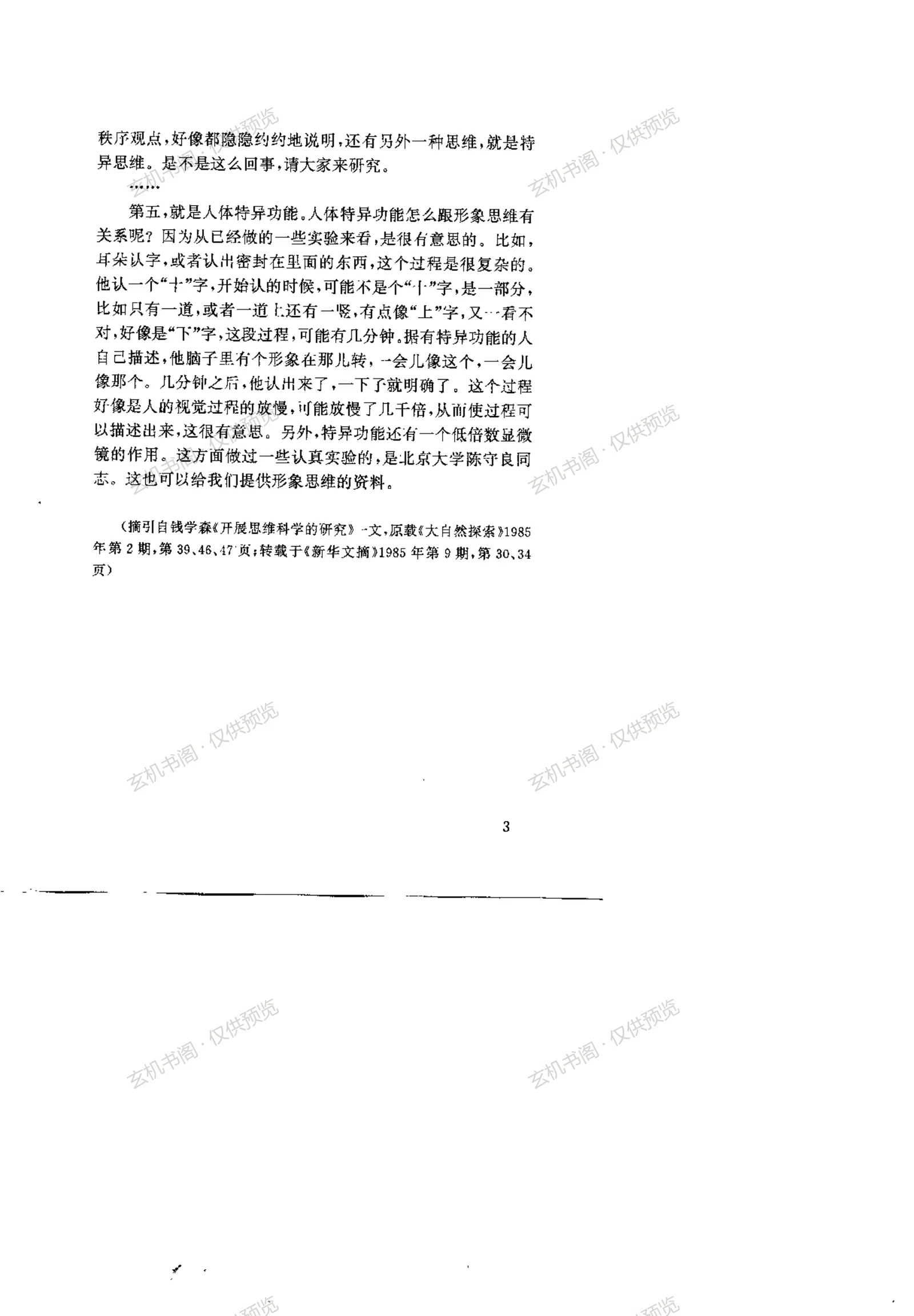
Qian Xuesen on 'exceptional thinking'
Concept and nature of exceptional thinking
Classification of exceptional perception and thought transmission
Exceptional calculation and exceptional painting
Theoretical hypotheses and physiological mechanisms
Ideas for disciplinary construction
Key Points
Uses Qian Xuesen's theory of human functional states as its starting point
Treats exceptional thinking as an intersection of human science and thinking science
Classifies exceptional perception, exceptional calculation, and thought transmission
Quotes Qian Xuesen's 1984 speech on qigong and exceptional function
Discusses quantum mechanics, hidden order, and Bohm's theory
Intended for readers in human science, thinking science, philosophy, and social science