Reading guide
Content guideOverview
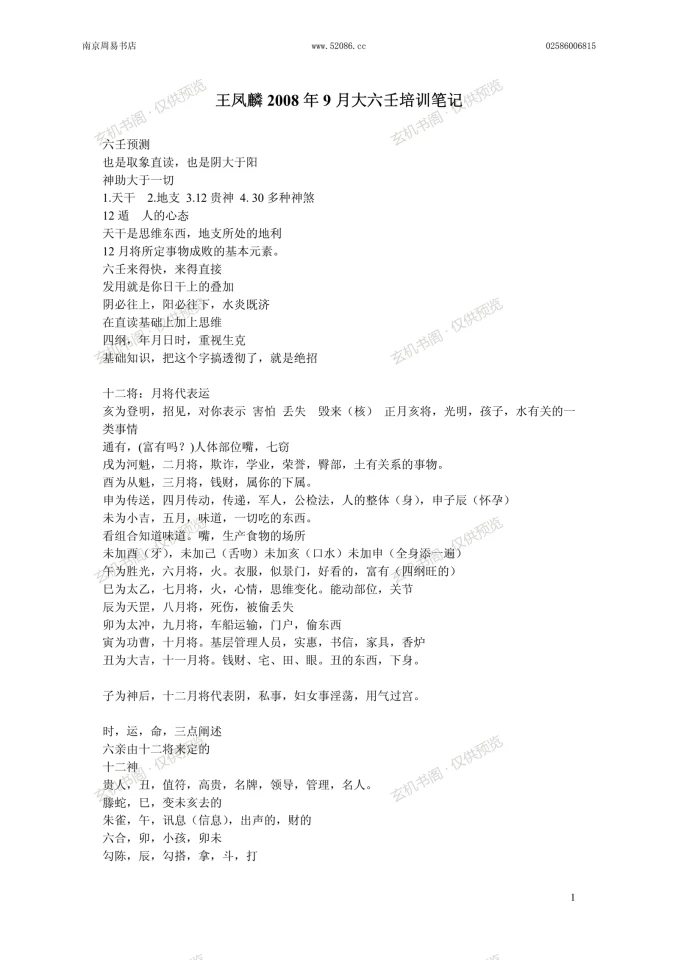
These are classroom notes from Wang Fenglin's November 2008 Daoist Da Liu Ren course. The opening stresses that understanding deity concepts and symbolic meanings comes before chart judgment, and compares Liu Ren with Qi Men: Liu Ren has more spirits and finer concepts, making it stronger for reading a person's mindset and details, while Qi Men excels at spatial layout; combining both improves feng shui work. The text uses examples of branch combinations to judge cooperation, bankruptcy, and timing, discusses spirits such as Sky, Vermilion Bird, Hook Chen, and Azure Dragon in relation to money, lawsuits, health, and the 'moving stars' technique, then explains the twelve generals from Hai to Zi one by one, ending with the twelve spirits including Nobleman, Flying Serpent, and Six Harmony. The colloquial style and dense examples suit readers with basic Liu Ren knowledge.
Contents
Opening: spirits and symbols first; Liu Ren vs. Qi Men
Combinations: Liu He, Yin-Hai, and timing judgment
Spirit imagery: Sky, Vermilion Bird, Hook Chen, Azure Dragon
Diao Ke, moving stars, and space-time prediction
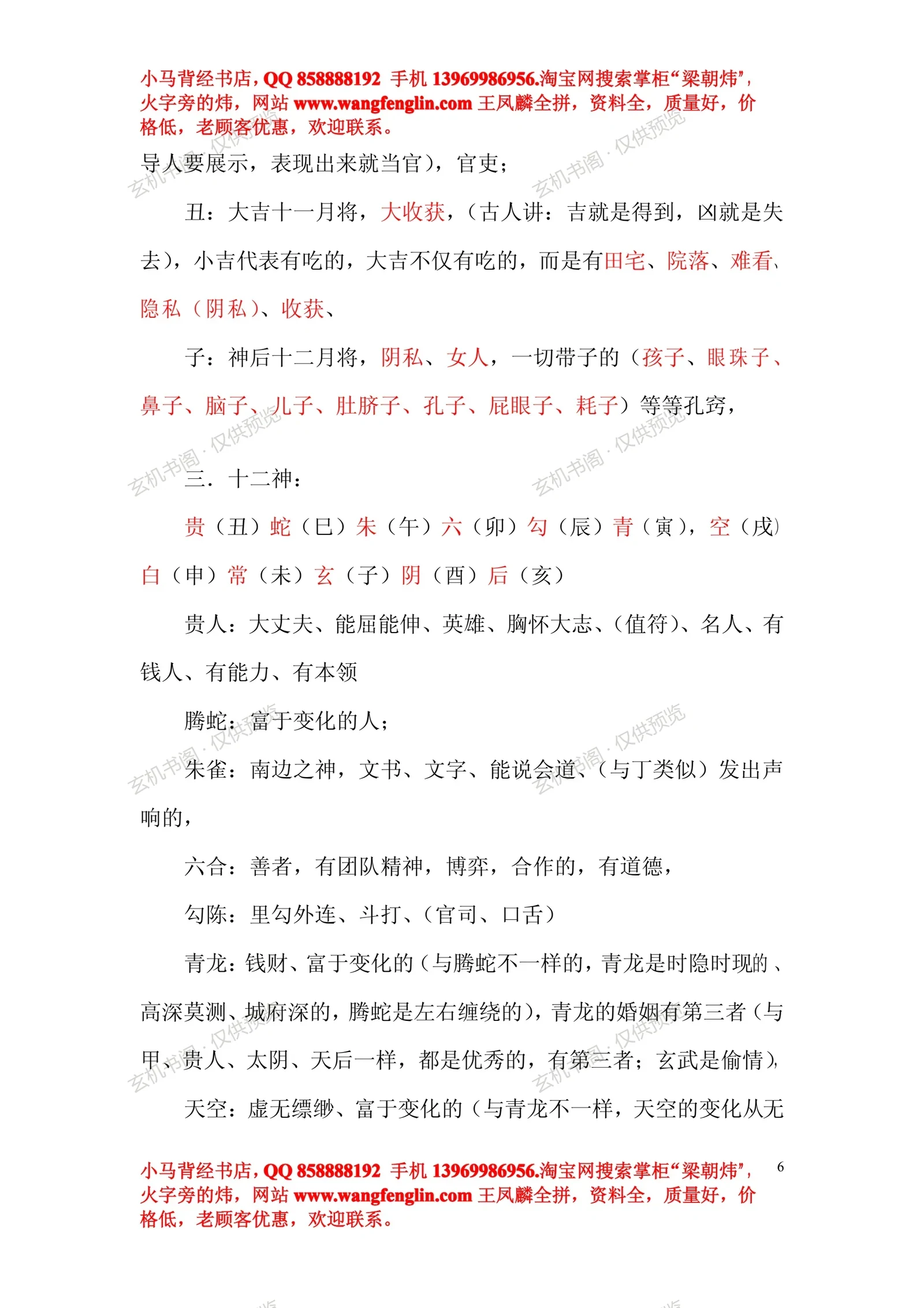
Twelve generals explained: Hai through Zi
Twelve spirits: Nobleman, Flying Serpent, Six Harmony, etc.
Key Points
Understand deity concepts and symbols before judging charts
Liu Ren has many spirits and fine detail, complementing Qi Men
Combination relations reveal cooperation outcomes and timing
Spirits plus generals read wealth, lawsuits, and health
Each of the twelve generals has a name and core imagery to memorize