Reading guide
Content guideOverview
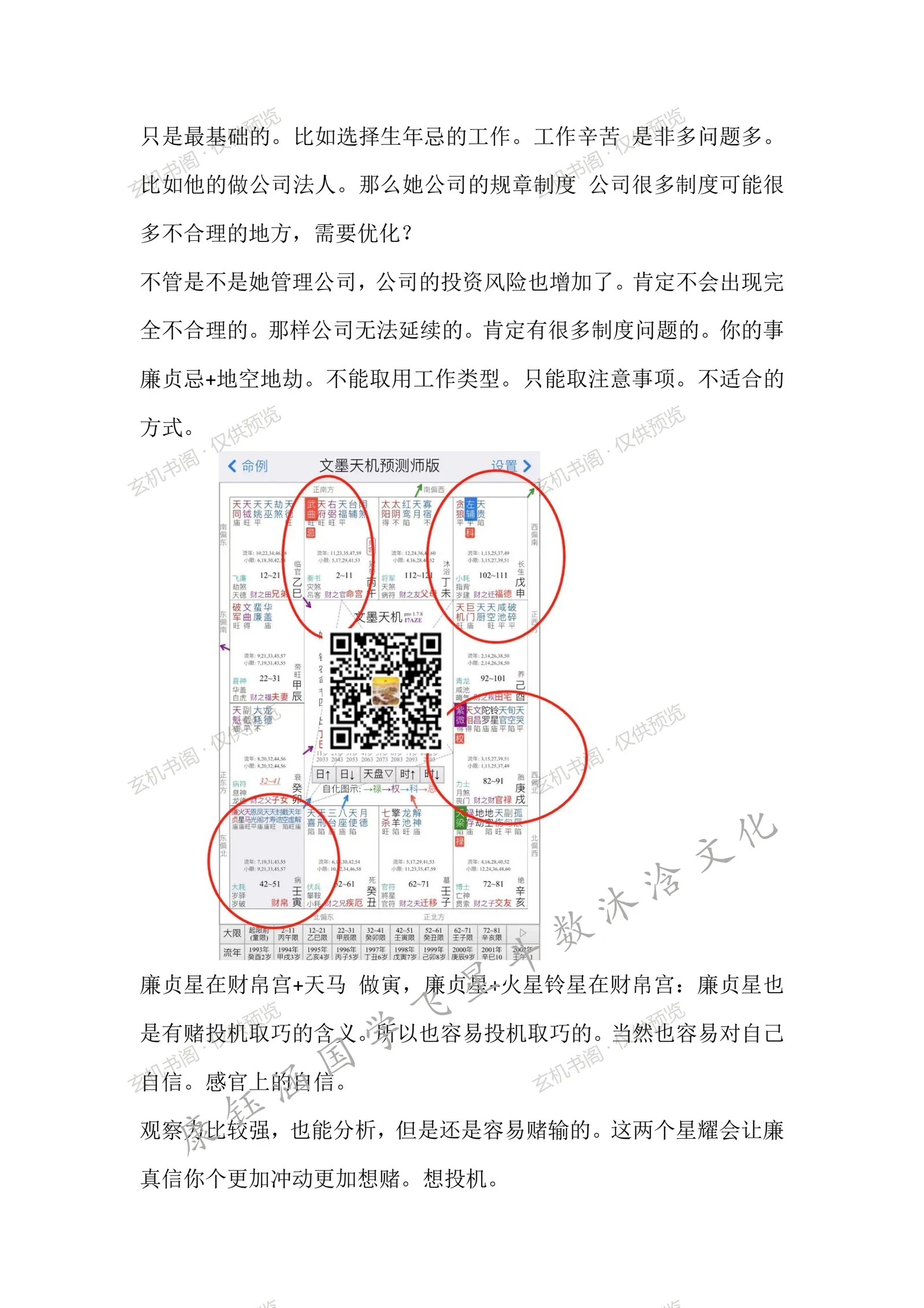
This is one lesson from a beginner Zi Wei Dou Shu course, titled “7.5 Lianzhen, the Indirect Wealth Star.” It first separates the direct wealth star (Wuqu) from the indirect wealth stars (Pojun, Lianzhen, Tanlang), then focuses on how Lianzhen in the Wealth Palace makes money: through social charm, aesthetic design, performance, cultural transmission and e-commerce, administrative rules and service fees. Sample charts show that Lianzhen meeting the six auspicious stars, Tianxiang and peach-blossom stars (Hongluan, Tianyao, Xianchi, Tianyue) supports income from popularity, fans and clients. When Lianzhen meets Dikong, Dijie, Hua Ji, Yang, Tuo, Huo or Ling, the text warns of debt, failed investments, legal and regulatory trouble, and advises against blind speculation or acting as a legal representative. The tone is spoken lecture style with chart screenshots.
Contents
Direct wealth vs. indirect wealth stars
Six ways Lianzhen in the Wealth Palace earns money
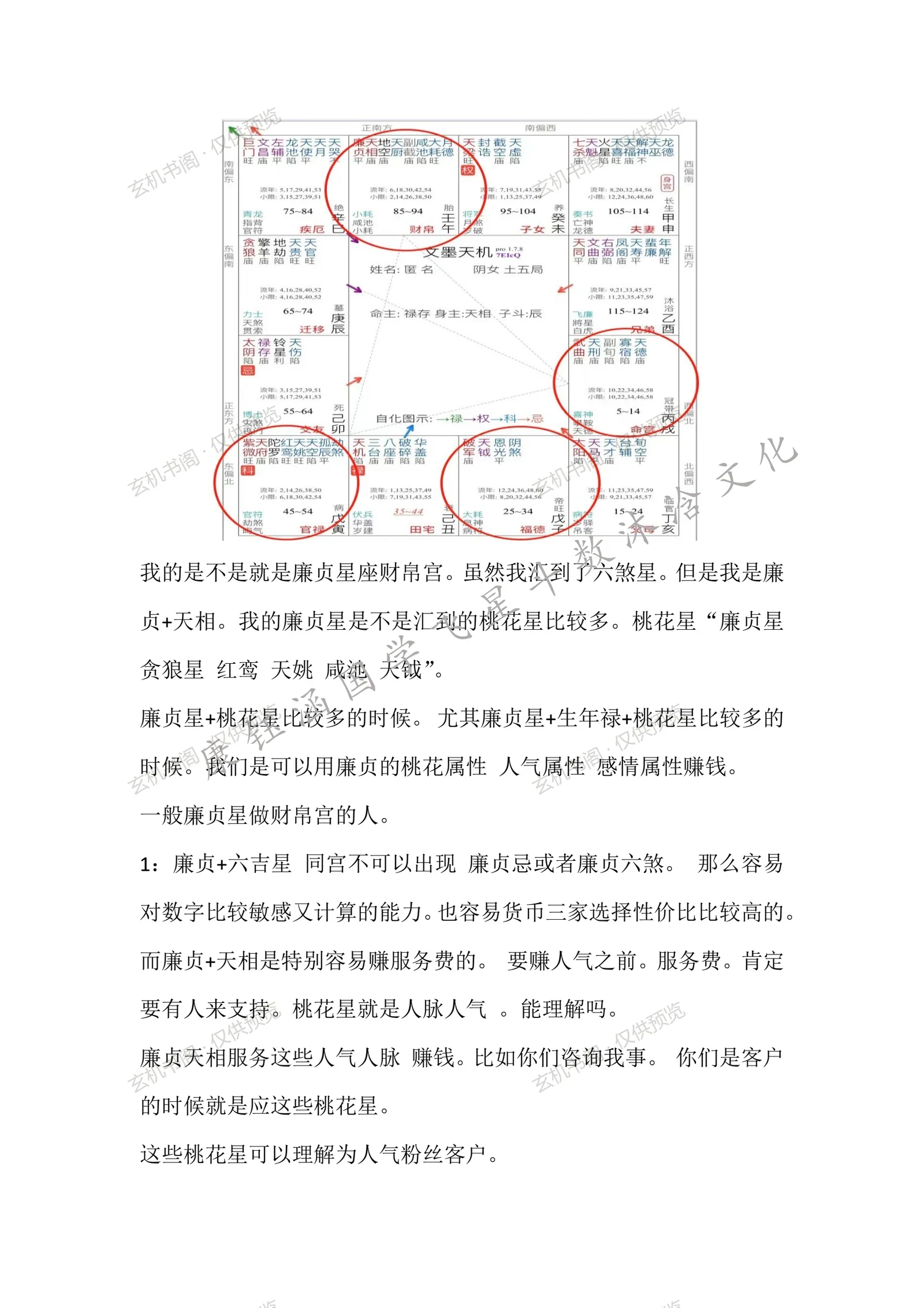
Lianzhen with auspicious stars, Tianxiang and peach blossoms
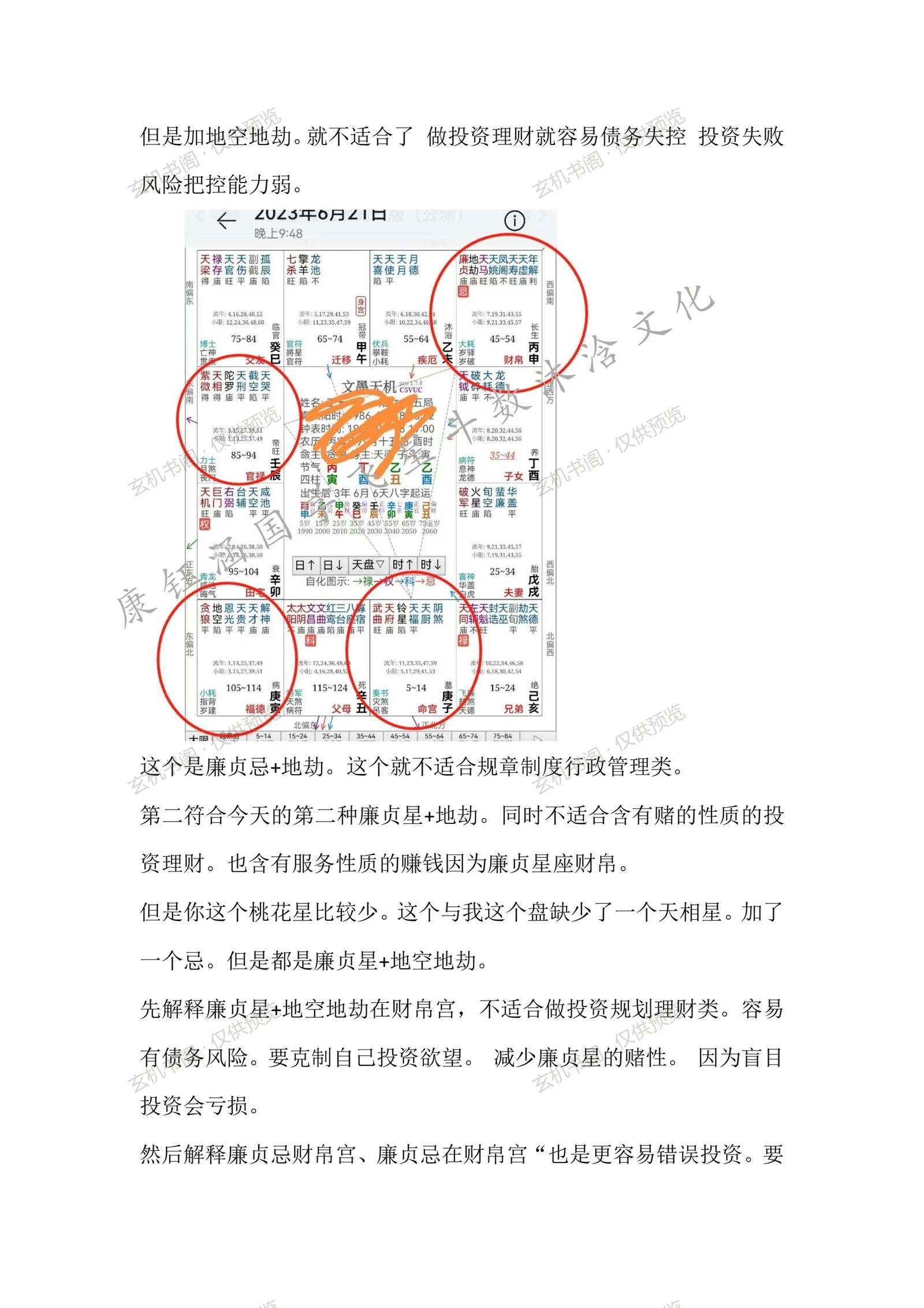
Lianzhen with Dikong and Dijie: debt and risk
Lianzhen Hua Ji with malefics: legal risk and legal person
Lianzhen with Huo and Ling: speculation and overconfidence
A caution against reading a single star in one palace
Key Points
Indirect wealth stars are Pojun, Lianzhen and Tanlang; Wuqu is the direct wealth star.
Lianzhen in the Wealth Palace earns through socializing, aesthetics, performance, media, rules and service fees.
With Tianxiang and peach-blossom stars, it profits from popularity, fans and clients.
With Dikong, Dijie or Hua Ji, it risks debt and failed investments.
With Yang, Tuo, Huo, Ling or Tianxing, it should be careful with regulations and legal roles.