Reading guide
Content guideOverview
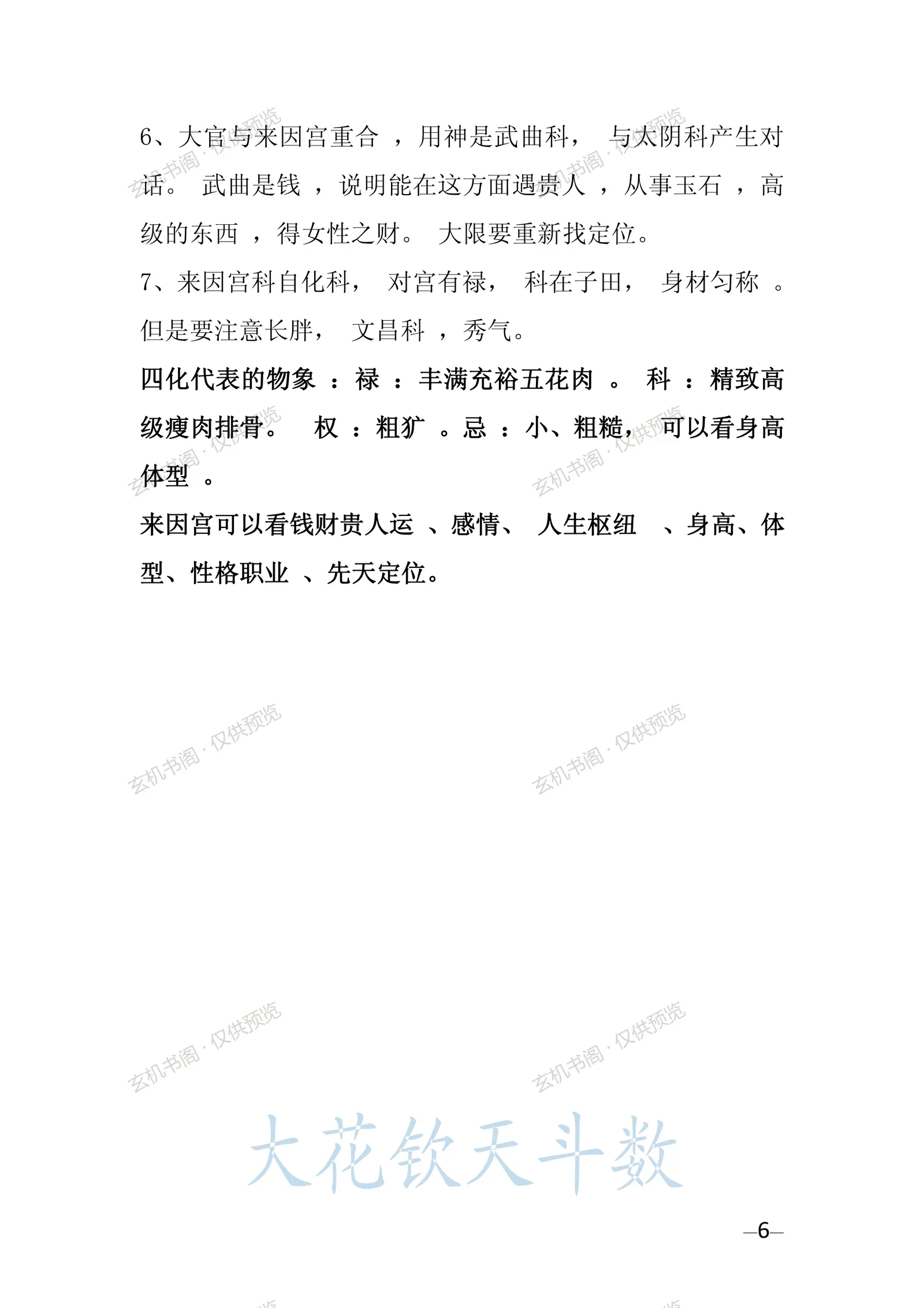
This handout is Lesson 4 of the Dahua Qintian Advanced Class on Zi Wei Dou Shu. It focuses on the Lai Yin Palace, which is divided into three sources: parents, self, and marriage, and is said to be the first place to look when reading a chart. The lecture explains how the Lai Yin Palace functions when it falls in different palaces such as siblings, children, health, friends, property, and parents, and discusses the inner and outer six palaces, the significance of Hua Ji inside or outside, and the imagery of Lu, Quan, Ke, and Ji in relation to money, people, emotions, career, and body type. Three chart screenshots are used as case studies, showing how the Lai Yin Palace and the four transformations are applied to specific charts. The material is a lecture note for advanced students and assumes prior familiarity with Zi Wei Dou Shu basics.
Contents
Three sources of the Lai Yin Palace and reading order
Lai Yin in the six yin and six yang palaces
Chart quality when Hua Ji is inside or outside the six inner palaces
Imagery of Lu, Quan, Ke, and Ji by palace
Case 1: Lai Yin in siblings, female benefactor
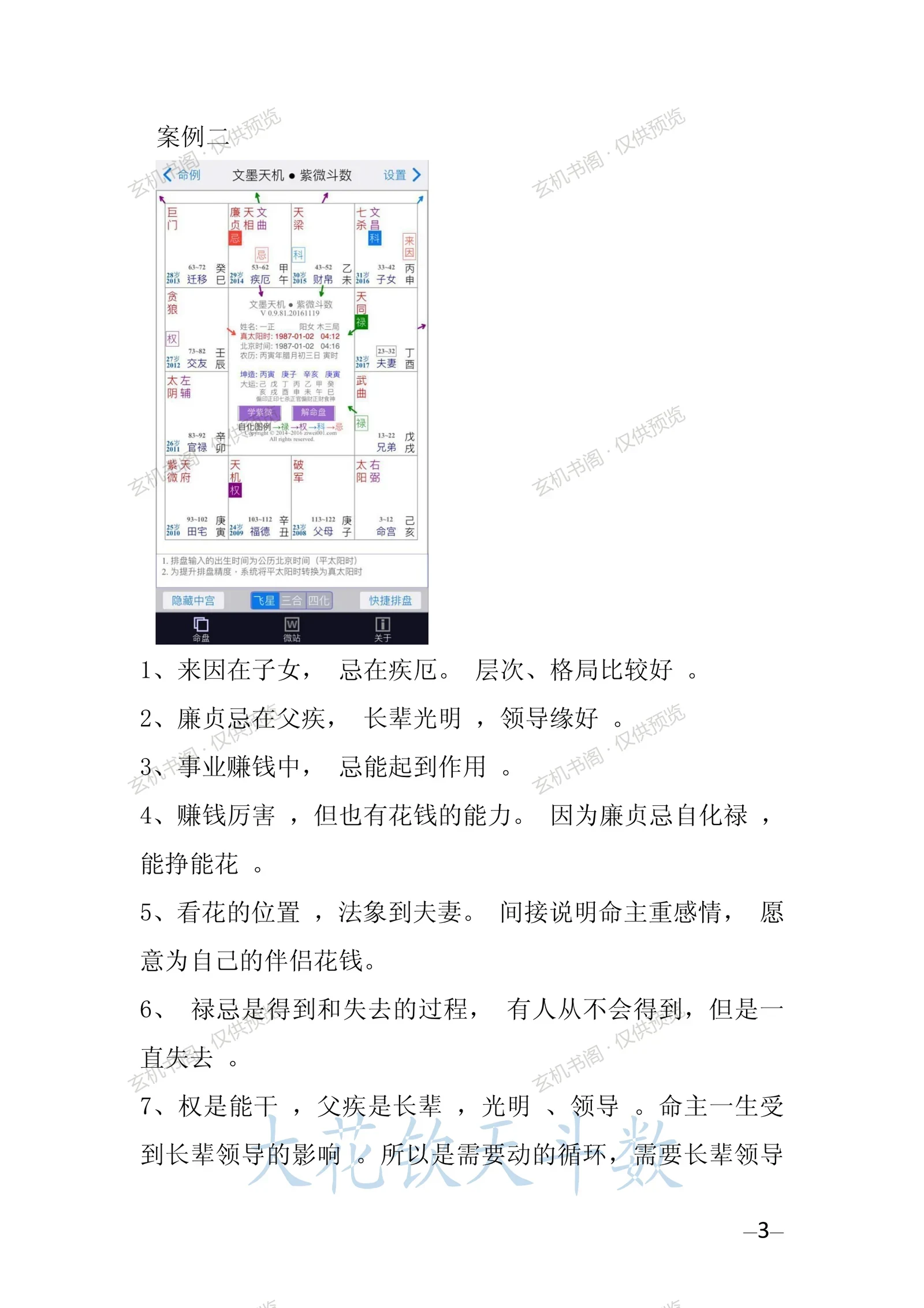
Case 2: Lai Yin in children, Lian Zhen Ji in parents and health
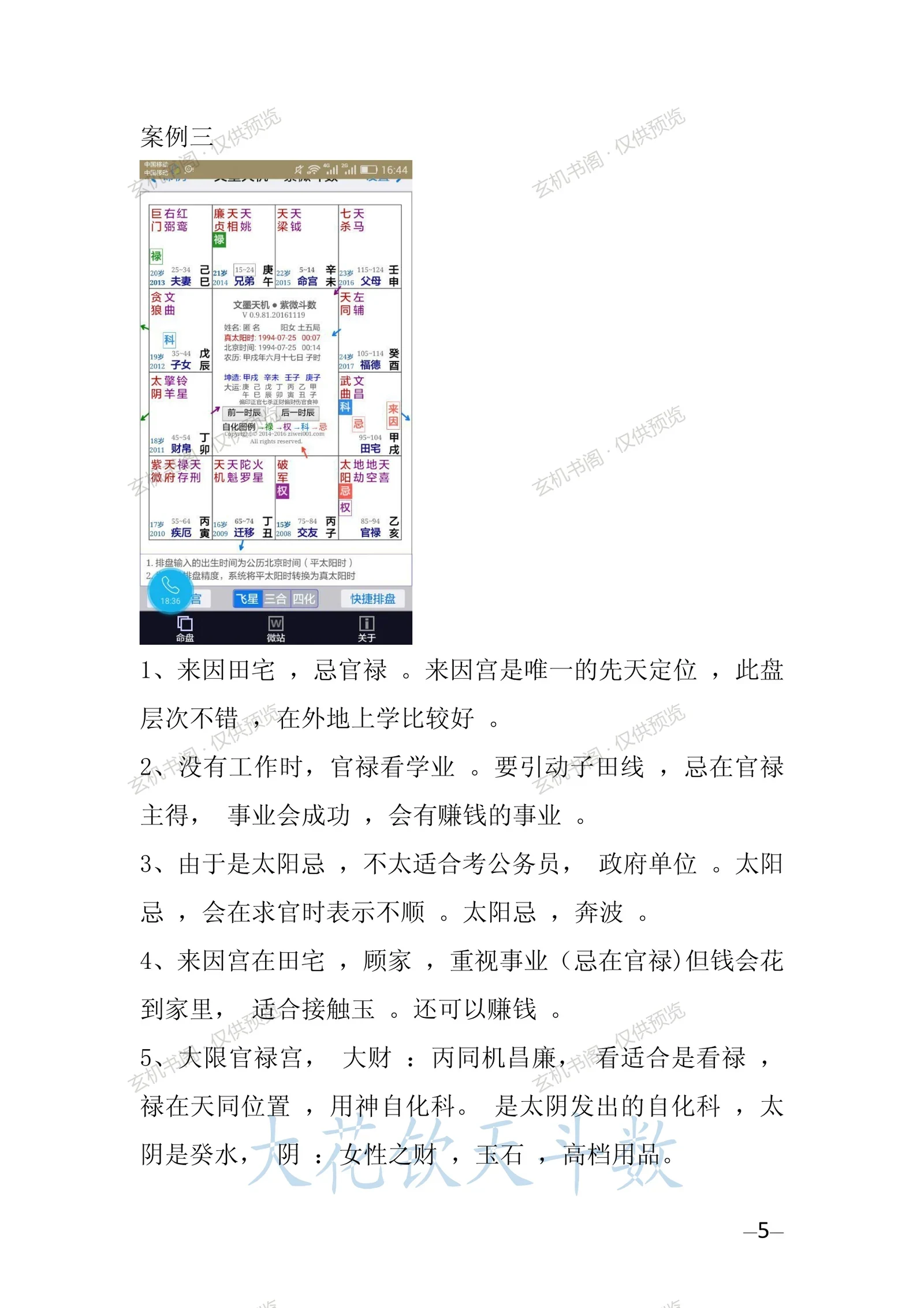
Case 3: Lai Yin in property, Tai Yang Ji in career
Key Points
Read the Lai Yin Palace first; it is categorized as parents, self, or marriage.
The six inner palaces are life, wealth, career, property, and fortune; Hua Ji inside is generally better.
Lu relates to wealth, Quan to people, Ke to objects, and Ji to objects, used to read personality and body type.
When the Lai Yin Palace is not activated, the palace position comes first; after activation, the birth-year four transformations matter most.
Case studies combine palace position, four transformations, and imagery to infer career, relationships, and money.