Reading guide
Content guideOverview
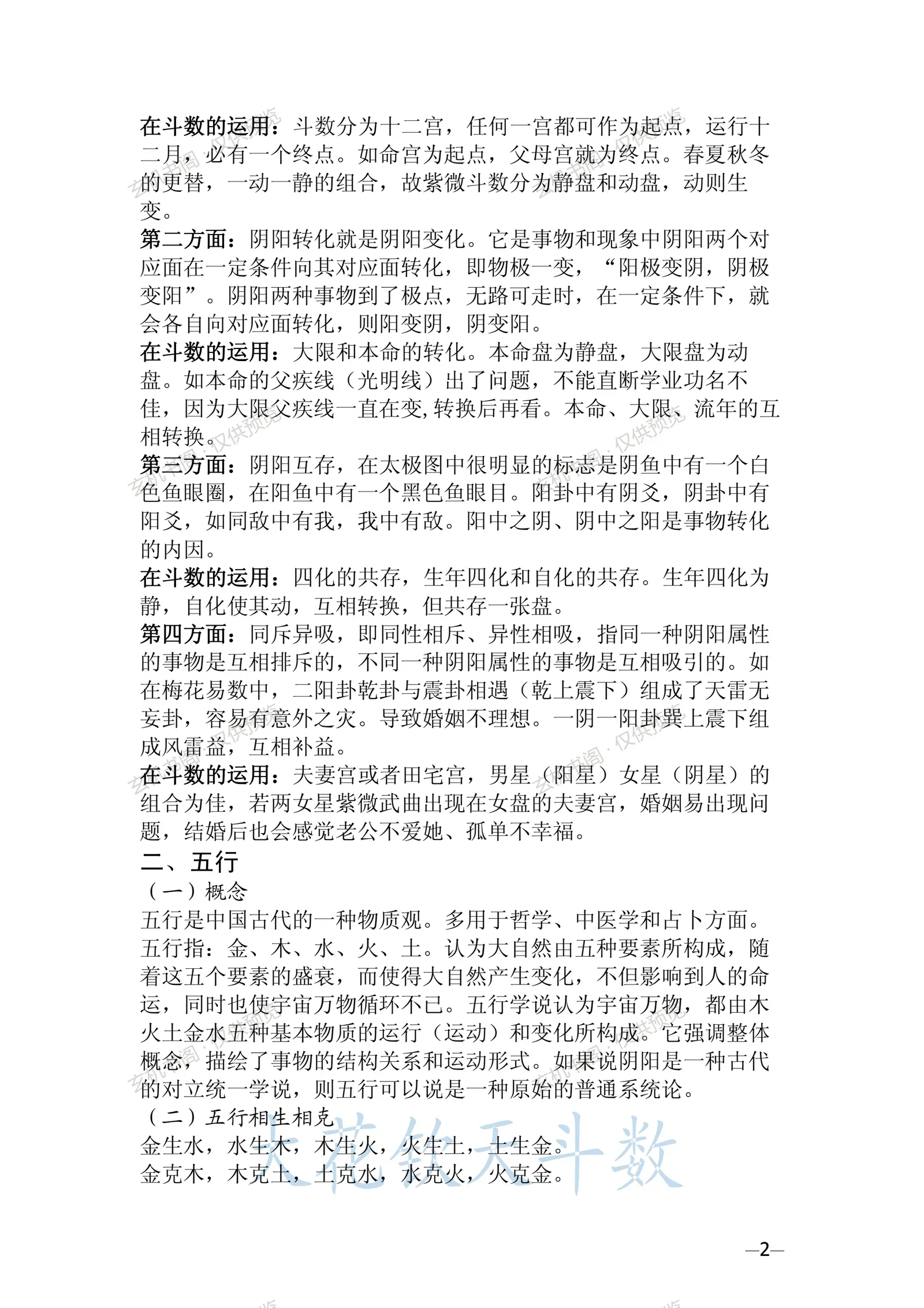
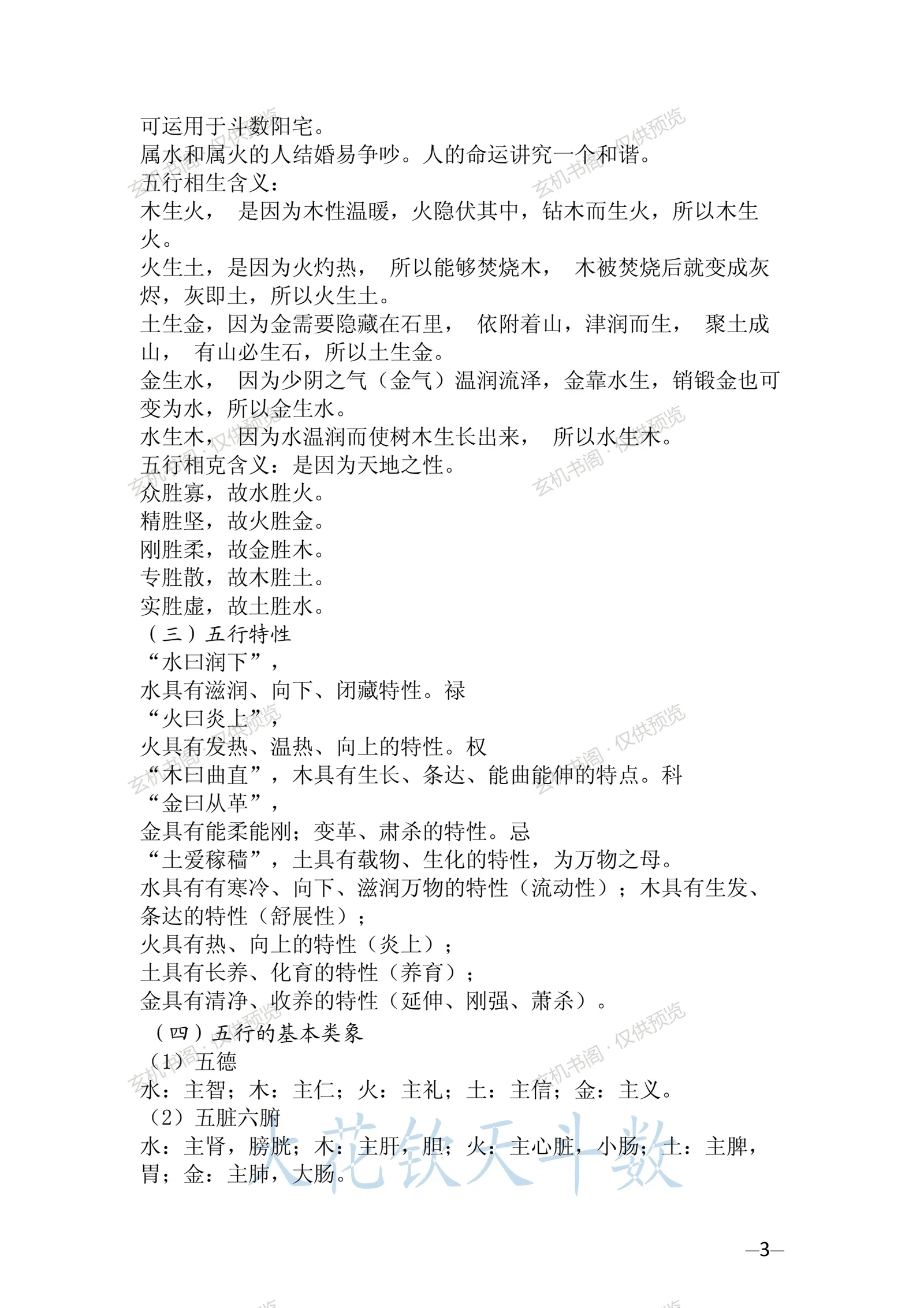
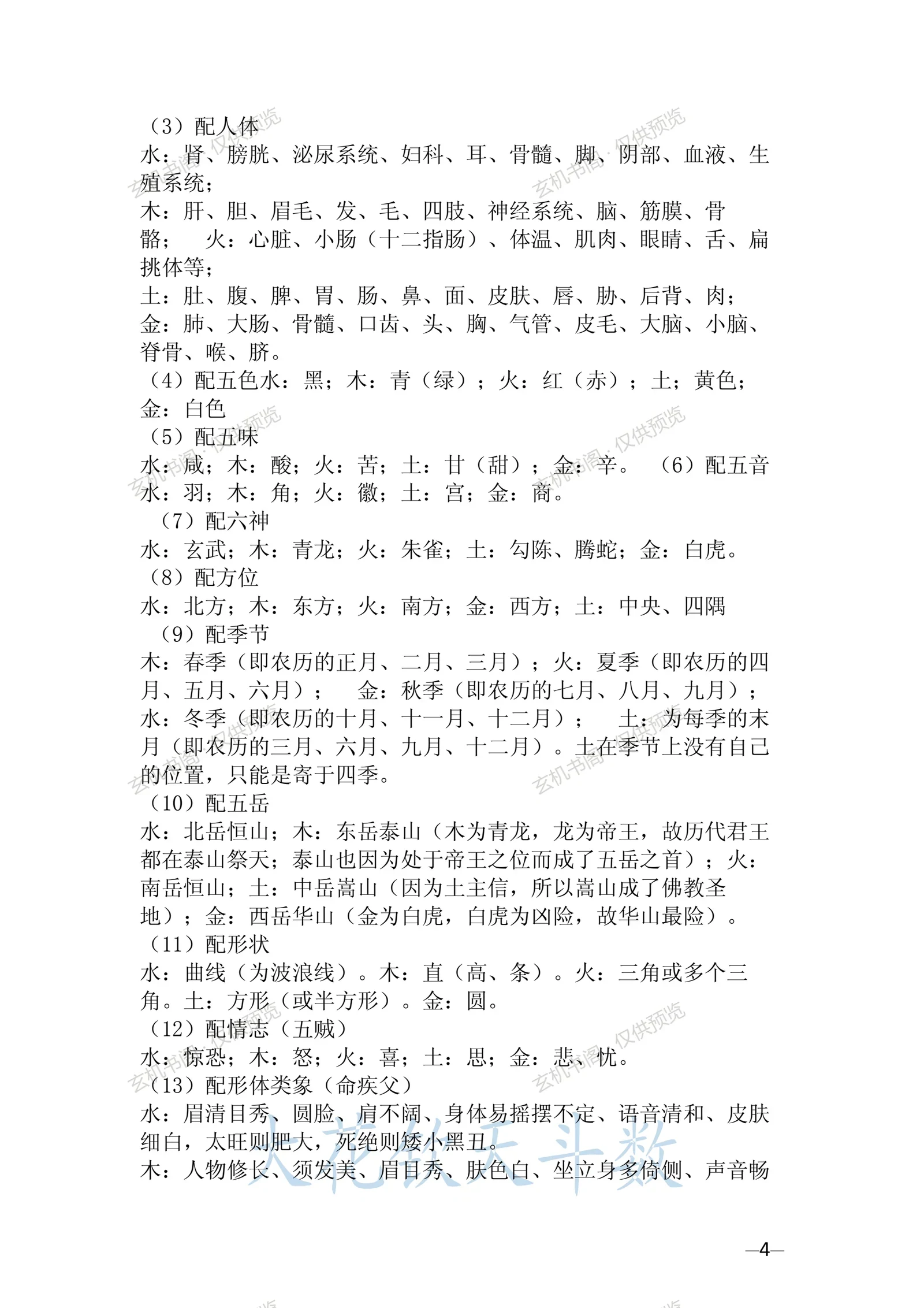
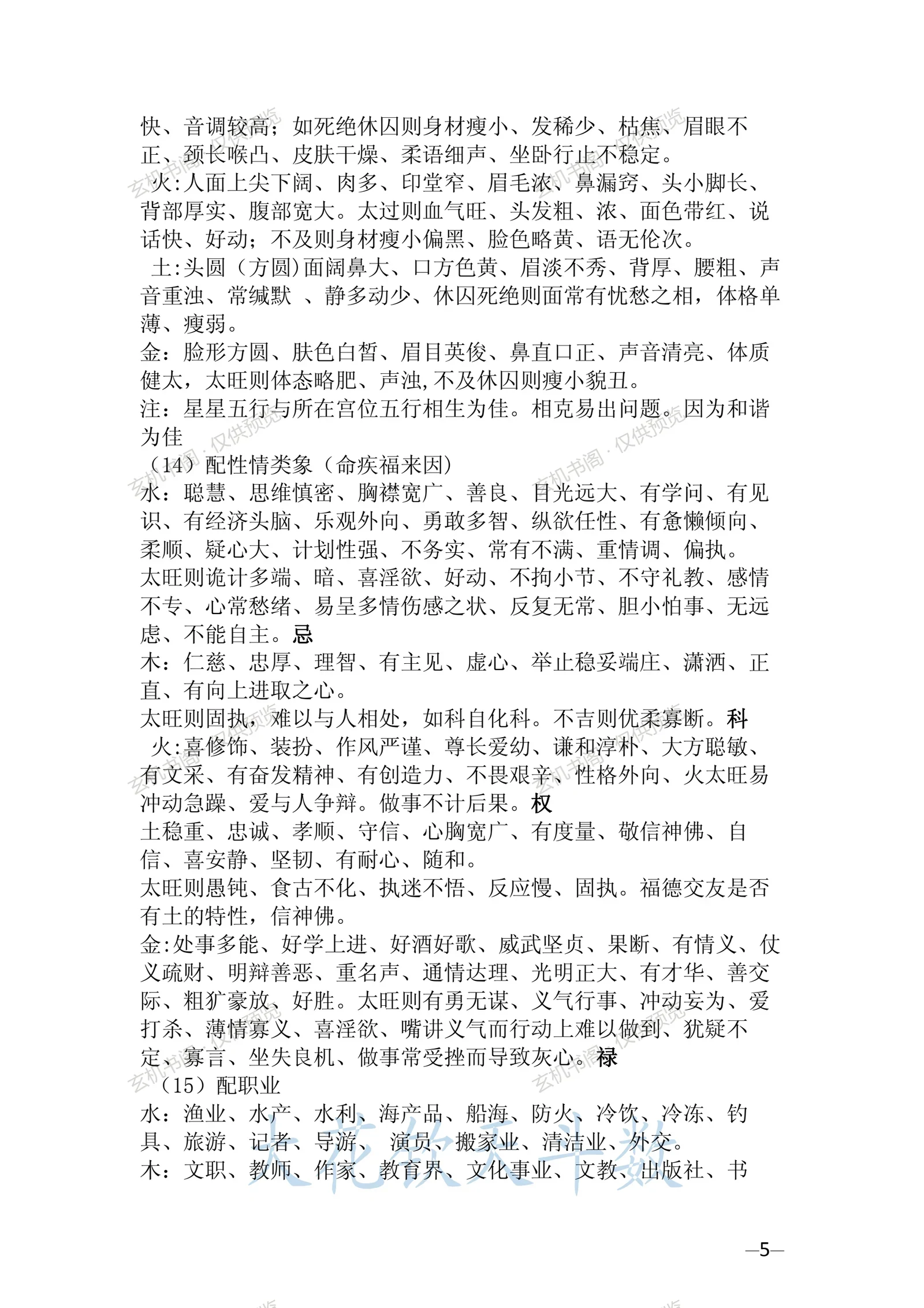
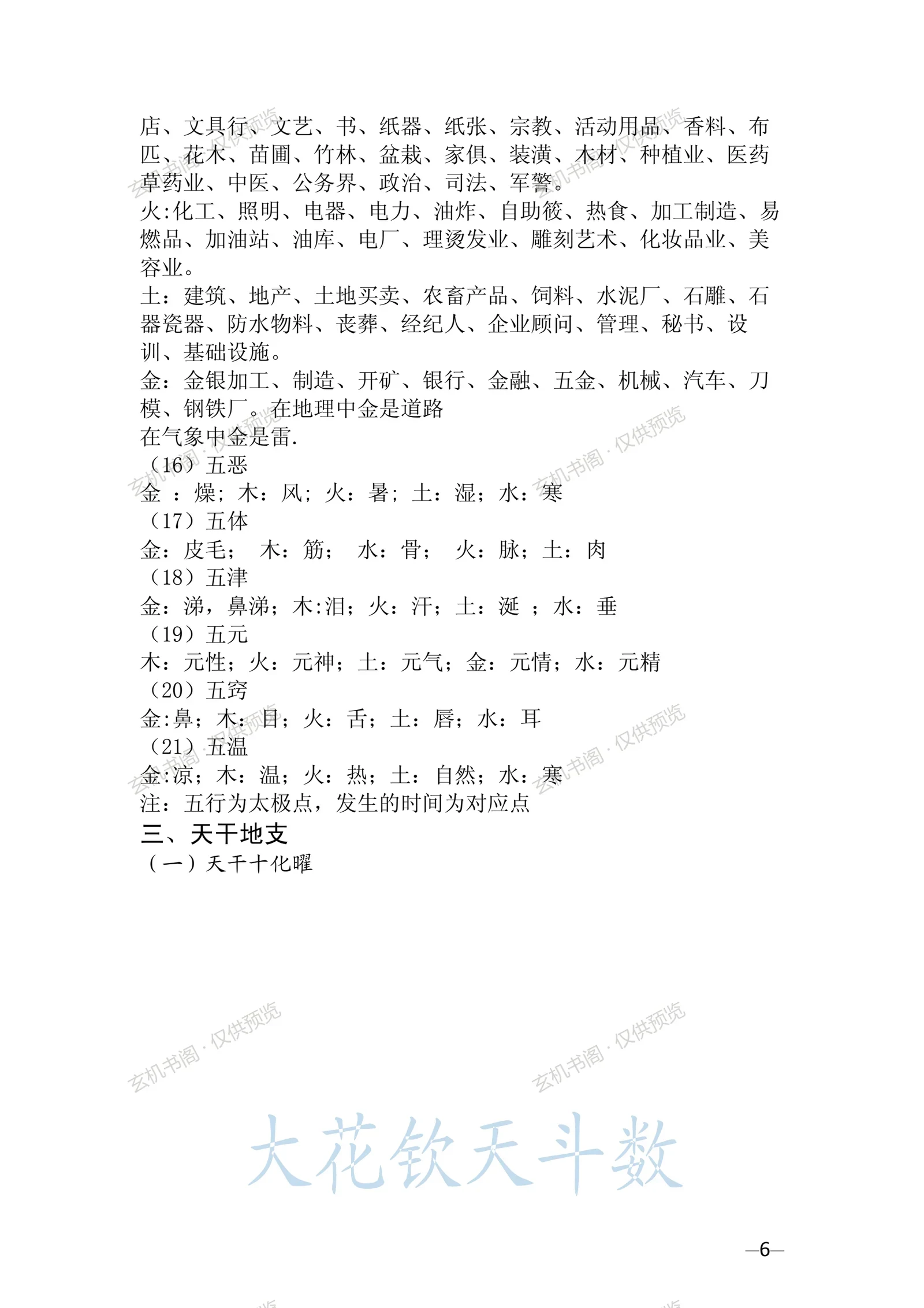
This six-page handout is the first lesson of the Dahua Qintian advanced class on Zi Wei Dou Shu. Section one defines yin and yang, citing the Daodejing and Taiji Tushuo, then explains four aspects—growth and decline, transformation, mutual coexistence, and same-repels/different-attracts—and how they apply to static and dynamic charts, the transition between natal, decade, and annual charts, and the coexistence of birth-year and self-transformations. Section two covers the five elements: their concept, generative and overcoming cycles with physical explanations, their core qualities, and over twenty categories of correspondences including virtues, organs, colors, tastes, sounds, six spirits, directions, seasons, mountains, shapes, emotions, body types, personalities, occupations, and more. Section three opens with the ten heavenly stems and their transformed luminaries. The material is list-based and suited to readers with prior Dou Shu background.
Contents
Yin-yang: concept and classical sources
Four applications of yin-yang in Dou Shu
Five elements: concept and cycles
Qualities and correspondences of the five elements
Heavenly stems and transformed luminaries (opening)
Key Points
Yin-yang is central to Dou Shu, analyzed through four aspects.
Natal chart is static, decade chart dynamic; they must be read in conversion.
Generating and overcoming cycles are explained with concrete reasoning.
Five-element correspondences span virtues, organs, colors, careers, and more.
A star's element should ideally generate, not overcome, its palace element.