Reading guide
Content guideOverview
This is the second lesson of a feng shui teaching handout, focusing on the concepts of house sectors (fangfen) and Taiji in form-school feng shui. The first half explains why siblings living in the same house may have different fortunes, introducing the idea that the dragon side, tiger side, bright hall, and back mountain correspond to the eldest, third, and second siblings respectively. It also notes principles for determining sibling order, such as separating males and females and excluding miscarriages. The second half introduces the Taiji diagram, distinguishing clockwise (zhengxing) and counterclockwise (nixing) rotations, and assigns yang to the dragon side and back mountain, yin to the tiger side and bright hall. The strength of these yin-yang pairs determines whether a house is fundamentally auspicious or inauspicious. The content is visual and intuitive, suitable for readers with basic feng shui knowledge, though the mapping between sibling order and spatial sectors requires careful application to specific floor plans.
Contents
Concept of house sectors and sibling differences
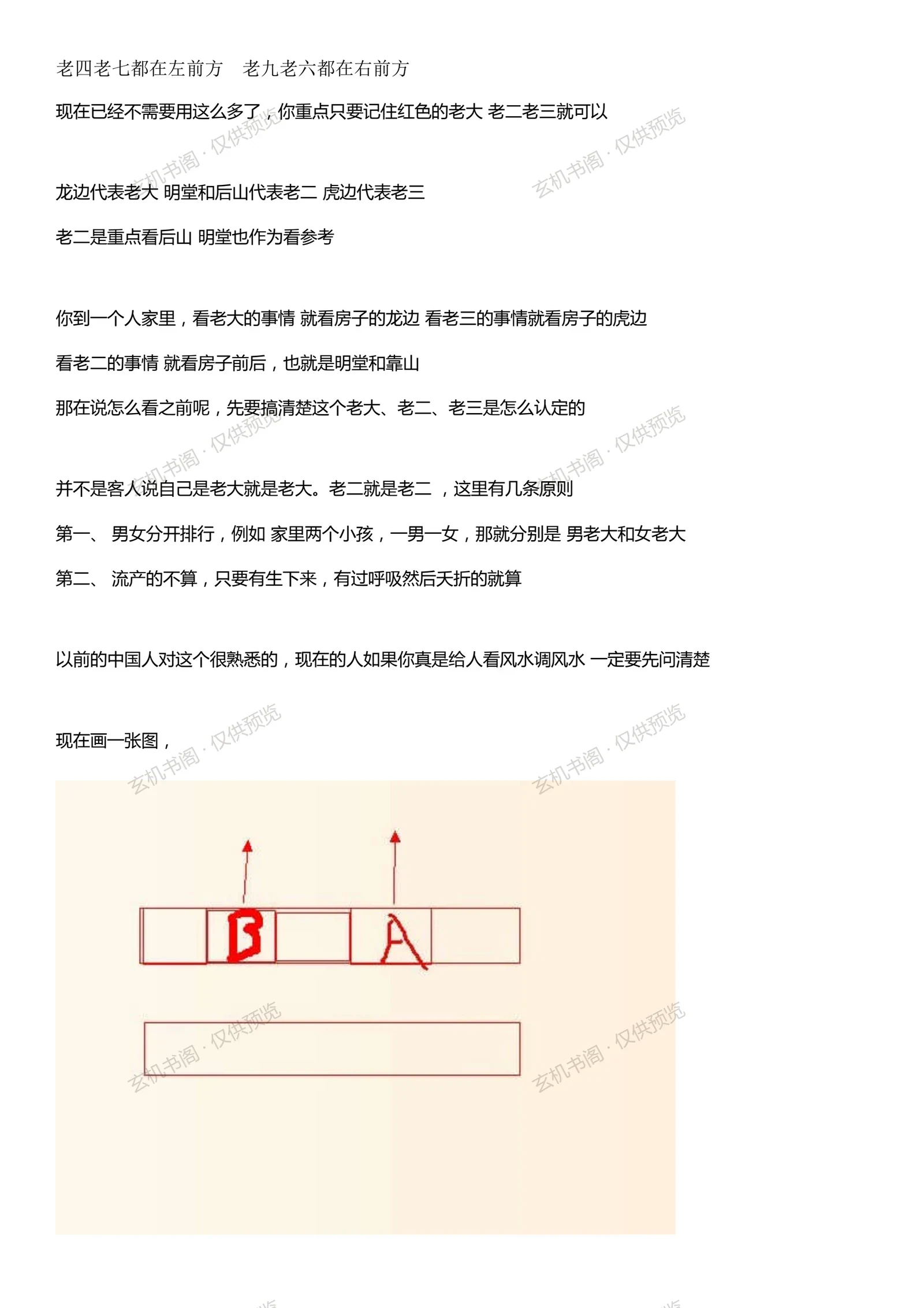
Dragon side, tiger side, bright hall, back mountain and sibling order
Principles for determining sibling order
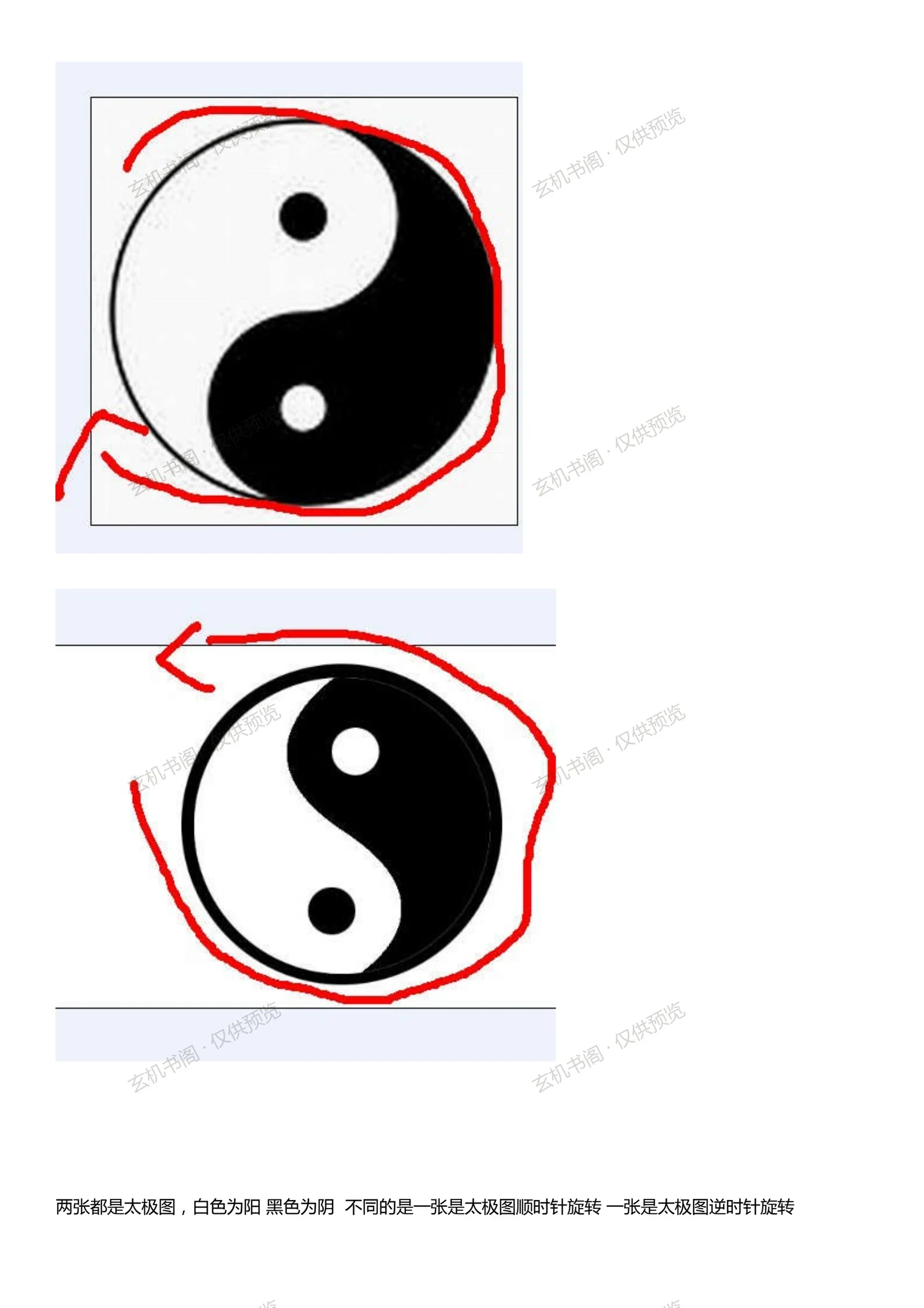
Taiji clockwise and counterclockwise
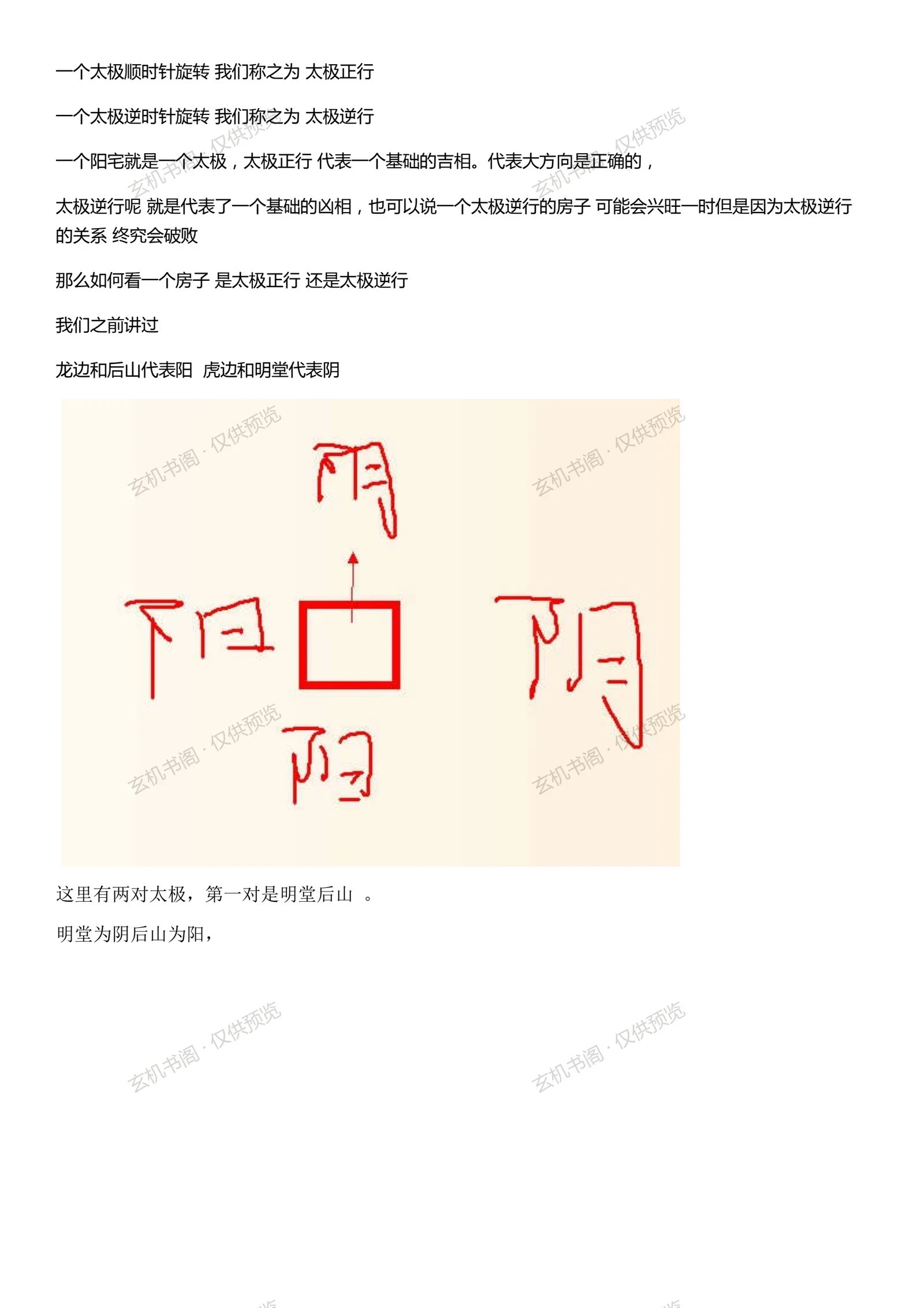
Yin-yang division: dragon/back as yang, tiger/hall as yin
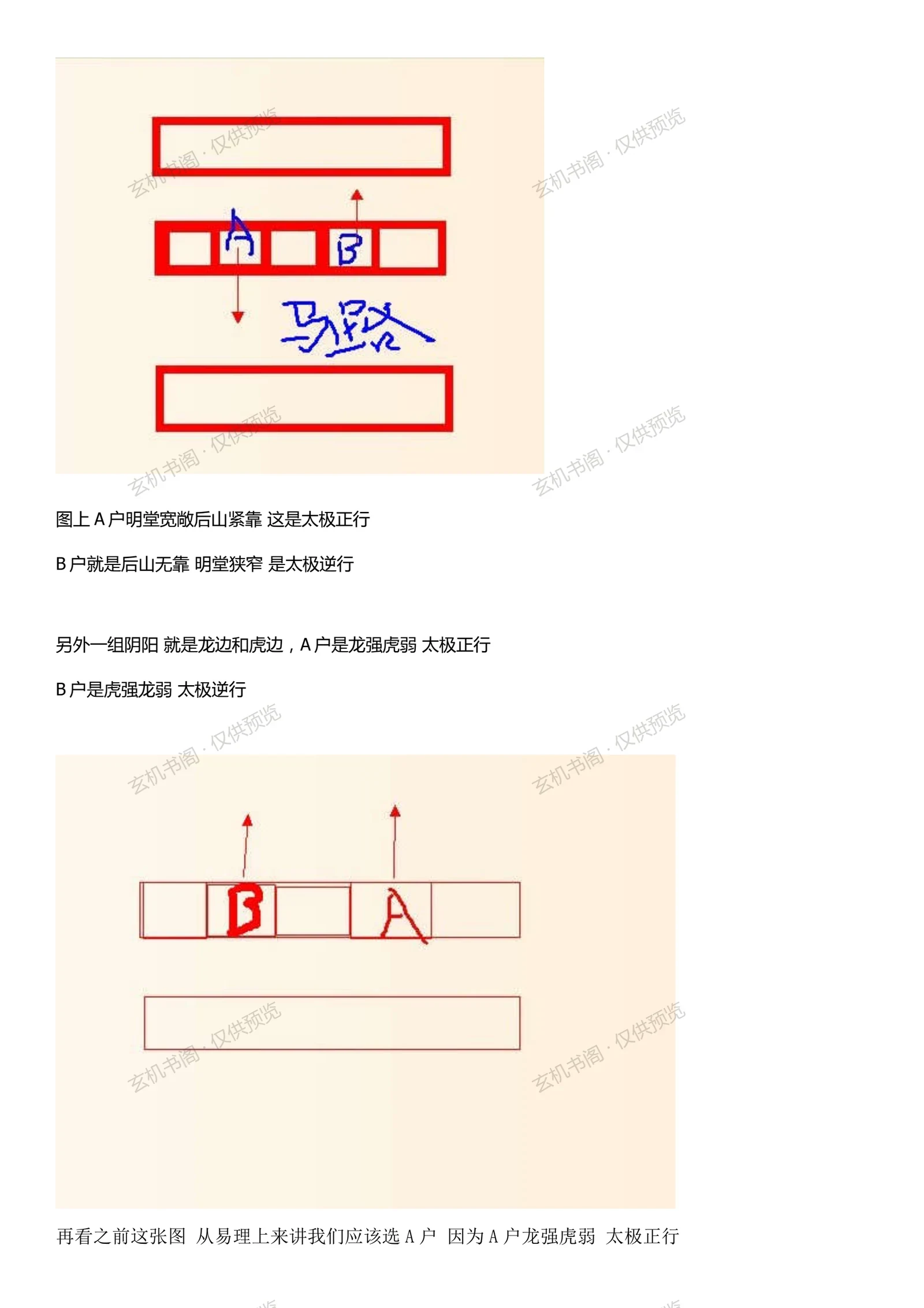
Judging auspiciousness by strength of yin-yang pairs
Key Points
Dragon side represents the eldest, bright hall and back mountain represent the second, tiger side represents the third.
Sibling order is counted separately for males and females; miscarriages are excluded, but infant deaths count.
Taiji clockwise indicates basic auspiciousness; counterclockwise indicates basic inauspiciousness.
Dragon side and back mountain are yang; tiger side and bright hall are yin. Their relative strength determines the Taiji rotation.
Form-school judgments must consider the whole layout, not isolated diagrams.