Reading guide
Content guideOverview
This document is the handout for the third lesson of a feng shui course. It falls within theform school (xingfa) of yang-dwelling feng shui and focuses on identifying dragon (left) and tiger (right) configurations and judging their auspiciousness. Through hand-drawn diagrams, the text demonstrates how dragon and tiger sides appear in advancing, retreating, stepped, U-shaped, and row-house layouts, and proposes methods for determining 'dragon crossing the hall' and 'tiger crossing the hall.' It also discusses how the relative strength of dragon and tiger affects the careers of male and female occupants, marital relations, and the reputation of shops and factories, with practical notes on avoiding tiger-strong configurations when placing beds. The material is a classroom lecture combining terminology with case examples; it is suitable as advanced form-school material but lacks a systematic table of contents and theoretical groundwork, requiring some prior knowledge to read smoothly.
Contents
Dragon-tiger advance and retreat: judging tiger advance and dragon retreat
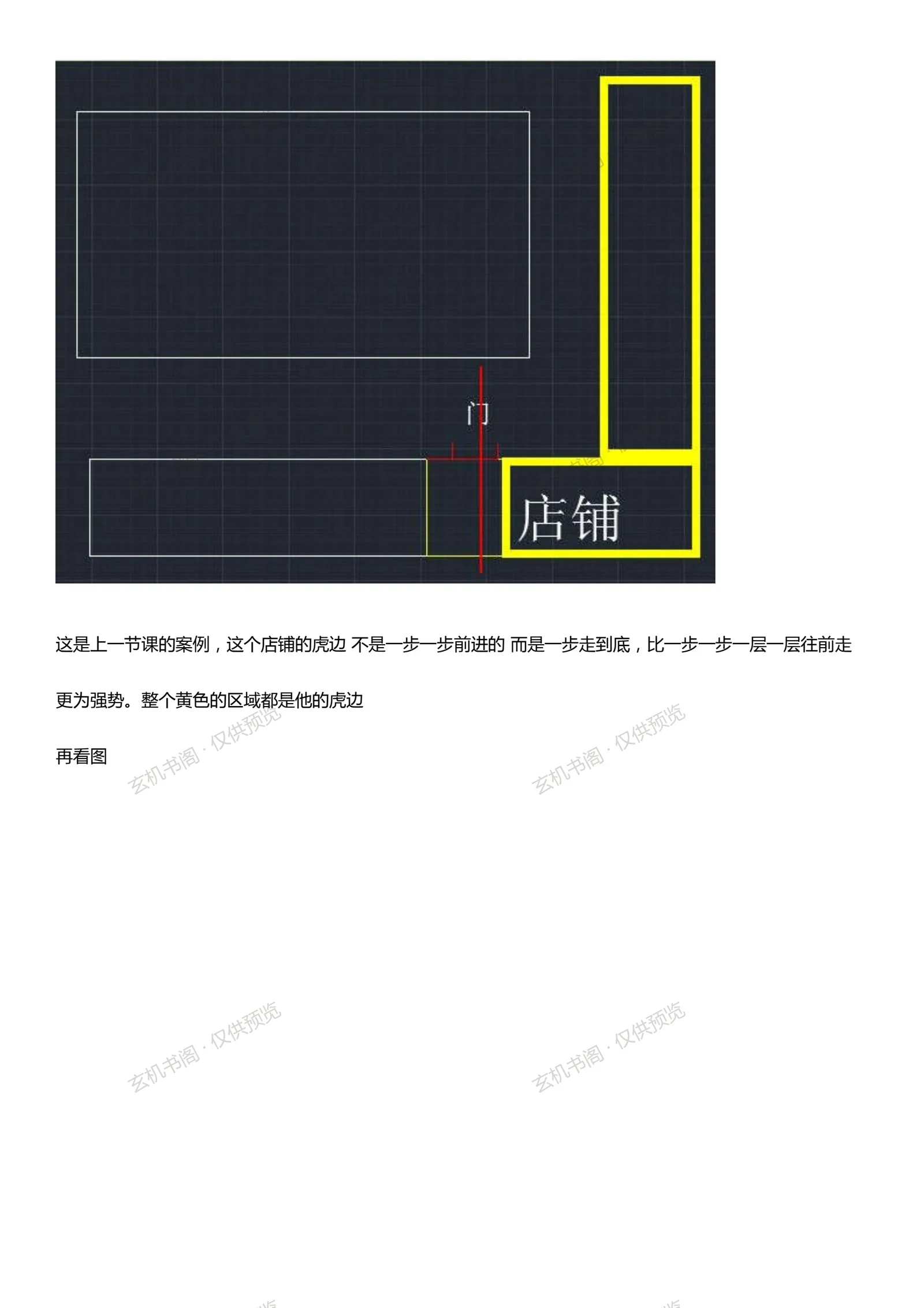
Case analysis: a shop's tiger side extending in one step is stronger
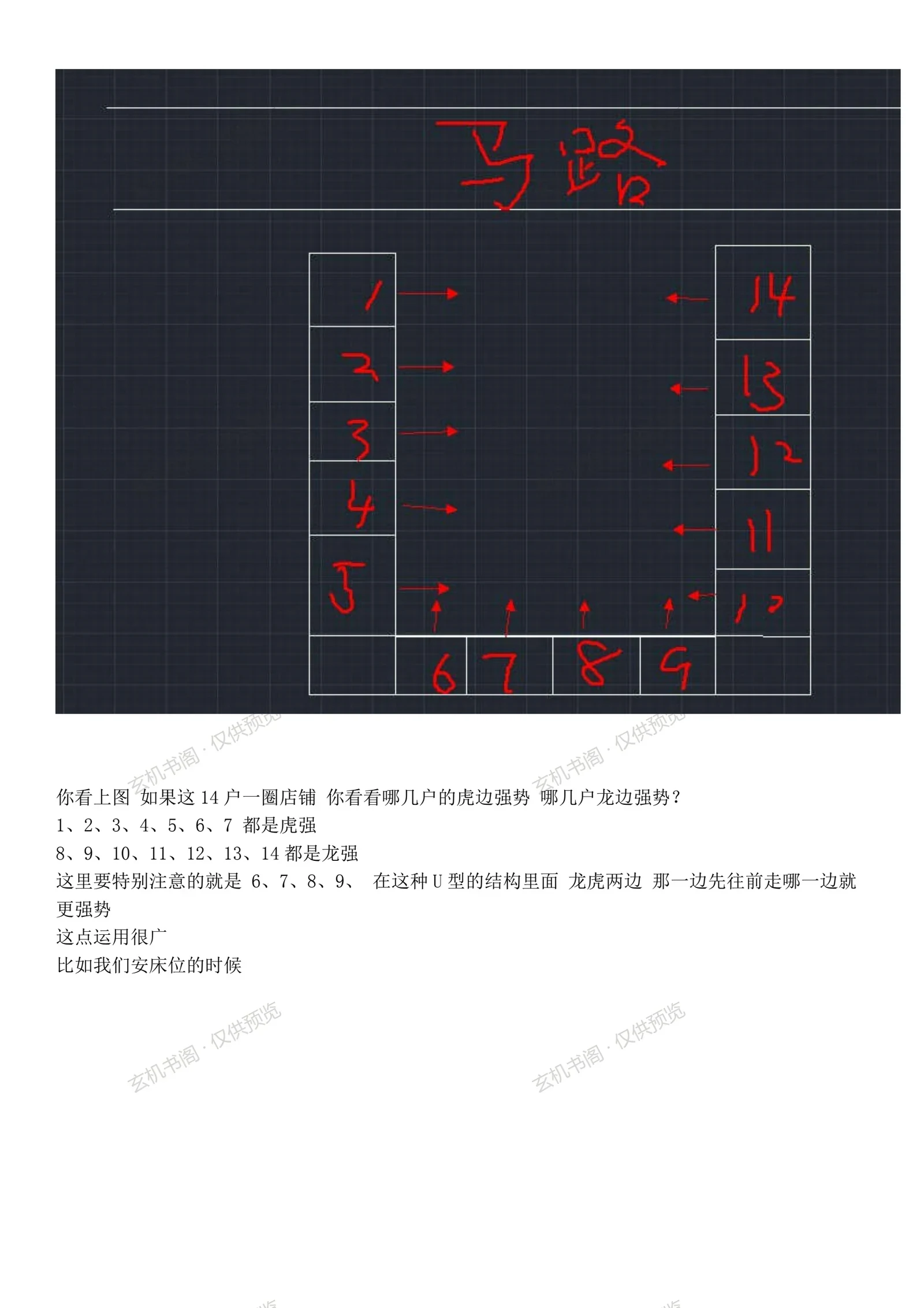
U-shaped row houses: first to advance is stronger, and bed placement principles
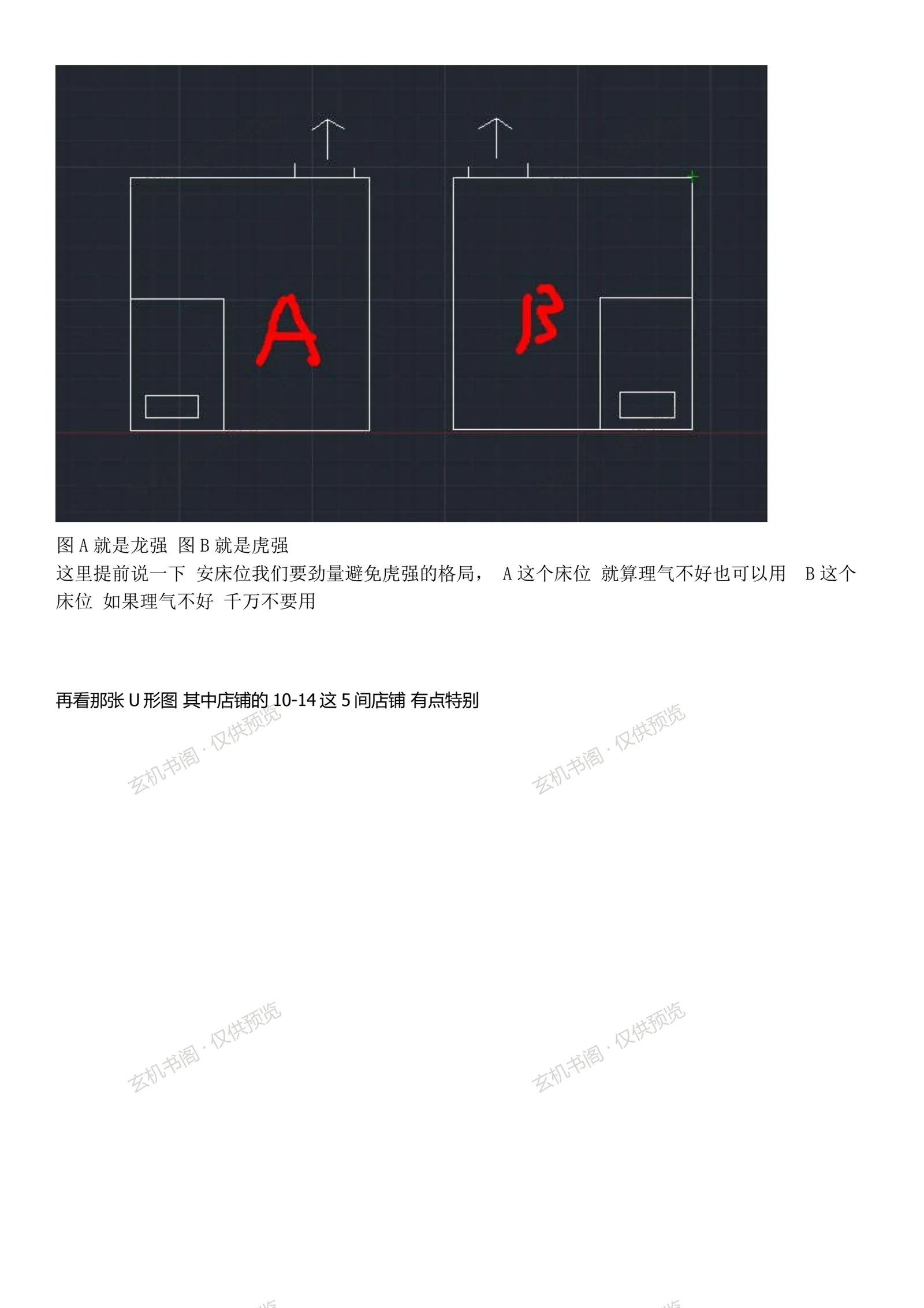
Identifying typical strong-dragon and strong-tiger diagrams
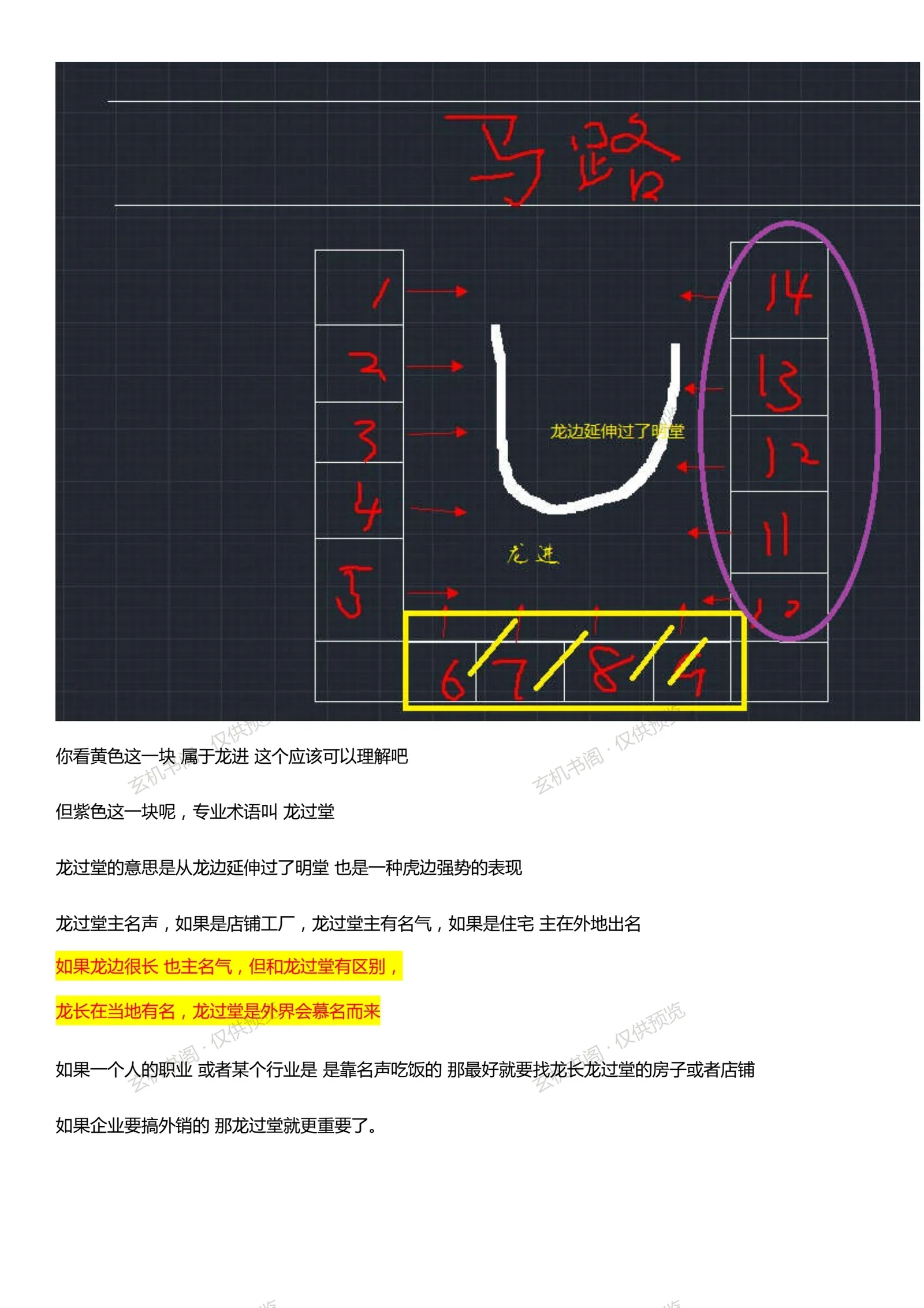
Dragon crossing the hall: dragon side extending past the bright hall and its auspicious effects
Tiger crossing the hall: inferring its many drawbacks in reverse
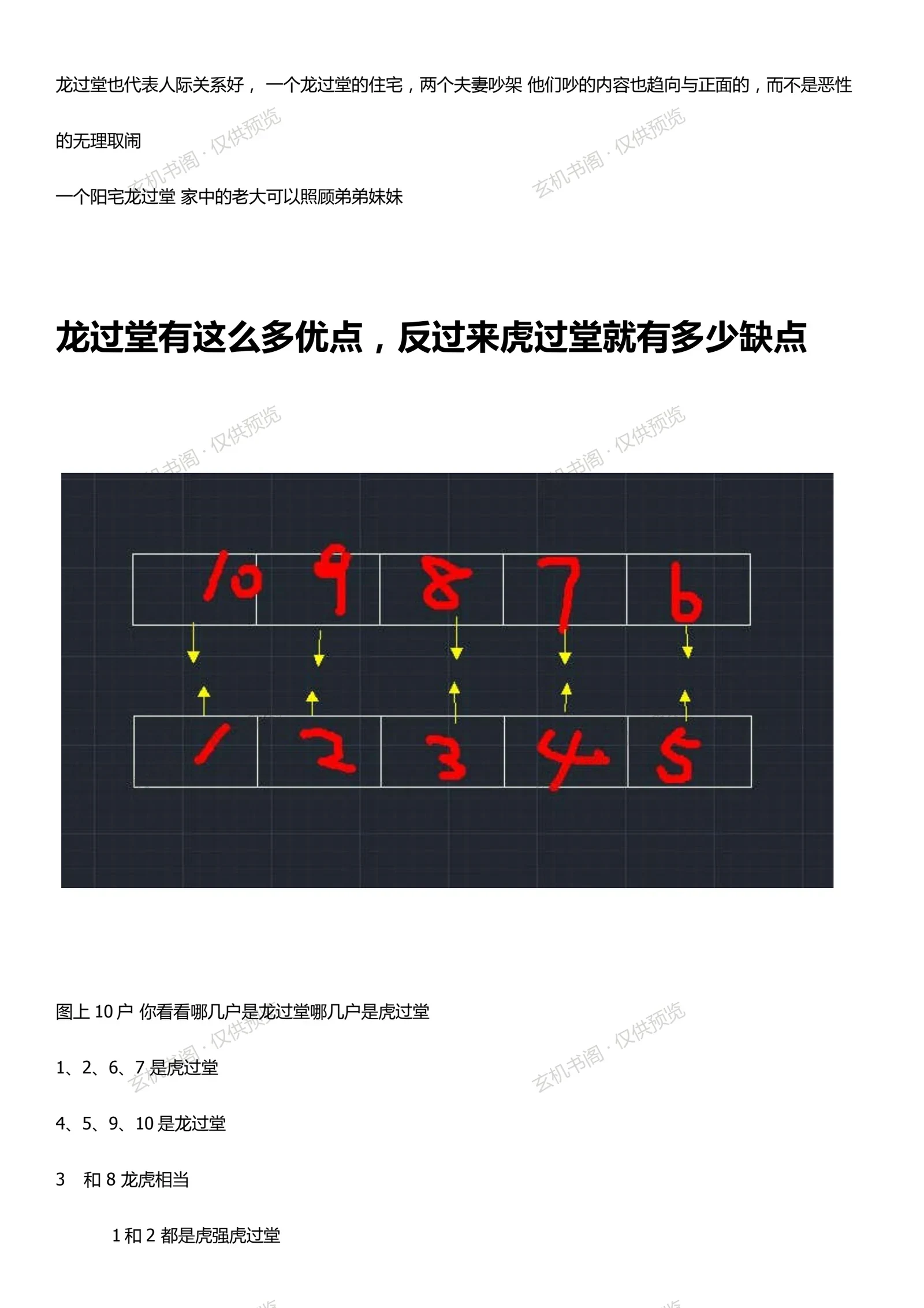
Ten-house row: examples of dragon-crossing-hall and tiger-crossing-hall judgments
Key Points
A tiger side extending forward is 'tiger advance,' indicating a stronger female occupant and accelerated male career.
A retreating dragon side indicates setbacks for the male occupant, with the number of retreats suggesting the number of setbacks.
Bed placement should avoid tiger-strong layouts; a dragon-strong bed position may be used even if the qi pattern is unfavorable.
Dragon crossing the hall means the dragon side extends past the bright hall, indicating fame, good relationships, and renown from afar.
Tiger crossing the hall produces the opposite effects of its dragon counterpart and is a configuration to avoid.