Reading guide
Content guideOverview
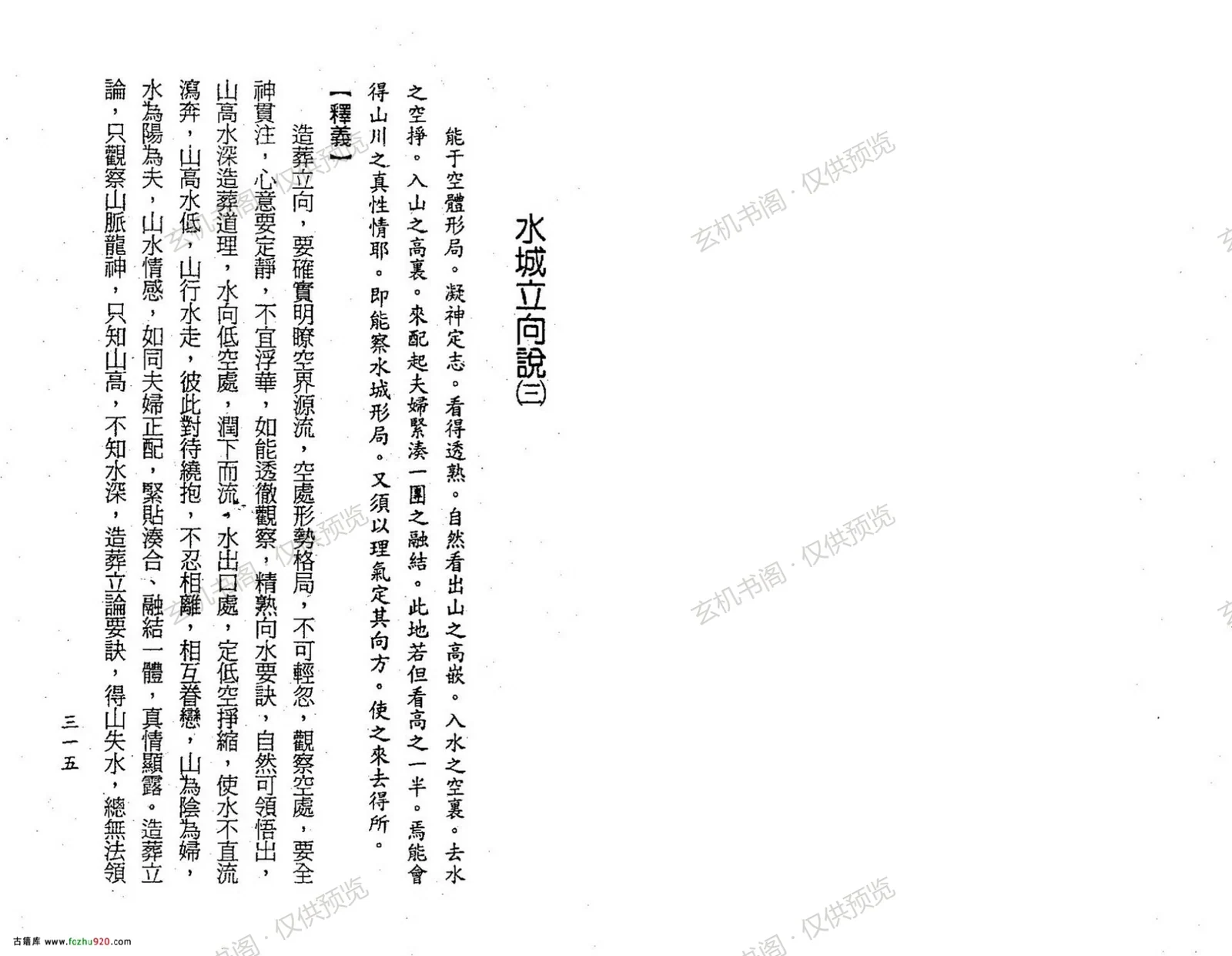
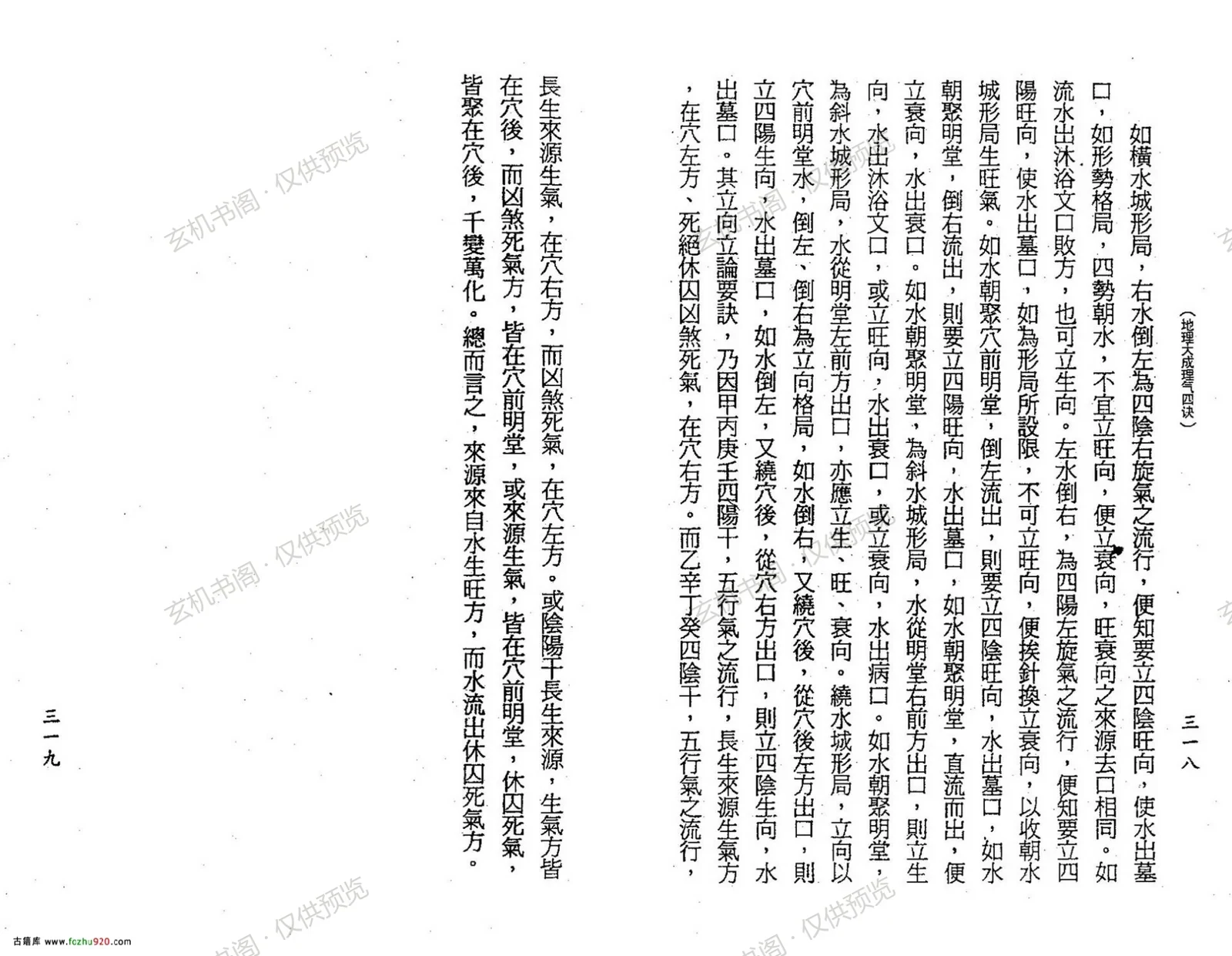
This is the second volume of Ye Jiusheng's Dili Dacheng Liqi Sijue, a classic of principle-based (liqi) feng shui. The visible text consists of the 'Shuicheng Lixiang Shuo' series (parts three to five), which discusses how water formations—transverse, diagonal, facing and winding water—determine the orientation of a grave. Each formation is matched with the four yin and four yang positions and the twelve stages of growth, prosperity, decline and death, and the author explains which orientation to choose, which qi to receive and which sha to avoid. Every section is followed by a 'Shiyi' commentary that paraphrases the gist in plain language, often comparing landscape features to parts of the human body such as the throat, stomach and bladder. The text insists that form and principle must work together: landscape alone cannot reveal life and death qi, while principle without attention to water's true character gives no basis for orientation. The volume is a key source for studying Ye Jiusheng's system and Sanhe water methods.
Contents
Water-city orientation, part 3: formations and principle-based orientation
Water-city orientation, part 4: transverse, diagonal and winding water
Water-city orientation, part 5: noble and greed-wolf formations, body analogies
Commentaries explaining each section's key points
Key Points
Orientation is determined by water-city form; each water type has its rules
Four yin and four yang correspond to the twelve growth stages
Form and principle are equally important and must not be separated
Landscape is compared to the human body for easier memorization