Reading guide
Content guideOverview
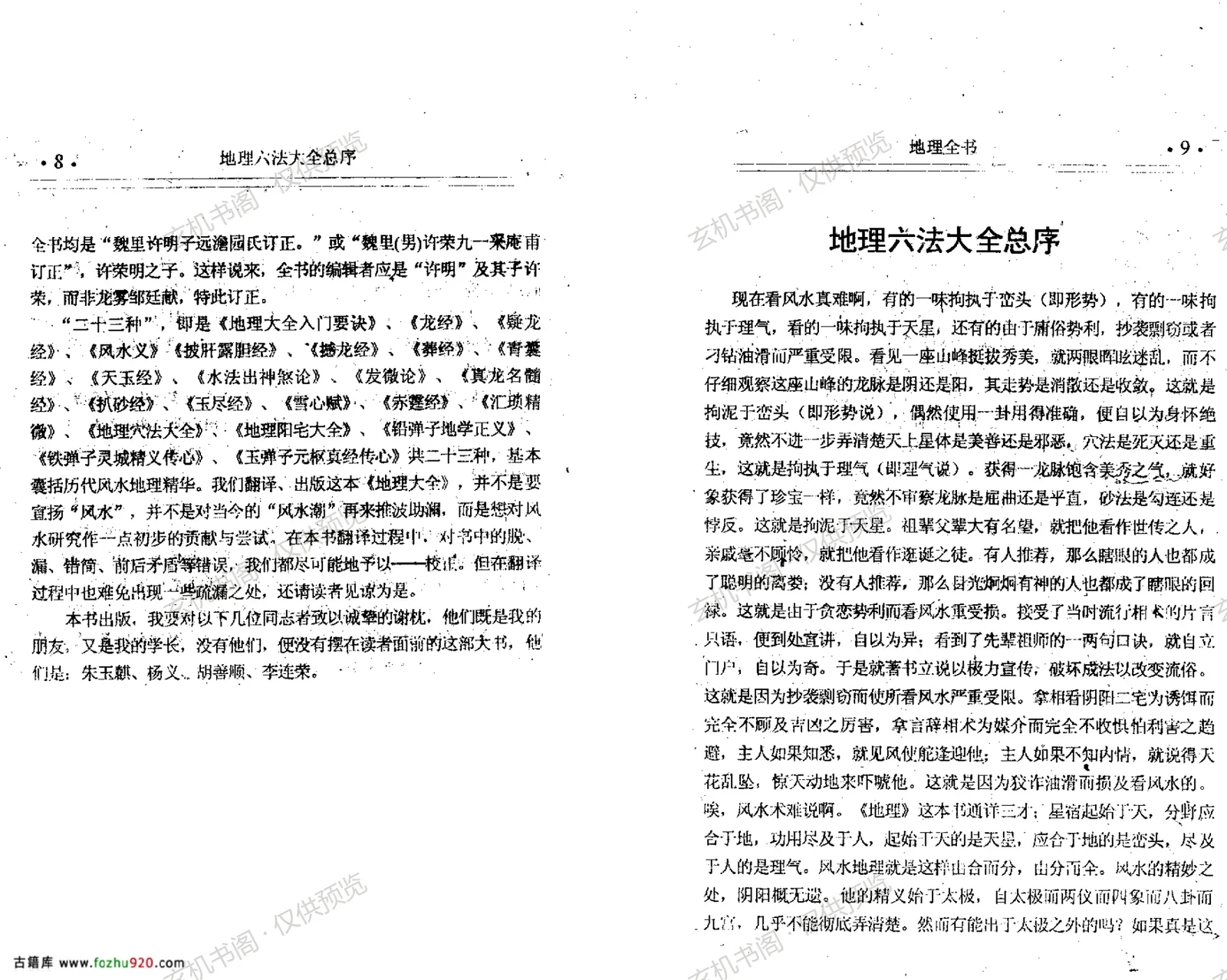
This is the first volume of the illustrated vernacular edition of the Complete Book of Geography (Dili Quanshu), attributed to Liu Bowen of the Ming dynasty and translated by Bing Xiang. The long preface traces feng shui from ancient divination and Han-dynasty kanyu to its peak in the Ming and Qing, highlighting the Jiangxi Form School and the Fujian Compass School. It then introduces the core categories of dragon, point, sand, water, and facing, and explains methods of locating dragons, examining sand, observing water, identifying points, and setting orientations. With plain-language translation and illustrations, the book serves as an accessible introduction to traditional Chinese feng shui literature.
Contents
Preface: origins and schools of feng shui
Jiangxi Form School vs. Fujian Compass School
Five essentials: dragon, point, sand, water, facing
Locating dragons, examining sand, observing water
Five and Nine Stars in mountain analysis
Ancient divination and origins of feng shui
General preface to the Six Methods
Key Points
Traces feng shui from antiquity to the Ming and Qing
Distinguishes the Form School from the Compass School
Explains key terms through dragon, point, sand, water, facing
Cites classics such as the Book of Burial and Qingnang Jing
Vernacular translation with illustrations for accessibility