Reading guide
Content guideOverview
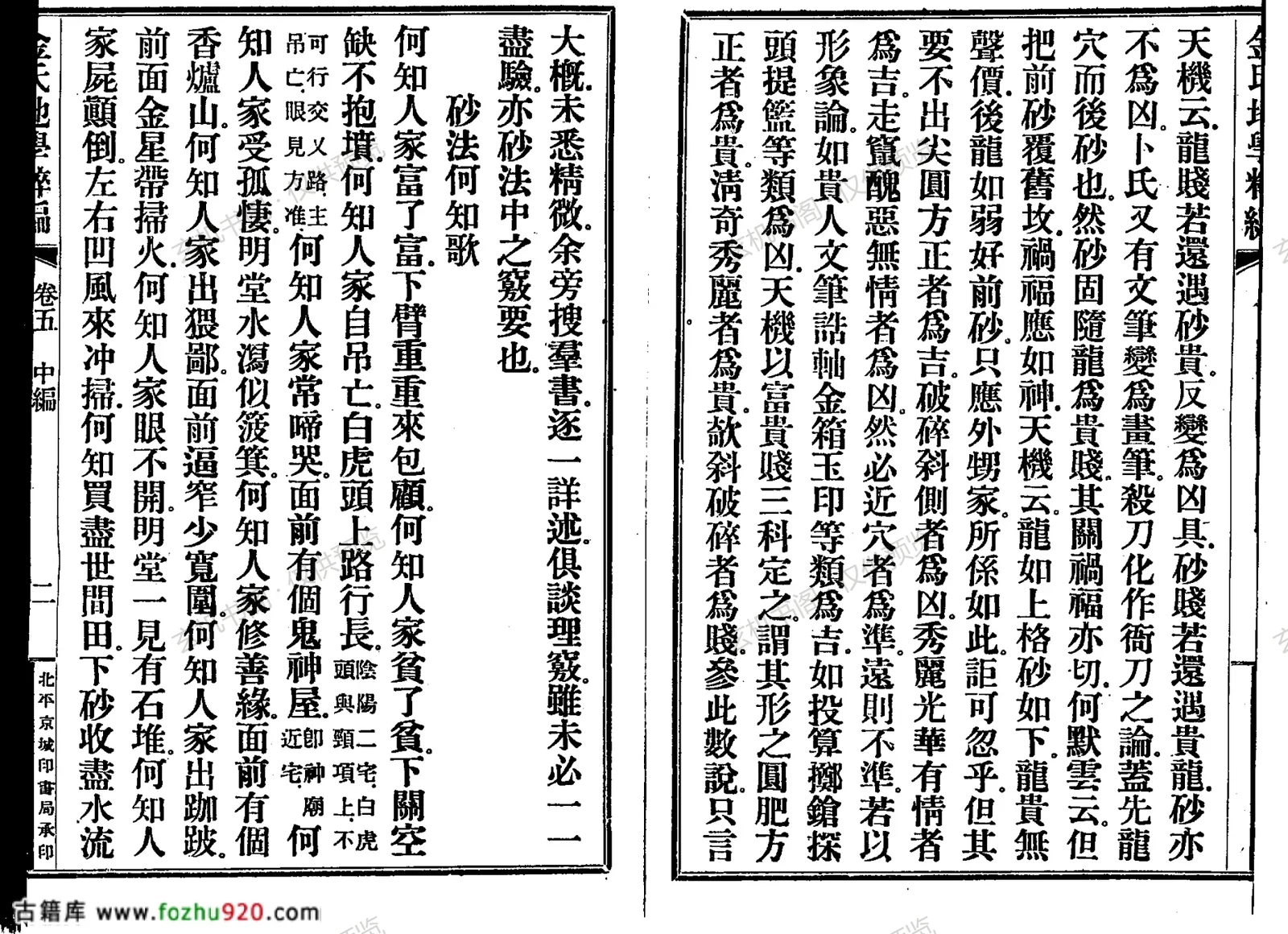
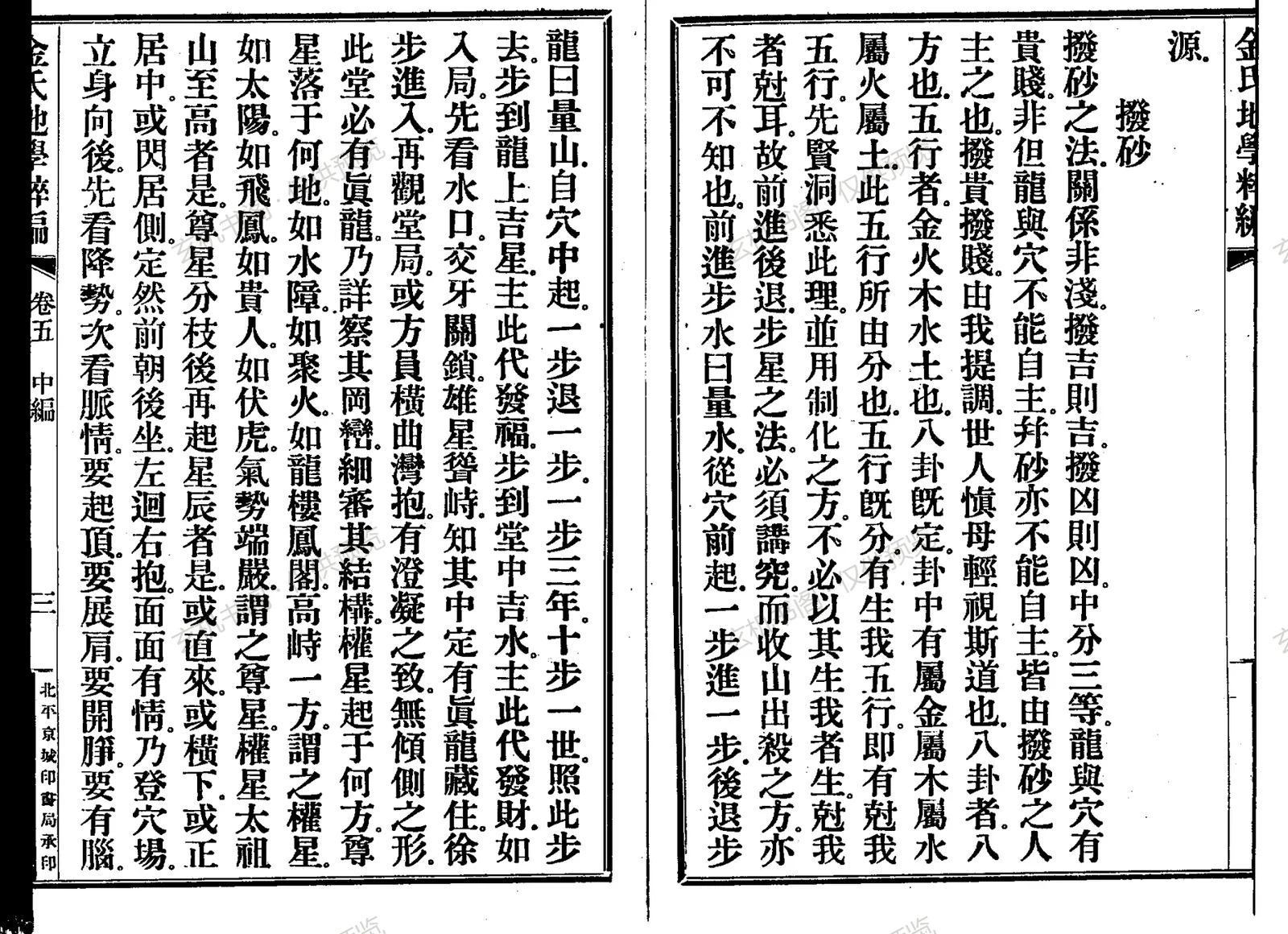
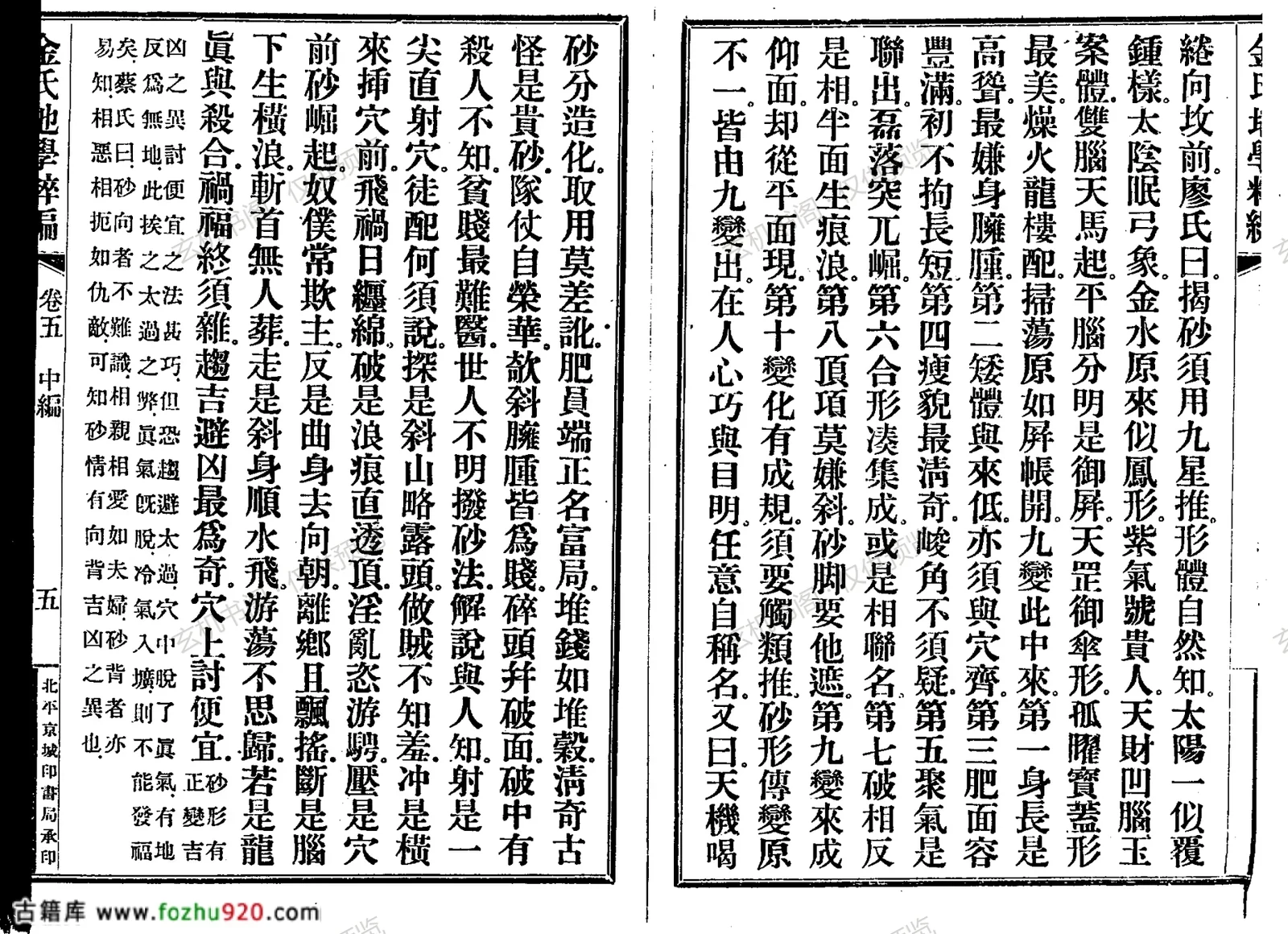
This is the third volume of Jin Zhi'an's Jinshi Dixue Cuibian, a Qing-dynasty fengshui compilation. The visible pages, marked as juan five, middle section, present the 'sand method' (shafa): a general discourse defines sand as the surrounding hills around a burial site and judges their quality by shape, orientation and attitude; a verse section lists omens of wealth, poverty and misfortune based on visible landforms; and the 'bosha' section explains how to align sand with the dragon and site using five-phase interactions and directional steps. The text mixes main arguments with small interlinear notes and lacks a table of contents, making it a traditional landform-oriented manual for readers of形势派 fengshui.
Contents
General discourse on sand method
Verse on sand and household fortunes
Bosha: aligning sand with five phases
Dragon, site and water coordination
Five-star landforms and auspiciousness
Key Points
Sand means surrounding hills, judged by shape and attitude
Upright, elegant and responsive sand is auspicious
Bosha combines five-phase cycles with directional steps
Verse form aids memorization but relies on field experience