Reading guide
Content guideOverview
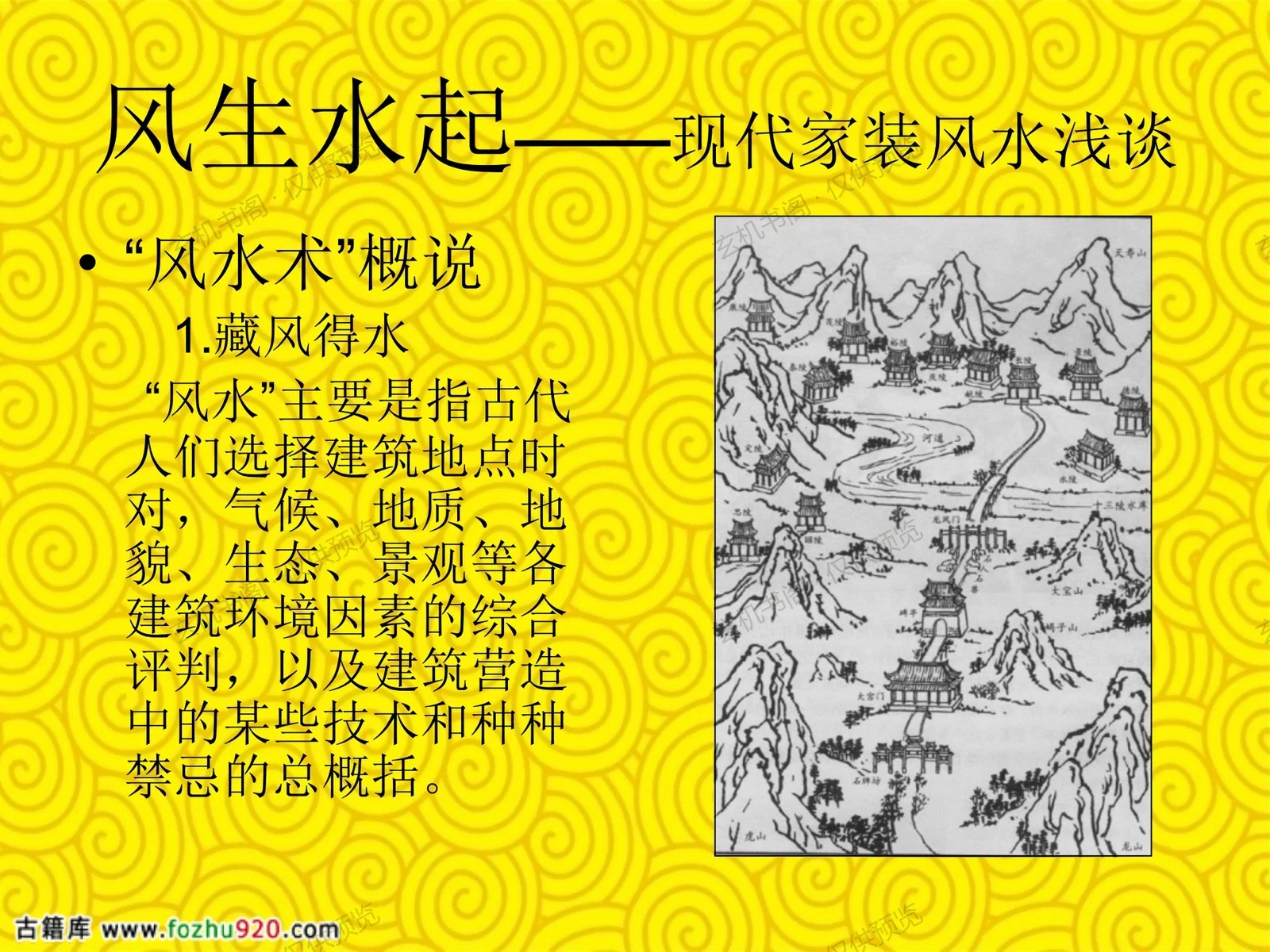
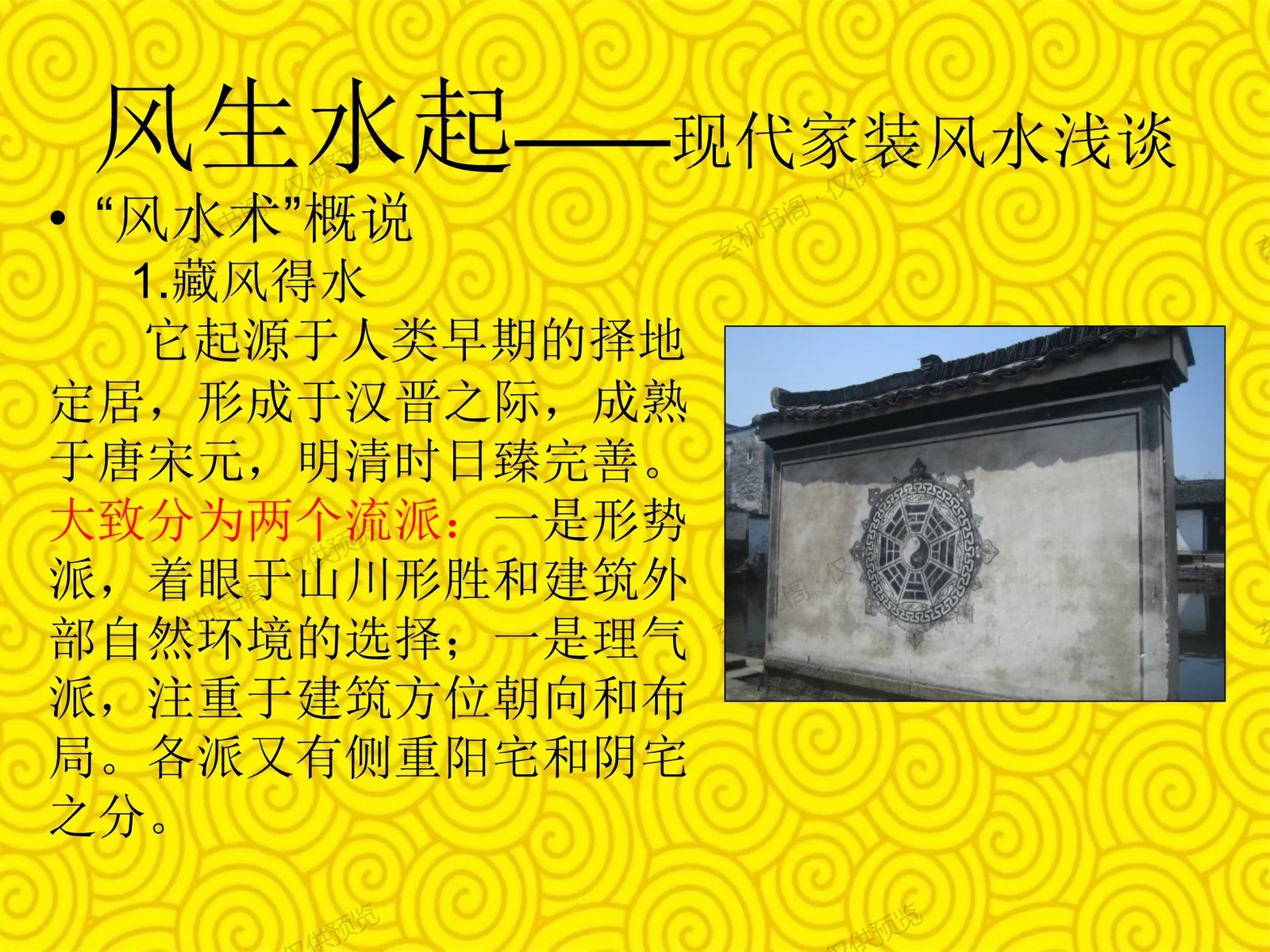
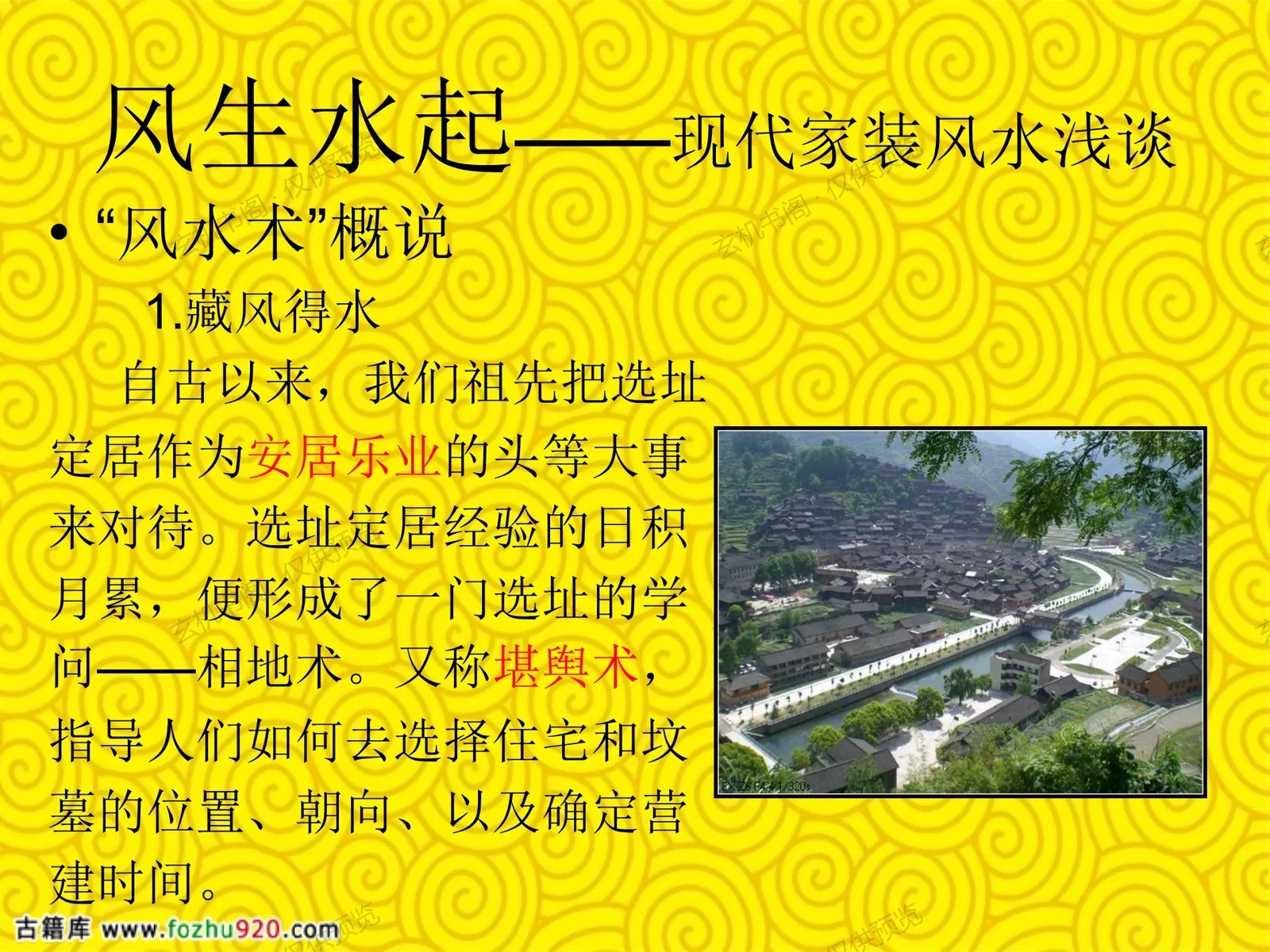
Subtitled 'A Brief Talk on Feng Shui in Modern Home Decoration,' this book is an introductory lecture-style guide to feng shui for the home. It first defines feng shui as the ancient practice of judging a building site by climate, geology, landform, ecology and landscape, together with the techniques and taboos of construction, summed up as 'storing wind and gathering water.' It sketches the art's development from early settlement siting, formation in the Han-Jin period, maturity in Tang-Song-Yuan, and refinement in Ming-Qing, and distinguishes the Form school (mountains, rivers and the outer environment) from the Compass school (orientation and internal layout), each with its focus on dwellings or graves. It then explains that physiognomy of land, or kanyu, began with siting and orienting houses and towns, relying on simple empirical summaries of terrain and climate. The table of contents arranges the material by room: an overview of feng shui, taboos for the living room, study, bathroom and toilet, kitchen and dining room, and bedroom, closing with a section on 'the architect's path of growth.'
Contents
Overview of feng shui: storing wind and gathering water
The Form school versus the Compass school
Living room feng shui taboos
Study feng shui taboos
Bathroom and toilet feng shui taboos
Kitchen and dining room feng shui taboos
Bedroom feng shui taboos
The architect's path of growth
Key Points
Feng shui judges a site by climate, geology, landform, ecology and landscape
Origins in settlement siting; formed in Han-Jin, matured in Tang-Song-Yuan
Two branches: Form school (terrain) and Compass school (orientation)
Land physiognomy, or kanyu, began with siting and orienting houses
Taboos are organized by living room, study, kitchen, bath and bedroom