Reading guide
Content guideOverview
Titled Dili Tiekou Yinyang Duan, this text opens by asserting that feng shui is essentially the study of yin and yang. It repeatedly uses the taiji diagram and the early and later heaven trigram arrangements to explain yin-yang union, the pairing of sha (mountains, raised objects) and shui (water, roads, depressions), and the way auspicious or inauspicious influences are read from position. The visible pages discuss the yin-yang fish and S-curve of the taiji diagram, analogies between trigrams and gender, birth and death; the principle of early heaven as substance and later heaven as function; definitions of sha and shui, including refined and evil forms; and several house cases linking trigram positions to illness and family misfortune. It also touches on Hetu-Luoshu and the Jinsuo Yuguan method. Written in plain Chinese with personal observations and case stories, it is a popular feng shui discussion rather than a formal classic edition.
Contents
Feng shui as the study of yin and yang
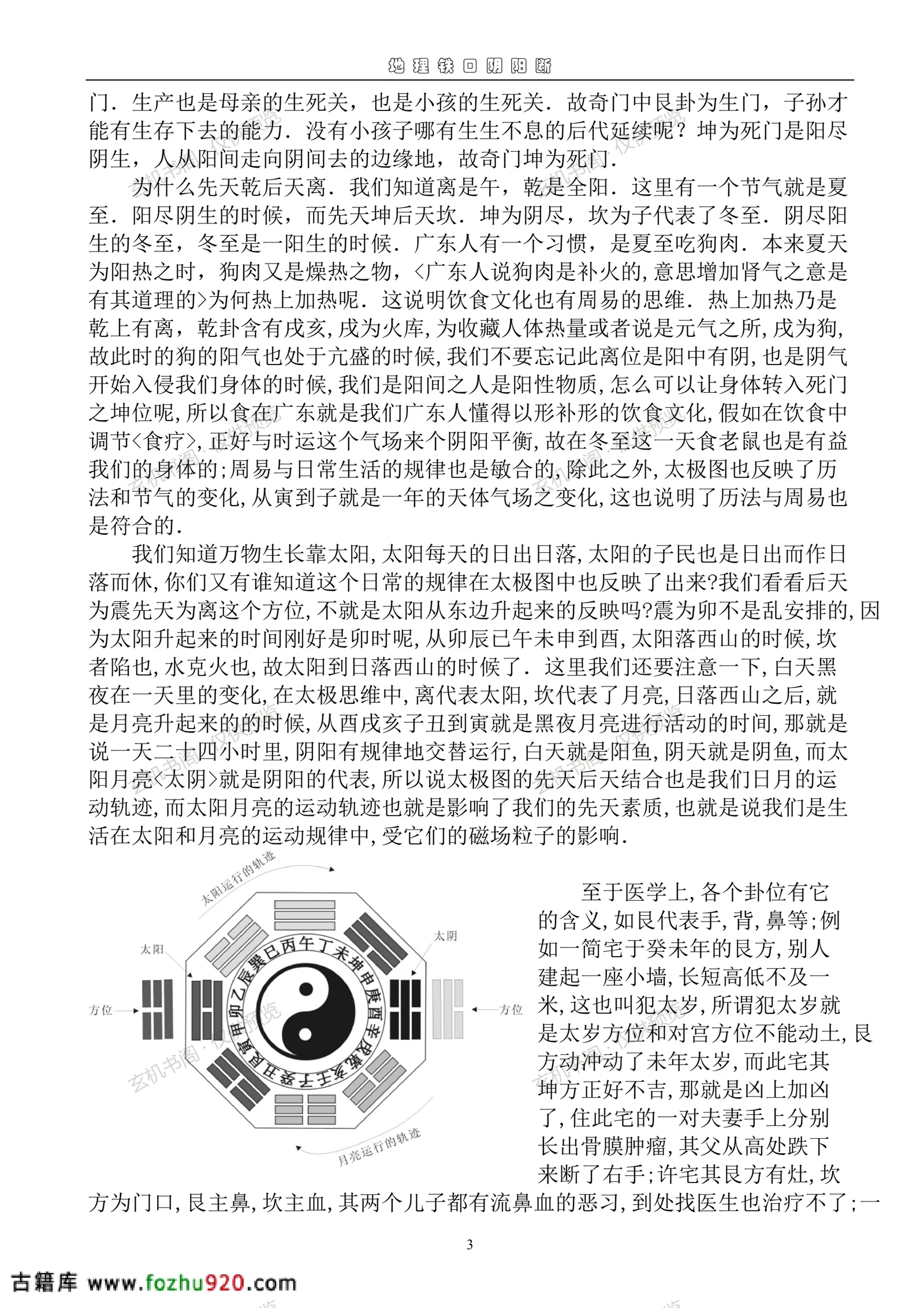
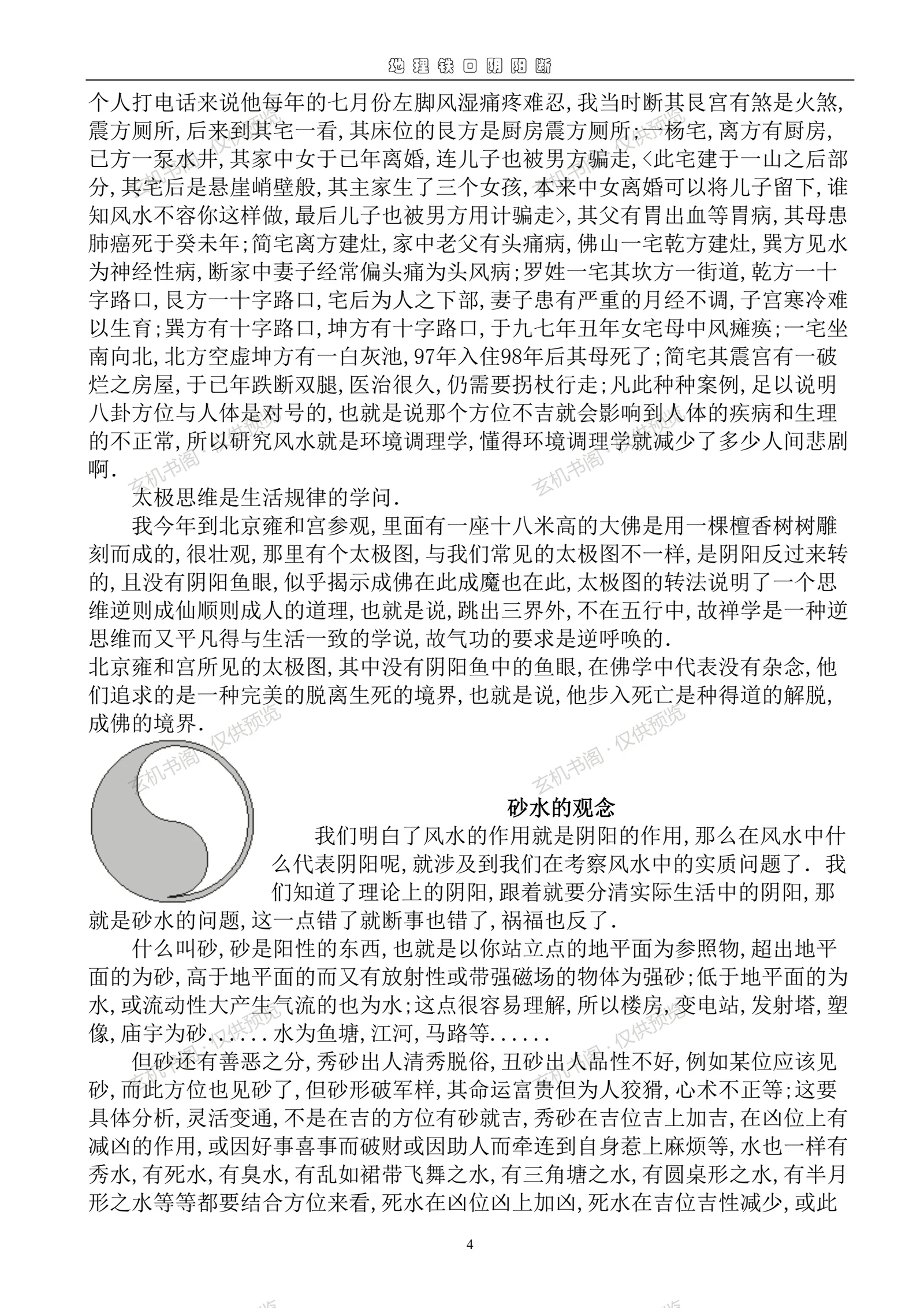
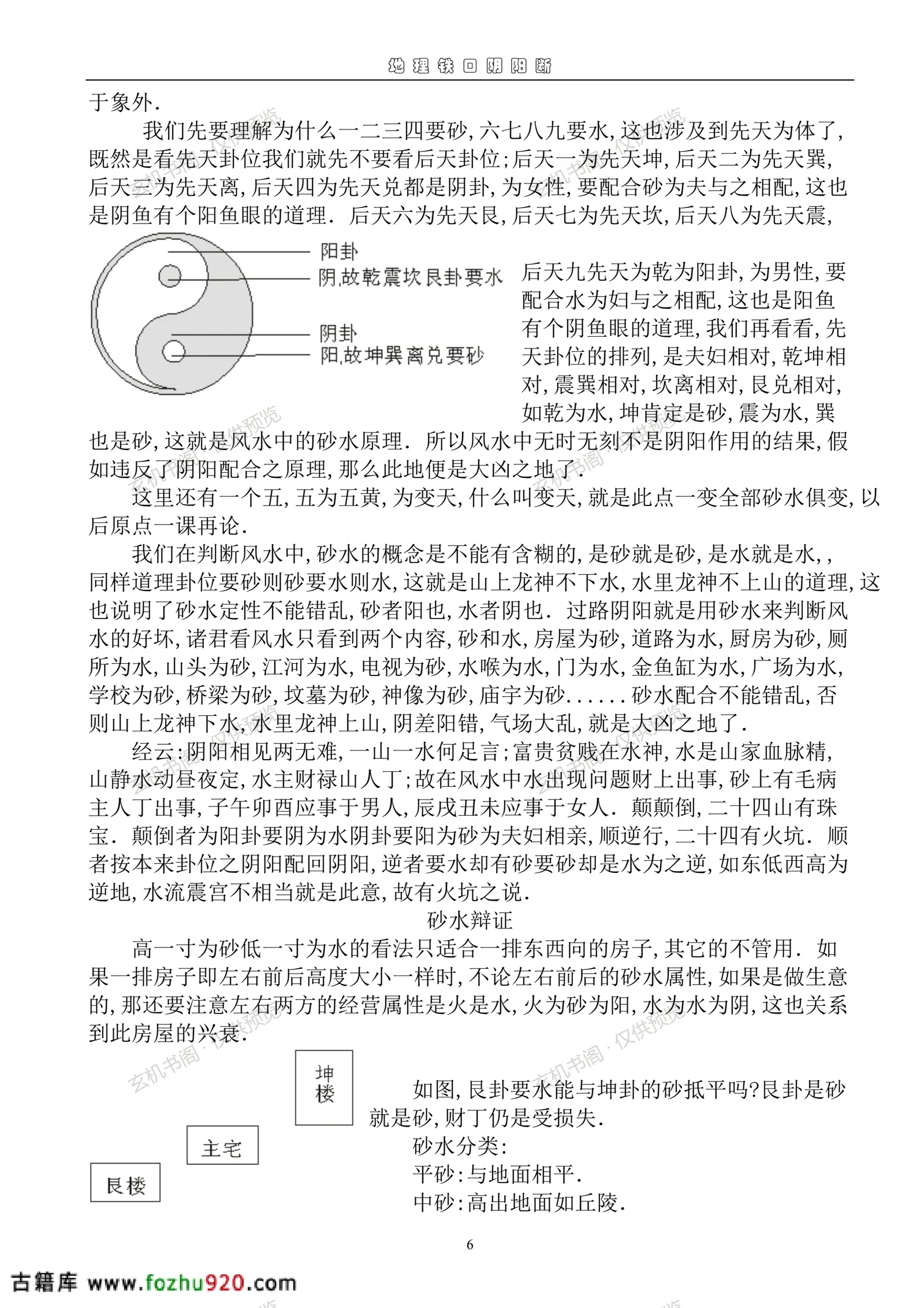
Principles of the taiji diagram
Taiji, sun and moon, seasons, medicine
The concept of sha and shui
Taiji diagram and Jinsuo Yuguan sha-shui relations
Dialectics of sha and shui
Key Points
Uses the taiji yin-yang fish to explain feng shui union
Stresses early heaven as substance, later heaven as function
Defines sha as yang and shui as yin, with refined and evil forms
Links trigram positions to people, health and events
Illustrates house judgments with concrete cases