Reading guide
Content guideOverview
This is Li Fei's vernacular annotated edition of the Qing-dynasty fengshui classic The Five Keys of Geography, published by Zhongzhou Ancient Books Press in 1994. The book organizes traditional site assessment around five core elements—dragons, points, sand, water, and facing—and sets out auspicious criteria such as enclosing walls, left and right support, official prosperity, and qi prosperity, alongside taboos like dragon劫煞 and wind-scattered points. It retains the original preface, which traces the Sanhe lineage and criticizes fragmented approaches, and adds plain-language commentary to clarify technical terms and mnemonic verses. It suits fengshui enthusiasts and historians of Chinese divination, while readers should approach its period beliefs critically.
Contents
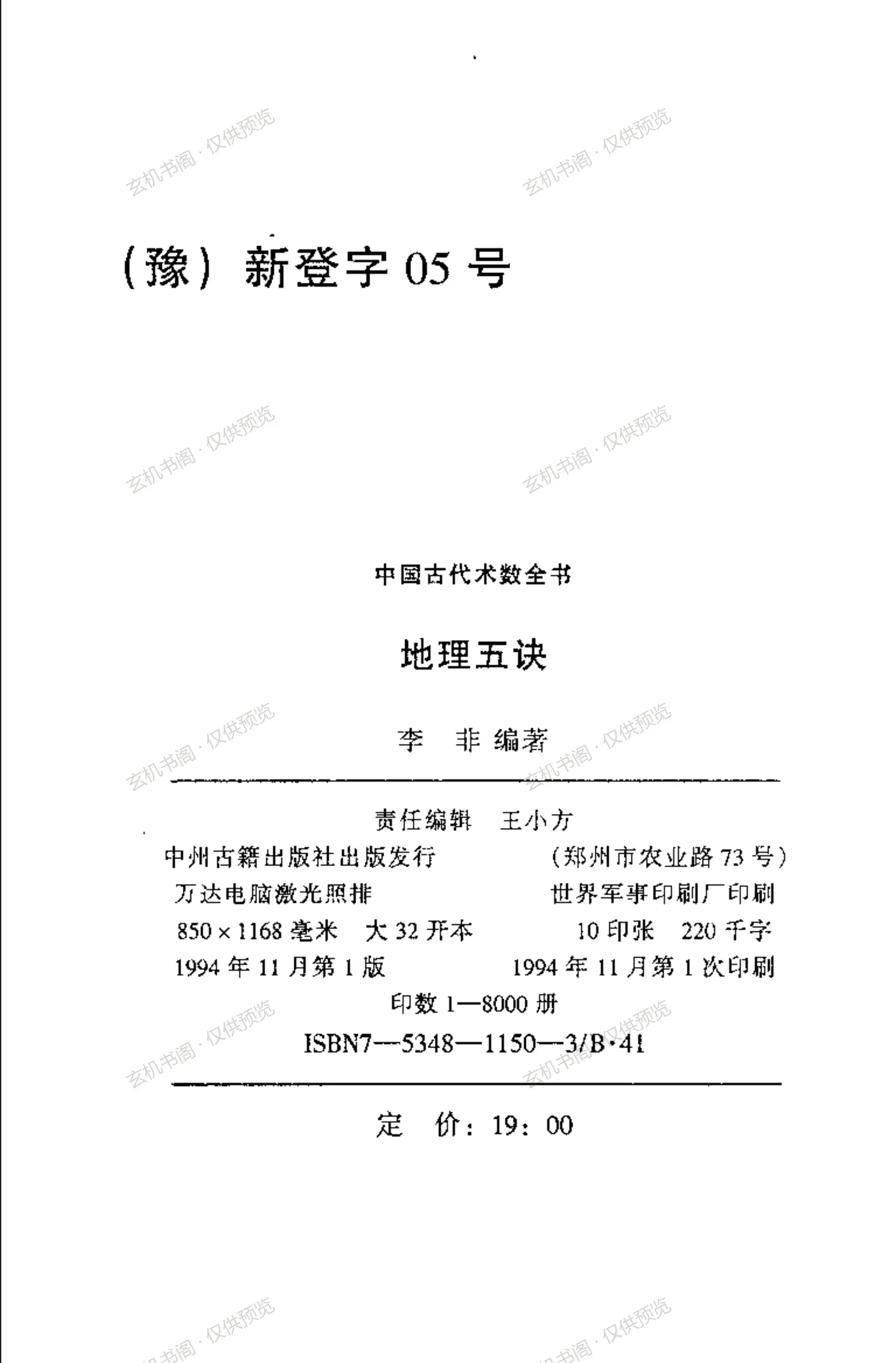
Cover and copyright page: title, editor, publisher
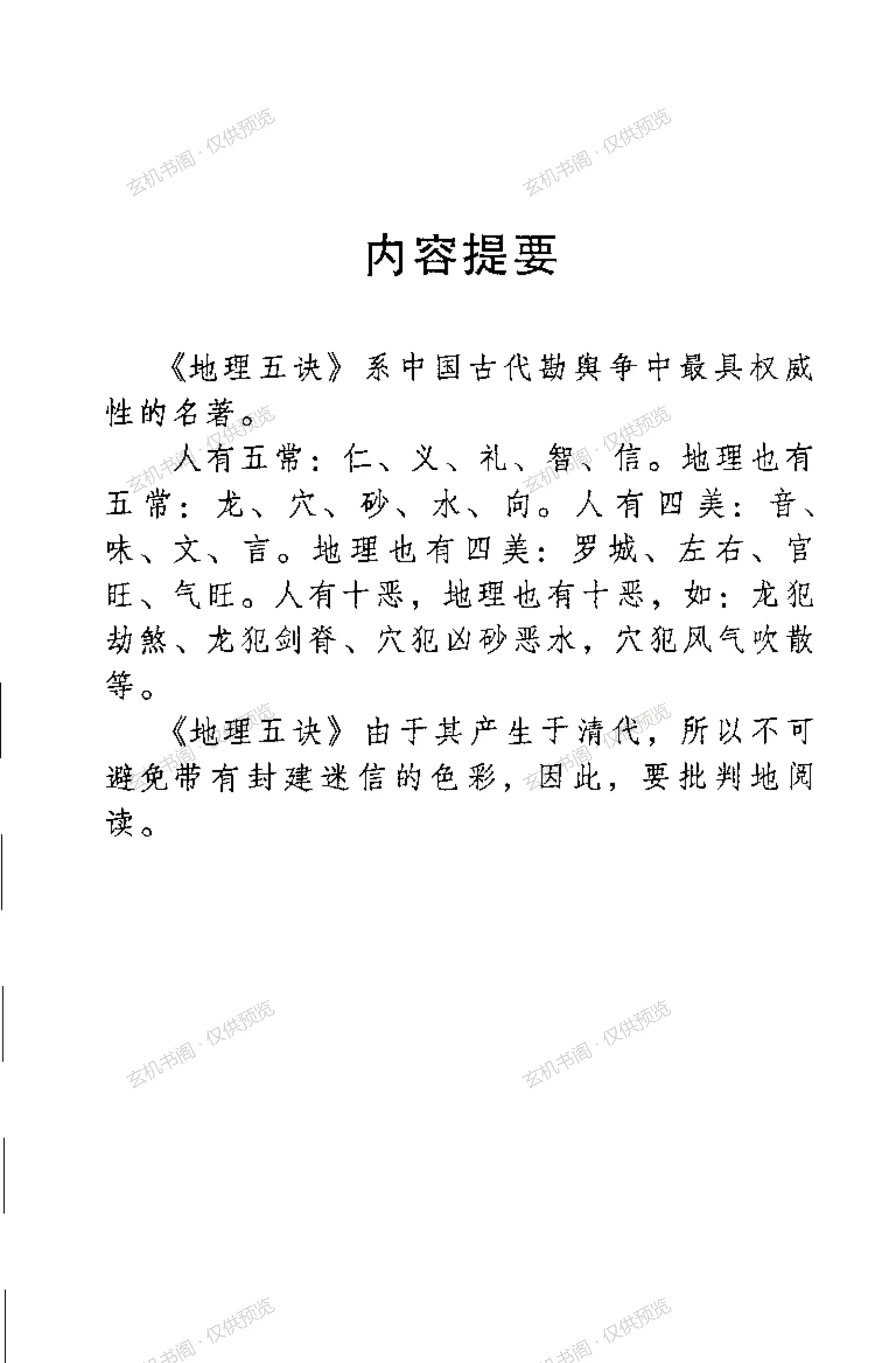
Content summary: five constants, four excellences, ten evils
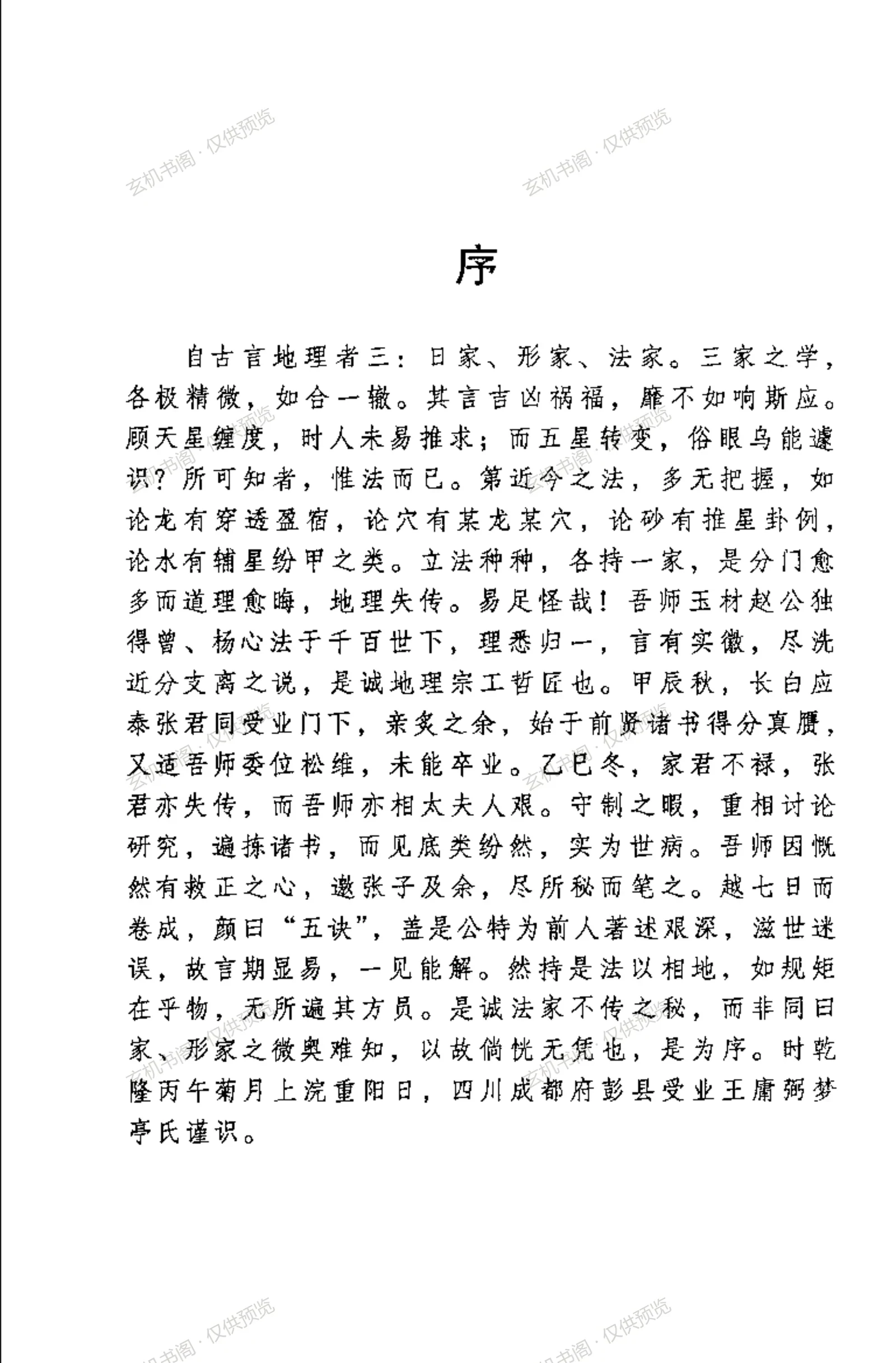
Original preface: Sanhe lineage and writing context
Main text: separate discussions of dragons, points, sand, water, facing
Vernacular commentary: term explanations and verse glosses
Key Points
Builds a site-assessment framework around five elements: dragons, points, sand, water, facing
Emphasizes the Sanhe school and critiques fragmented one-sided approaches
Lists auspicious patterns such as enclosing walls, support, official and qi prosperity
Enumerates inauspicious patterns including dragon劫煞 and wind-scattered points
Vernacular commentary lowers the barrier of classical terminology