Reading guide
Content guideOverview
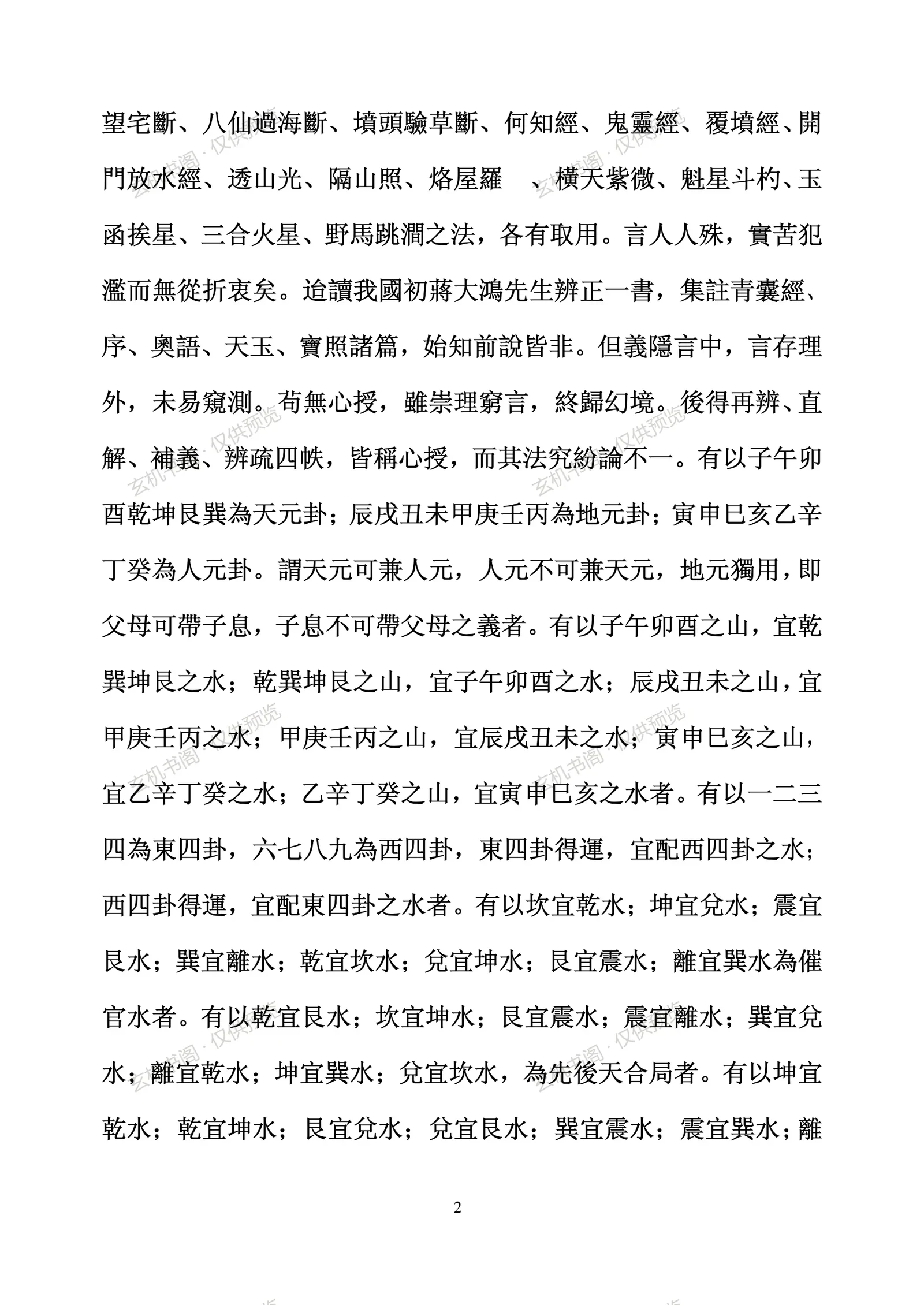
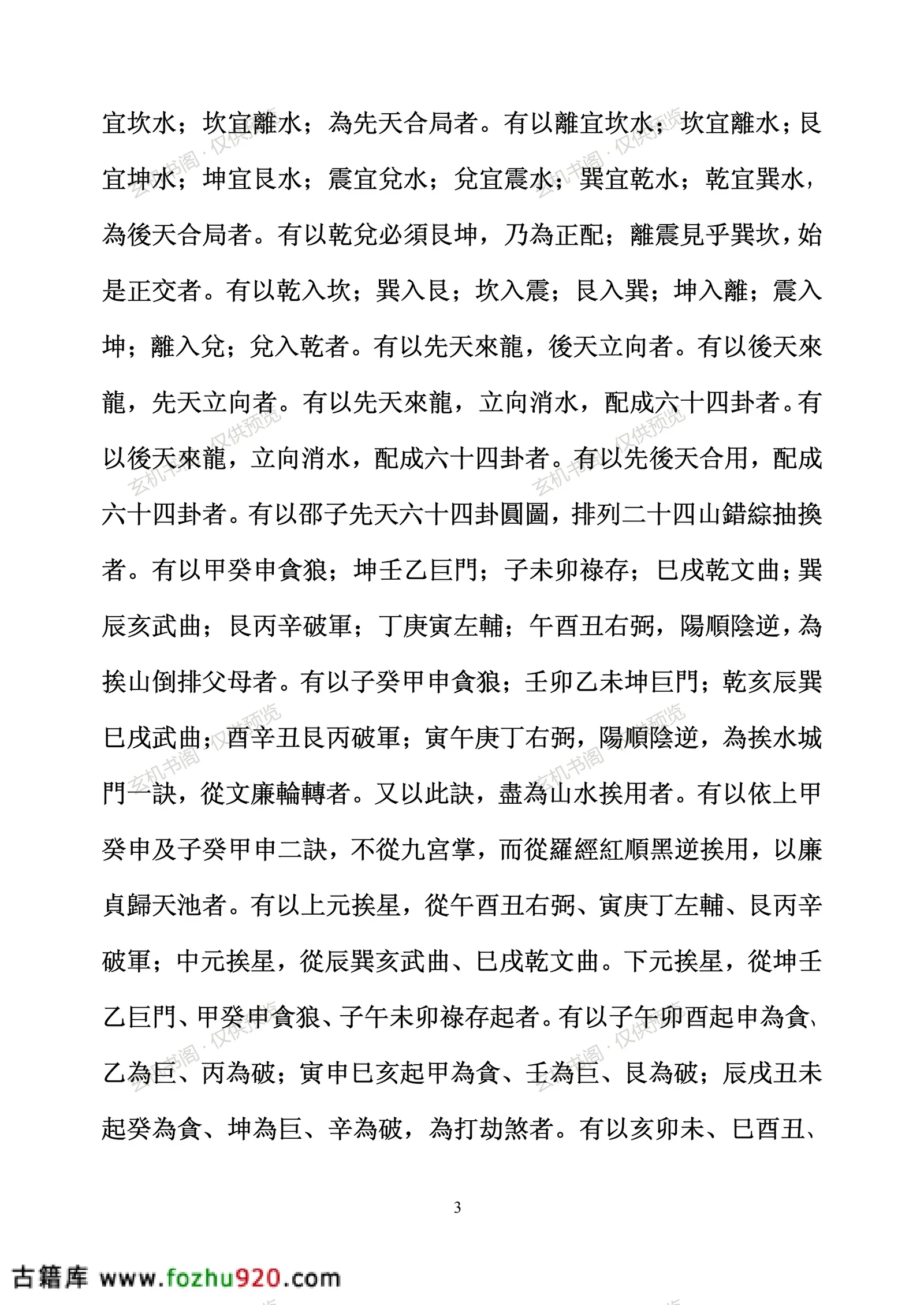
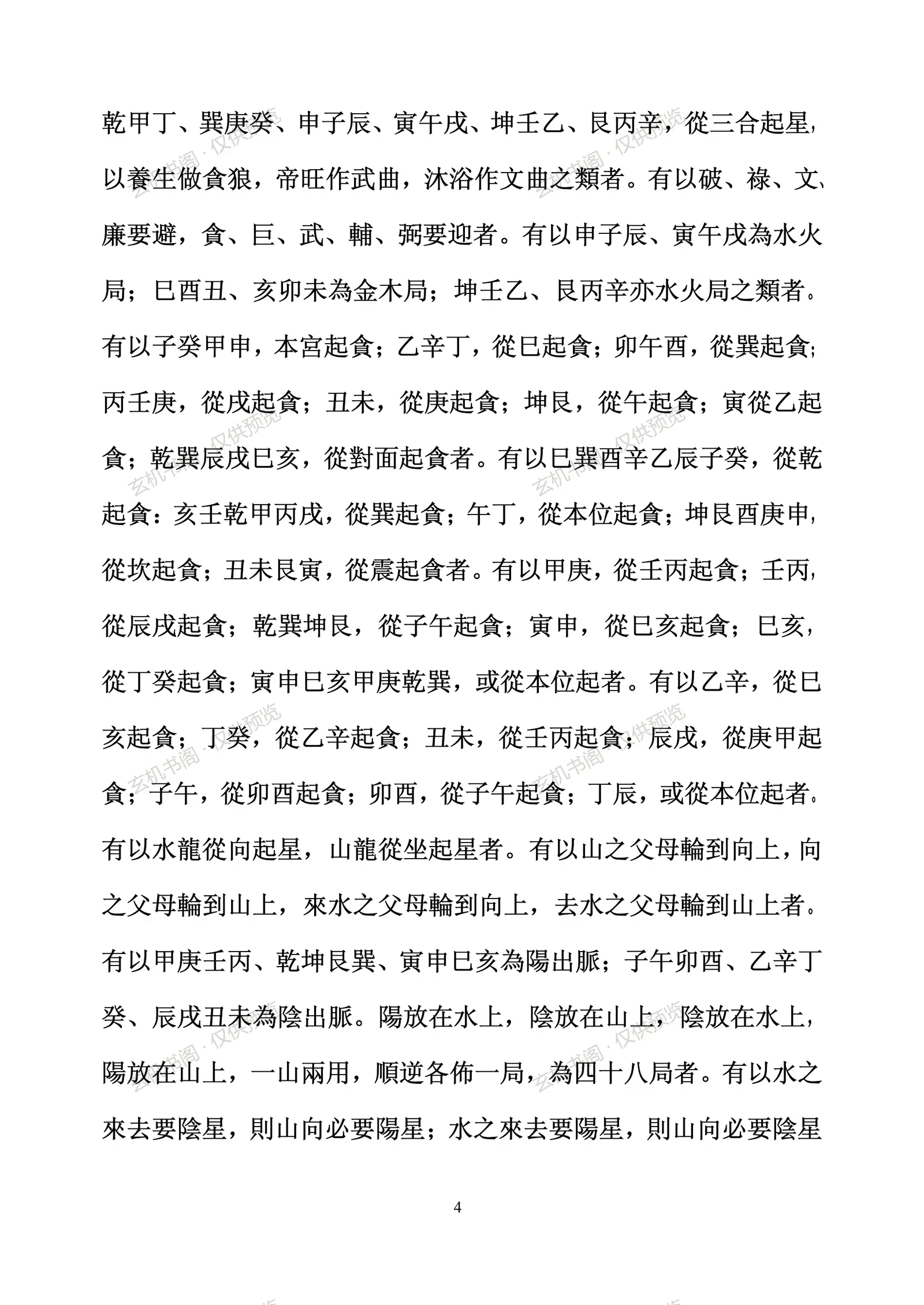
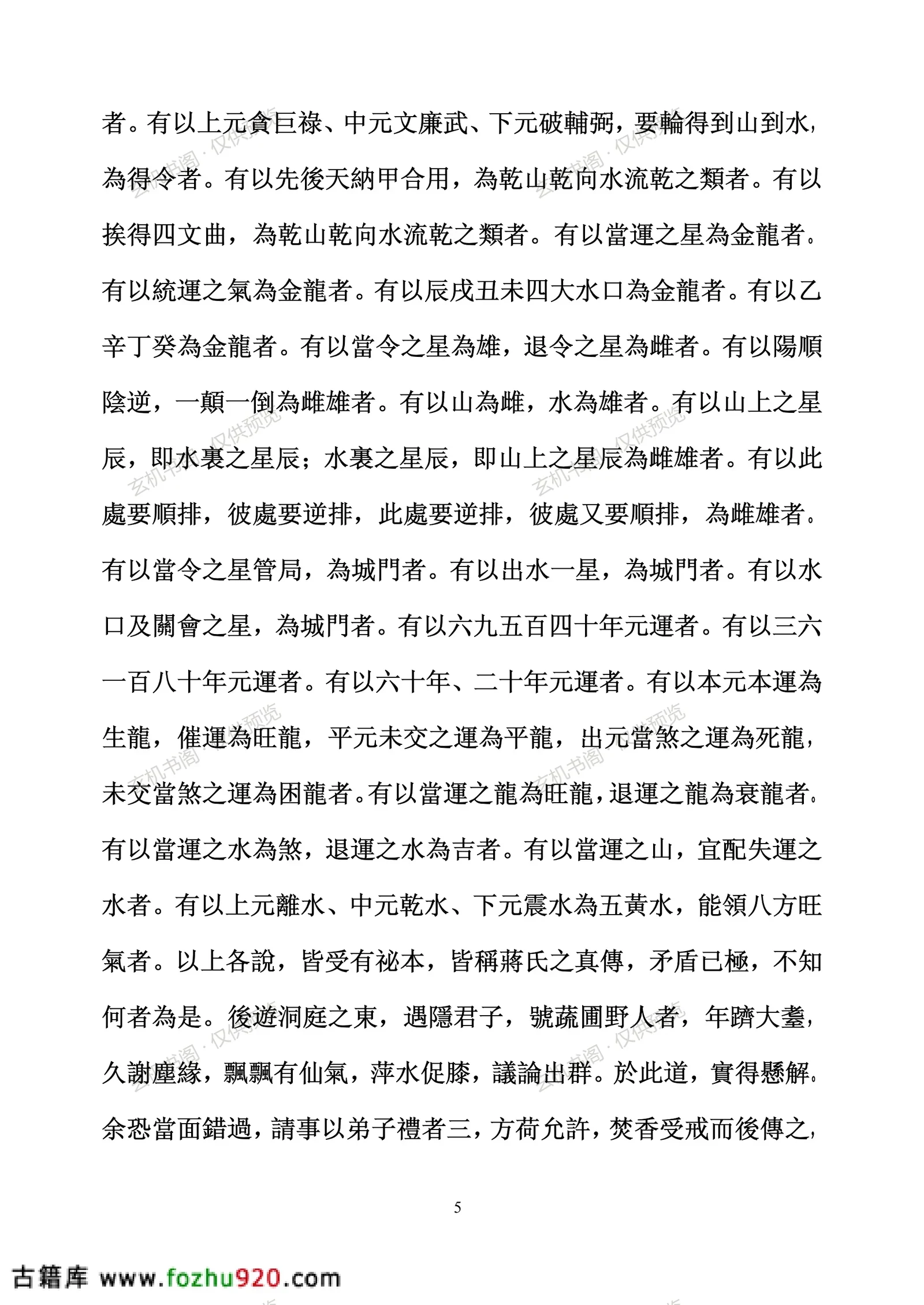
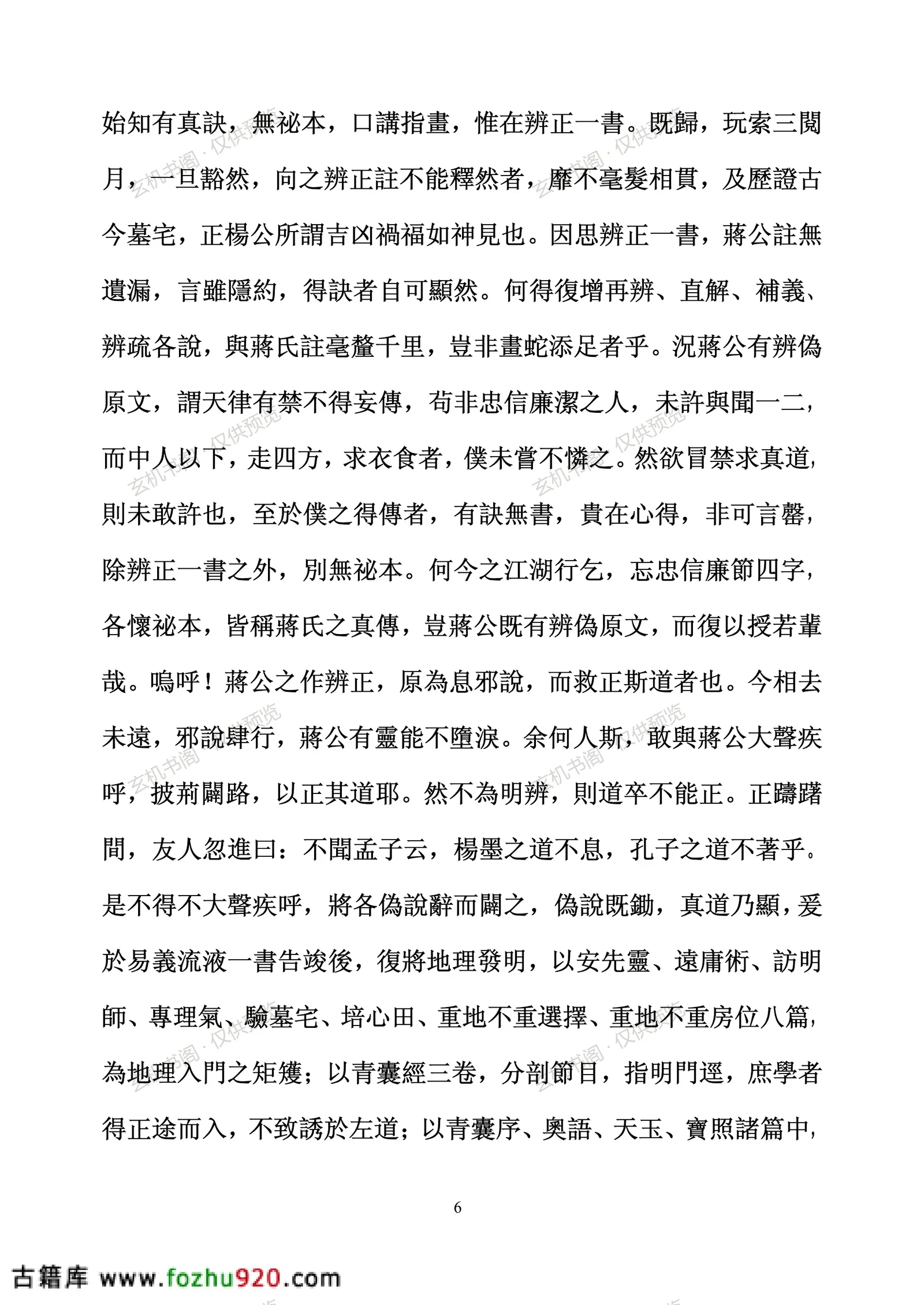
These first six pages contain the author's preface to Dili Xiaobu (Minor Supplement to Geography). The author argues that geomancy is grounded in principle rather than mere technique, since it concerns the proper burial of the dead and the welfare of the living. He describes collecting geomantic secret texts from the Qin, Han, Jin, Tang, Song and Yuan onward, and summarizes the tradition as half form (luantou) and half direction (liqi). The form section treats dragons,穴 spots, sand and water, each requiring proper stellar conformation and auspicious arrangement. The direction section lists a bewildering array of methods—Heavenly and Earthly Trigrams, Sanhe double mountains, the Yellow Spring and Eight Killings, Great and Small Yuankong, the Four Classics and Hongfan, the Four Great Golden Dragons, the East-West Four Houses, auxiliary-star najia, piercing mountains and透地, and division of the lunar mansions. The author then recounts reading Jiang Dahong's Bianzheng, which convinced him that most earlier teachings were wrong, and lists the contradictions among various schools on water methods, trigram qi, star shifting and the raising of greed. He records meeting a recluse named Mr. Shupu of the Wilds near Lake Dongting, from whom he received oral instruction as a disciple; returning home, he verified the teachings against old graves and dwellings and found them clear. He explains his purpose: since Jiang's Bianzheng is already complete, he fears that heterodox teachings continue to spread, so he presents the Dili Fawen chapters and the three fascicles of the Qingnang Jing with divisions and headings to guide students onto the correct path. The preface is written in literary Chinese dense with technical terminology.
Contents
General argument: geomancy is grounded in principle, not mere technique
Four essentials of form: dragon, spot, sand and water must each conform
Directional schools: Sanhe, Yuankong, najia, division of degrees
Reading Jiang Dahong's Bianzheng and refuting other teachings
Meeting the recluse Shupu near Dongting and receiving instruction
Purpose of the book: guide readers to the Dili Rumen and Qingnang Jing
Key Points
Stresses that geomancy is half form and half direction; both matter
Form is organized around dragon, spot, sand and water, each requiring auspicious conformation
Lists a great many directional schools, showing how fragmented the field was
The author follows Jiang Dahong's Bianzheng and seeks to refute heterodoxy
The preface ends by explaining the arrangement of the Dili Rumen and Qingnang Jing