Reading guide
Content guideOverview
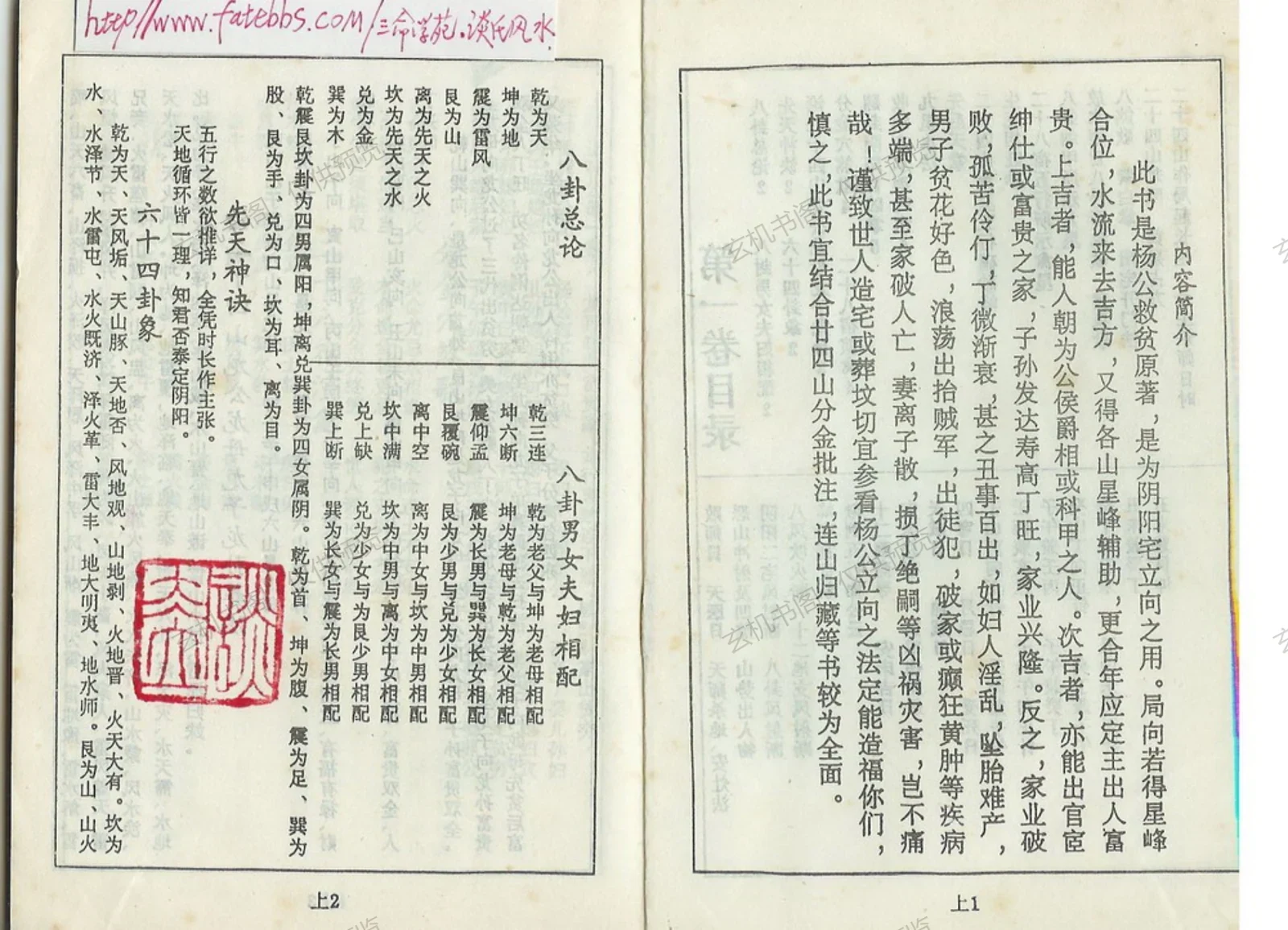
Attributed to Yang Jiupin, this text is a core Sanhe feng shui manual. It opens with an introduction explaining the use of Yang Gong's method for orienting yin and yang dwellings and for assessing mountain peaks. The first volume covers bagua theory, the innate divine formula, the sixty-four hexagrams, the dragon father-mother-child burial method across the twenty-four mountains, the fenjin cave-omen verse, the twenty-eight lunar mansions, the innate and acquired palm diagrams, methods for collecting auspicious water and dispelling inauspicious water, the Yellow Spring and Eight Killings verses, and day-selection essentials. The book provides a systematic reference for studying Sanhe feng shui, tomb and house siting, and related calendrical taboo practices.
Contents
Bagua theory and the innate divine formula
Dragon father-mother-child burial method across the twenty-four mountains
Fenjin cave-omen verse and the twenty-eight mansions
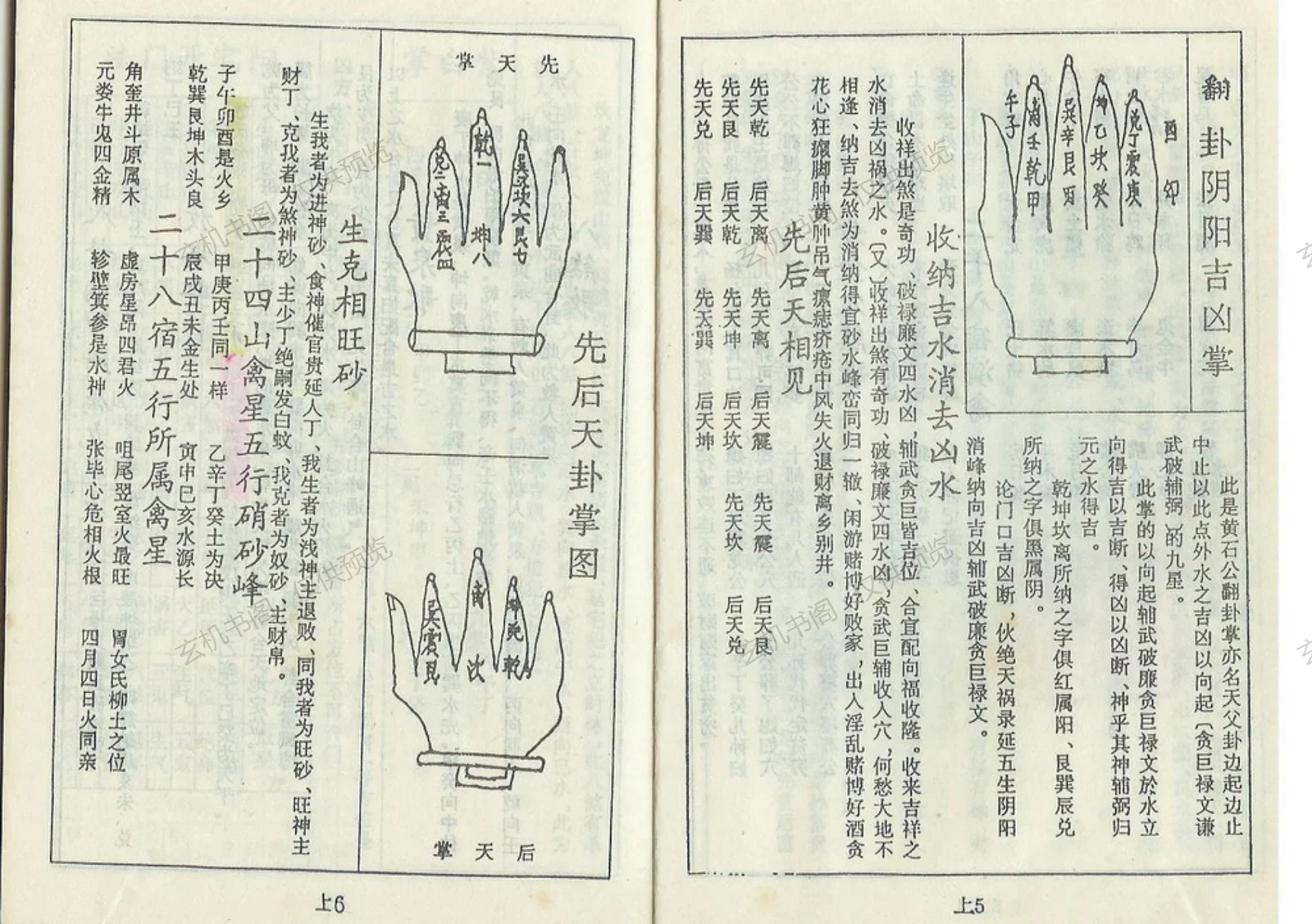
Innate and acquired palm diagrams with generating and overcoming sand
Collecting auspicious water and the Yellow Spring and Eight Killings verses
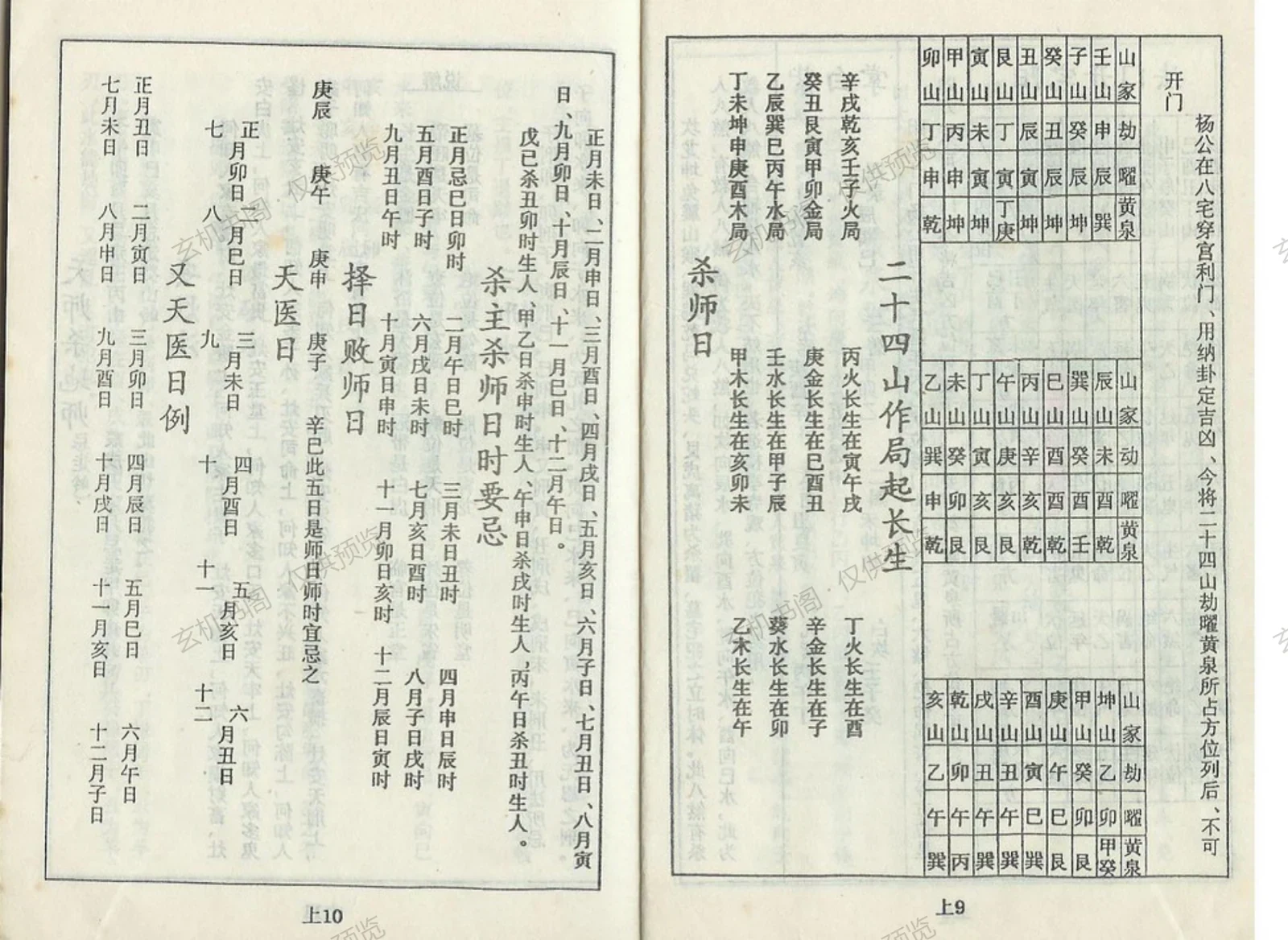
Twenty-four mountain configurations, long life cycles, and master-killing days
Key Points
Annotates the fortune and social outcomes of each of the twenty-four mountains by fenjin.
Emphasizes bagua yin-yang pairing and the flow of innate and acquired qi.
Provides detailed water-method judgments, including Yellow Spring and Eight Killings.
Includes house door-opening methods and day-selection rules for master-killing days.
Uses the twenty-eight mansions and five-element generation/overcoming to assess sand peaks.