Reading guide
Content guideOverview
This is the main volume of a practical feng shui manual compiled by Chi Jinxing. In the preface the author says he was influenced by his family, later studied under transmitters of Kang Jitian and Dai Xilun, and received oral instruction in geographical mind methods, especially the flying-star (aixing) formula. He stresses that this lineage differs from current schools: the method is simple and its assessments match actual conditions. Chapter 1 covers basic knowledge: five phases, heavenly stems and earthly branches, earlier and later heaven bagua, Hetu-Luoshu, and the twenty-four mountains. Chapter 2 explains use of the luojing compass and the six palms. Chapter 3 is the xingtou (form) section, with sections on seeking dragons, identifying acupoints, sand, water, and setting orientations. Chapter 4 is the liqi (pattern) section, covering division lines, flying-star secrets for sand, water-receiving methods, and orientation technique. Chapter 5 treats yang dwellings and the three-yuan great hexagrams; Chapter 6 gives concrete operating steps for yang dwellings. It suits readers with basic feng shui knowledge who want a systematic view of form and pattern methods and the aixing formula.
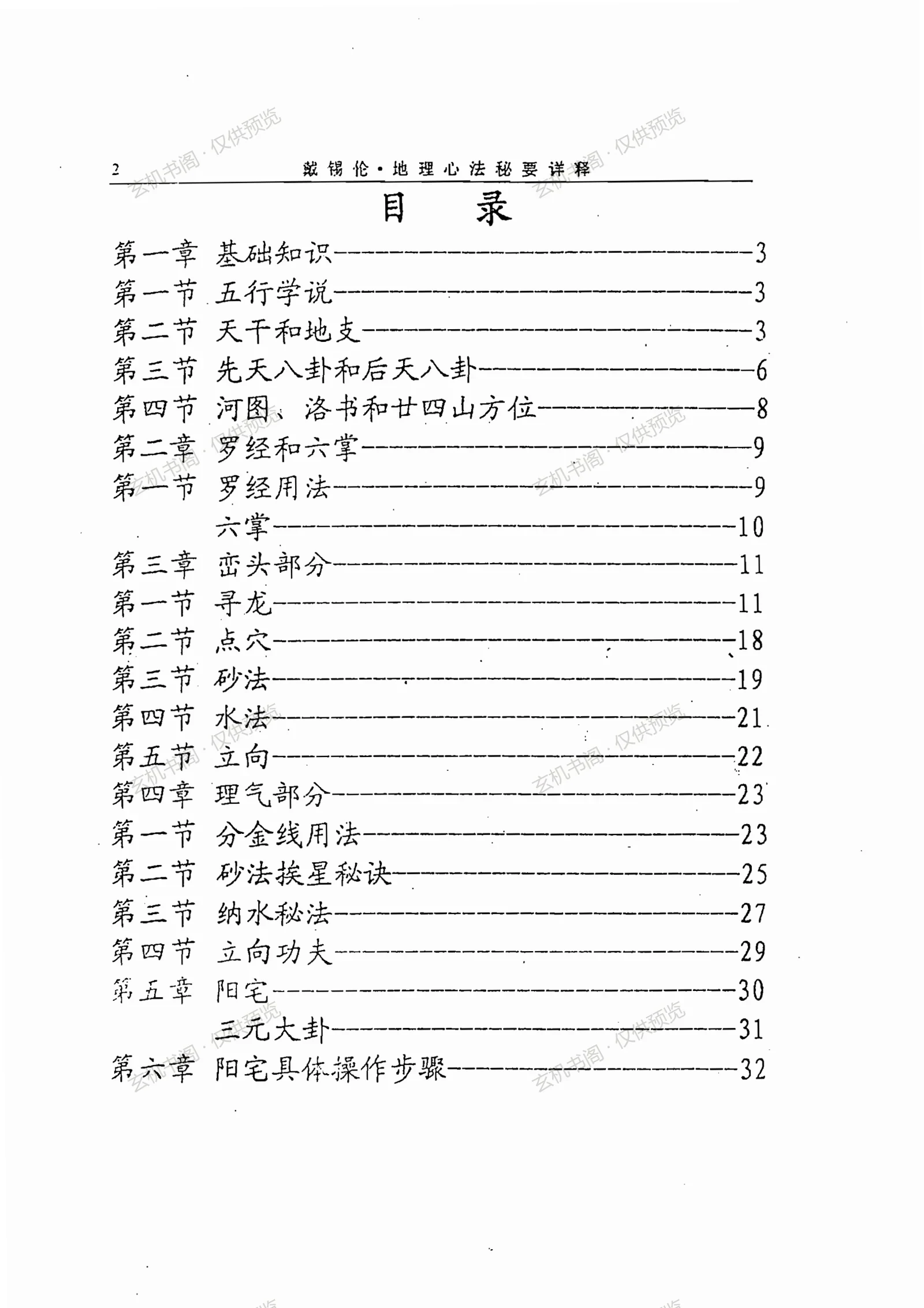
Contents
Ch.1 Basics: five phases, stems-branches, bagua
Hetu-Luoshu and the twenty-four mountains
Ch.2 Luojing use and the six palms
Ch.3 Form: dragons, acupoints, sand, water, orientation
Ch.4 Pattern: division lines, aixing, water, orientation
Ch.5 Yang dwellings and three-yuan great hexagrams
Ch.6 Concrete steps for yang dwellings
Key Points
Starts from five phases, stems-branches, and bagua, then moves to compass and form-pattern methods
Form section is divided into dragons, acupoints, sand, water, and orientation
Pattern section highlights aixing secrets for sand and water-receiving methods as the core
Covers both yin-dwelling form methods and yang-dwelling three-yuan hexagrams with operating steps