Reading guide
Content guideOverview
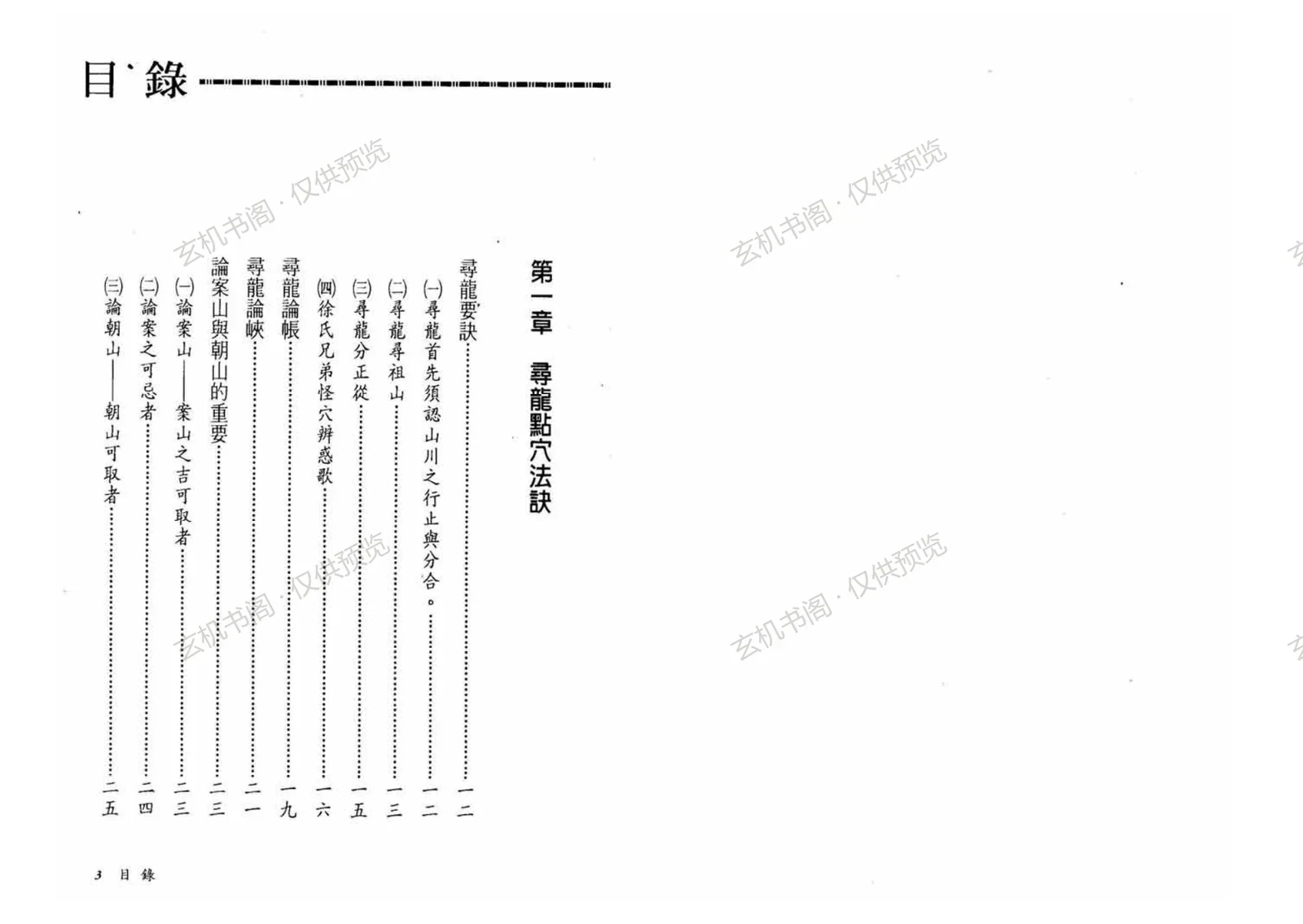
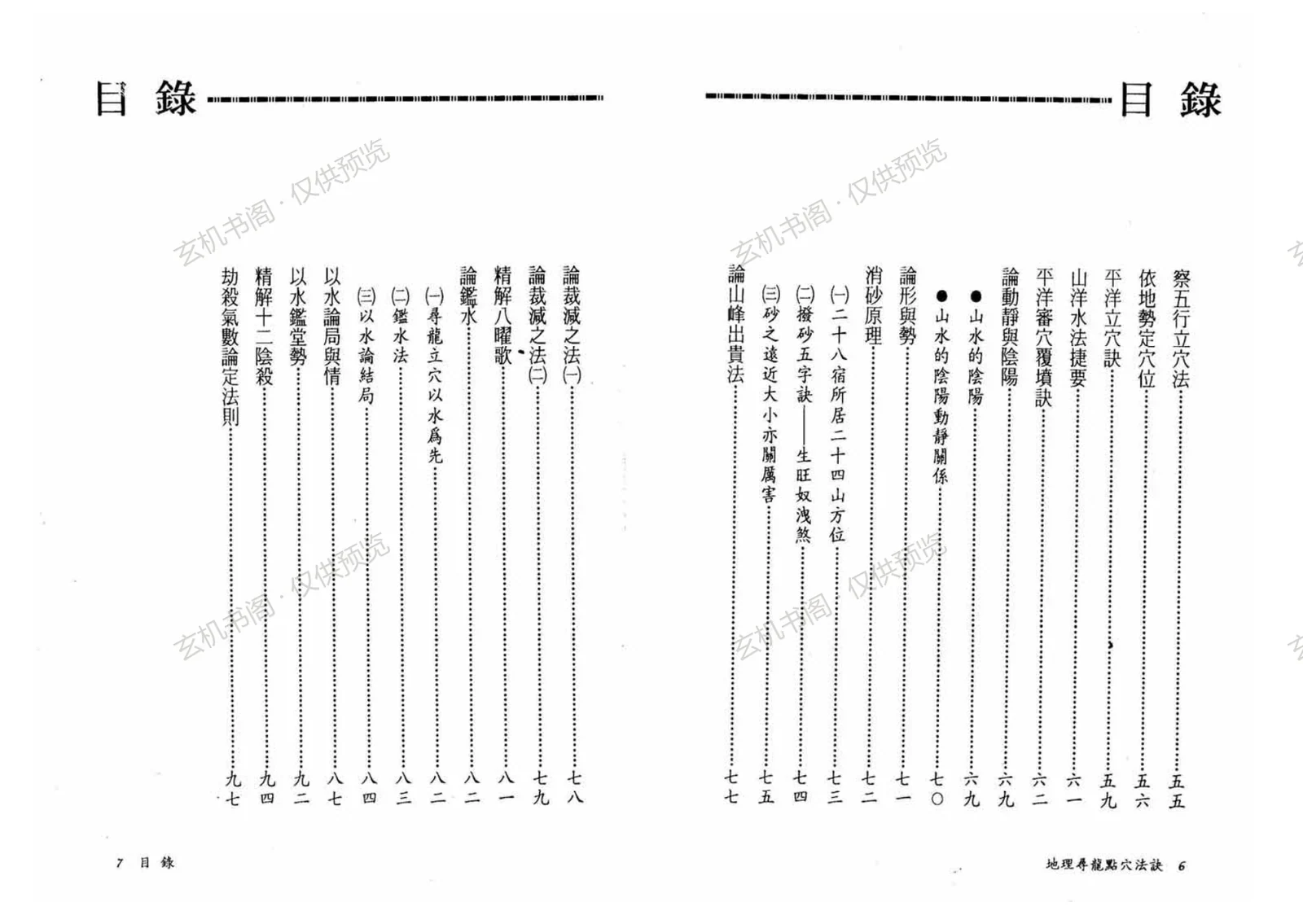
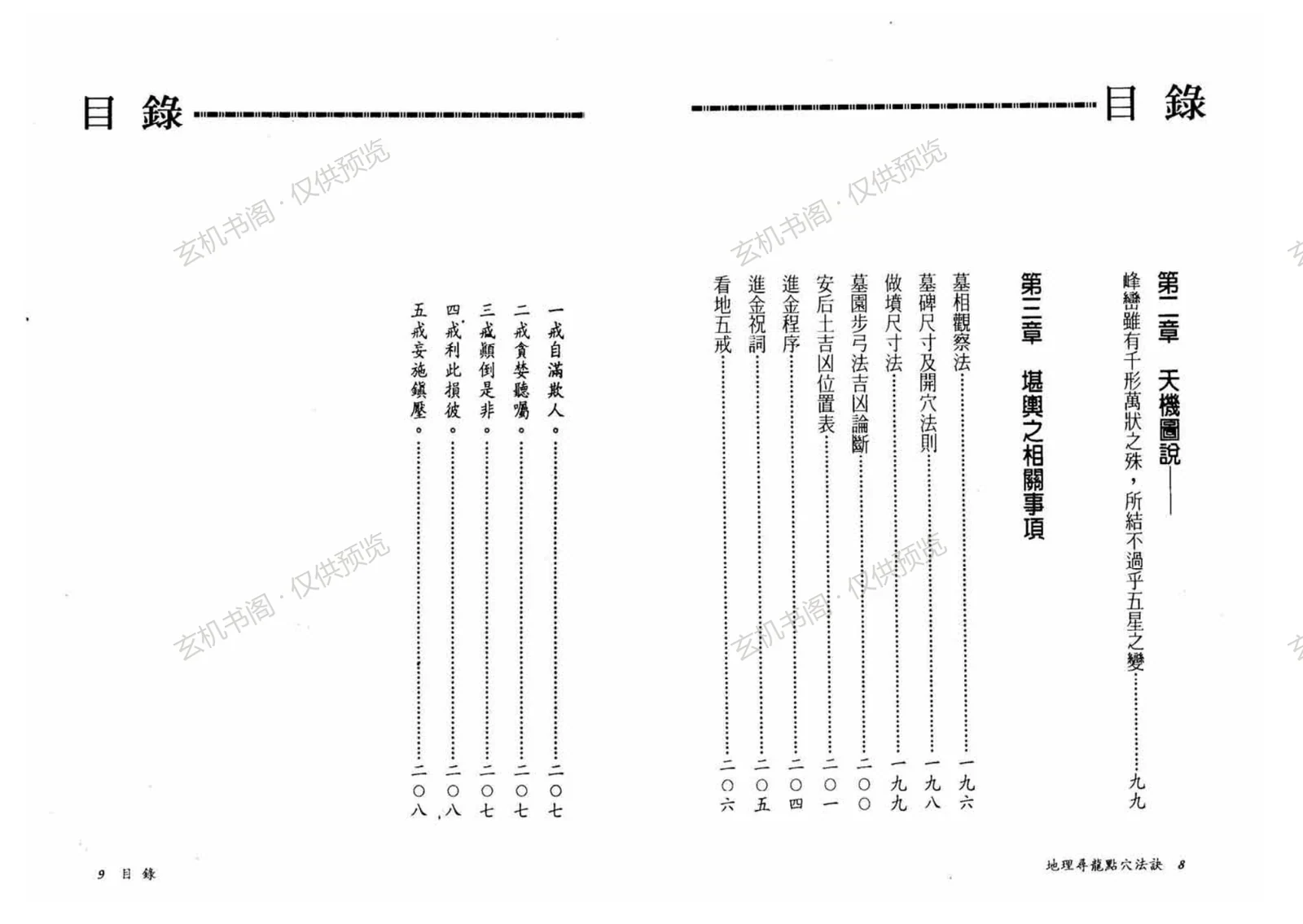
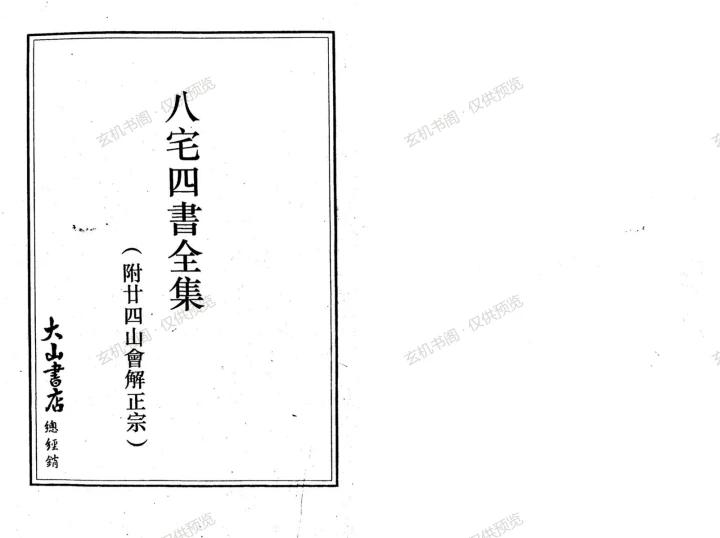
This book by Jiang Jianxian is a Form School (luantou) manual on traditional Chinese geomancy, published by Jinyuan Book Company. It centers on finding dragons and selecting burial sites. The opening chapter explains how to recognize ancestral mountains, distinguish primary and secondary branches, and identify unusual sites, then discusses dragon curtains, passes, table mountains, and facing mountains. The site-selection section covers the descending vein, the closing structure, surrounding hills, and the four orientations, along with methods for reading qi, riding vital energy, and recognizing flat or spread-out formations. Separate sections treat sand formations and water: auspicious and harmful sand shapes, Liao Jinjing's sand chants, yaosha, the eight-road sand method, shrimp-whisker and crab-eye waters, water mouths, water-city structures, and reduction methods. The final chapters address the Heavenly Mechanism diagram and practical matters such as grave observation, tombstone dimensions, excavation rules, earth-god rituals, and gold-entry procedures. The text is dense with oral formulas and suited to readers with prior grounding in Form School feng shui.
Contents
Chapter 1: Dragon-seeking and site-selection methods
Dragon curtains, passes, table mountains, and facing mountains
Site selection: vein descent, closing structure, surrounding hills
Reading qi and point-selection rules
Sand methods: shapes, Liao Jinjing's chants, yaosha, eight roads
Water methods: shrimp-whisker, crab-eye, water mouth, water city
Chapter 2: Heavenly Mechanism diagram
Chapter 3: Grave observation, tombstone size, excavation, gold entry
Key Points
Builds a complete Form School workflow from dragon seeking to site selection, sand, and water.
Emphasizes ancestral mountains, primary and secondary branches, and unusual site identification.
Site selection covers vein descent, closing structure, surrounding hills, and qi reading.
Sand methods include Liao Jinjing's chants, yaosha, and the eight-road method.
Water methods cover shrimp-whisker and crab-eye waters, water mouths, and water-city structures.
The final chapter turns to grave observation, tombstone dimensions, and burial procedures.