Reading guide
Content guideOverview
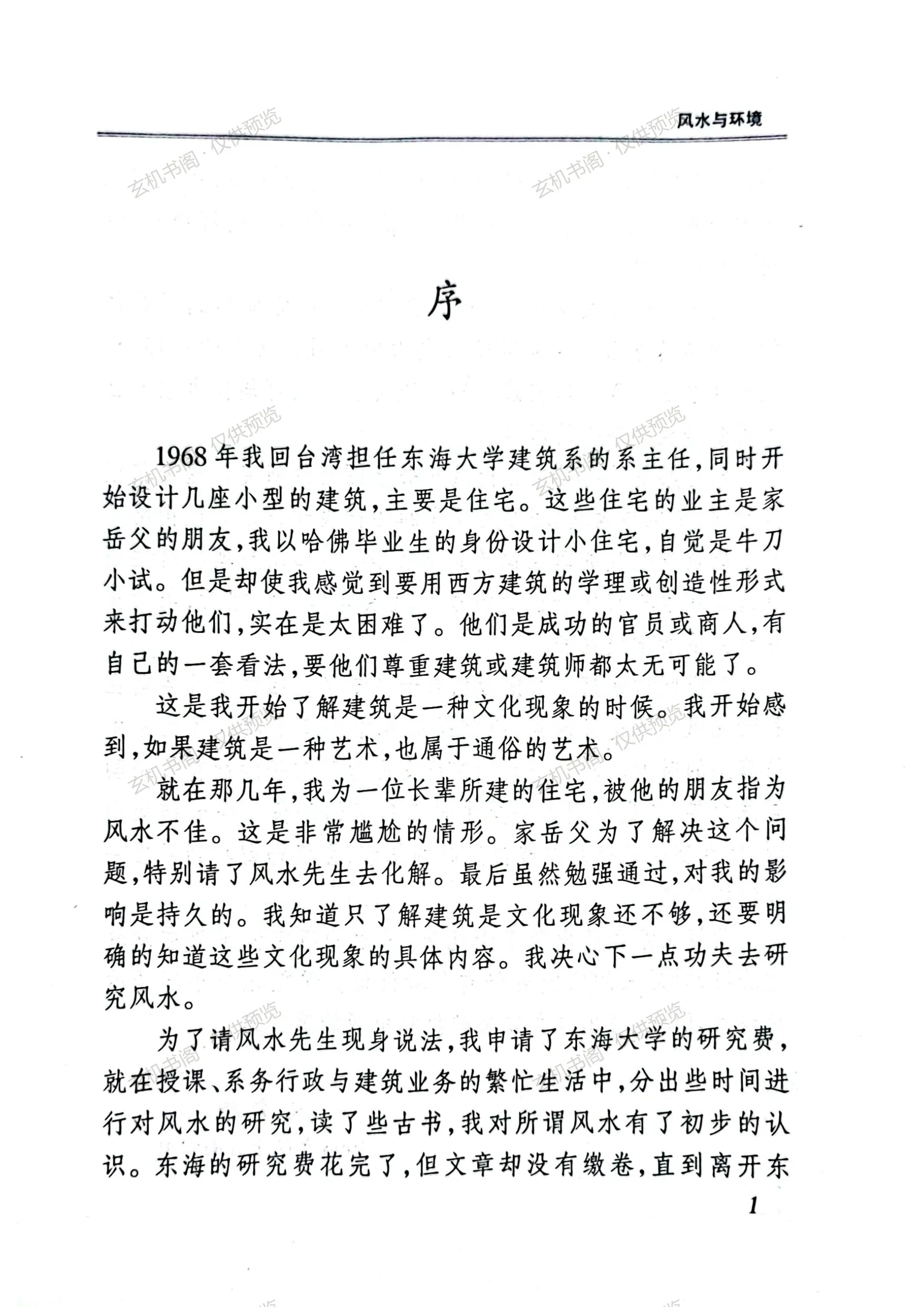
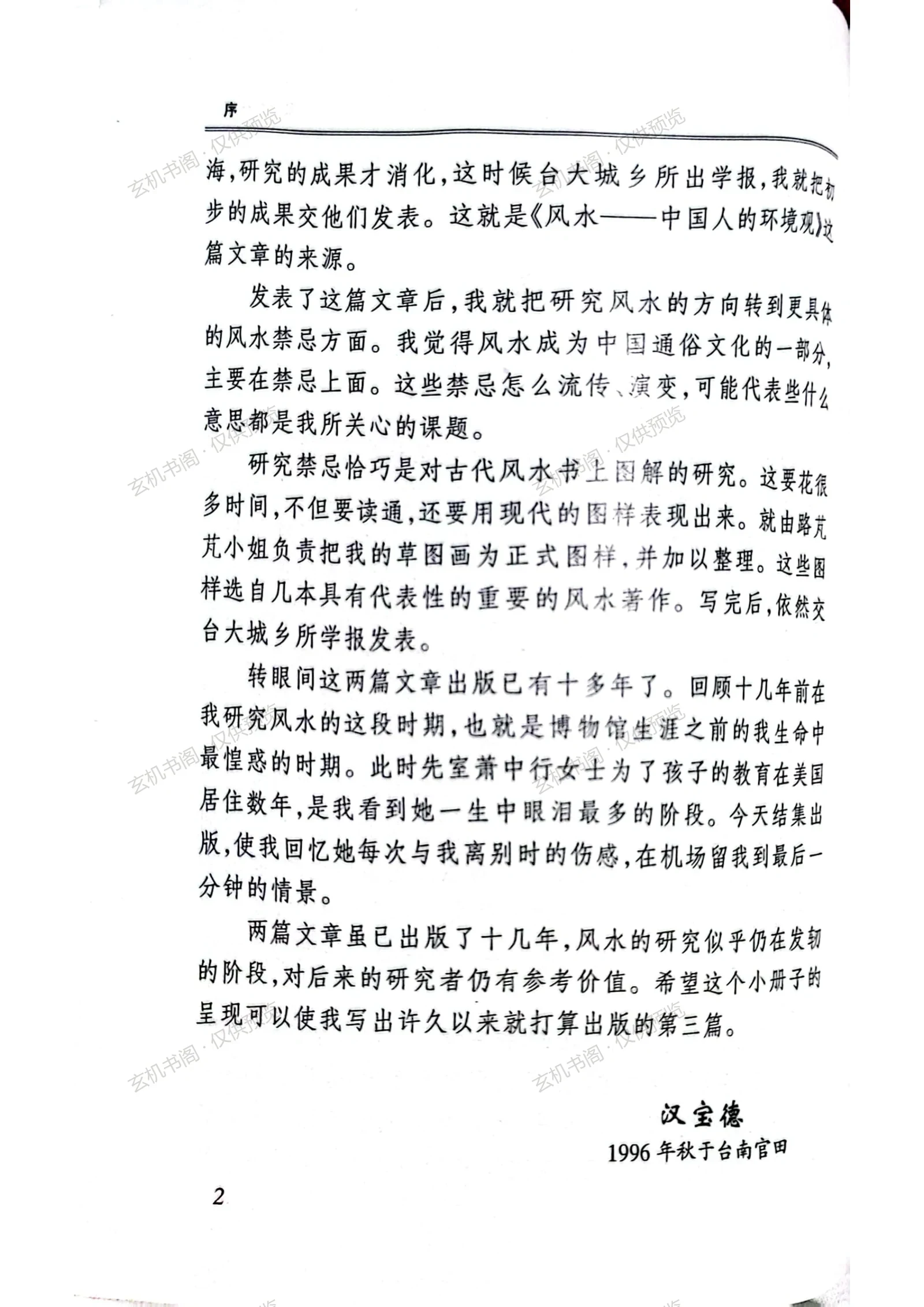
Written by architectural scholar Han Pao-teh and published by Tianjin Guji Press in 2003 as part of the Chinese Tian-gu Culture Series, this short book approaches fengshui through architectural and cultural research rather than as a practical manual. In the preface, Han explains that after returning to Taiwan in 1968 to chair the architecture department at Tunghai University, a residential project of his was criticized for poor fengshui, prompting him to study the subject seriously. He produced two papers—one on fengshui as the Chinese environmental view, and one on the illustrated study of fengshui taboos—which are collected here. The text argues that fengshui is an important part of Chinese popular culture and a Chinese way of viewing nature, that it became a building principle from the Ming dynasty onward, and that studying fengshui taboos helps us understand Chinese attitudes toward the environment. The author seeks a balance between modern environmental planning and scientific principles on the one hand, and natural and folk cultural traditions on the other. The book is suitable for readers interested in fengshui culture, architectural history, and environmental thought.
Contents
Preface: How the author began studying fengshui
Fengshui and the Chinese environmental view
The transmission and evolution of fengshui taboos
Organizing and redrawing diagrams from old fengshui books
Conclusion: Reference value of fengshui research
Key Points
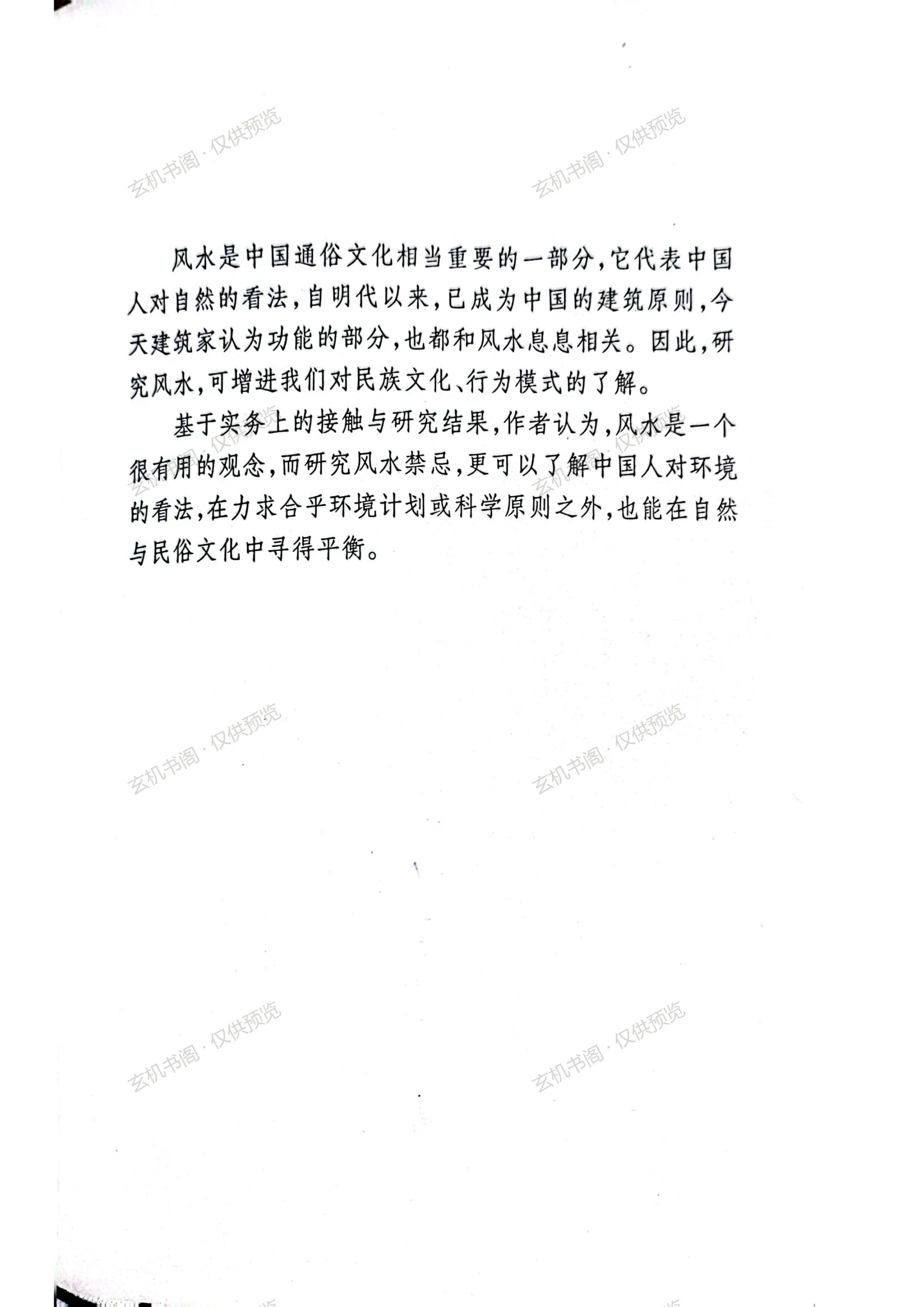
Fengshui is a key part of Chinese popular culture and environmental views.
Since the Ming dynasty, fengshui has been a principle in Chinese architecture.
Studying fengshui taboos reveals Chinese attitudes toward the environment.
Ancient fengshui diagrams are reorganized and redrawn in modern form.
The book seeks balance between scientific planning and folk culture.