Reading guide
Content guideOverview
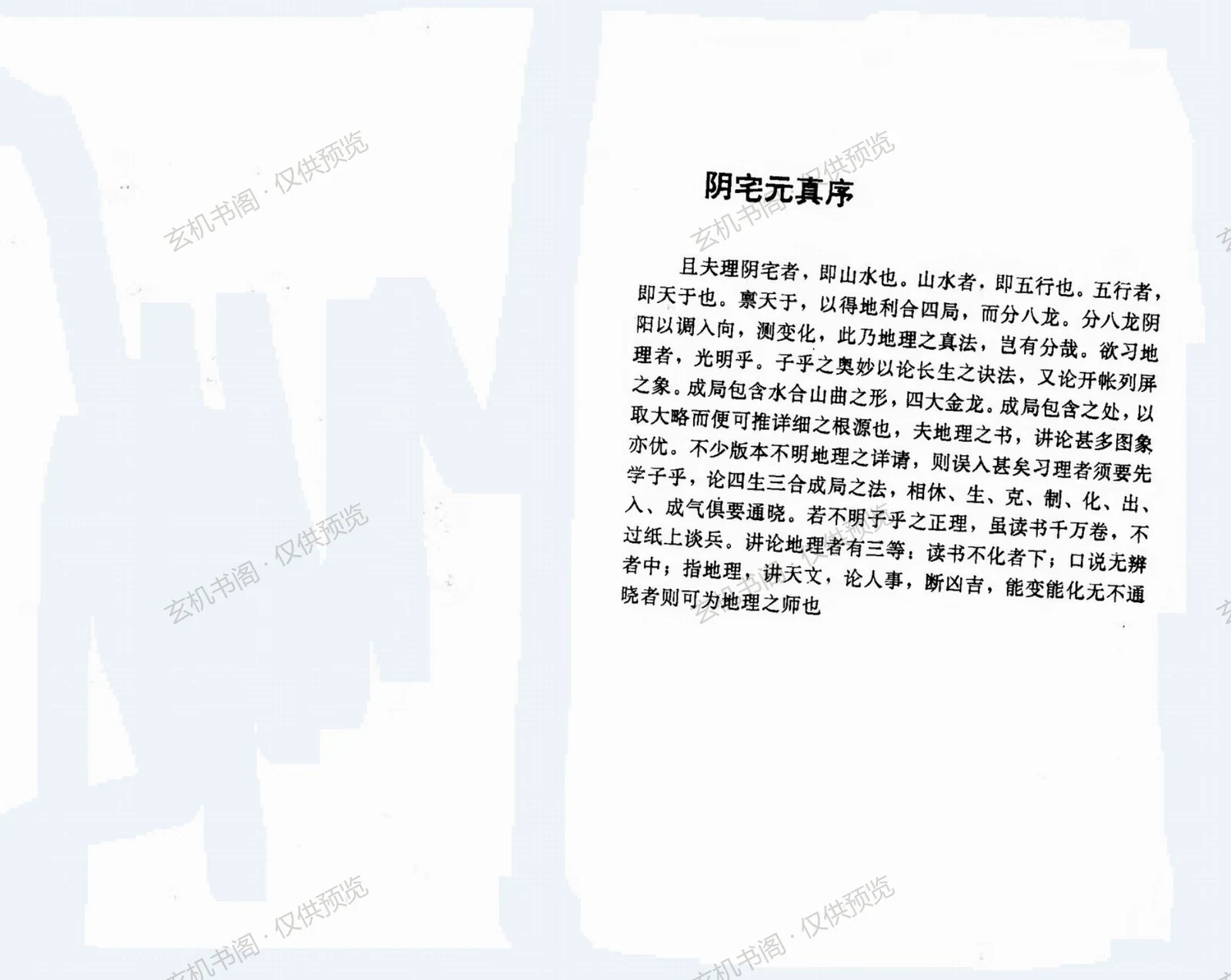
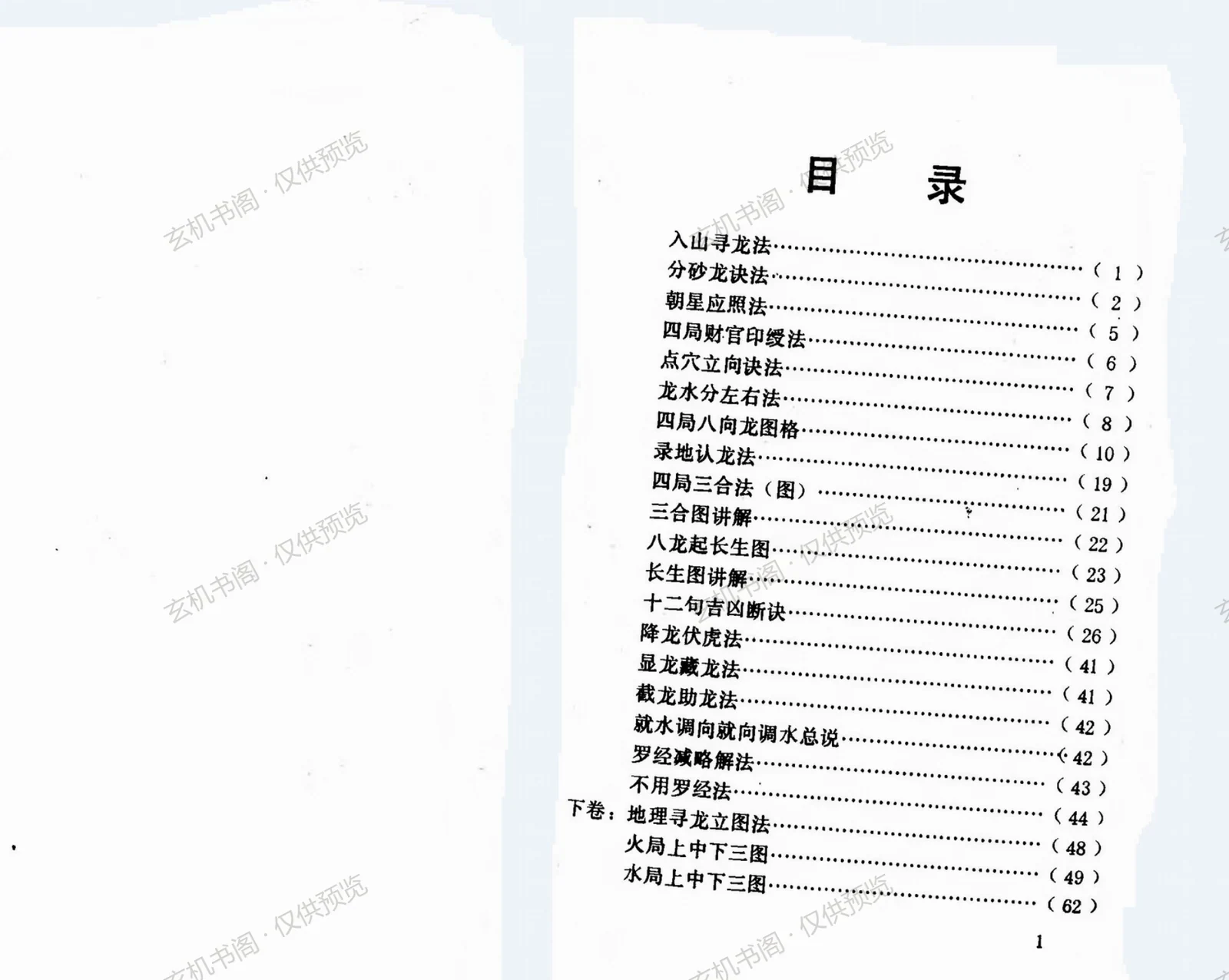
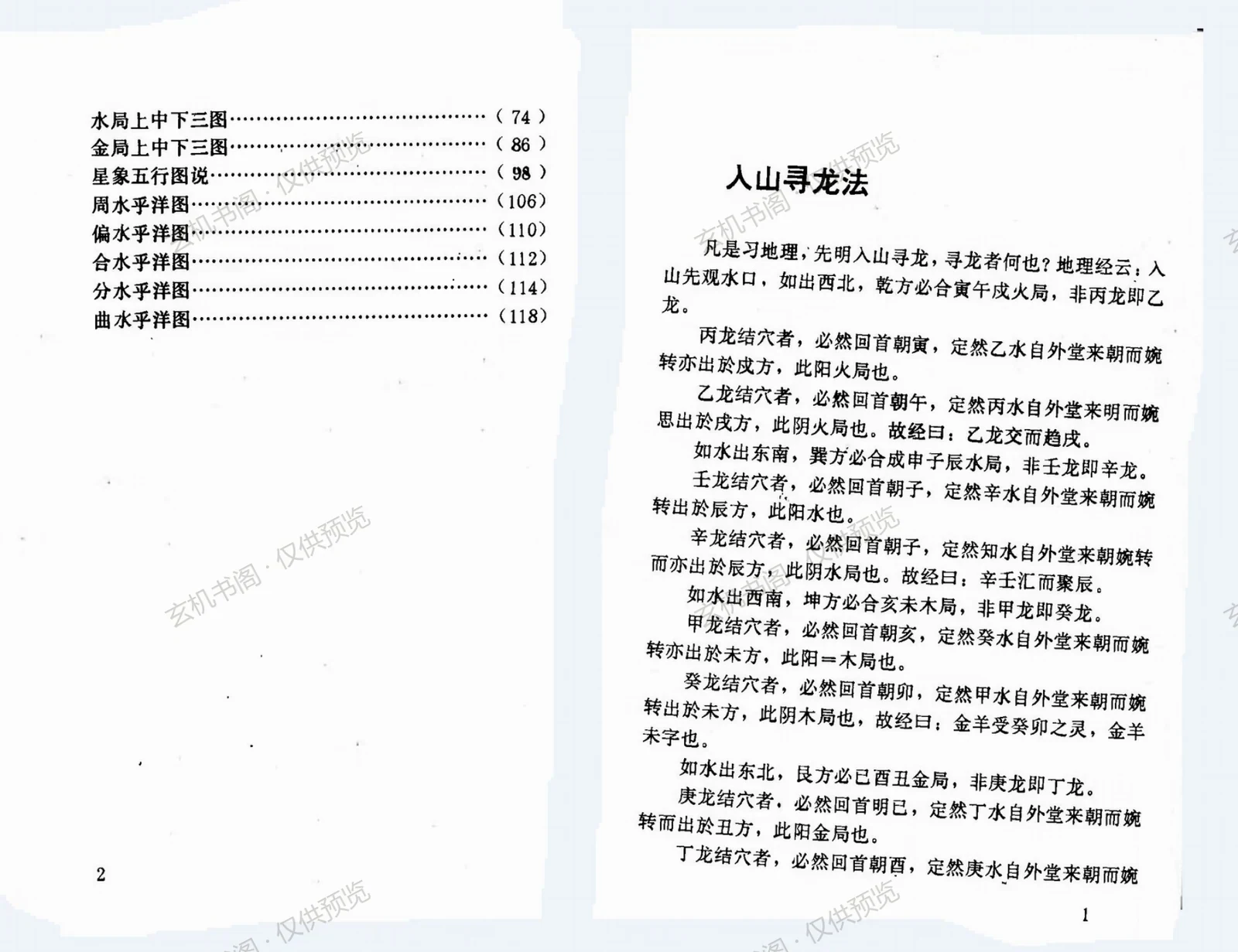
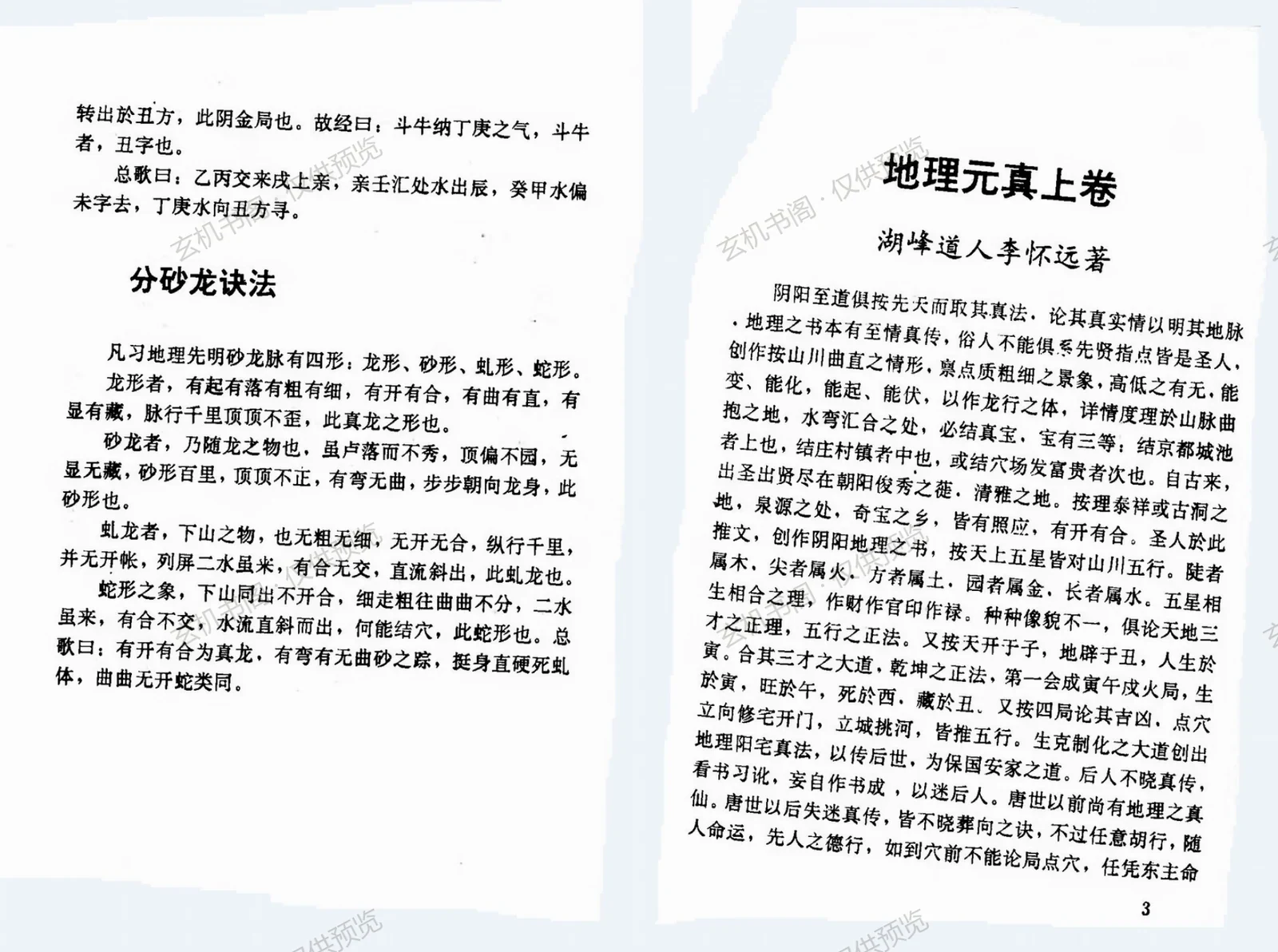
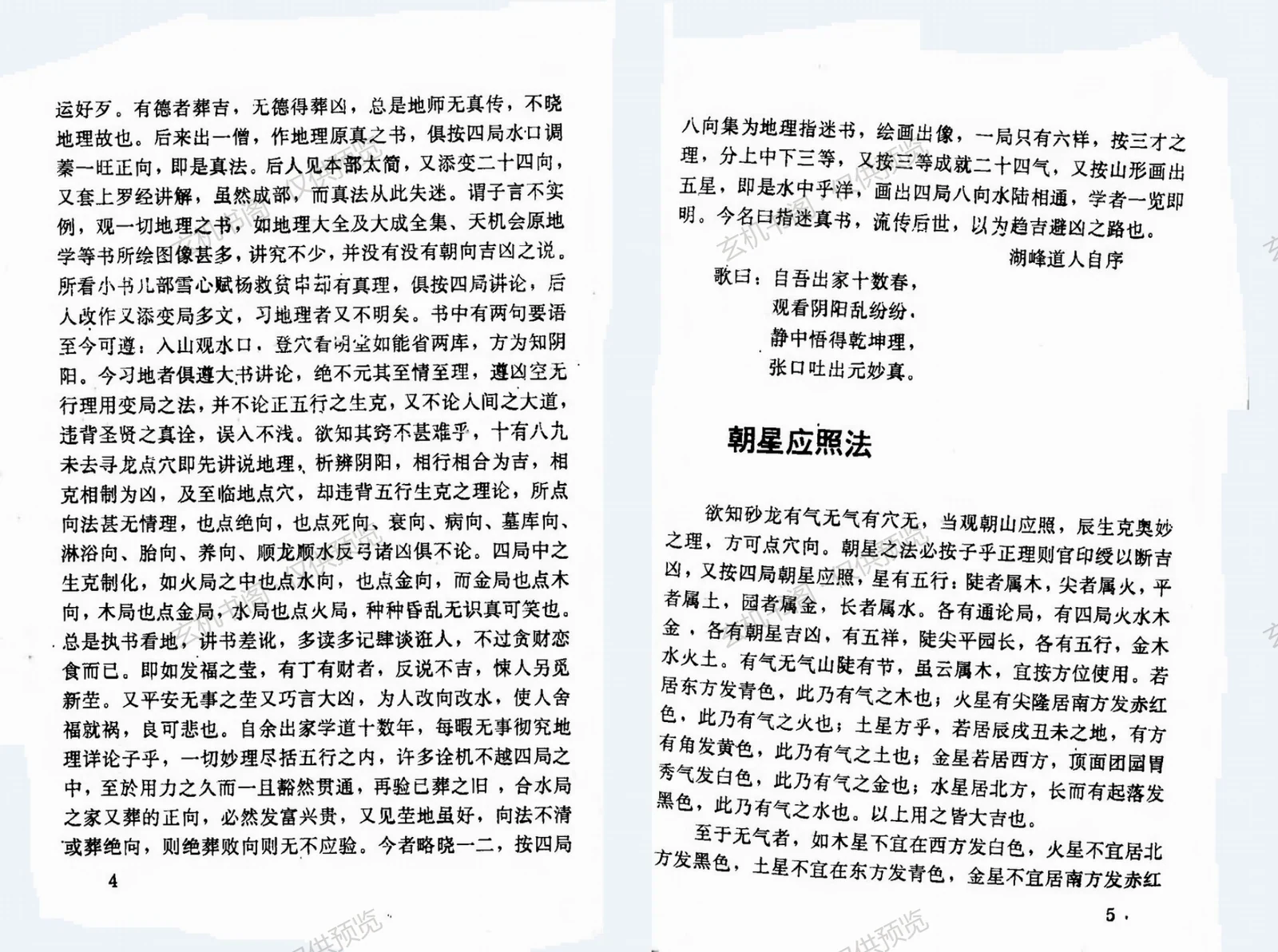
Dili Yuanzhen, attributed to Li Huaiyuan (style name Hufeng Daoren) and marked as a Xinchou (1891) Guangxu-era reprint on the cover, is a specialized fengshui text centered on yinzhai (burial) siting. Its table of contents and opening chapters show a practical structure built around the Four Bureaus (fire, wood, metal, water): entering the mountains to seek the dragon, classifying sand into dragon, sand, rainbow, and snake forms, reading facing stars, determining wealth-official-seal configurations, selecting the point and orientation, dividing left and right water, diagramming the eight directions of the four bureaus, recognizing dragons, explaining the four-bureau three-combination method, the eight-dragon longevity chart, twelve-line auspicious and inauspicious judgments, techniques for subduing and hiding dragons, water-adjustment orientation, and simplified luopan usage. The lower volume adds diagrams for fire, water, and metal bureaus in upper, middle, and lower grades, along with star-phase and water-level diagrams. The author's preface criticizes contemporaries for empty diagram-mongering and misuse of the compass, insisting on water-mouth-based bureau determination and five-phase generation and restraint. The book is valuable for readers studying Sanhe-school yinzhai theory and the coordination of dragon, cave, sand, water, and orientation.
Contents
Preface: mountains, water, five phases, four bureaus and eight dragons
Entering the mountains to seek the dragon: water mouth defines the bureau
Sand classification: dragon, sand, rainbow, snake forms
Facing stars and four-bureau wealth-official-seal methods
Point selection, orientation, and left-right water division
Four-bureau three-combination method and eight-dragon longevity chart
Twelve judgments and dragon-subduing techniques
Lower volume: fire, water, metal bureau diagrams and water-level charts
Key Points
The Four Bureaus (fire, wood, metal, water) unify dragon seeking, orientation, and water regulation.
Water mouth is the first key; facing stars and incoming dragons are read from it.
Sand is classified into dragon, sand, rainbow, and snake, with true dragons having opening and closing.
The twelve judgments and eight-dragon longevity chart assess site fortune.
Luopan use is deliberately simplified rather than elaborate.
The lower volume pairs fire, water, and metal bureau diagrams with explanations.