Reading guide
Content guideOverview
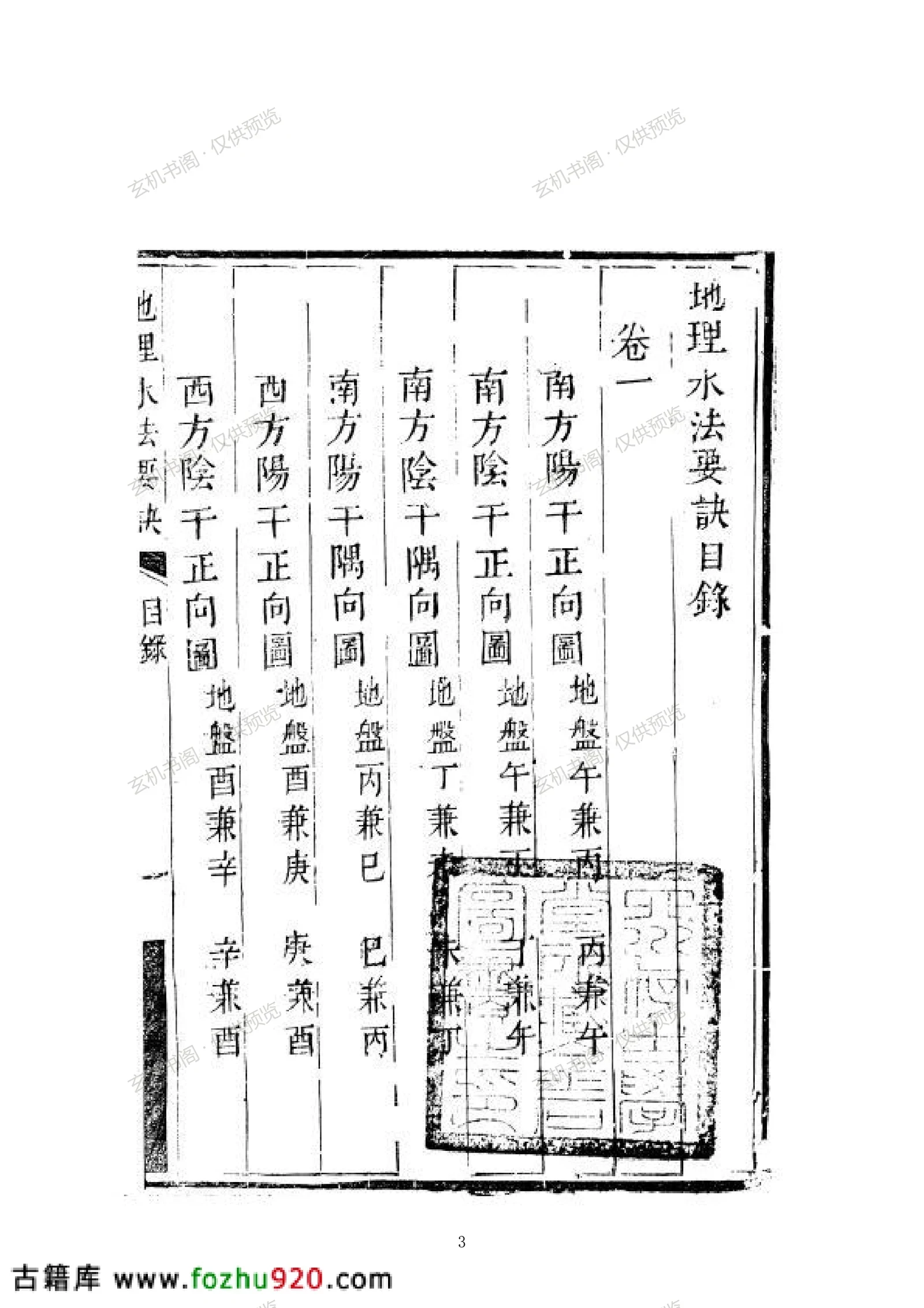
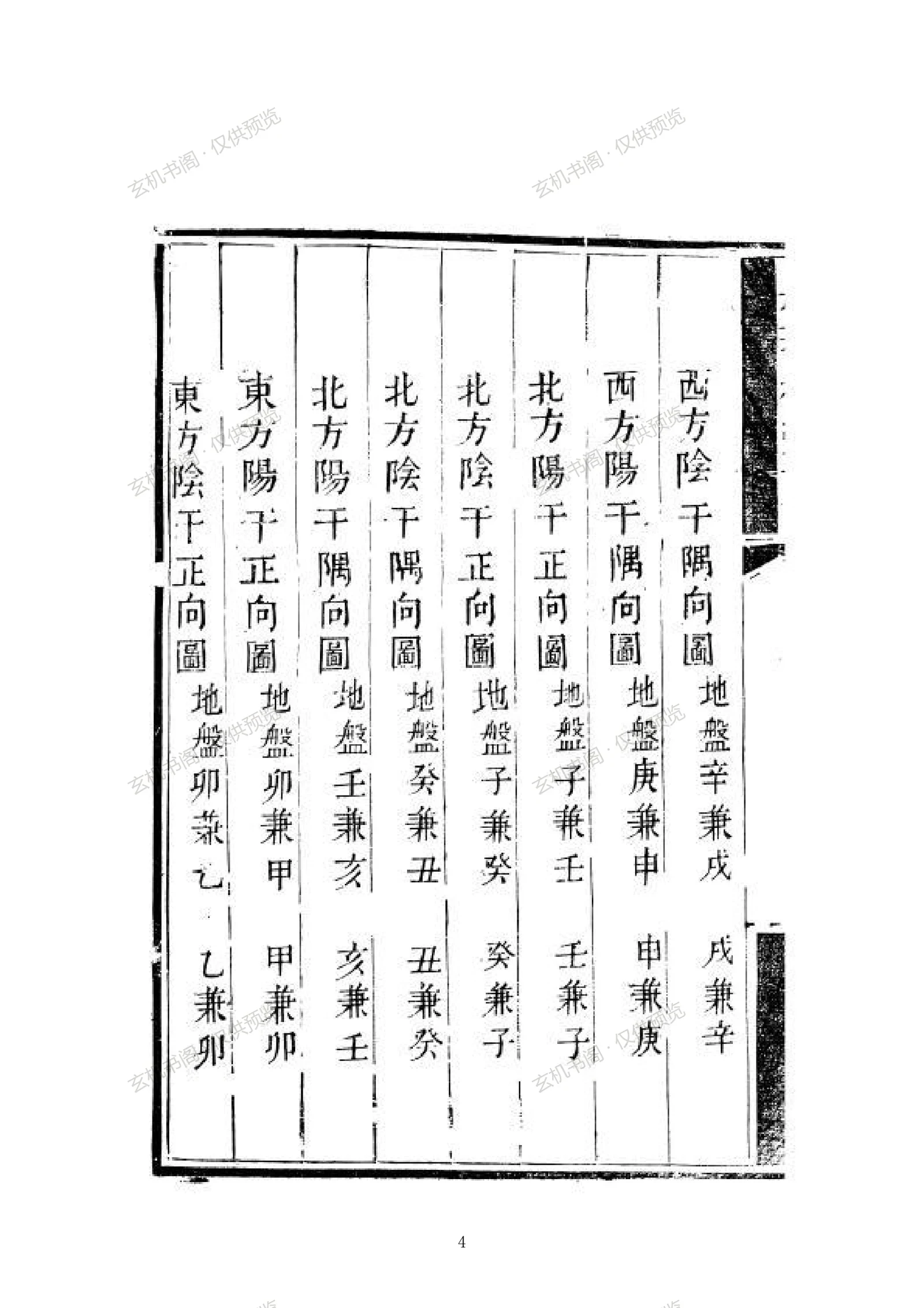
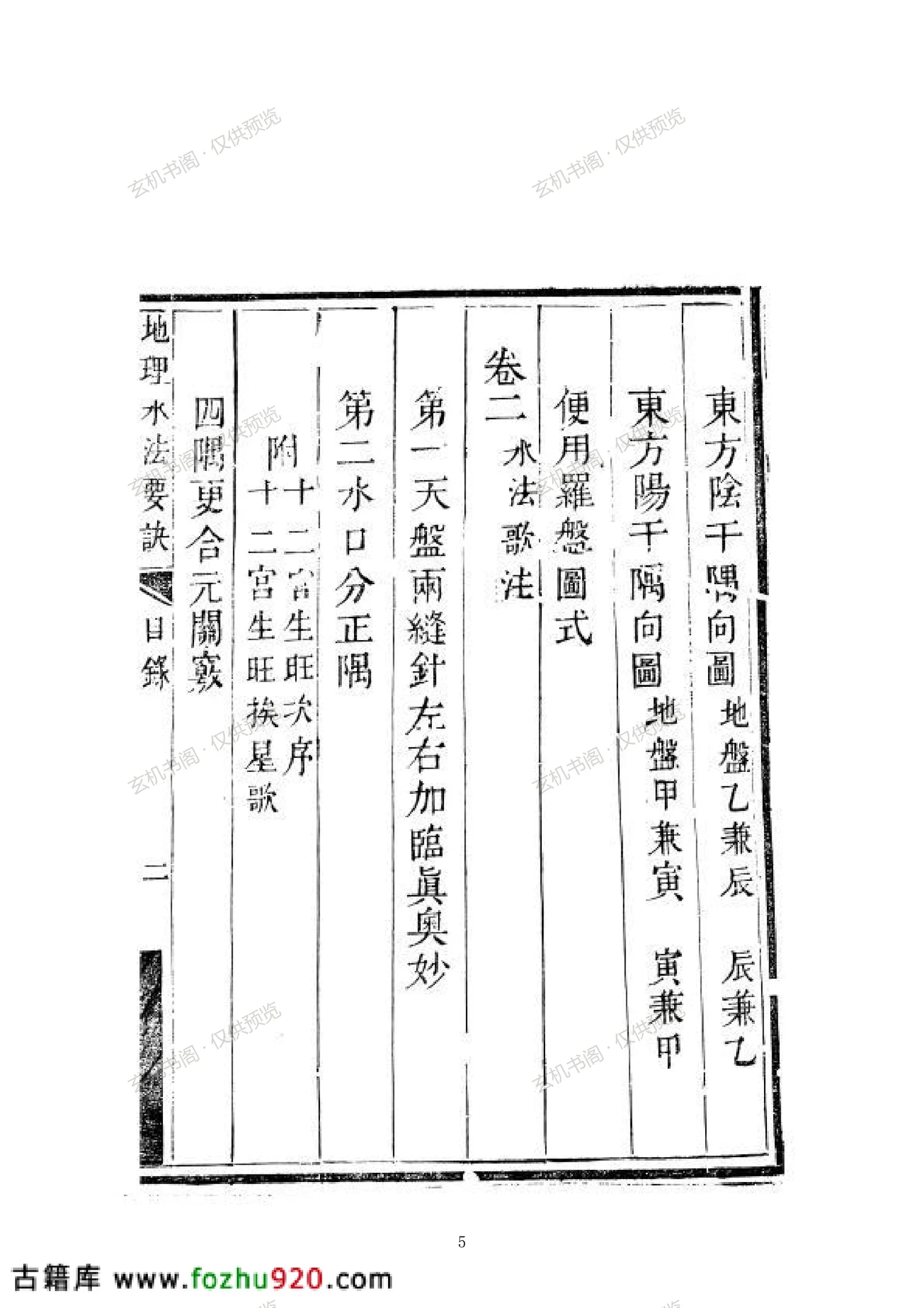
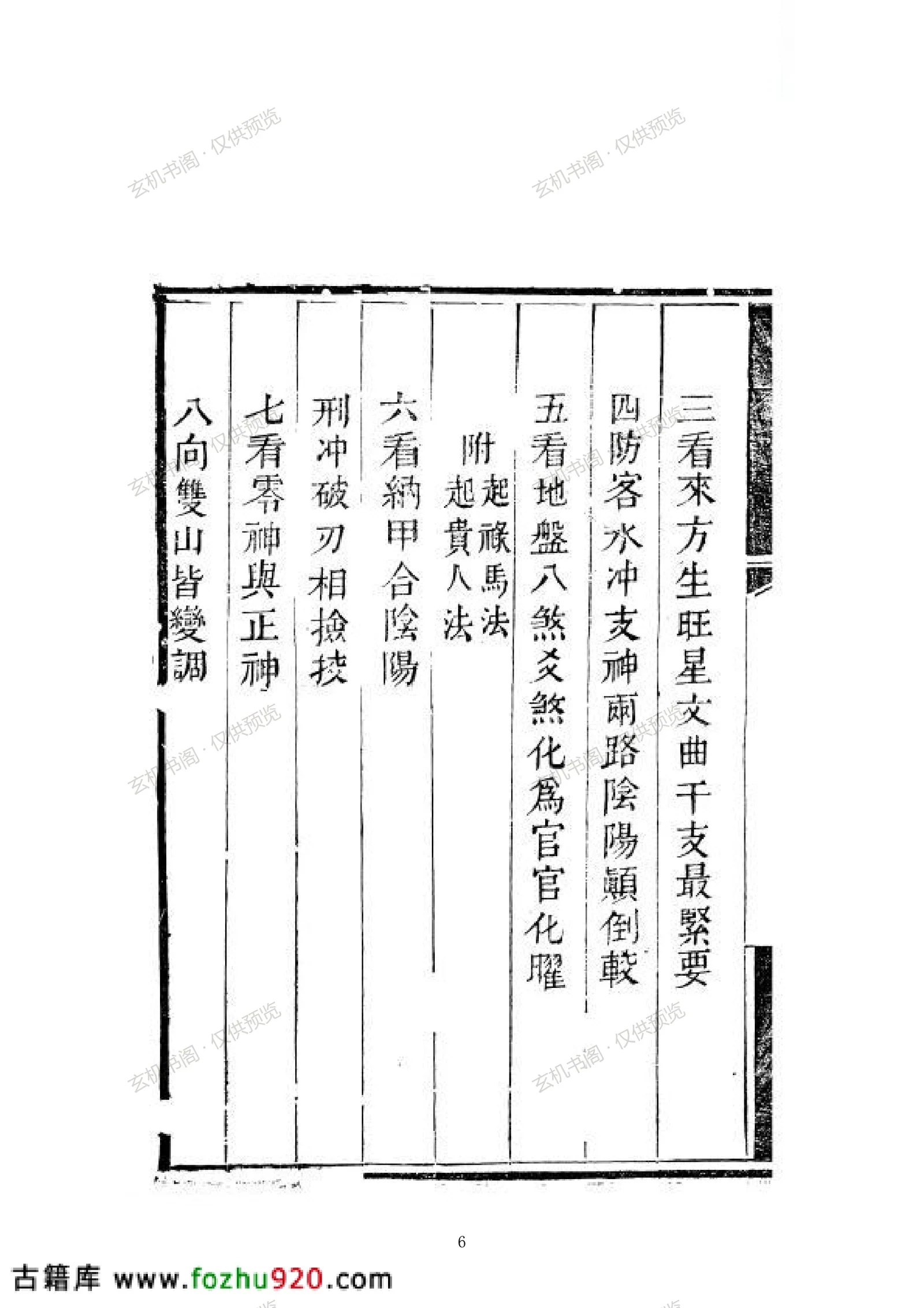
The opening pages of Ji Dakui's Essential Formulas for Geographical Water Methods present a Qing-era fengshui text built around the 24 directions of the luopan. The table of contents for Volume One lists diagrams for the upright and offset orientations of the southern, western, northern and eastern sectors, such as the noon direction with a bing offset or the you direction with a xin offset. Later headings cover the two needle positions, water mouth classification, the twelve-palace rising and declining sequence, and instructions for using the compass. Volume Two contains annotated water-method verses and rules on incoming water, guest water clashes, and yin-yang reversals. The work belongs to the Sanhe tradition and combines verses with diagrams to explain how orientation and water flow determine fortune, making it a practical source for studying traditional Chinese geomancy.
Contents
Volume One contents: upright and offset diagrams for 24 directions
Needle positions and added orientations
Classifying the water mouth
Twelve-palace rising and declining verse
How to use the luopan
Volume Two: annotated water-method verses
Rules on incoming and guest water
Key Points
Uses upright and缝 needle positions to define 24 orientations
Water mouth classification is central to judging fortune
Offset orientations differ from upright ones and must be clear
Includes star, nobleman and najia auxiliary verses
Verses and diagrams are meant to be used with a compass