Reading guide
Content guideOverview
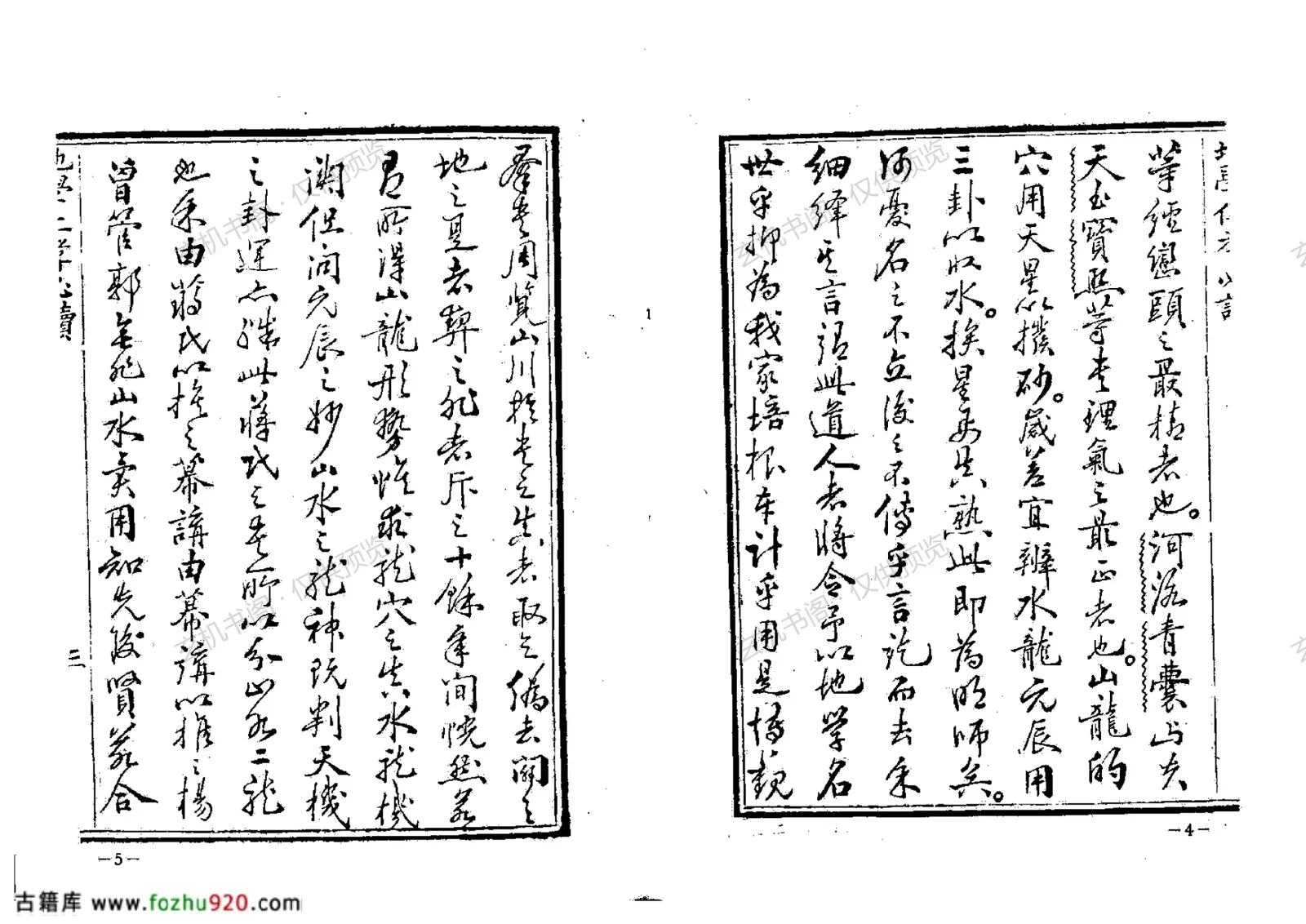
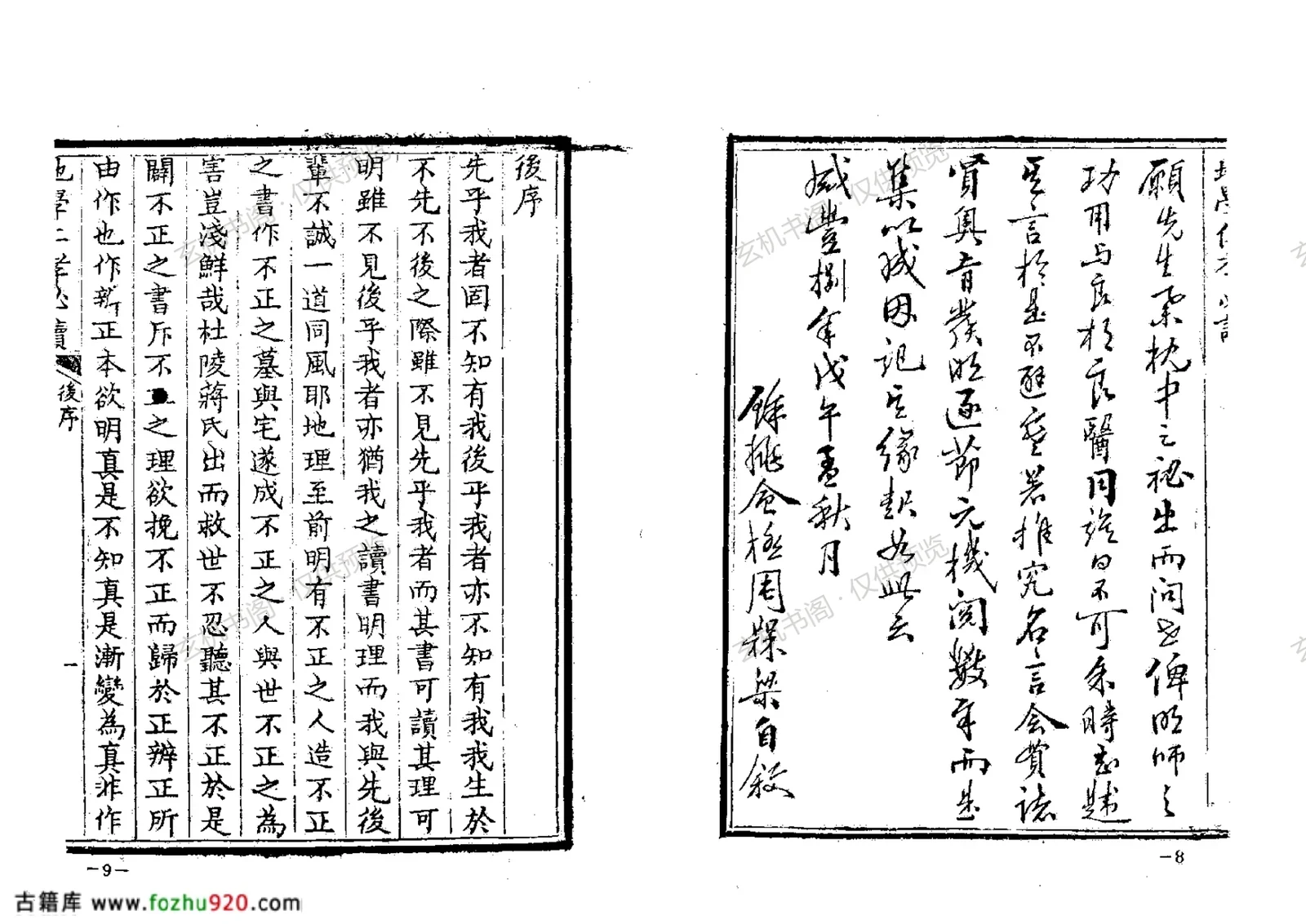
Compiled by Zhou Meiliang of Yuyao in the Guangxu era, this fengshui work builds its argument around filial piety: choosing a burial site for one's parents is a duty of the dutiful son, and so one must discern authentic geomancy from false claims. The prefatory and postfatory essays recount the author's early exposure through his maternal grandfather, his studies with teachers of the Jiang Dahong lineage, and his intention to correct popular errors. The book discusses mountain and water dragons, point selection, sand and water methods, and celestial patterns, combining form and liqi approaches. It was written in running-cursive handwriting rather than standard block type, making the script itself a barrier for modern readers. It is useful for studying late-Qing folk geomancy and the transmission of the Jiang school.
Contents
General preface: family background and interest in geomancy
Author's preface: teacher dialogues and the aim of correction
Mountain and water dragons, point and sand methods
Celestial patterns and Jiang Dahong's geographic corrections
Postface: distinguishing true from false, returning to filial piety
Author's colophon dated Guangxu dingchou
Key Points
Frames geomancy as an expression of filial piety
Follows the Jiang Dahong lineage and criticizes false methods
Covers mountain/water dragons, points, sand, and celestial liqi
Written in running-cursive script, not standard type
Compiled in the Guangxu dingchou year by Zhou Meiliang of Yuyao