Reading guide
Content guideOverview
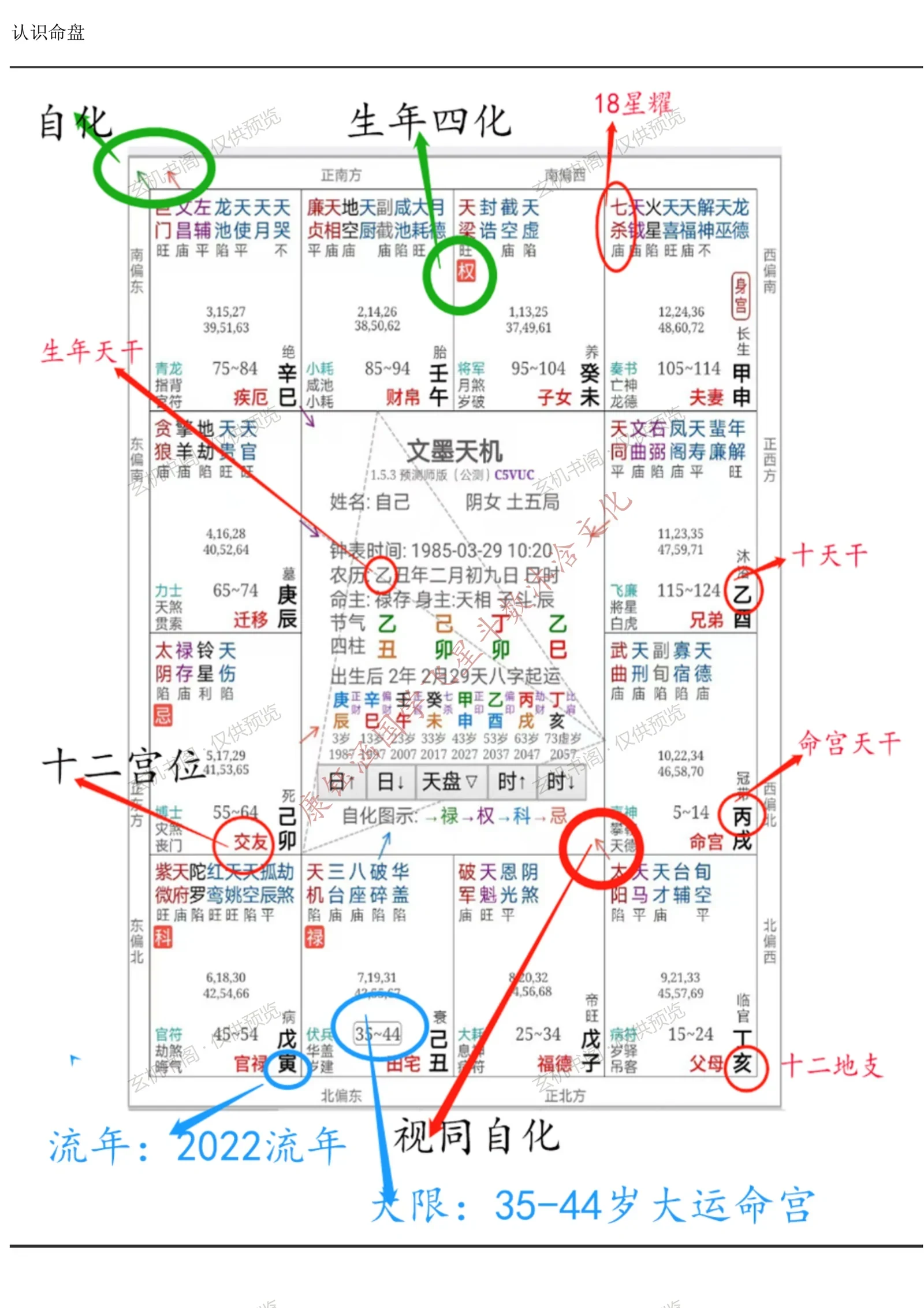
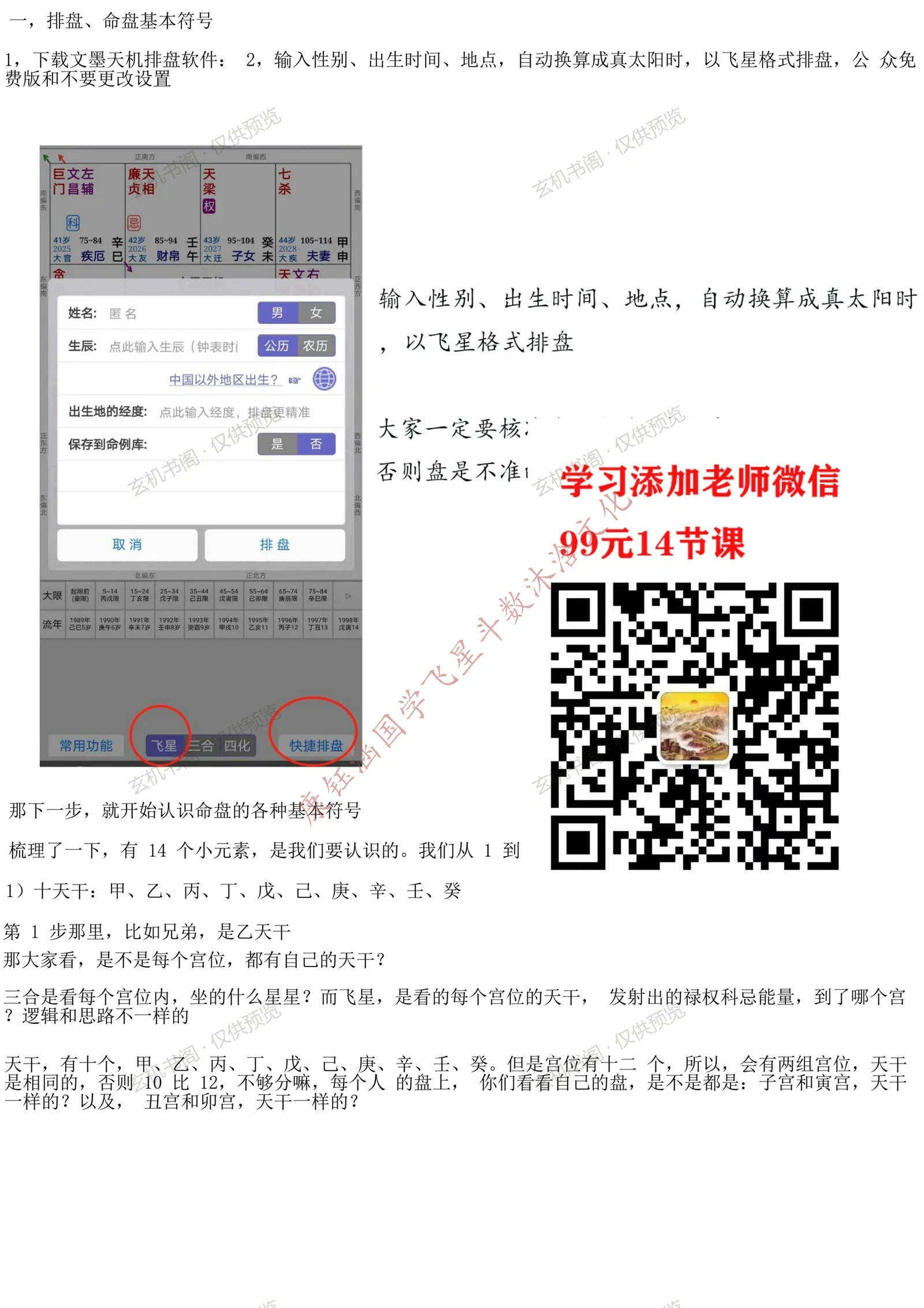
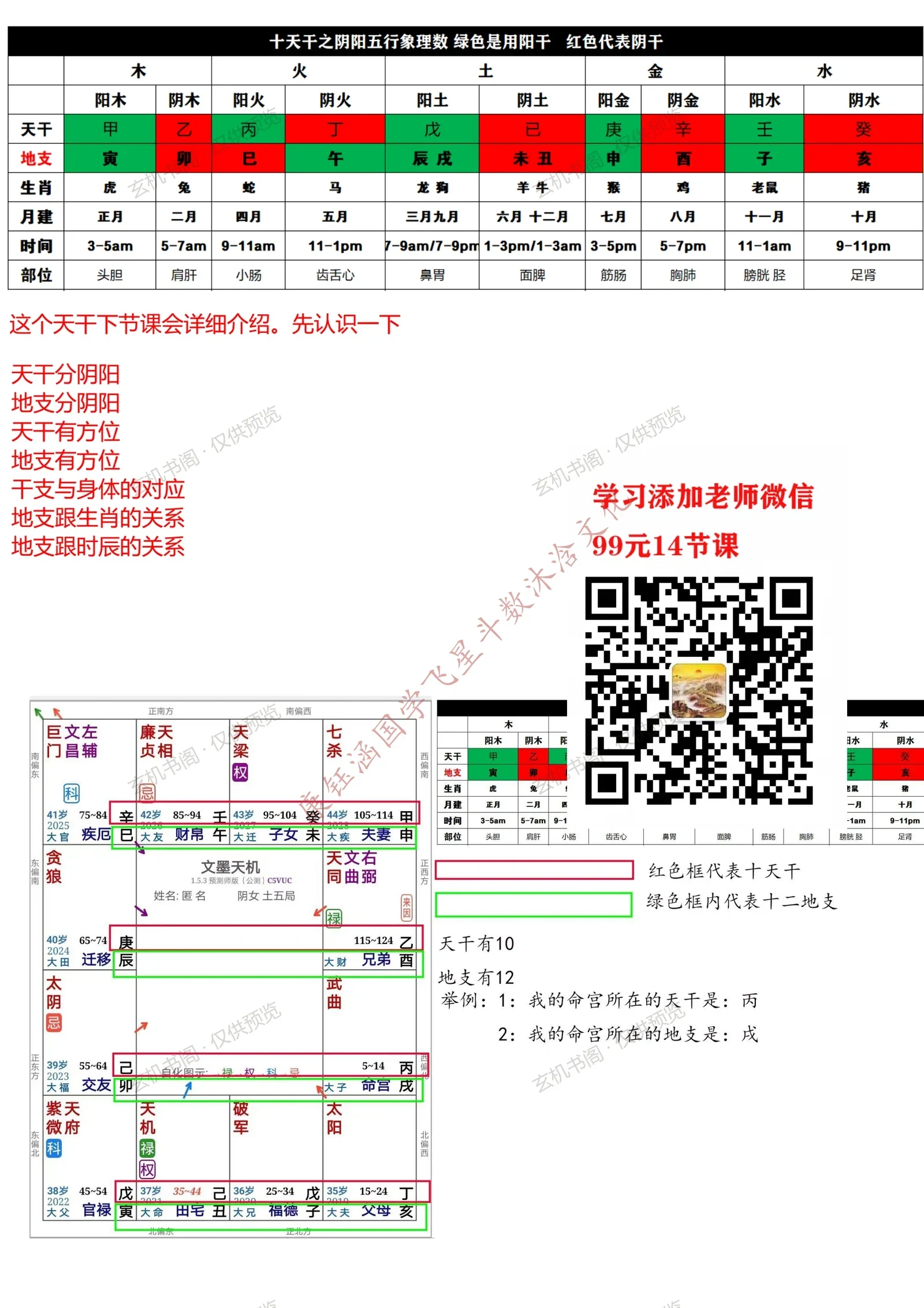
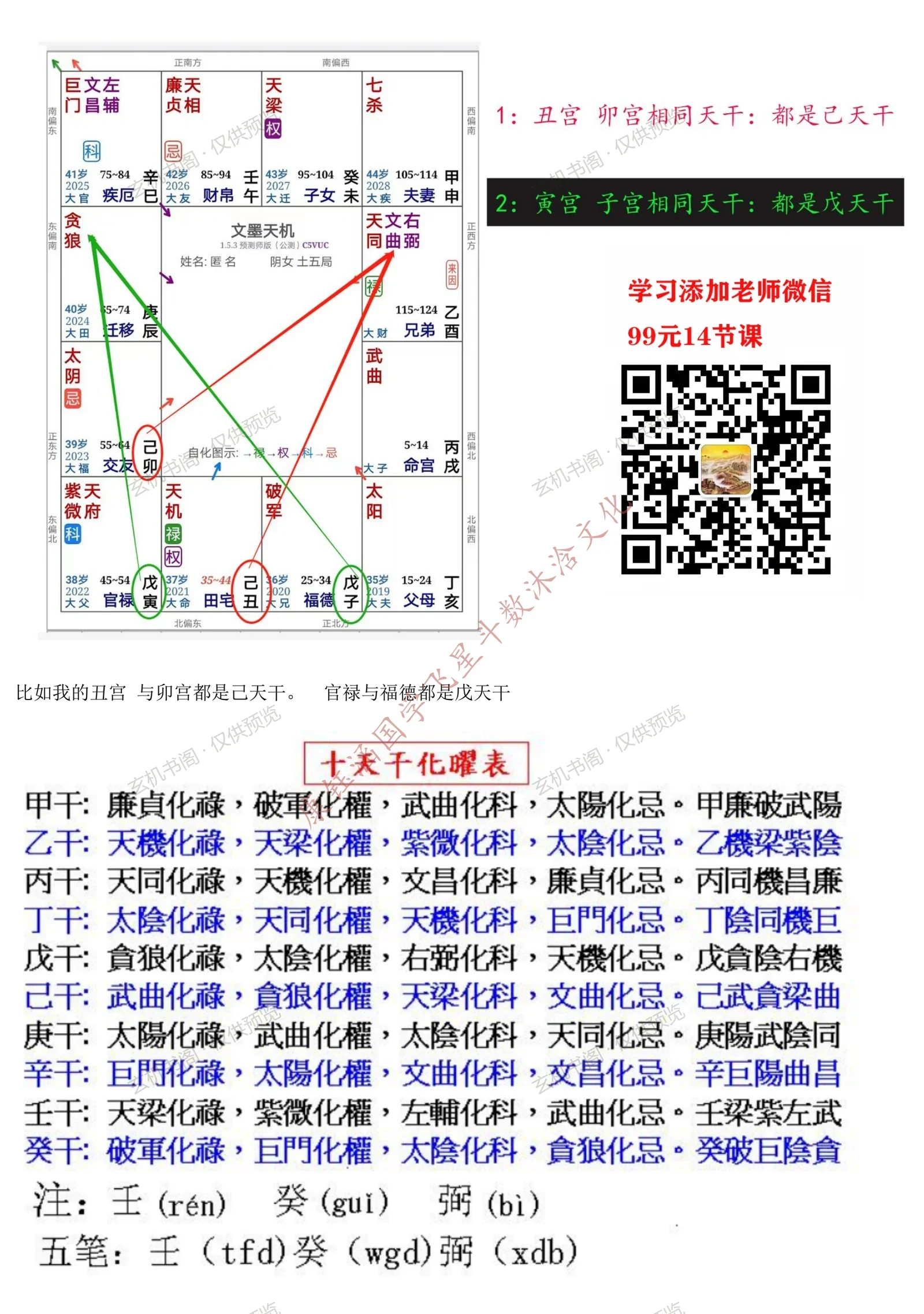
This handout is the first lesson in a Zi Wei Dou Shu (Purple Star Astrology) course in the Flying Star tradition, centered on reading a natal chart. It opens with an image of the patriarch Xi Yi, then explains how to cast a chart with the Wenmo Tianji software by entering gender, birth time, and location, selecting the Flying Star format, and verifying the data. The main body breaks down the chart's basic symbols: the ten heavenly stems distributed across the twelve palaces (noting that some palaces share the same stem), a reference table linking stems to yin-yang, the five phases, zodiac animals, months, hours, and body parts, and an annotated sample chart marking the twelve palaces, birth-year stems, earthly branches, annual and major-limit positions. It then introduces the birth-year four transformations and self-transformation, and closes with a full table of stem-to-transformation correspondences for the lu, quan, ke, and ji stars, plus pronunciation and input-method notes for ren, gui, and bi. The material is practical and beginner-oriented, focused on building a working vocabulary of chart symbols.
Contents
Casting a chart: enter birth data, choose Flying Star format
The ten heavenly stems and their distribution across palaces
Table of stems with yin-yang, phases, zodiac, and hours
Twelve palaces, birth-year stems, and branch labels
Birth-year four transformations and self-transformation
Stem-to-transformation table: lu, quan, ke, ji stars
Key Points
Use Wenmo Tianji in Flying Star mode and verify birth data
Twelve palaces map to ten stems, so two pairs of palaces share stems
Stems carry yin-yang, five-phase, zodiac, month, hour, and body-part correspondences
Each palace has a name, and charts also show birth-year stems and branches
The stem-to-transformation table determines which four stars become lu, quan, ke, and ji