Reading guide
Content guideOverview
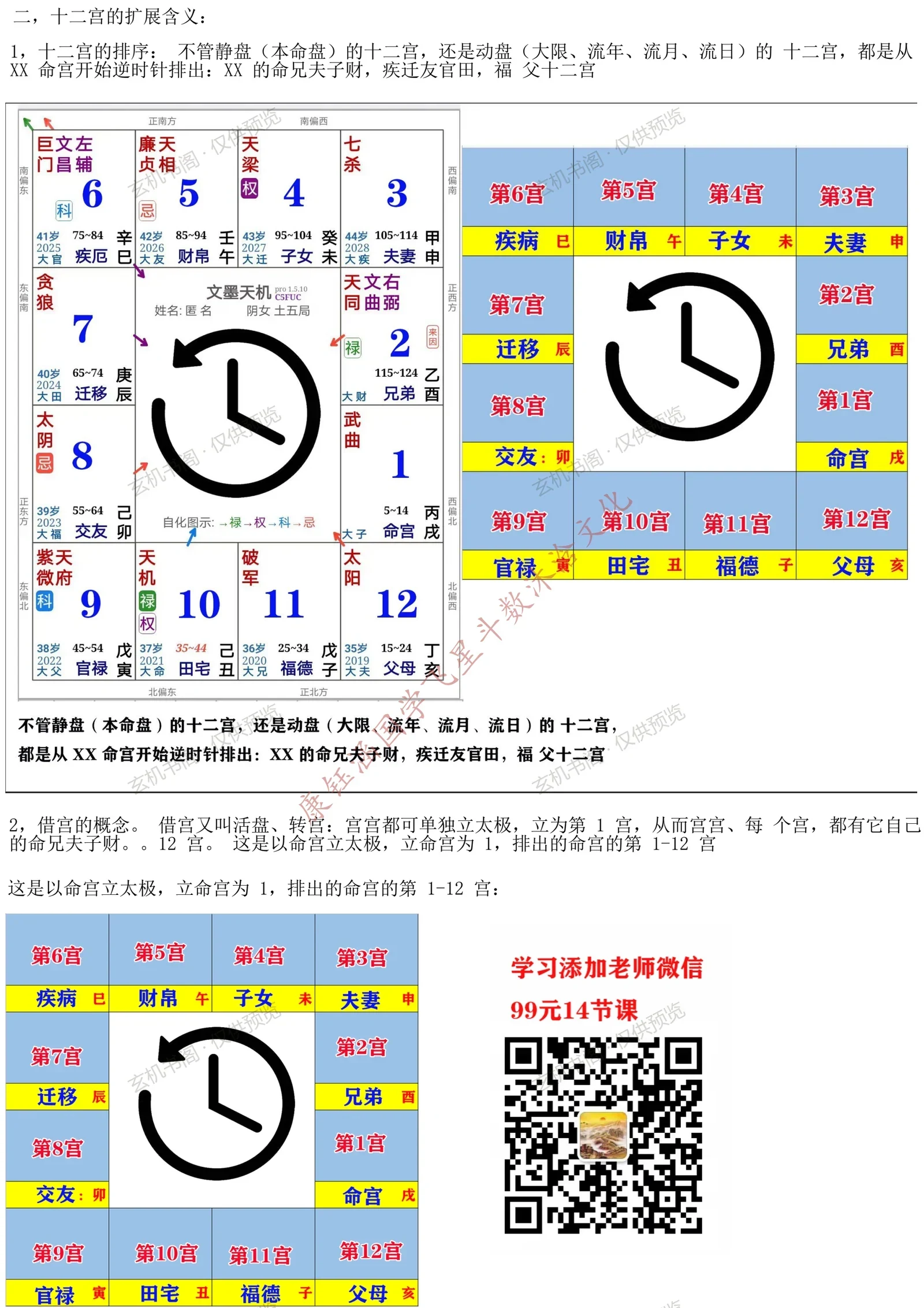
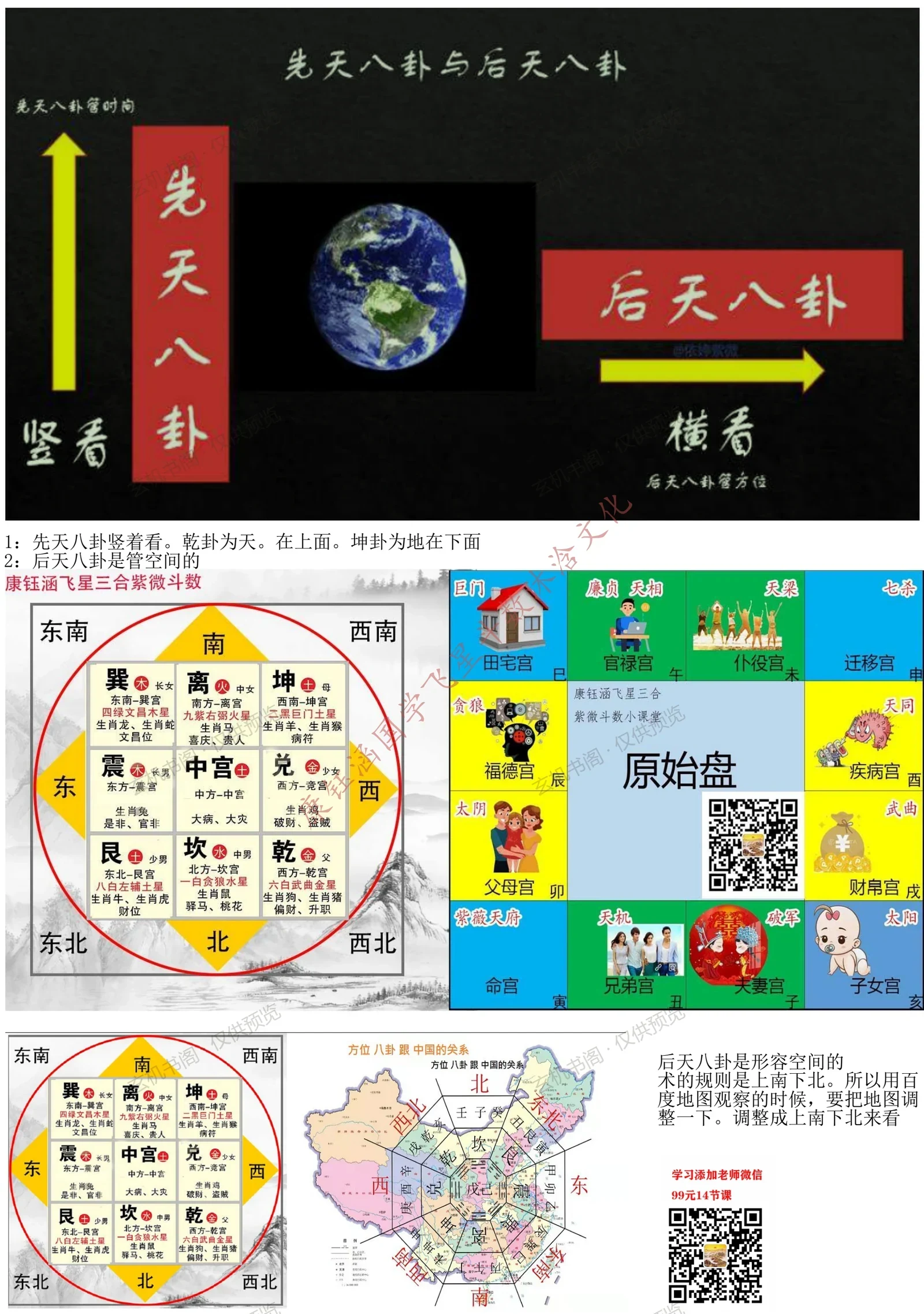
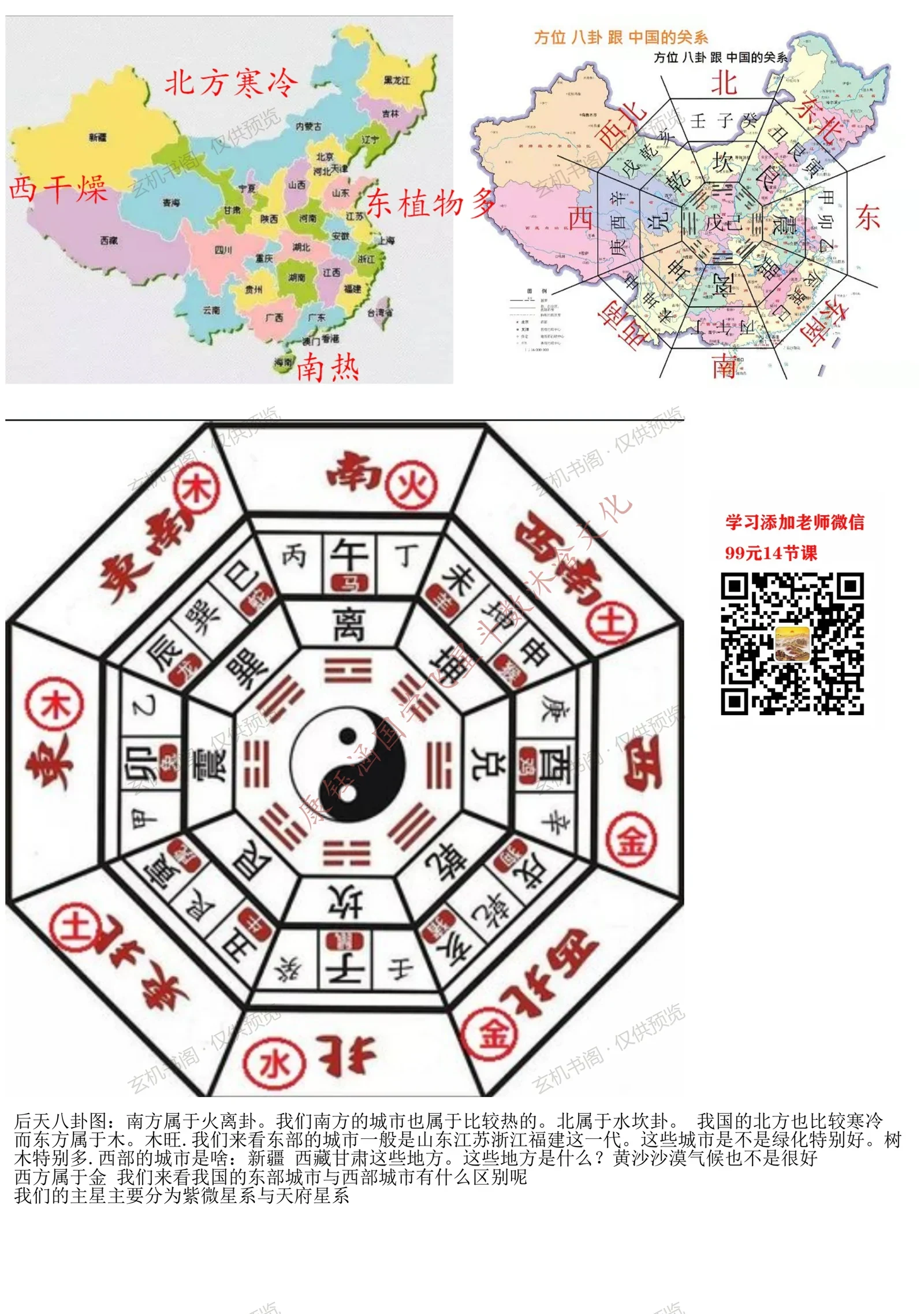
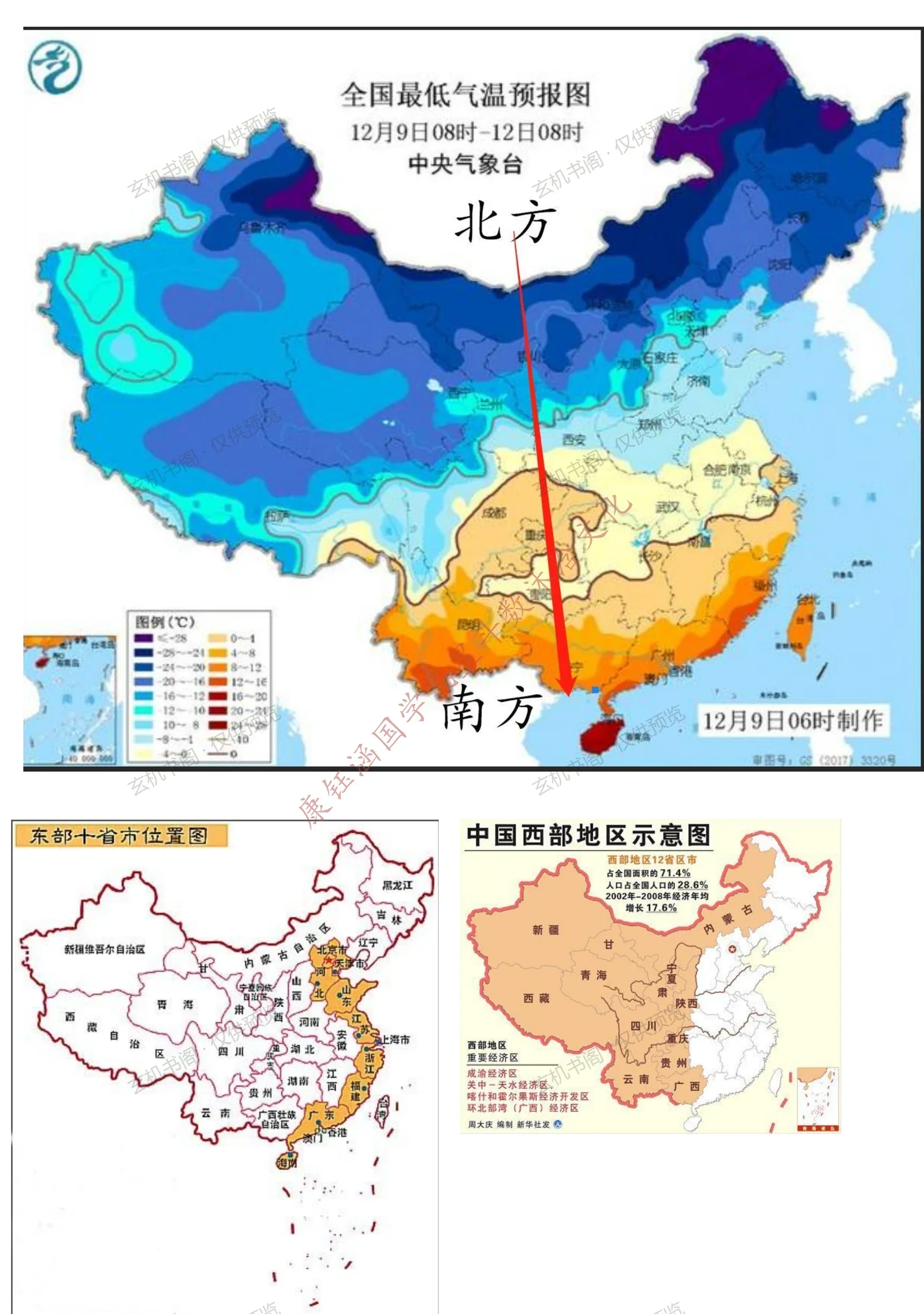
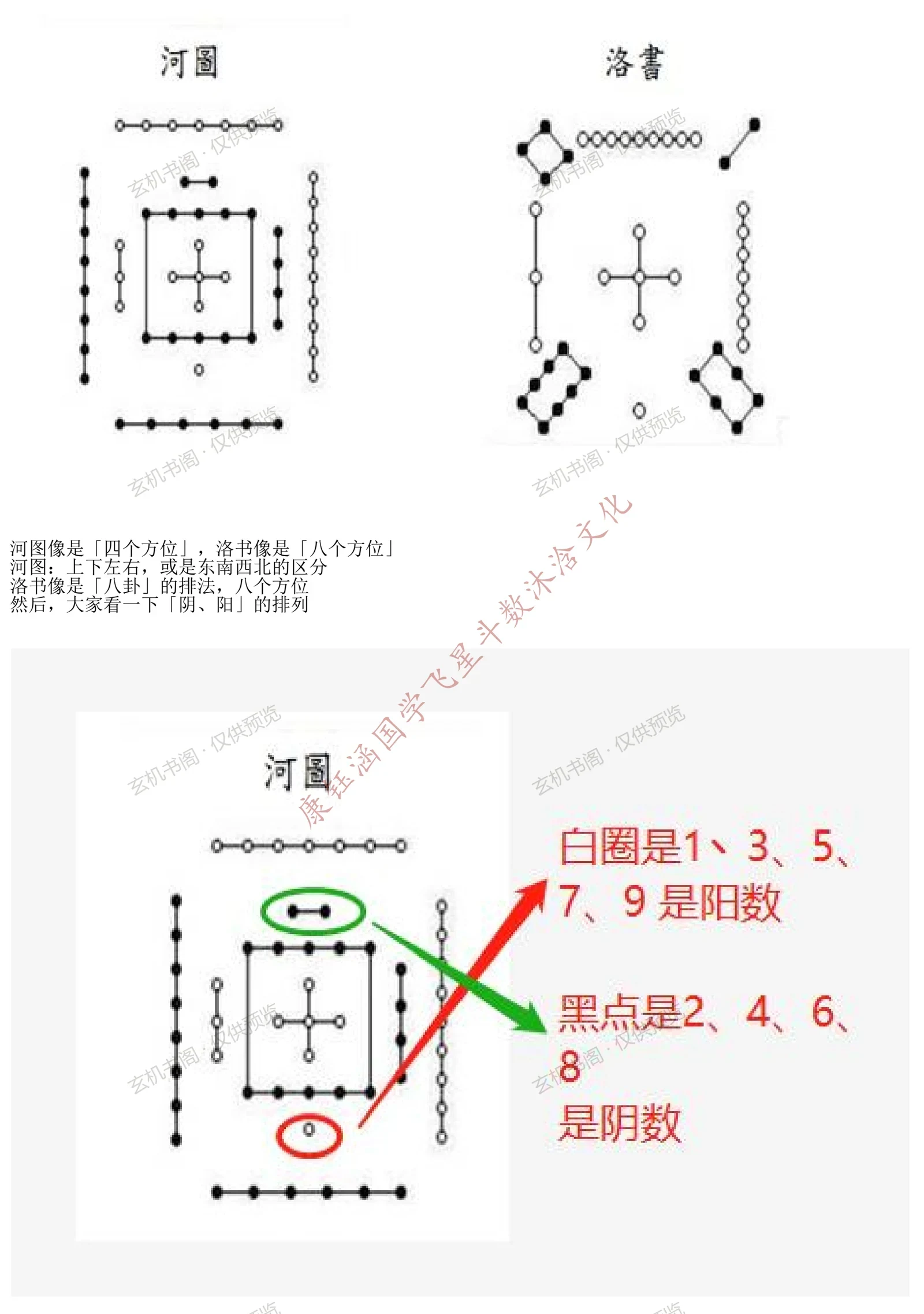
This handout accompanies the third lesson of a Zi Wei Dou Shu course, focusing on the structural basics of the chart. The first half explains the extended meaning of the twelve palaces: whether in the natal chart or in dynamic charts such as major periods, yearly, monthly and daily charts, the twelve palaces are arranged counterclockwise starting from the Life Palace, running through Life, Siblings, Spouse, Children, Wealth, Health, Travel, Friends, Career, Property, Fortune and Parents. It then introduces the idea of “borrowing palaces” (living chart, rotating palace), where any palace can serve as its own Taiji and be treated as the first palace to re-derive a full set of twelve. The second half turns to Yi studies fundamentals, comparing the Earlier Heaven and Later Heaven Bagua in diagrams: the Earlier Heaven is viewed vertically and relates to time, while the Later Heaven is viewed horizontally and relates to spatial direction. The Later Heaven directions are cross-checked against Chinese geography and climate (hot south, cold north, wood east, metal west), and the handout ends with the dot patterns of the He Tu and Luo Shu, the distinction between four directions and eight directions, and the yin-yang division where white odd numbers 1, 3, 5, 7, 9 are yang and black even numbers 2, 4, 6, 8 are yin. Overall it is an introductory handout on palace and directional foundations, illustrated with chart diagrams and maps.
Contents
Order and extended meaning of the twelve palaces
Borrowing palaces and establishing a new Taiji
Earlier and Later Heaven Bagua: vertical and horizontal views
Later Heaven directions matched to geography and climate
He Tu and Luo Shu: directions and yin-yang numbers
Key Points
Twelve palaces run counterclockwise from the Life Palace in both natal and dynamic charts
Any palace can be taken as Taiji and re-expanded into twelve palaces
Earlier Heaven Bagua relates to time; Later Heaven to spatial direction
He Tu has four directions; Luo Shu maps to the eight Bagua directions
White odd dots are yang; black even dots are yin