Reading guide
Content guideOverview
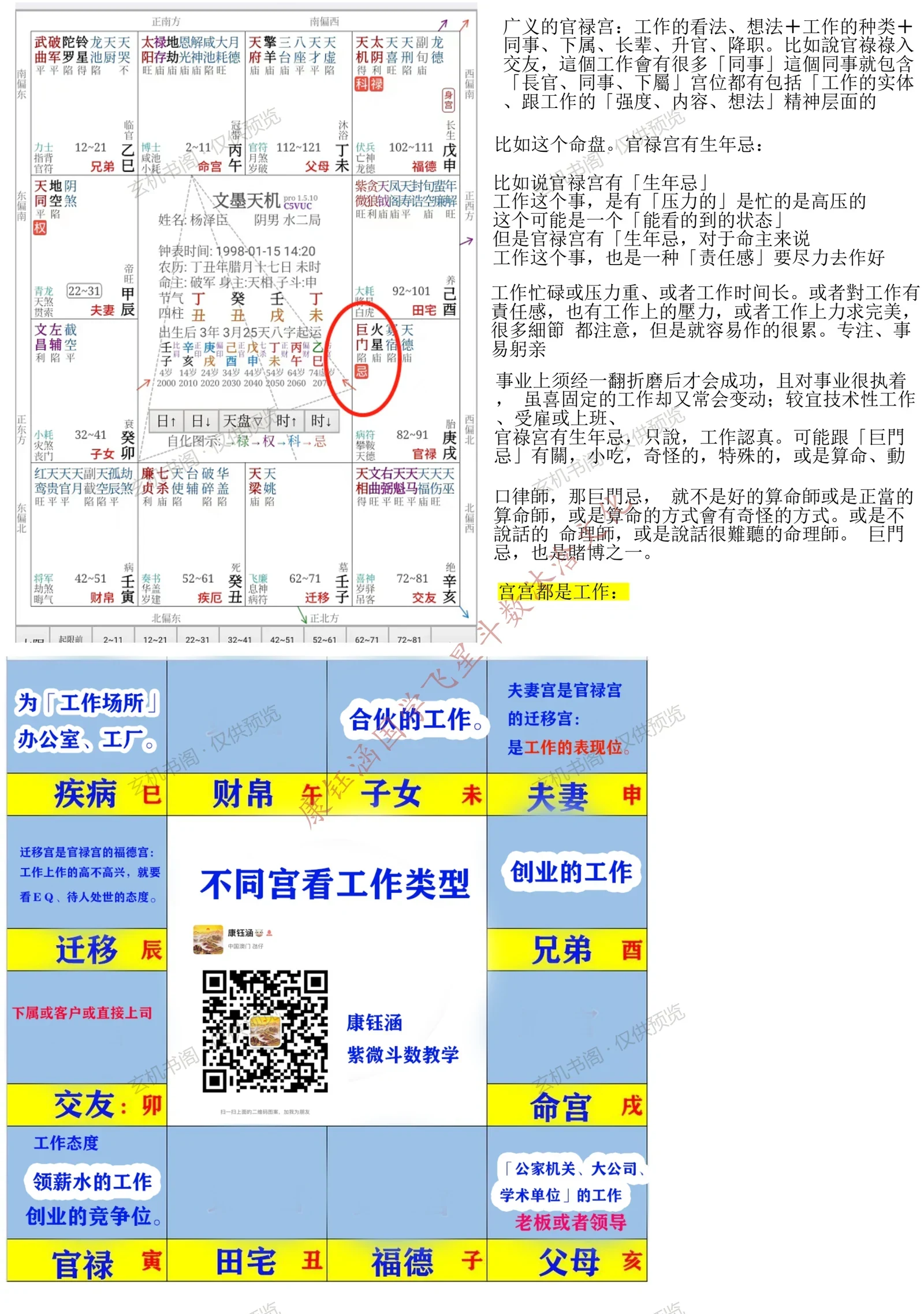
This handout focuses on the Career Palace (Guan Lu Gong) in Zi Wei Dou Shu. It begins with the extended meanings of the twelve palaces and the concepts of setting up a new central palace and borrowing palaces, explaining that the Career Palace governs views on work, job types, and related people such as colleagues, subordinates, elders, and promotions. It then uses example charts to show how to judge work types—salaried, entrepreneurial, partnership, public office, or academic—and discusses how birth-year Ji and other transformations in the Career Palace indicate work pressure, nature, and performance. A compound-meaning table of the twelve palaces and a ten-stem transformation table are included for reference. The material is a classroom handout for learners with basic knowledge of Zi Wei Dou Shu.
Contents
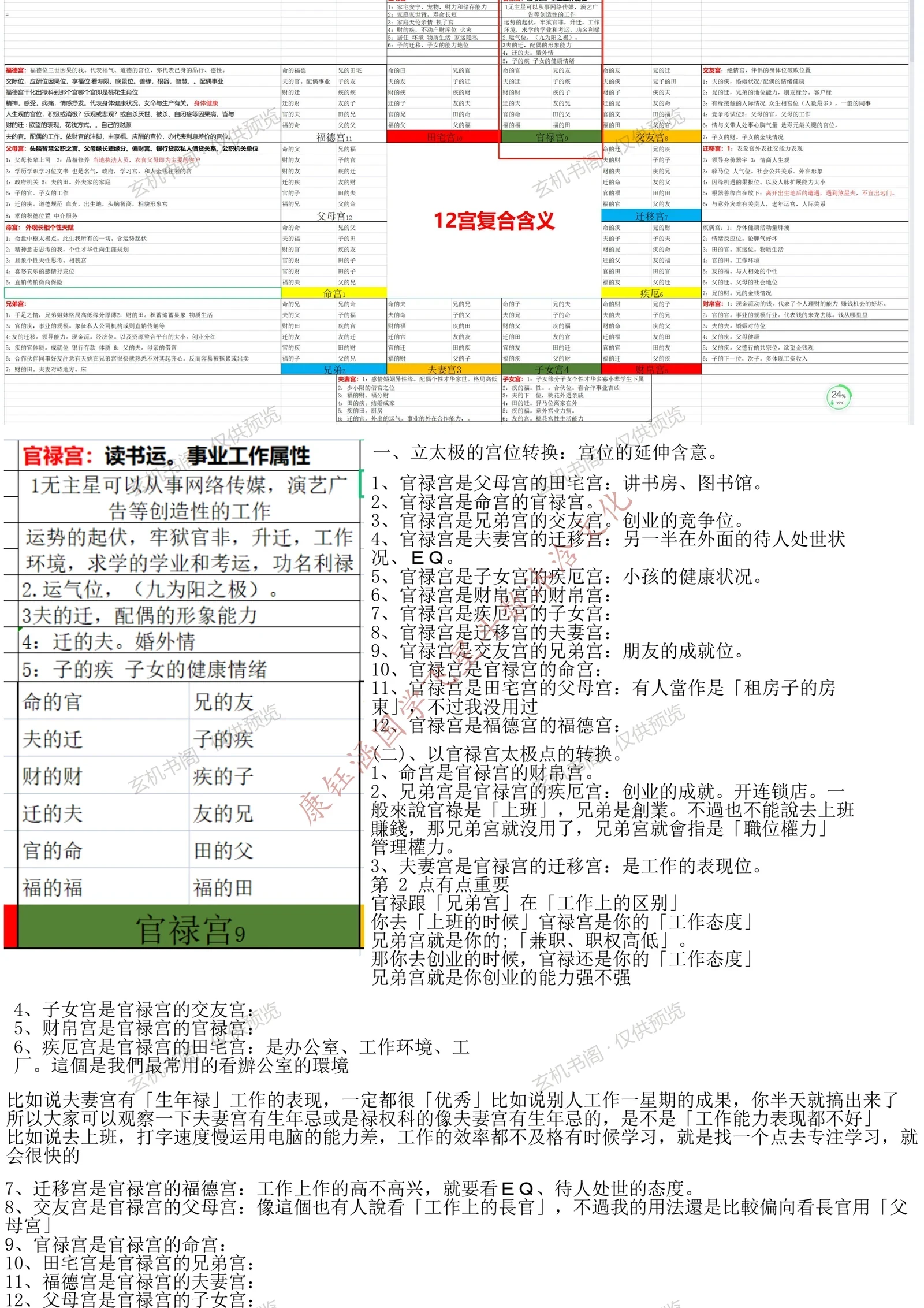
Extended meanings and ordering of the twelve palaces
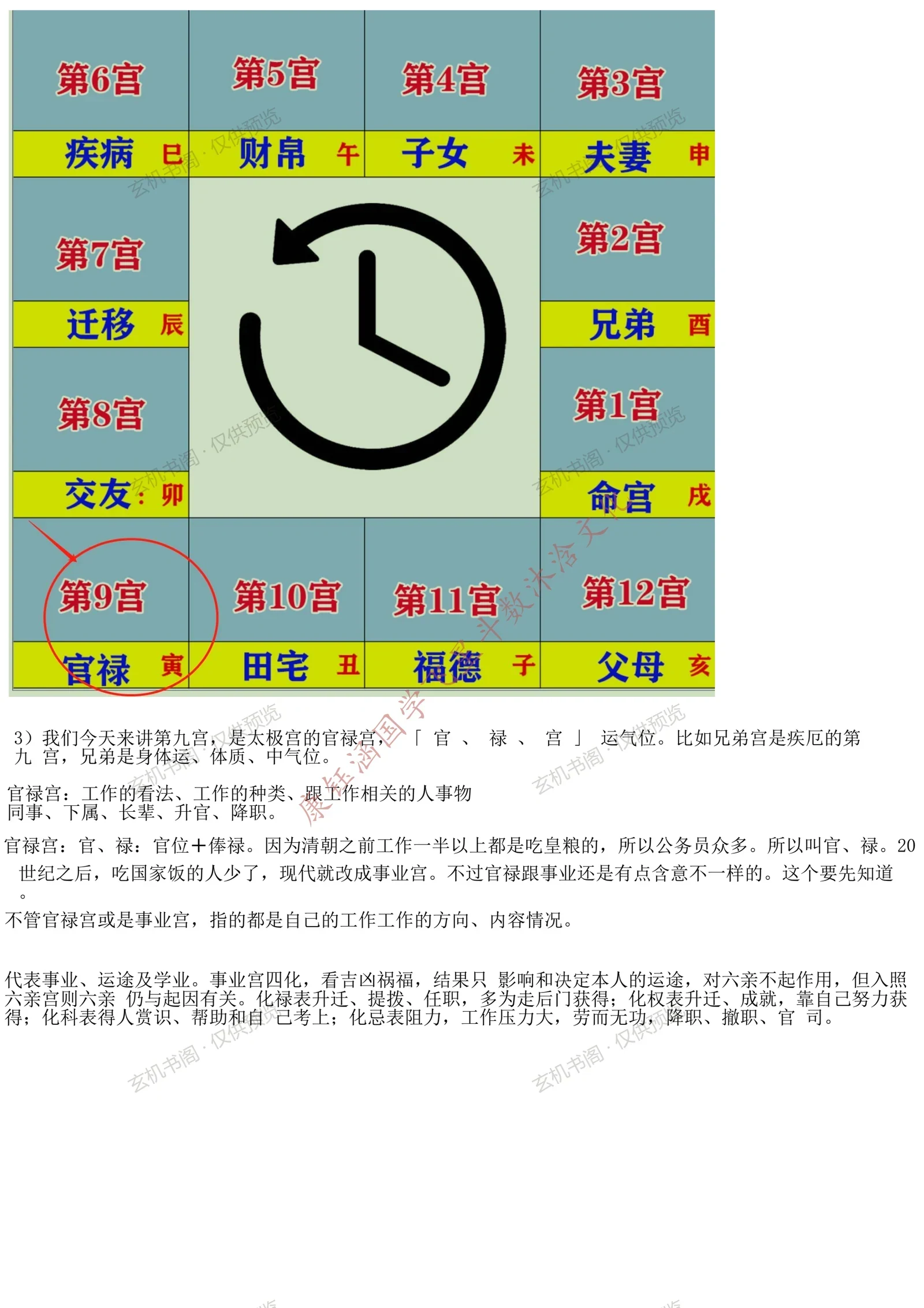
Basic meaning of the Career Palace: work, position, salary
Setting the central palace and borrowing palaces
Judging job types through palace shifts
Transformations and birth-year Ji in the Career Palace
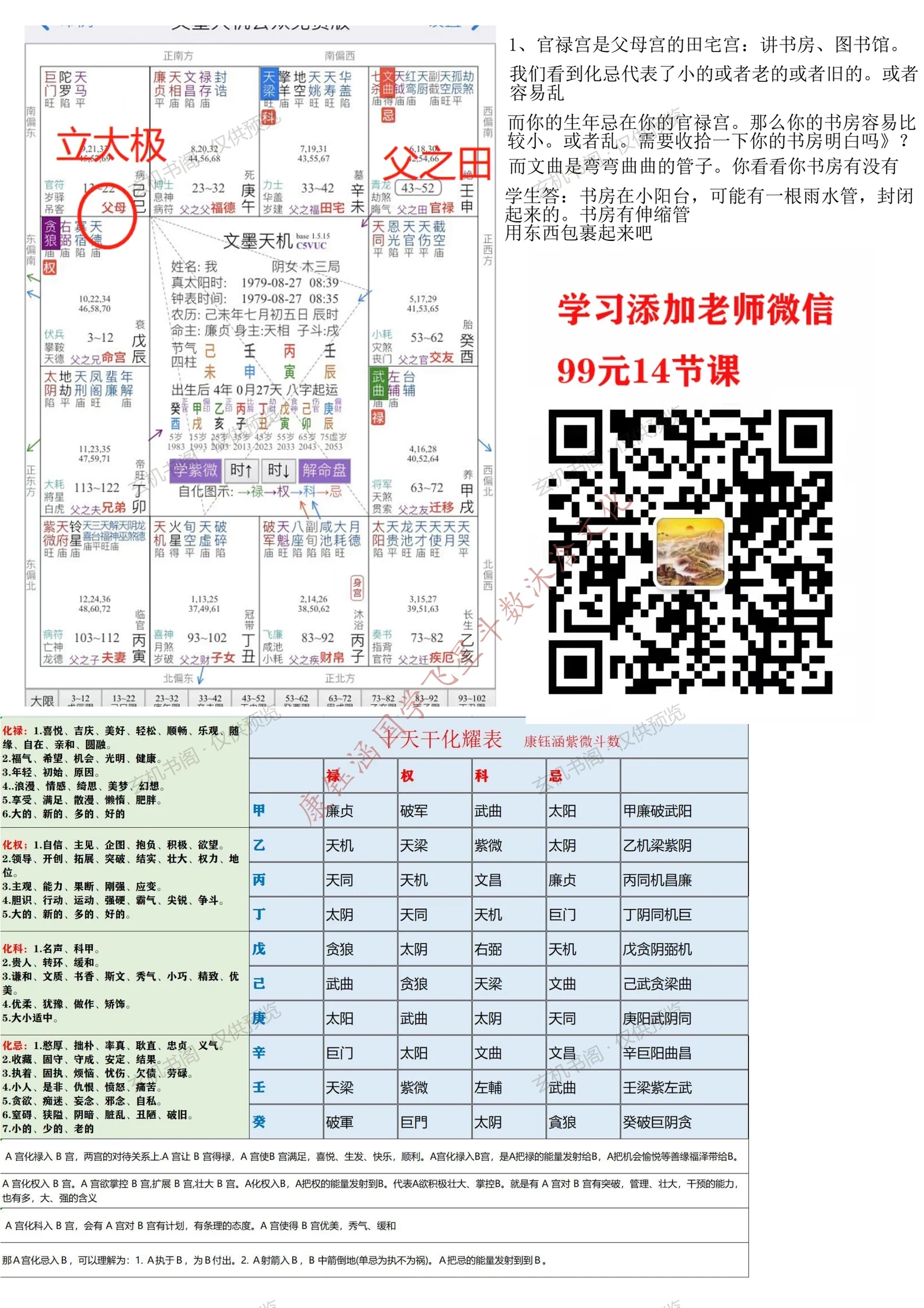
Tables of palace meanings and stem transformations
Key Points
The Career Palace governs work views, job types, and related people
It is also the Parents Palace's Property Palace, relating to studies and libraries
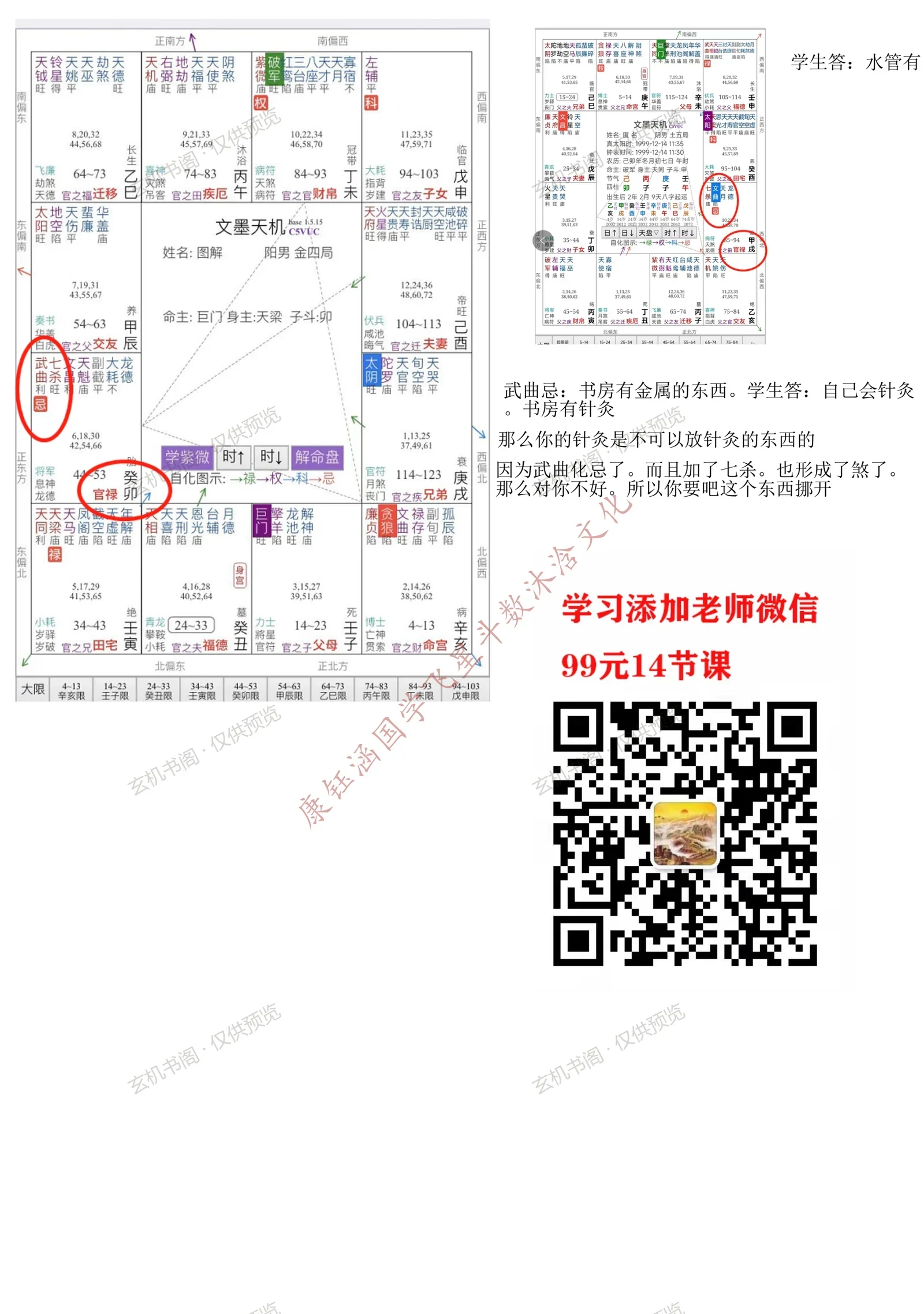
Different palace combinations indicate salaried, entrepreneurial, or partnership work
A birth-year Ji in the Career Palace suggests pressure and responsibility at work
Ju Men Ji in the Career Palace often relates to speech-based or unusual professions
The stem transformation table maps stars to Lu, Quan, Ke, and Ji