Reading guide
Content guideOverview
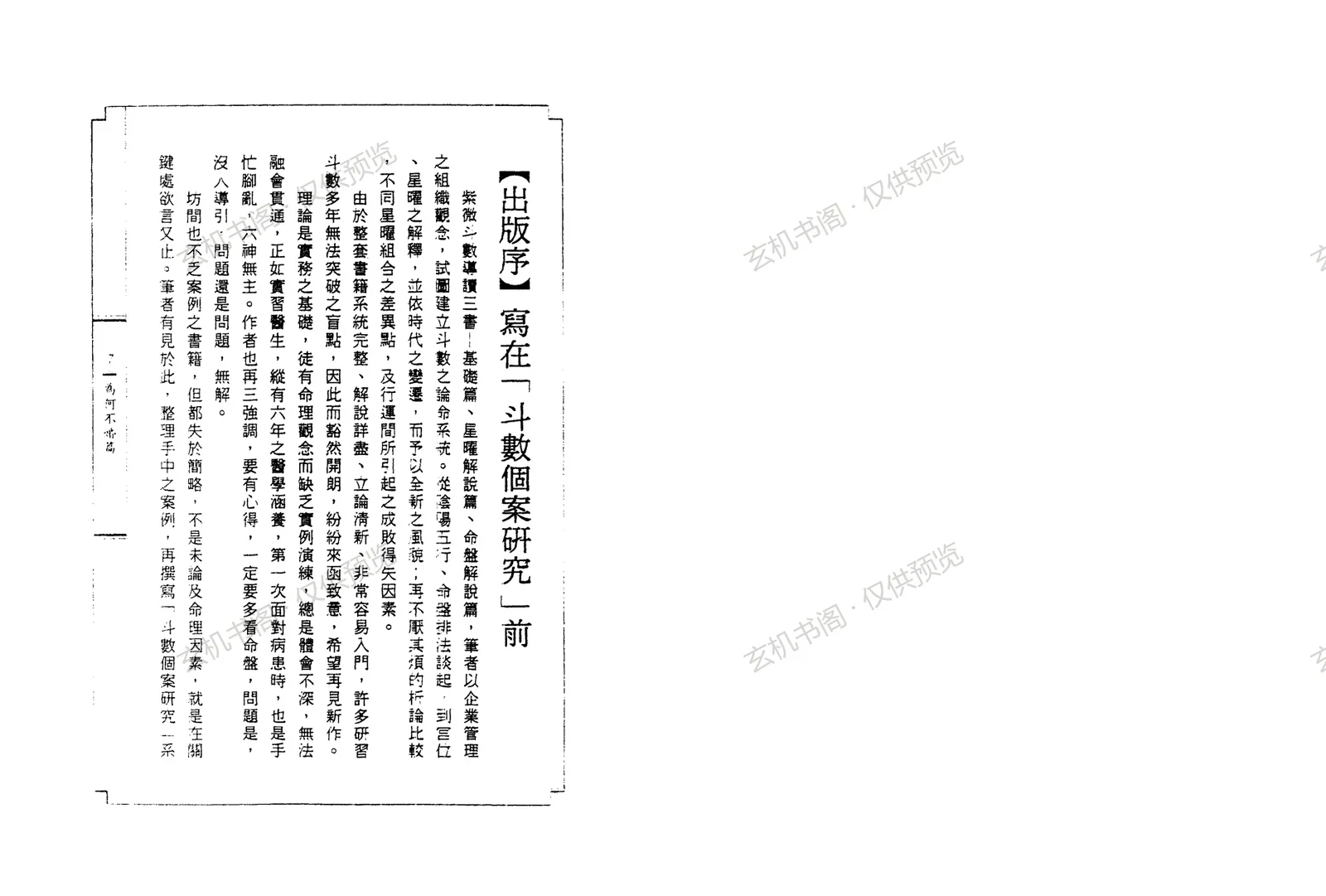
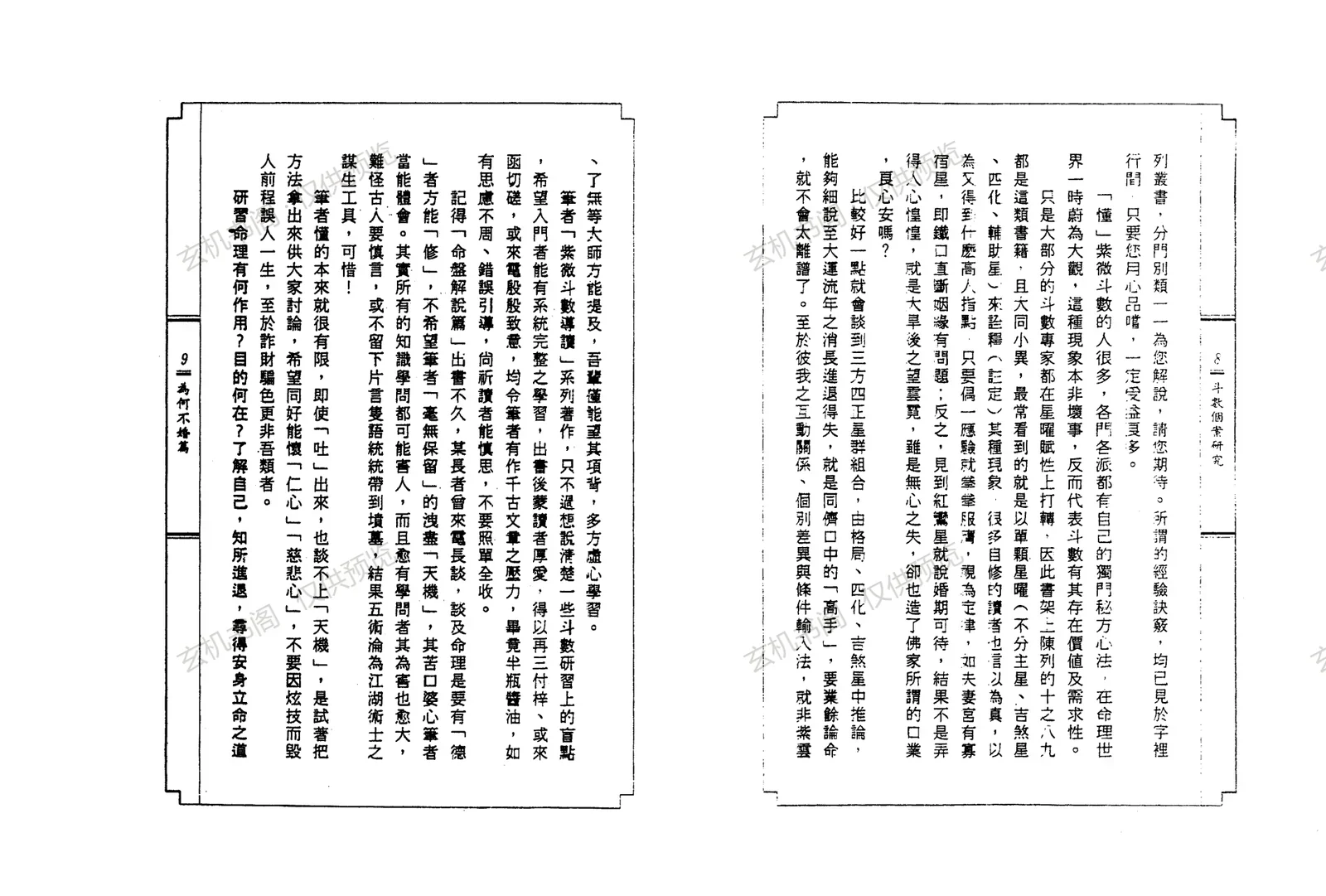
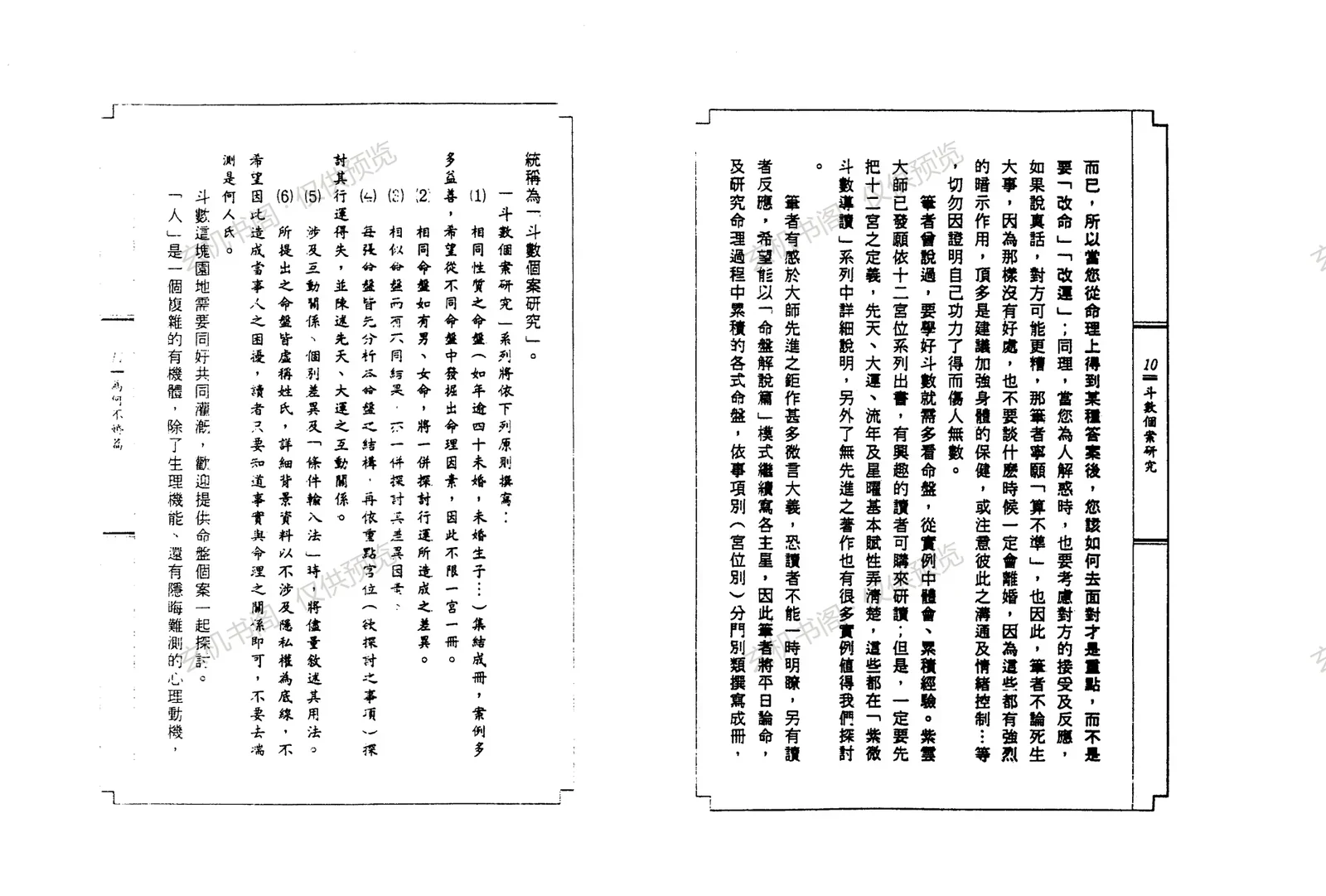
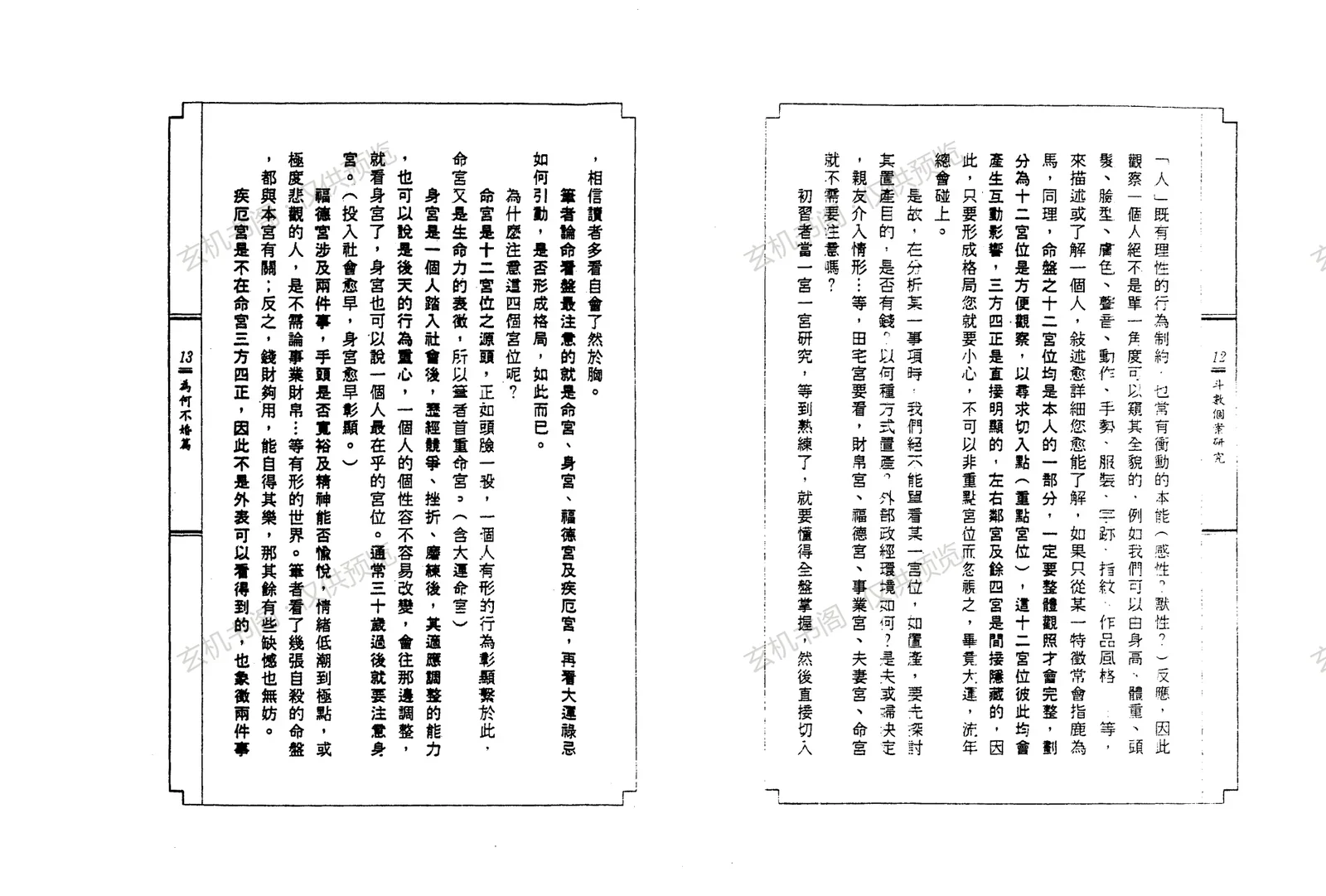
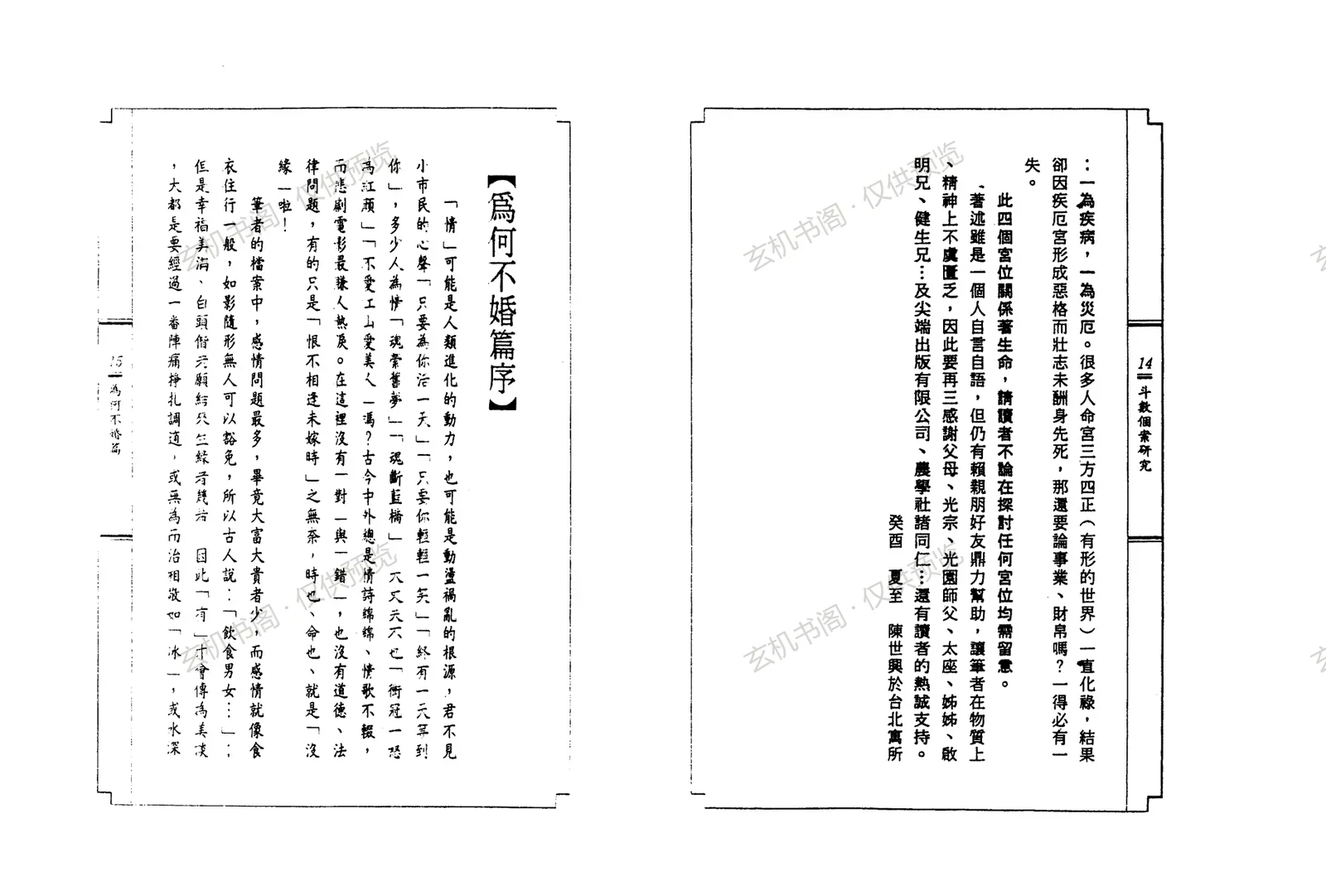
This volume belongs to Chen Shixing's Zi Wei Dou Shu case-study series and focuses on cases of people who remain unmarried. The preface explains that the author previously published introductory works on Zi Wei Dou Shu, including foundational, star-explanation, and chart-interpretation volumes, and now extends the series through practical case studies. The text stresses that Dou Shu theory must be tested against real charts and criticizes purely theoretical approaches. It first sets out principles for case research, such as comparing charts of similar nature, charts that are identical but lead to different outcomes, structural comparisons, interactive relationships, and conditional input methods. It then introduces the section on why some people do not marry, discussing illness, misfortune, and the three directions and four positions of the Life Palace, and how to observe emotional and marital issues through the Life, Body, Fortune, and Spouse palaces together with major and annual cycles. The book is concise and suited to readers with basic Dou Shu knowledge who want to learn case-analysis methods.
Contents
Publisher's preface: series background and writing approach
Principles for Zi Wei Dou Shu case research
Comparing identical charts with different outcomes
Preface to Why Not Marry: emotional and marital issues
Judging through Life, Body, Fortune, and Spouse palaces
Integrating major cycles, annual cycles, and interactive relationships
Key Points
Dou Shu must be verified with real charts, not discussed only in theory.
Case selection follows principles such as similar-nature charts and identical charts with different outcomes.
Interpretation focuses on the Life, Body, Fortune, and Spouse palaces and the three directions and four positions.
Unmarried tendencies should be judged together with major and annual cycles and chart interactions.
Readers are reminded to respect privacy and avoid reckless pronouncements.