Reading guide
Content guideOverview
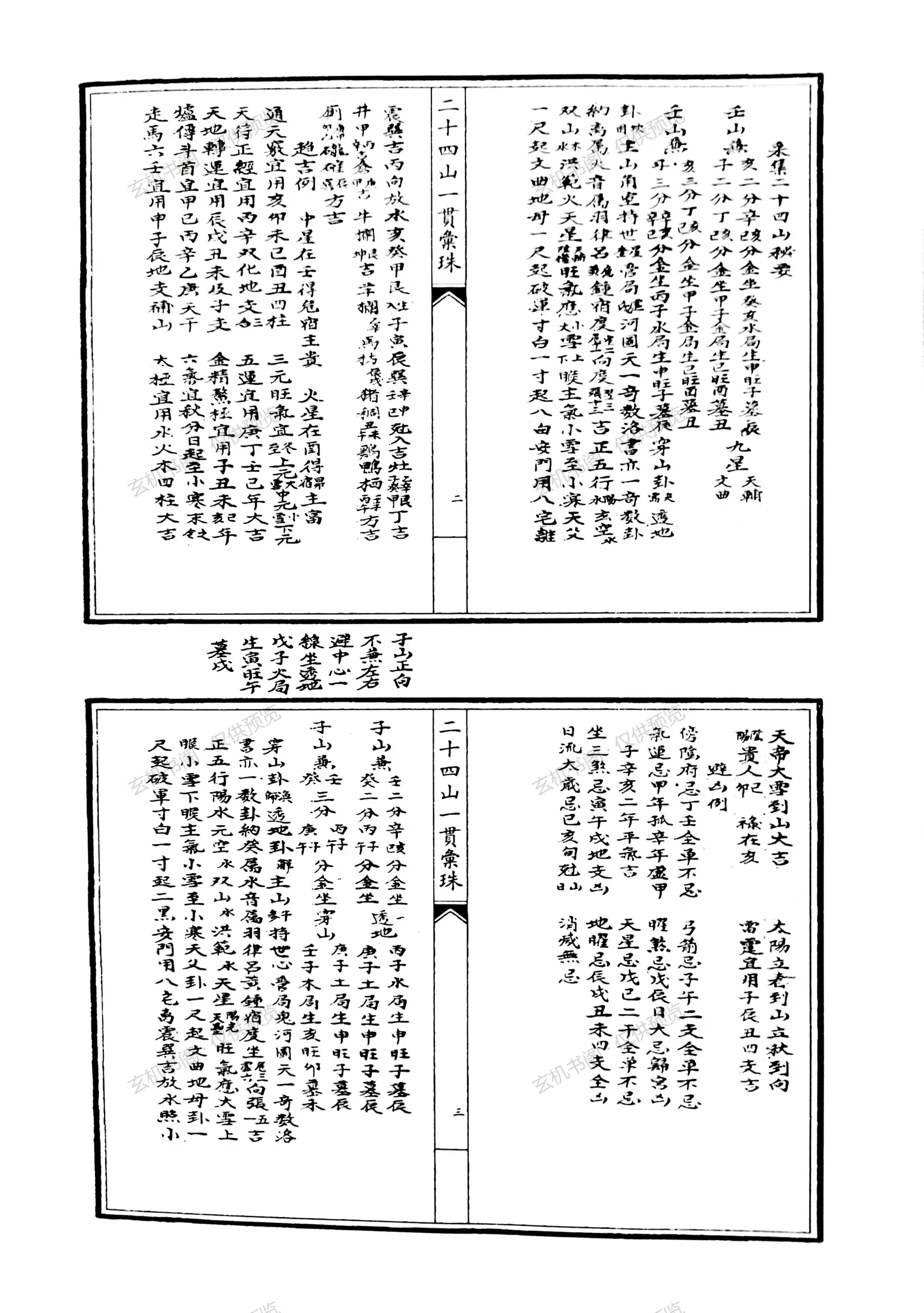
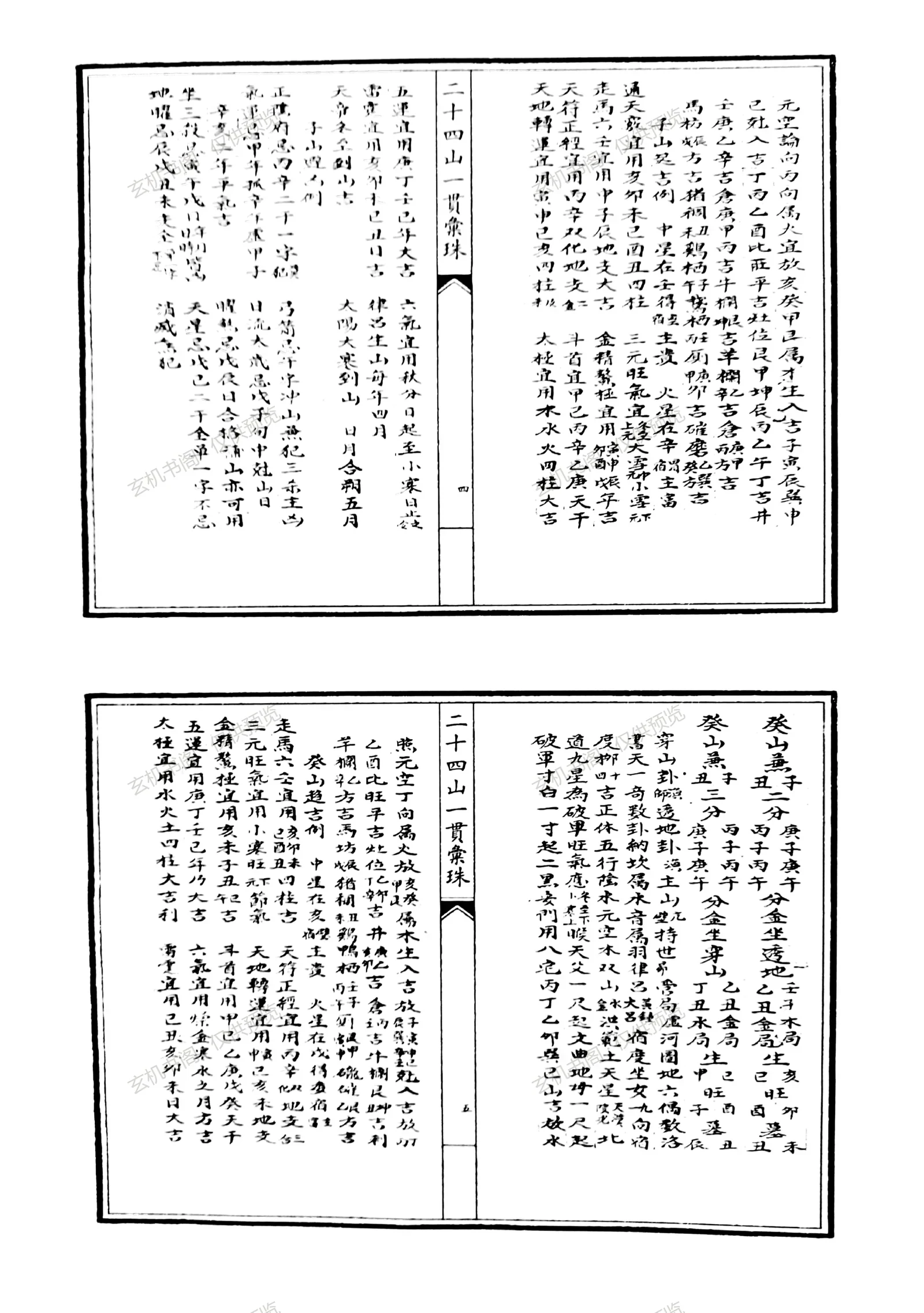
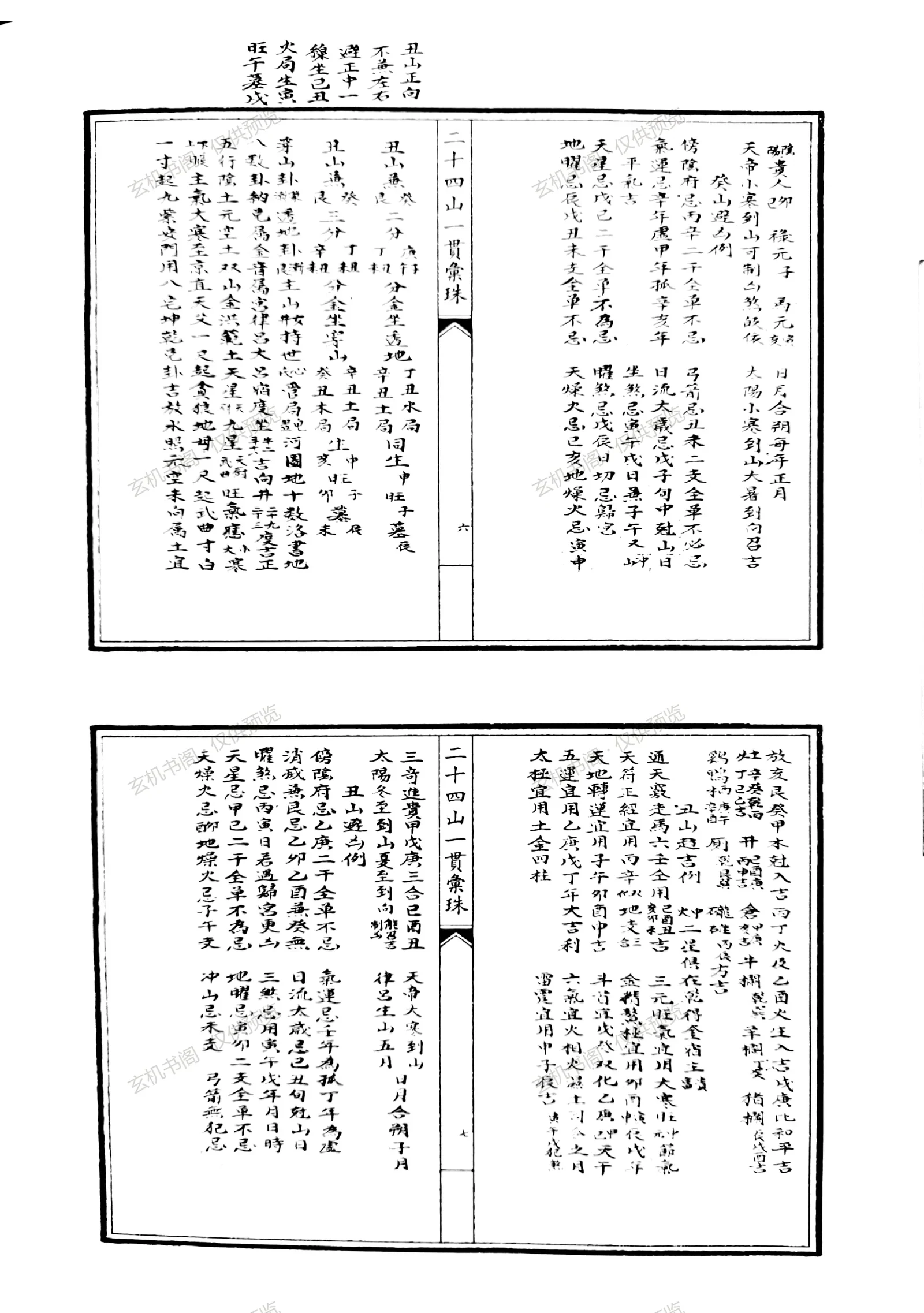
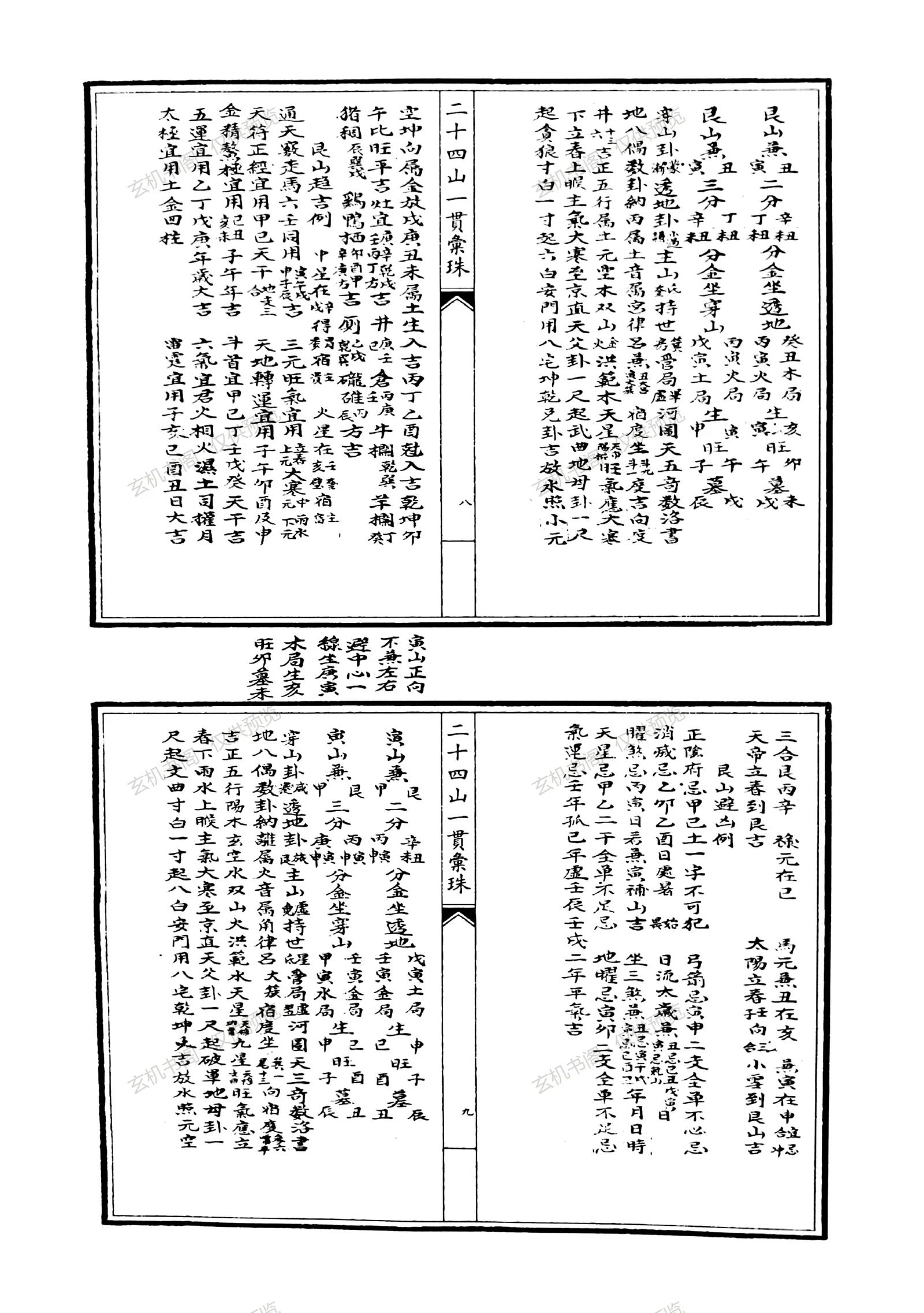
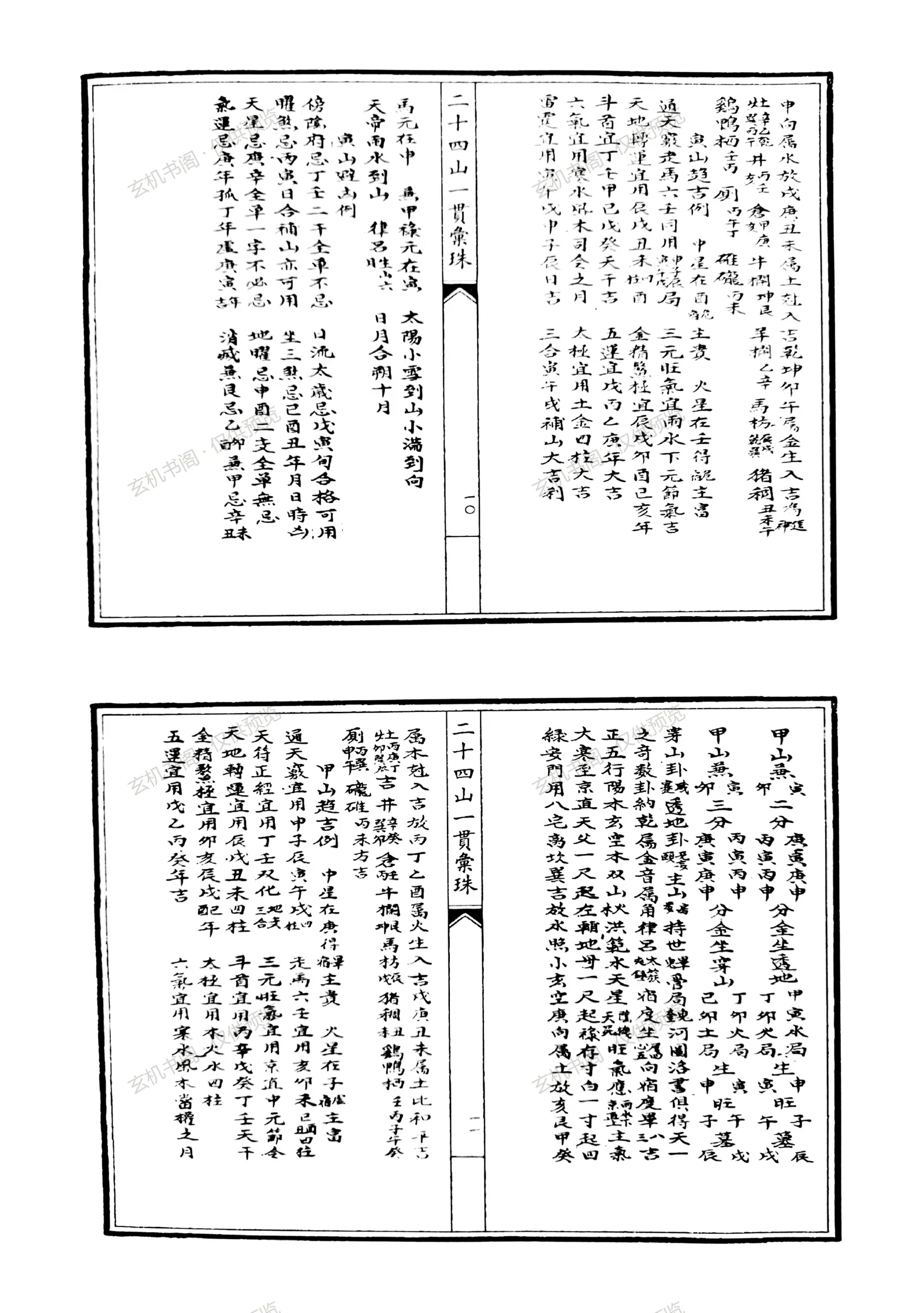
This Qing manuscript, compiled in 1846 by Lu Mingsheng of Gaogang, is a comprehensive feng shui manual arranged according to the twenty-four mountains. For each mountain it first lists the relevant fenjin (degree divisions), then the appropriate water methods and facing directions, followed by two categories of entries: auspicious timings and inauspicious avoidances. The auspicious entries specify suitable years, months, days, and hours according to the five-element cycles, while the inauspicious entries list clashes, three killings, yin fu, and celestial star taboos. Combining Sanhe water methods, fenjin degree calculations, and celestial date selection, the book reflects the practical feng shui and burial date-selection traditions of Qing-era folk practitioners and serves as a primary source for studying traditional Chinese geomancy.
Contents
Preface: origins of the compilation
Ren, Zi, Gui mountains: fenjin, water methods, auspicious and inauspicious examples
Chou, Gen, Yin mountains: fenjin, water methods, examples
Jia, Mao, Yi mountains: fenjin, water methods, examples
Chen, Xun, Si mountains: fenjin, water methods, examples
Bing, Wu, Ding mountains: fenjin, water methods, examples
Wei, Kun, Shen mountains: fenjin, water methods, examples
Geng, You, Xin, Xu, Qian, Hai mountains: fenjin, water methods, examples
Key Points
Organized by the twenty-four mountains, each covering fenjin, water methods, orientation, and date selection
Each mountain has separate auspicious and inauspicious example sections for easy reference
Integrates Sanhe water methods, fenjin degrees, and celestial date selection
Auspicious examples list suitable year, month, day, and hour stems and element cycles
Inauspicious examples list clashes, three killings, yin fu, and celestial star taboos