Reading guide
Content guideOverview
Titled Ritual Qimen: Secret Daoist Transmission and attributed to Daoist Yu Cheng, this text opens with the full Heart Sutra and carries the running header “Revised by Daoist Yuzhen.” Both cover and body mark it as internal material not to be circulated, indicating a compiled folk/esoteric manuscript. Its core idea is “field energy”: the universe consists of yin and yang substances, with yin substance governing change, and Qimen rites invoke cosmic yin-spirit and deity fields through talisman, sound, graphic, and intent codes. The author argues for merging Qimen field energy with the immediate linear energy of Maoshan rites to form a distinctive ritual field aimed at saving people and altering fate. The text mentions 3,600 method-gates divided into three grades and lists nineteen common ritual types, including protection, recovering the original spirit, countering sorcery, offensive interference, wrestling with demons, dispersing souls, debt collection, yin-altar talismans, deploying spirit soldiers, emergency breakthrough, reversing heaven and earth, six-jia yin talismans, hiding one's form, real-person step-on-dipper, plague eradication, three-marvel divine incantation, and five-ghost soul pursuit. It also sets out qualifications—deep cultivation, purity of heart, sense of mission, respect for teachers, strict observance of rules, and accumulation of merit—distinguishes ritual practice from spiritual cultivation, and stresses secrecy, calmness, and right intent. Applications include adjusting the biological field for healing, correcting yin and yang dwelling fengshui, changing destiny, and subduing spirits. The book is strong on concepts and classification but vague on concrete procedure, making it useful for understanding folk Qimen ritual discourse rather than as a practical manual.
Contents
Cover title and attribution: Ritual Qimen, Daoist Yu Cheng
Prefatory Heart Sutra in full
General theory: cosmic yin-yang substances and Qimen field energy
Fusion with Maoshan rites and requirements for discipleship
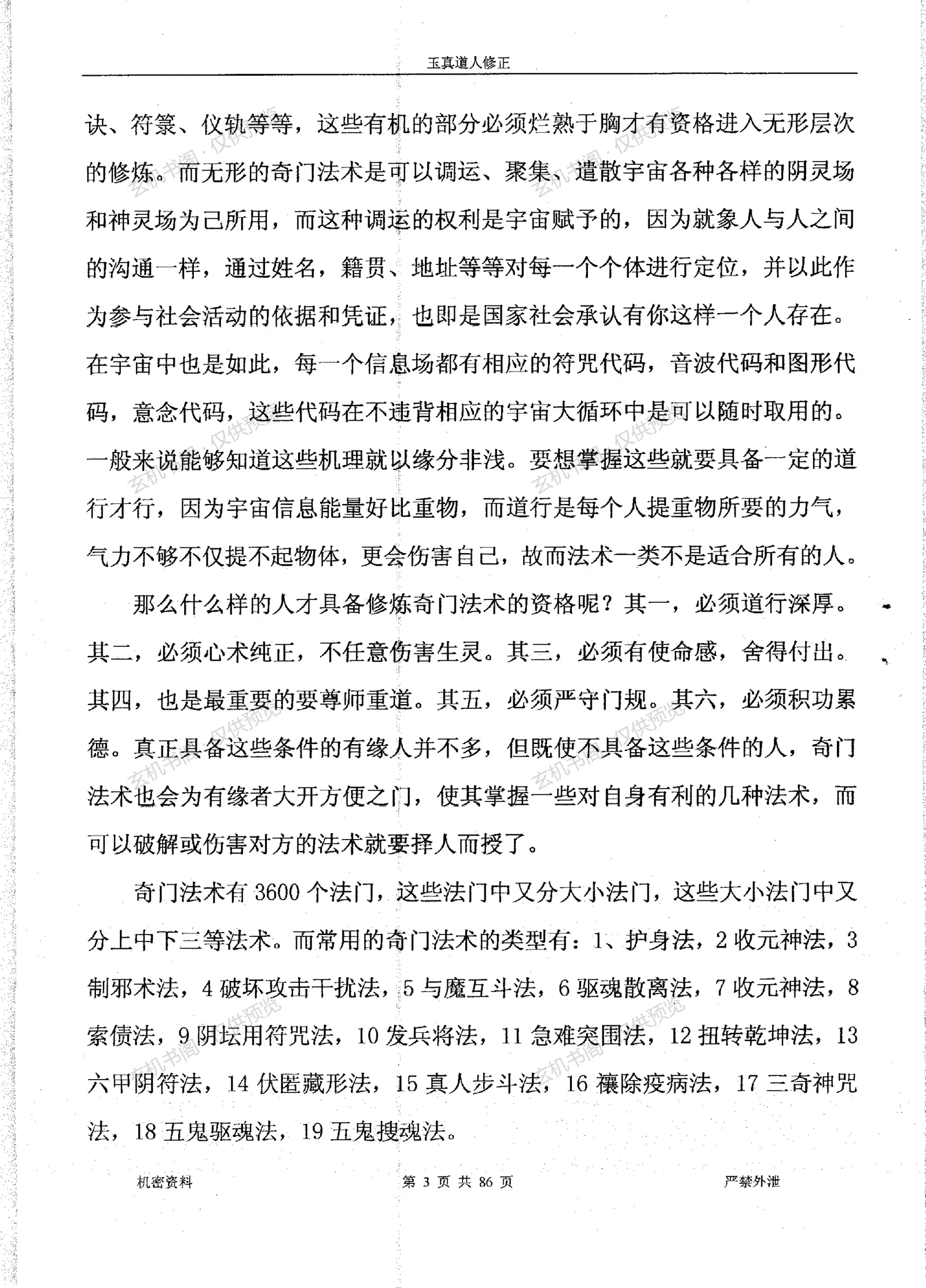
Ritual classification: 3,600 gates and nineteen common rites
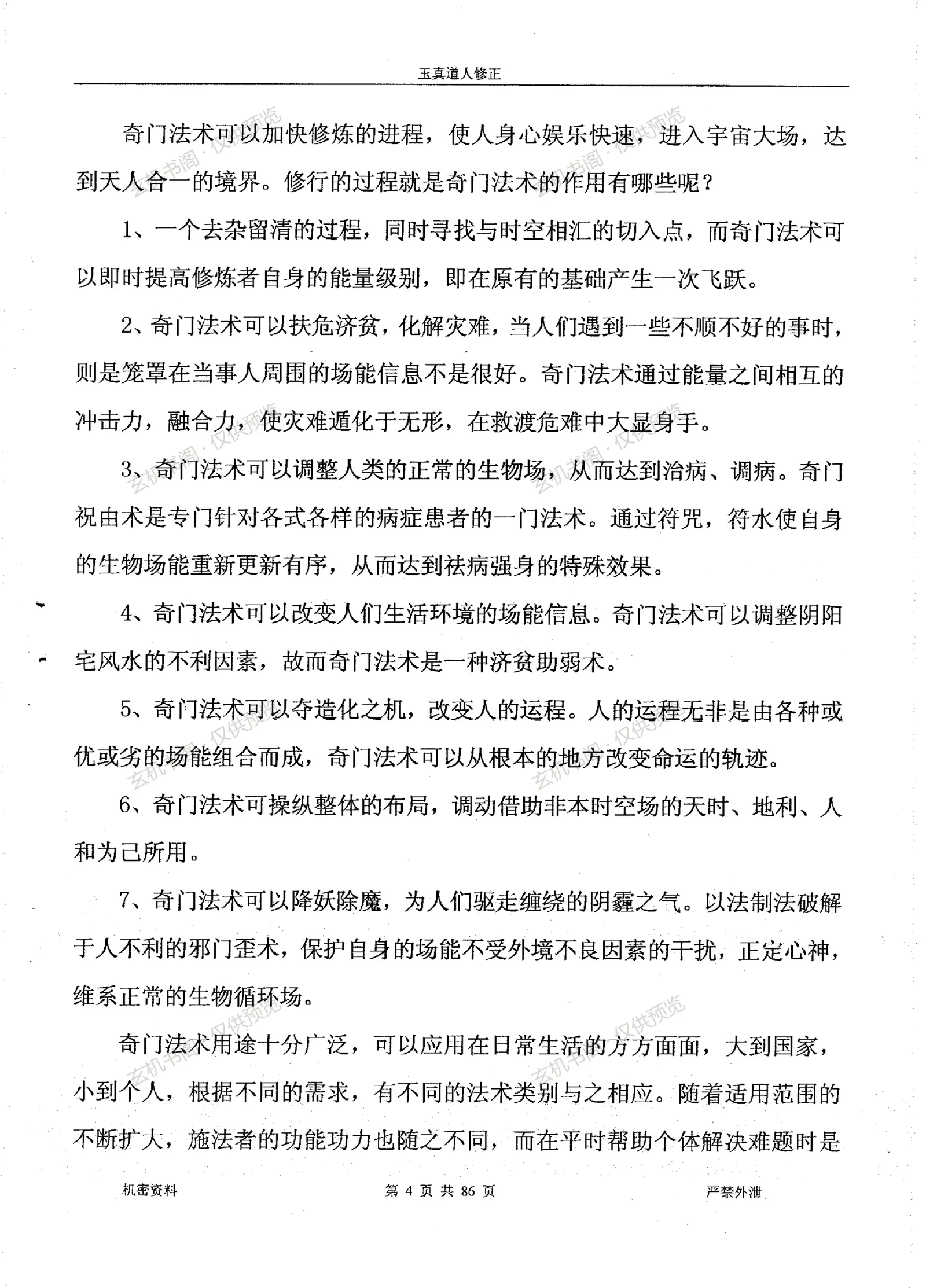
Seven functions: cultivation, disaster relief, healing, fengshui, fate change
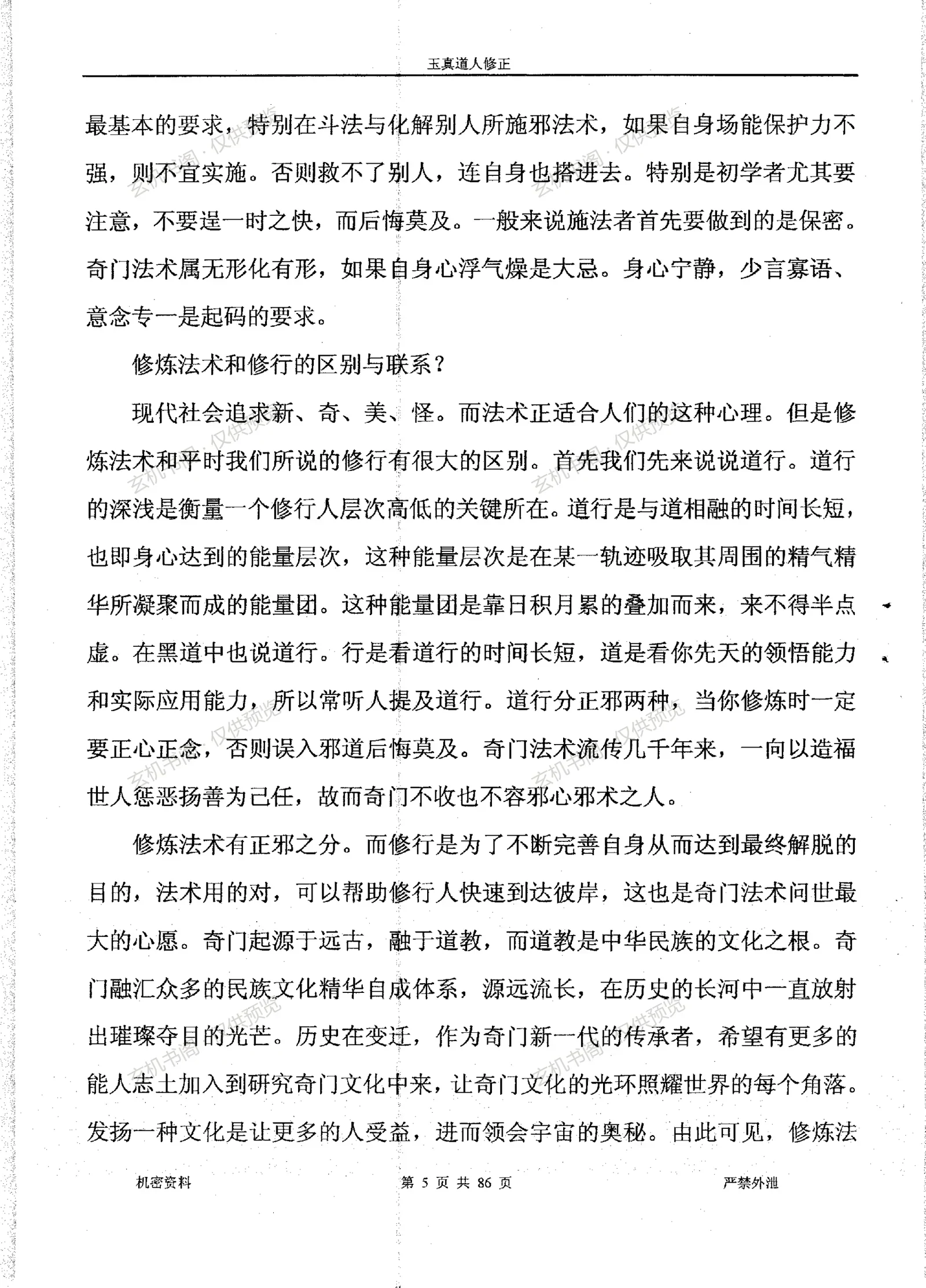
Qualifications, right versus evil, and cultivation versus ritual
Taboos: secrecy, calmness, knowing one's limits
Key Points
Explains Qimen rites through “field energy,” with yin substance governing cosmic change
Proposes merging Qimen field energy with Maoshan linear spellcraft
Lists nineteen common rites by name, from protection to reversing heaven and earth
Stresses finding a teacher, respecting the lineage, and purity of heart
Distinguishes ritual practice from spiritual cultivation and demands secrecy
Applies rites to healing, yin-yang dwelling fengshui, fate change, and exorcism