Reading guide
Content guideOverview
This volume, compiled by Zhou Shiqian as the fourth of his 'secret transmission' materials, explains how to convert Qimen Dunjia prediction into Liuyao or Bagua hexagram casting. It begins with the correspondence between the ten heavenly stems and hexagrams, giving the 'Taixuan number formula' and tables that assign yang stems to Earlier Heaven hexagrams and yin stems to Later Heaven hexagrams. Two casting paths are then presented: the Qimen layout method, using nine qi pieces to arrange the plate and deriving the upper trigram from the heavenly plate stem and the lower trigram from the earthly plate palace, with the moving line found by dividing the sum by six; and the 'plate-less' Qimen method, also called the nine-grid ruler method, which flattens the nine palaces into a straight grid and arranges the six instruments and three wonders according to the three-element stanza. Worked examples from 1998, including a university entrance exam case, show how to select the relevant stem, form the hexagram, and interpret the result. The book is a cross-disciplinary practical manual suited to readers with some background in Qimen or Liuyao who want to learn hexagram conversion techniques.
Contents
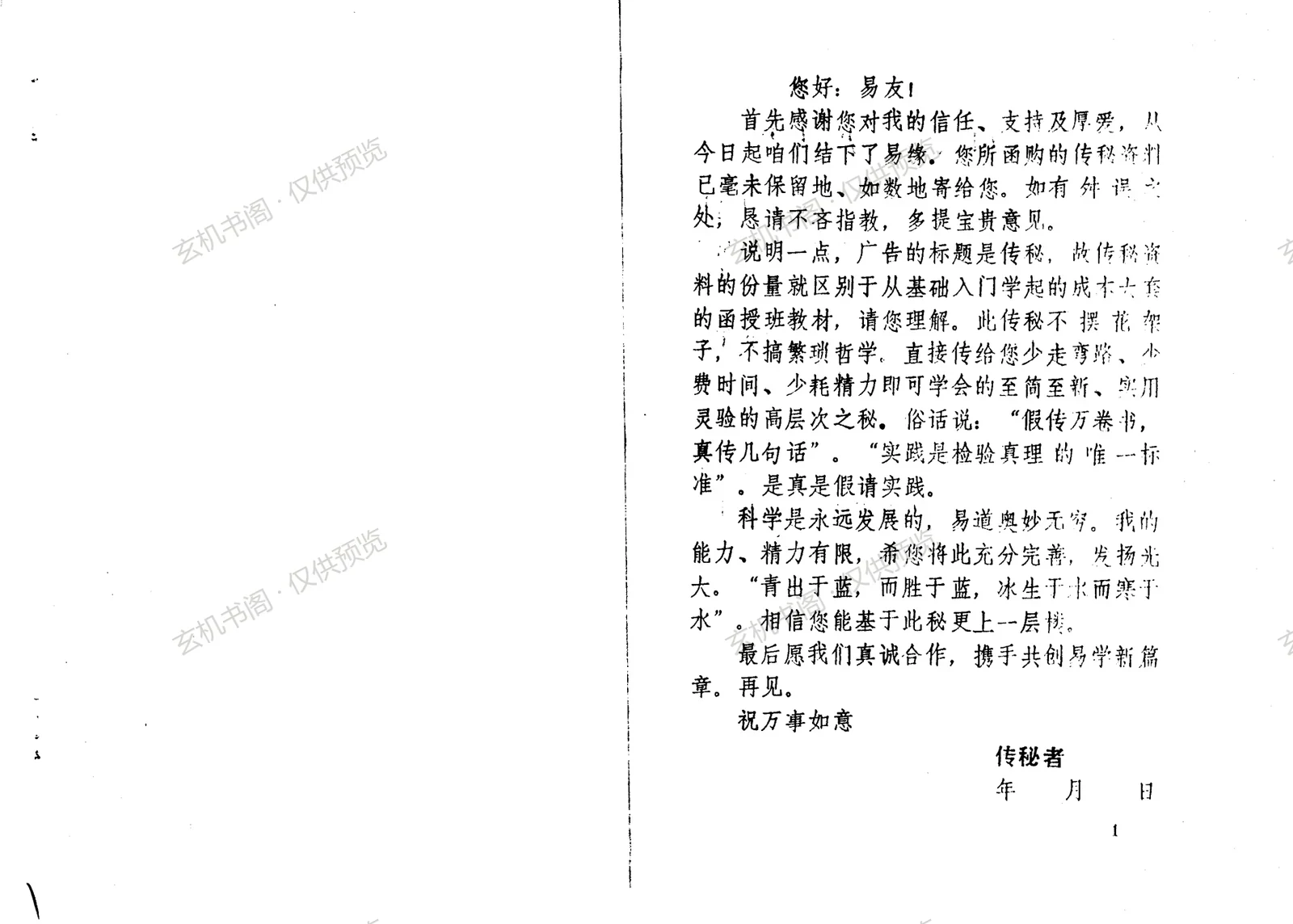
Note from the transmitter to fellow students
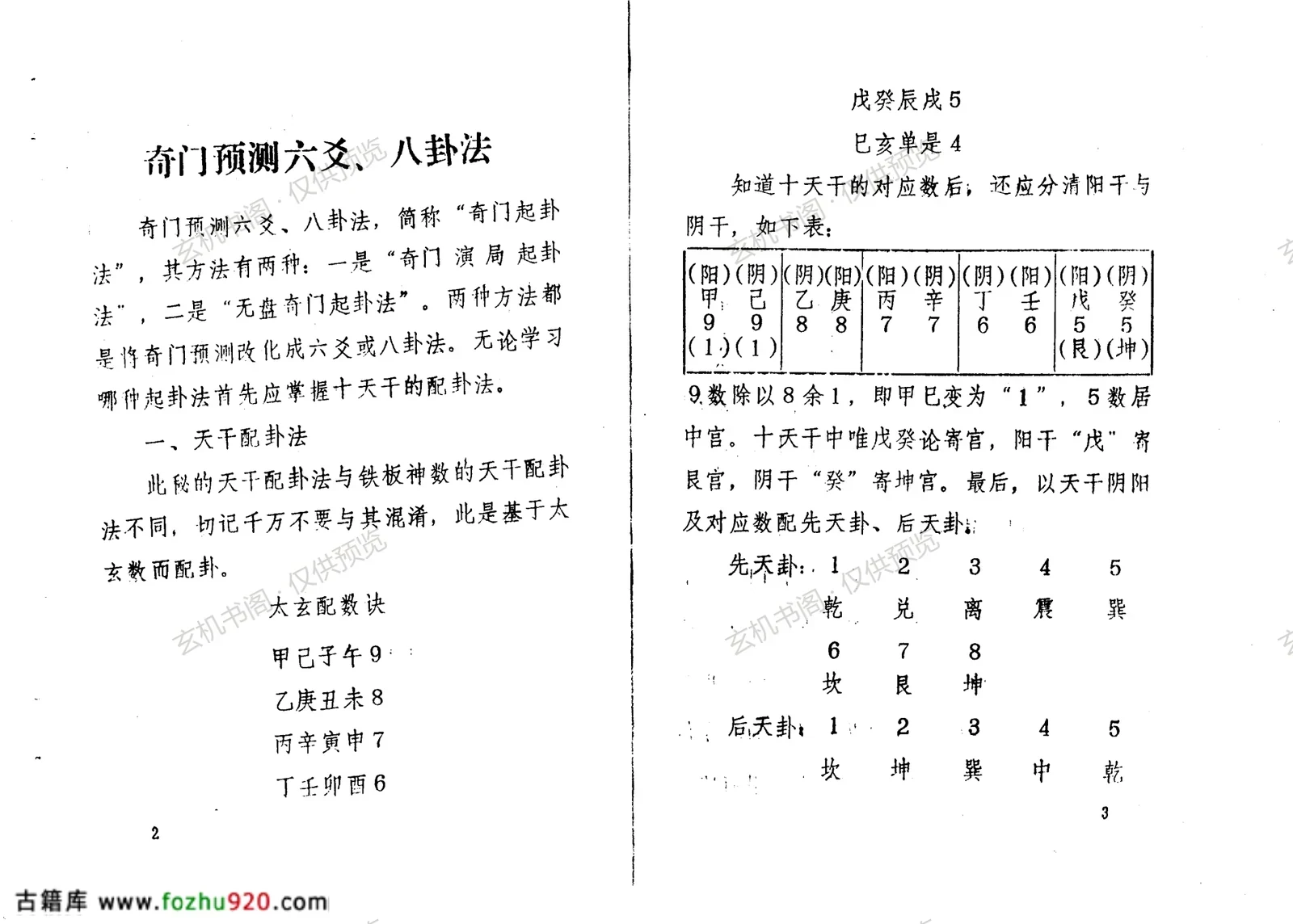
Stem-hexagram correspondence and Taixuan numbers
Qimen layout casting method
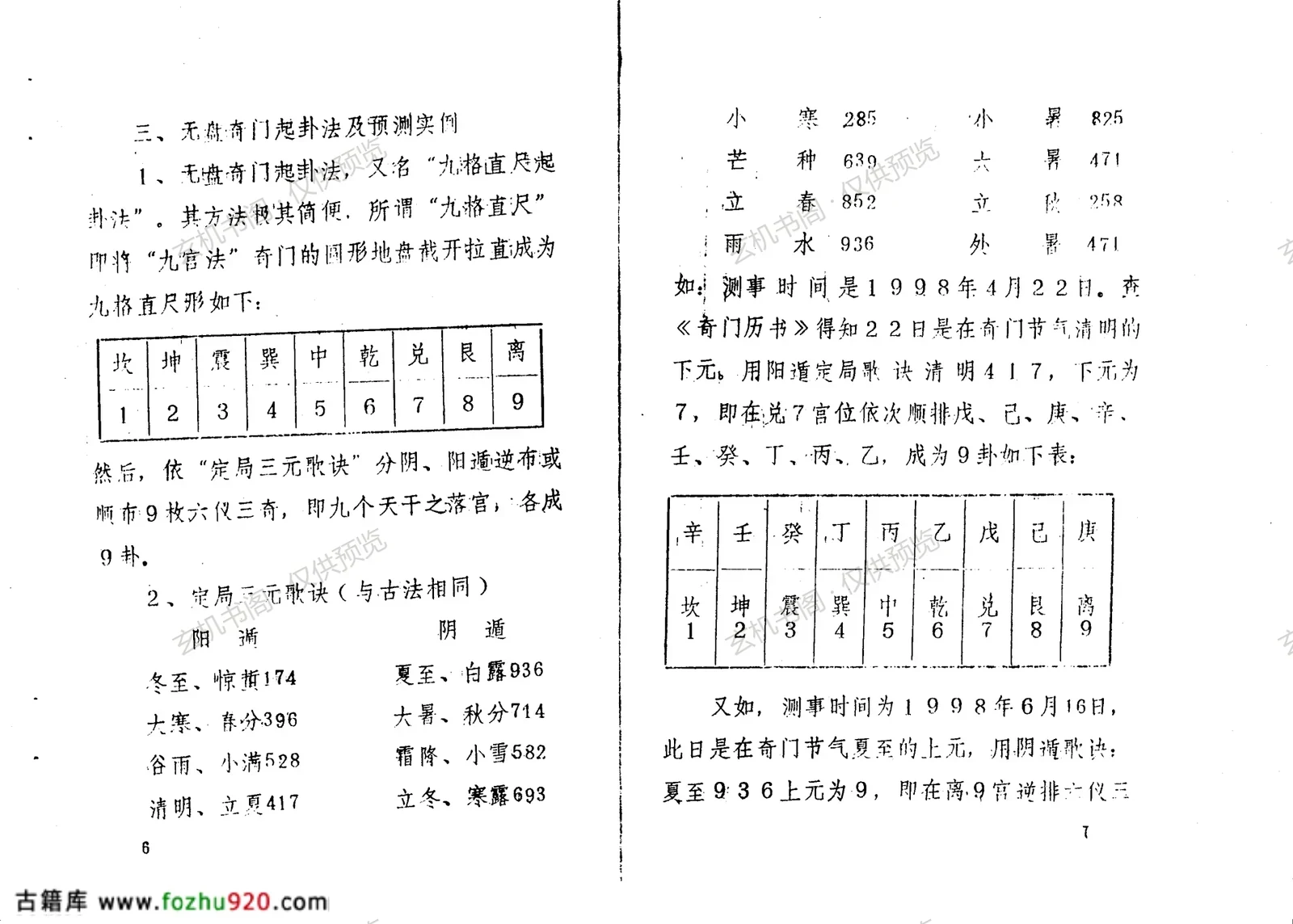
Plate-less Qimen casting with nine-grid ruler
Three-element stanza and yin-yang escape
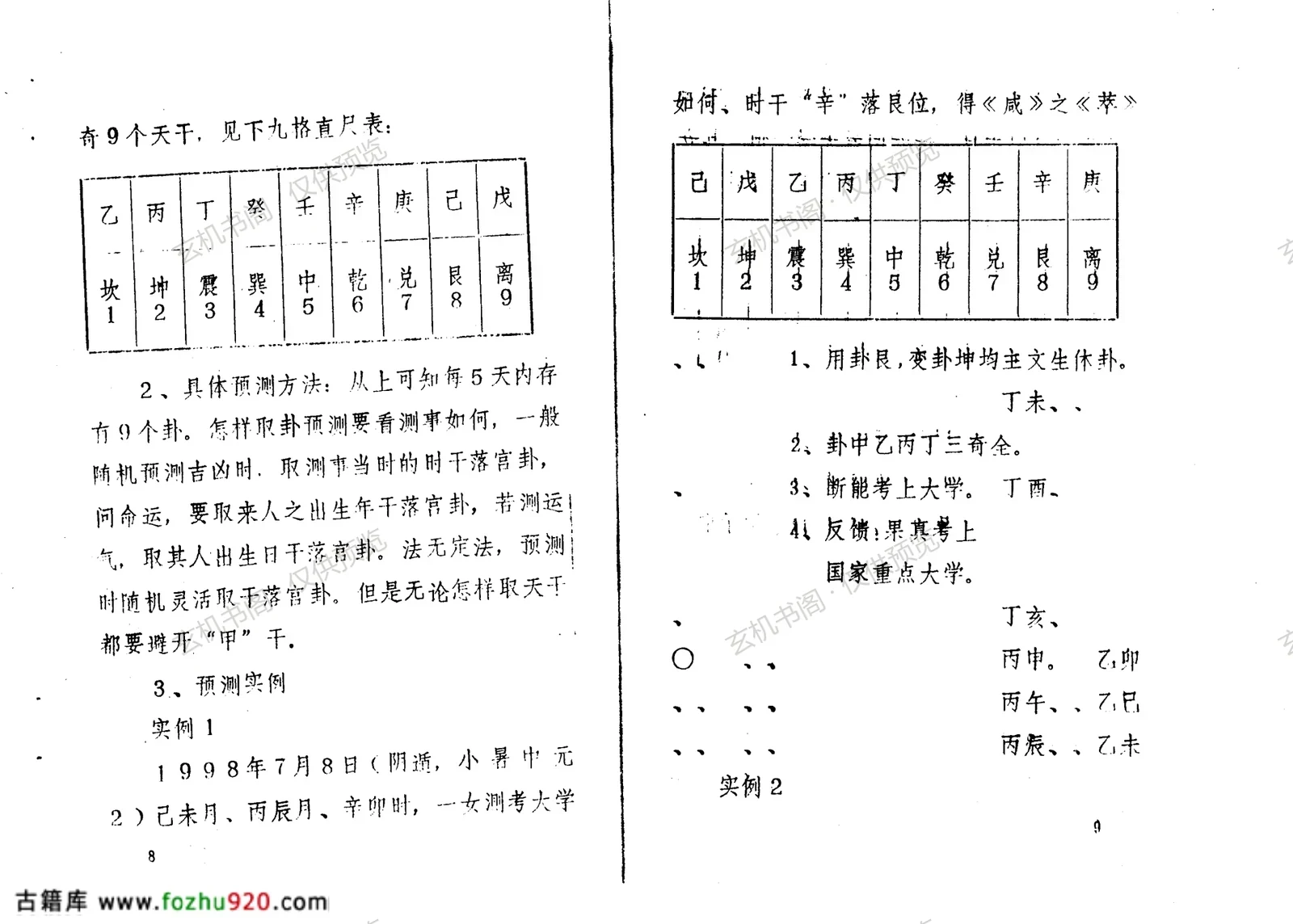
Case studies including exam prediction
Key Points
Stem-hexagram correspondence is based on the Taixuan number formula, distinct from Tieban Shenshu.
Yang stems pair with Earlier Heaven hexagrams; yin stems with Later Heaven; Wu and Gui lodge in Gen and Kun.
In layout casting, the heavenly stem gives the upper trigram, the earthly palace gives the lower, and the sum divided by six gives the moving line.
Plate-less Qimen uses a nine-grid ruler and the three-element stanza to arrange stems into nine hexagrams.
Examples show using the hour stem or birth year stem to select the hexagram for prediction.