Reading guide
Content guideOverview
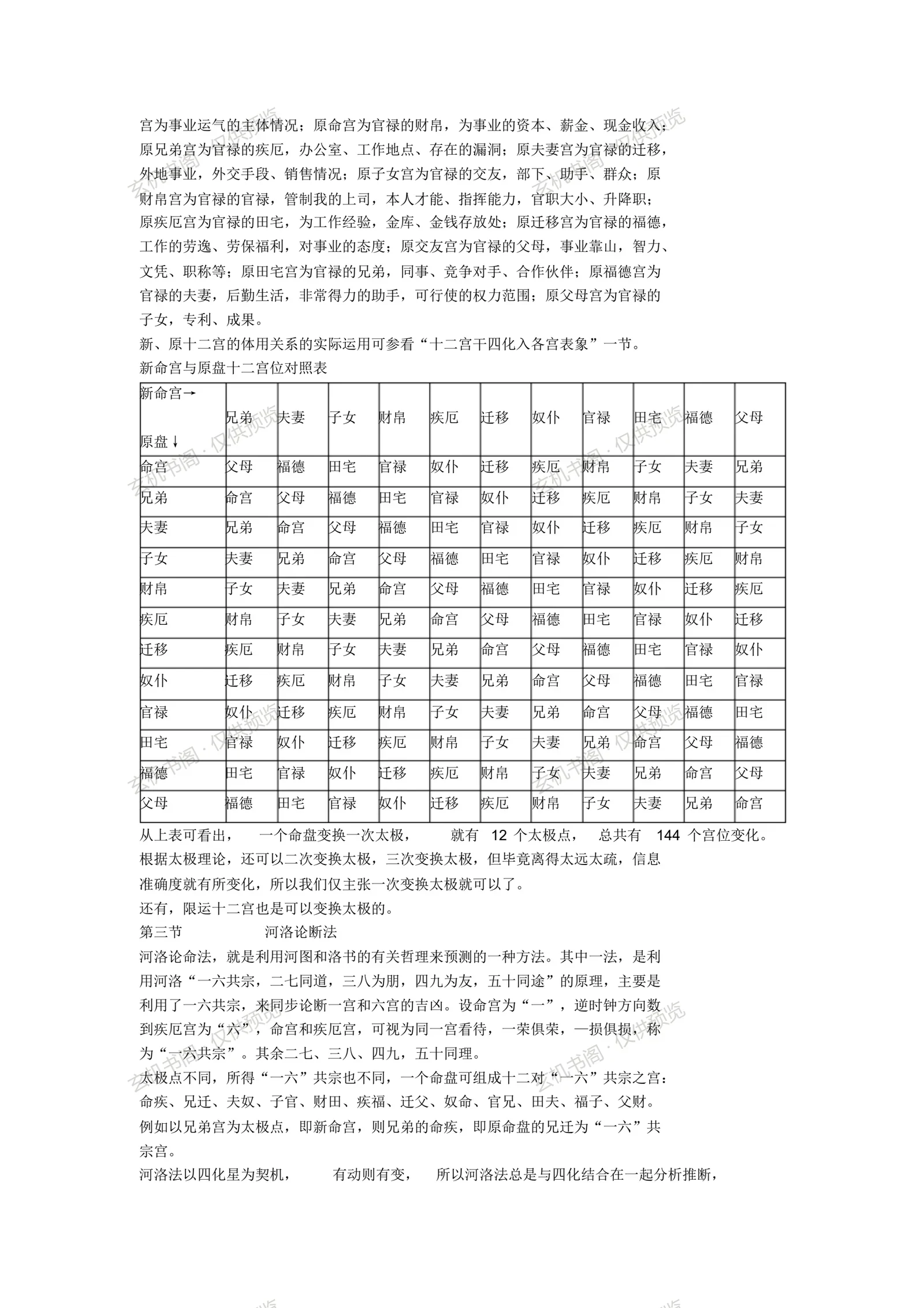
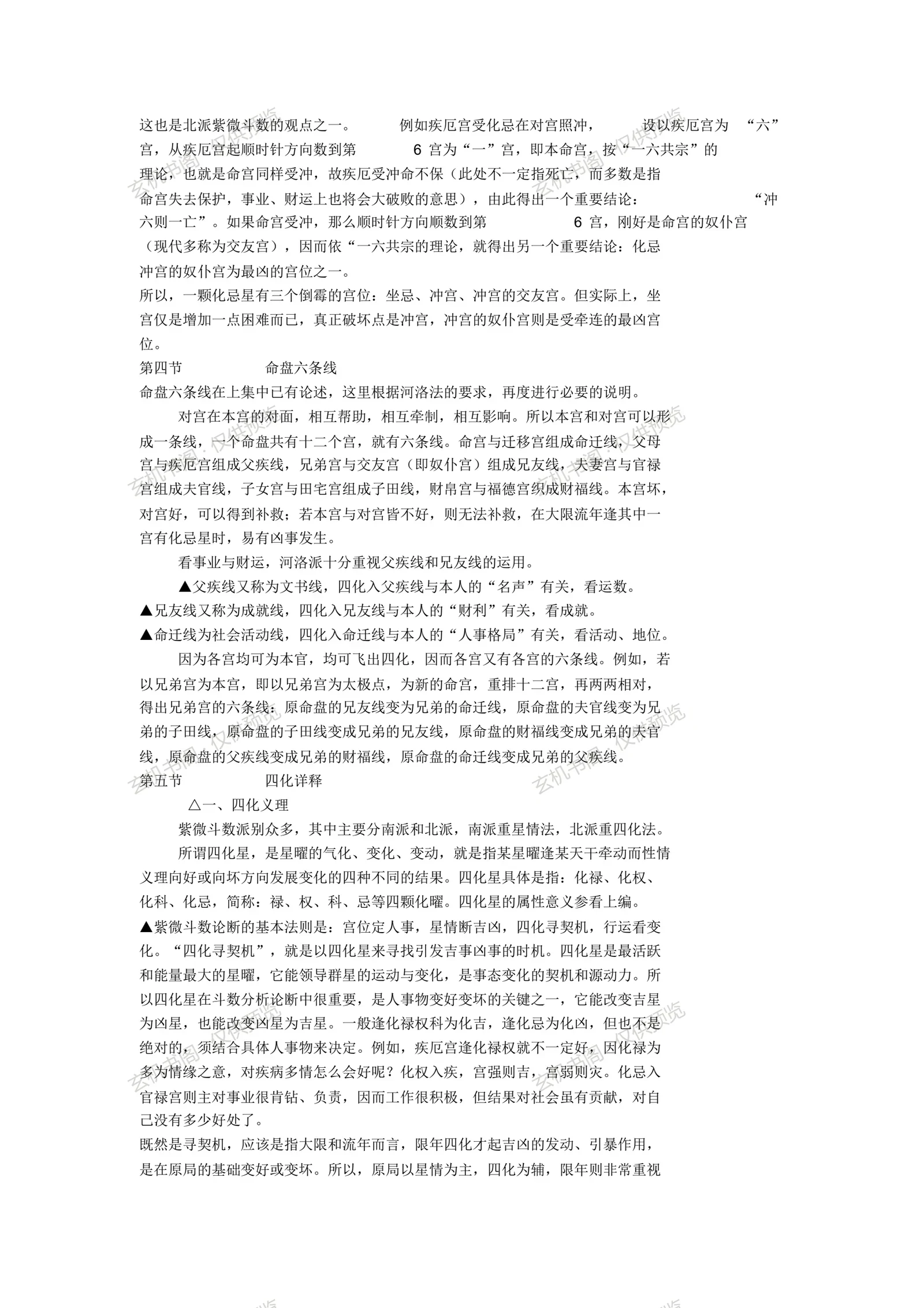
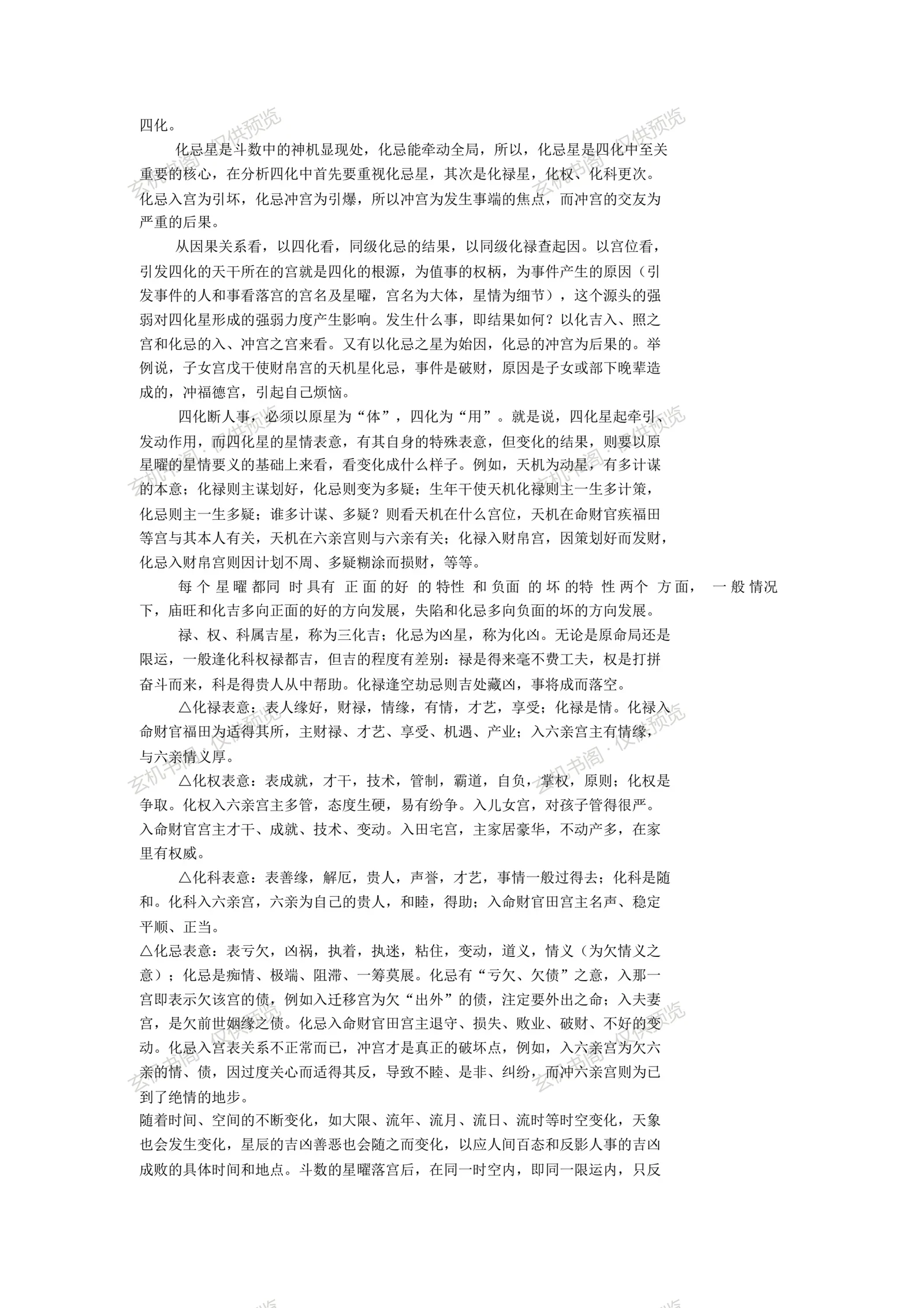
This is a lecture text by Fangwairen on the Hetu-Luoshu school of Zi Wei Dou Shu. It begins with the Hetu and Luoshu diagrams and the numbers of the early and later heaven bagua, then explains palace taiji transformation, in which any of the twelve palaces can serve as a new center, producing a new twelve-palace chart with a comparison table. The third section presents the Hetu-Luoshu method of judging paired palaces through the formulas 'one and six share a source,' 'two and seven share a path,' and so on, using four transformations as the trigger. The fourth section covers the six lines of the chart—life-migration, parent-health, sibling-friend, spouse-career, children-property, and wealth-fortune—and how a palace and its opposite restrain and rescue each other. The fifth section details the four transformations: their meaning, flying stars, types, self-transformation, and entry/exit, distinguishing birth-year, palace-stem, and period transformations. It emphasizes that Hua Ji reveals the pivotal mechanism and that the opposing palace is the trigger point. The book is clear in structure and suited to readers with basic Zi Wei Dou Shu knowledge who wish to study the Hetu-Luoshu school and four-transformation techniques in depth.
Contents
Section 1: Hetu-Luoshu basics and bagua numbers
Section 2: Palace taiji transformation and comparison table
Section 3: Hetu-Luoshu judgment and four-transformation triggers
Section 4: The six palace lines
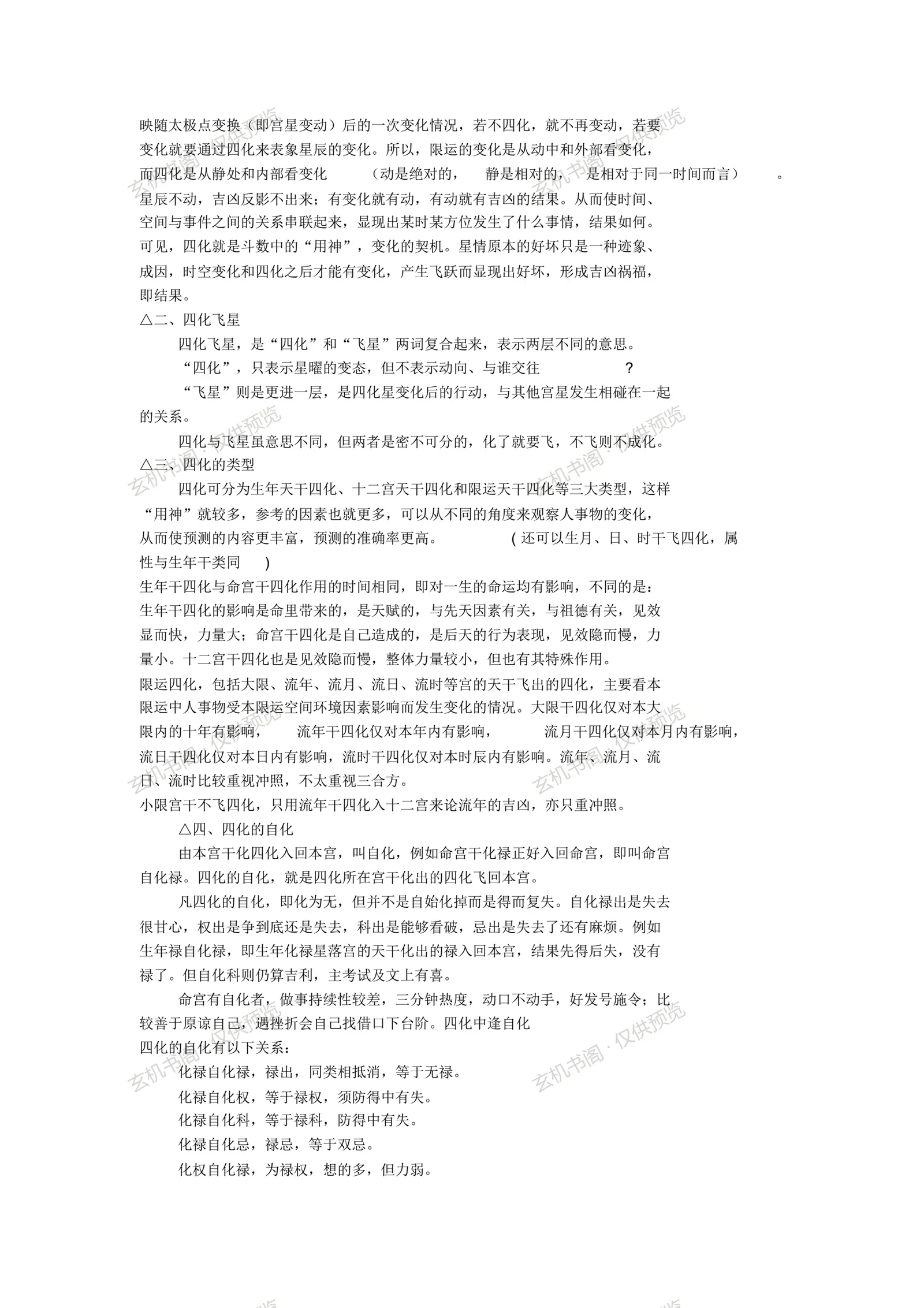
Section 5: Four transformations in detail
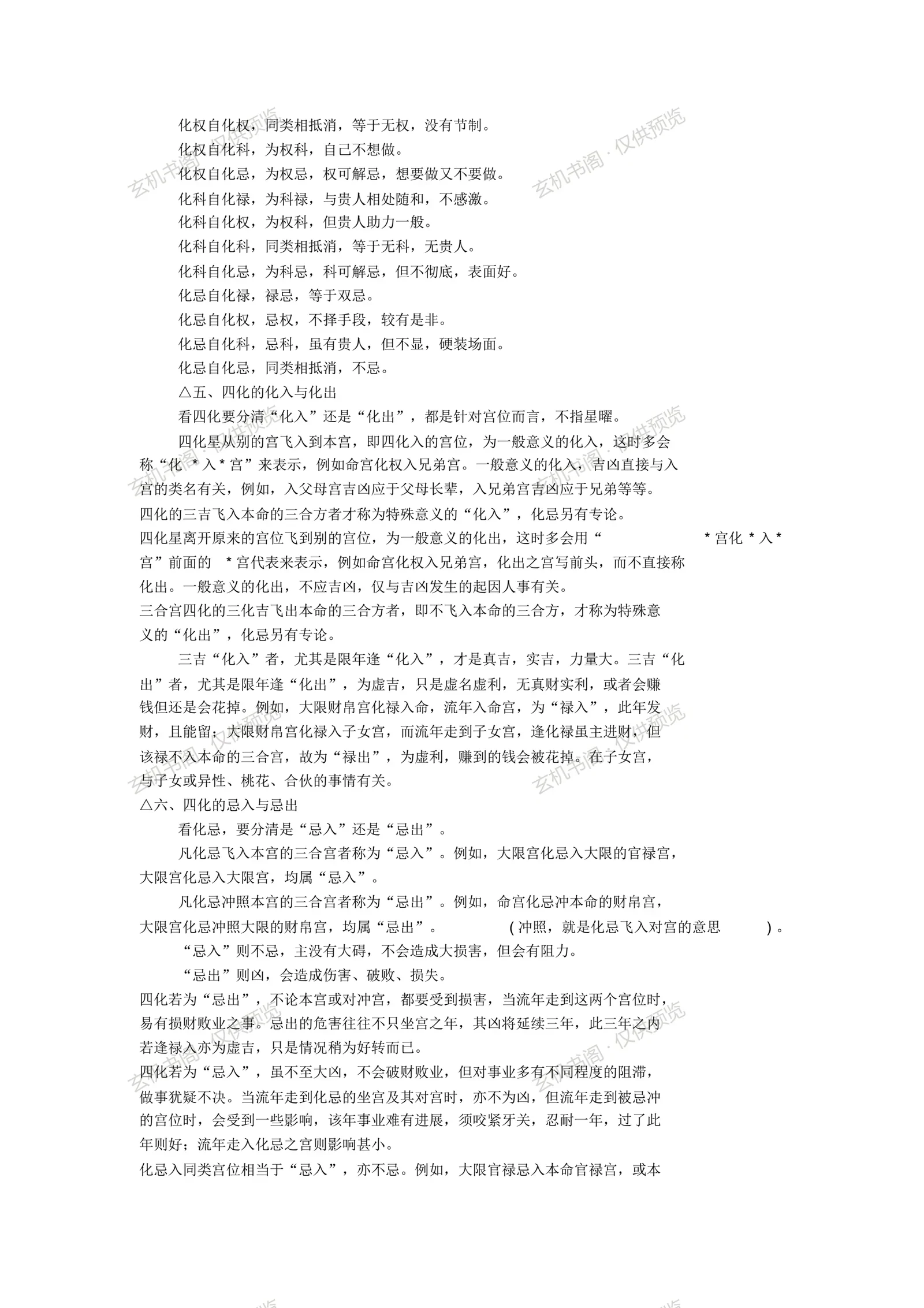
Four-transformation entry/exit and Hua Ji judgment
Key Points
Uses Hetu-Luoshu numerology and taiji transformation as the analytical framework
Any palace can become a new taiji; 144 variations, but one transformation is advocated
Paired-palace judgment through formulas such as 'one and six share a source'
The six lines treat a palace and its opposite as mutually restraining and rescuing
Four transformations are classified as birth-year, palace-stem, and period types
Hua Ji reveals the mechanism; self-transformation involves cancellation and gain/loss