Reading guide
Content guideOverview
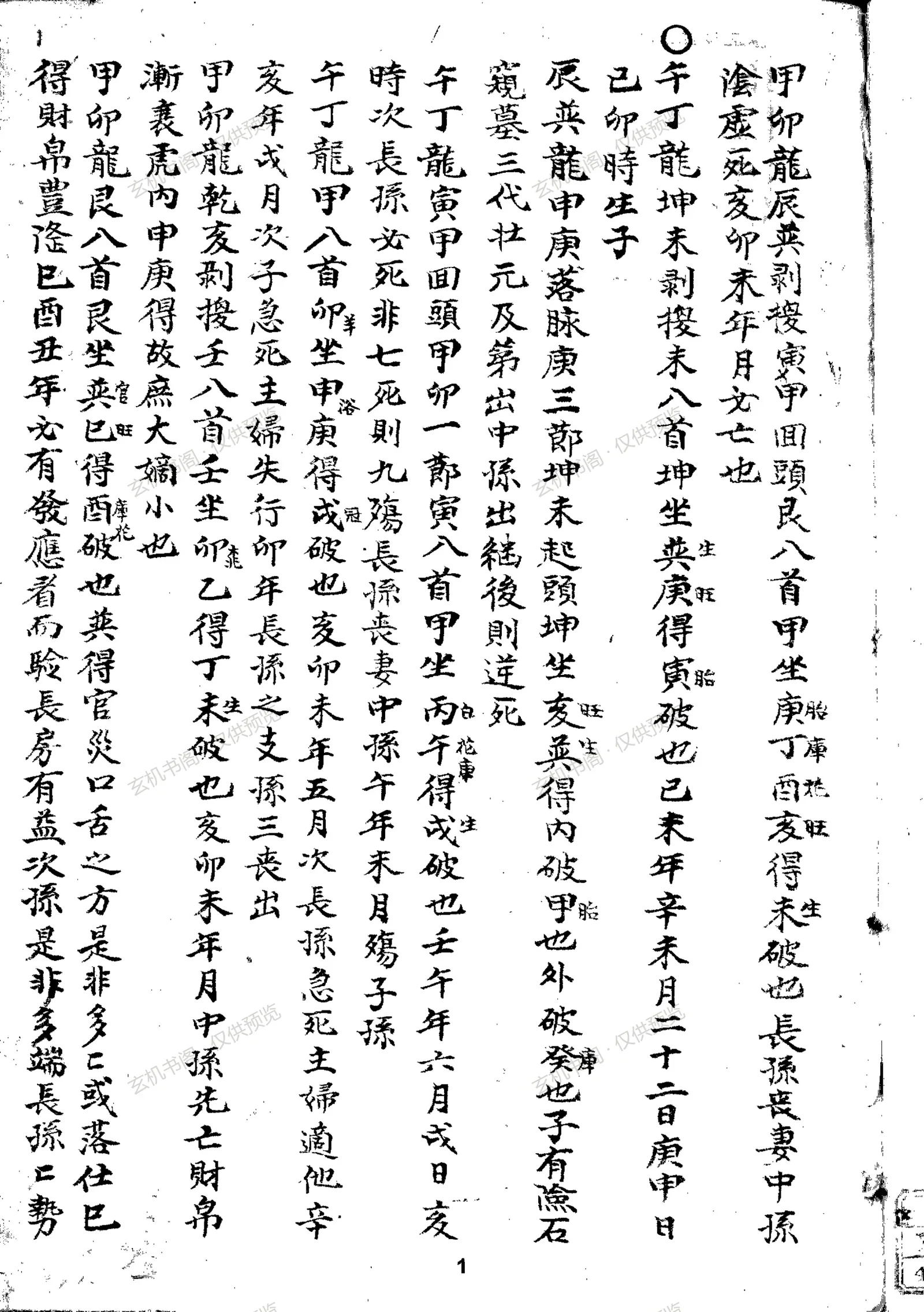
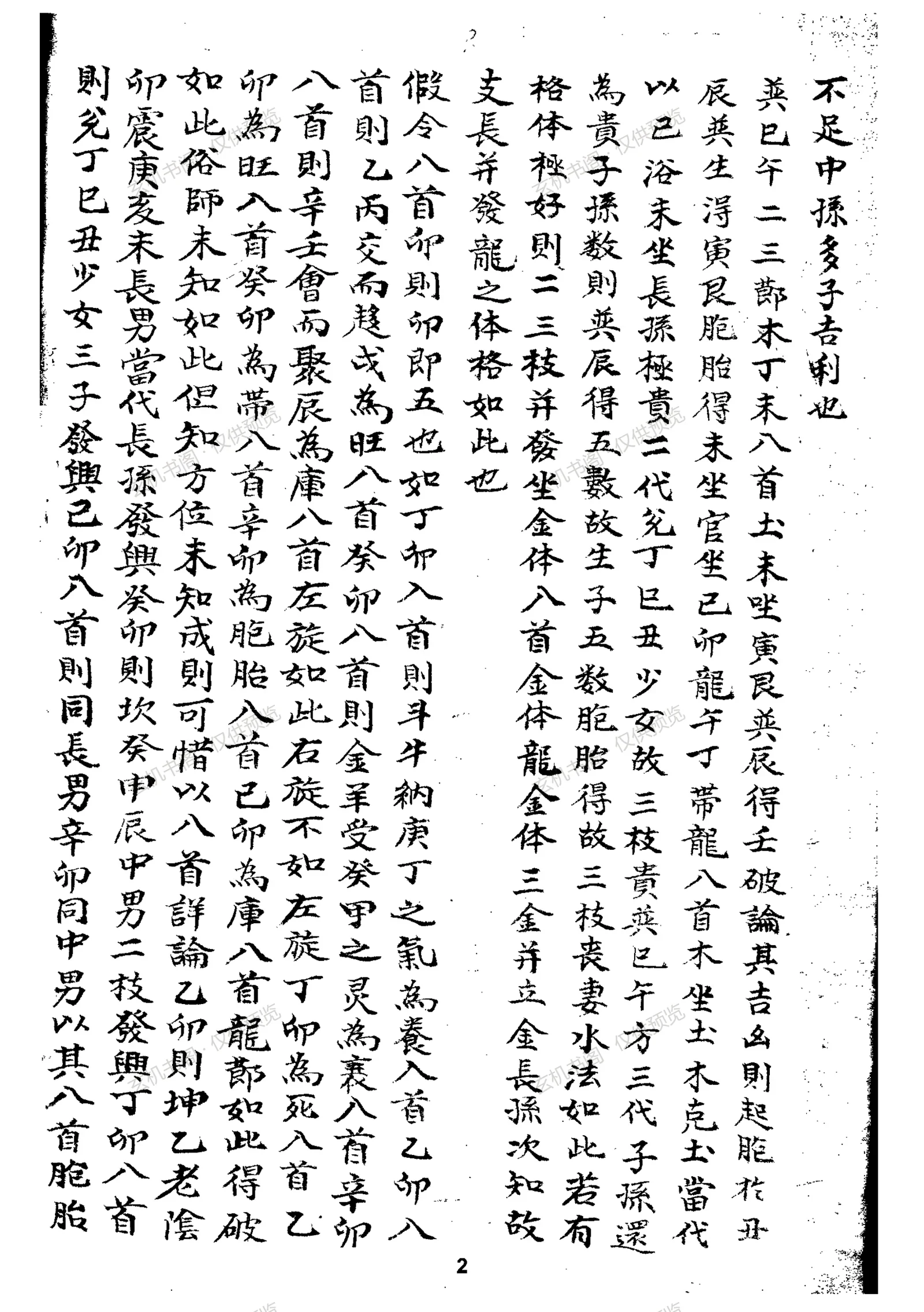
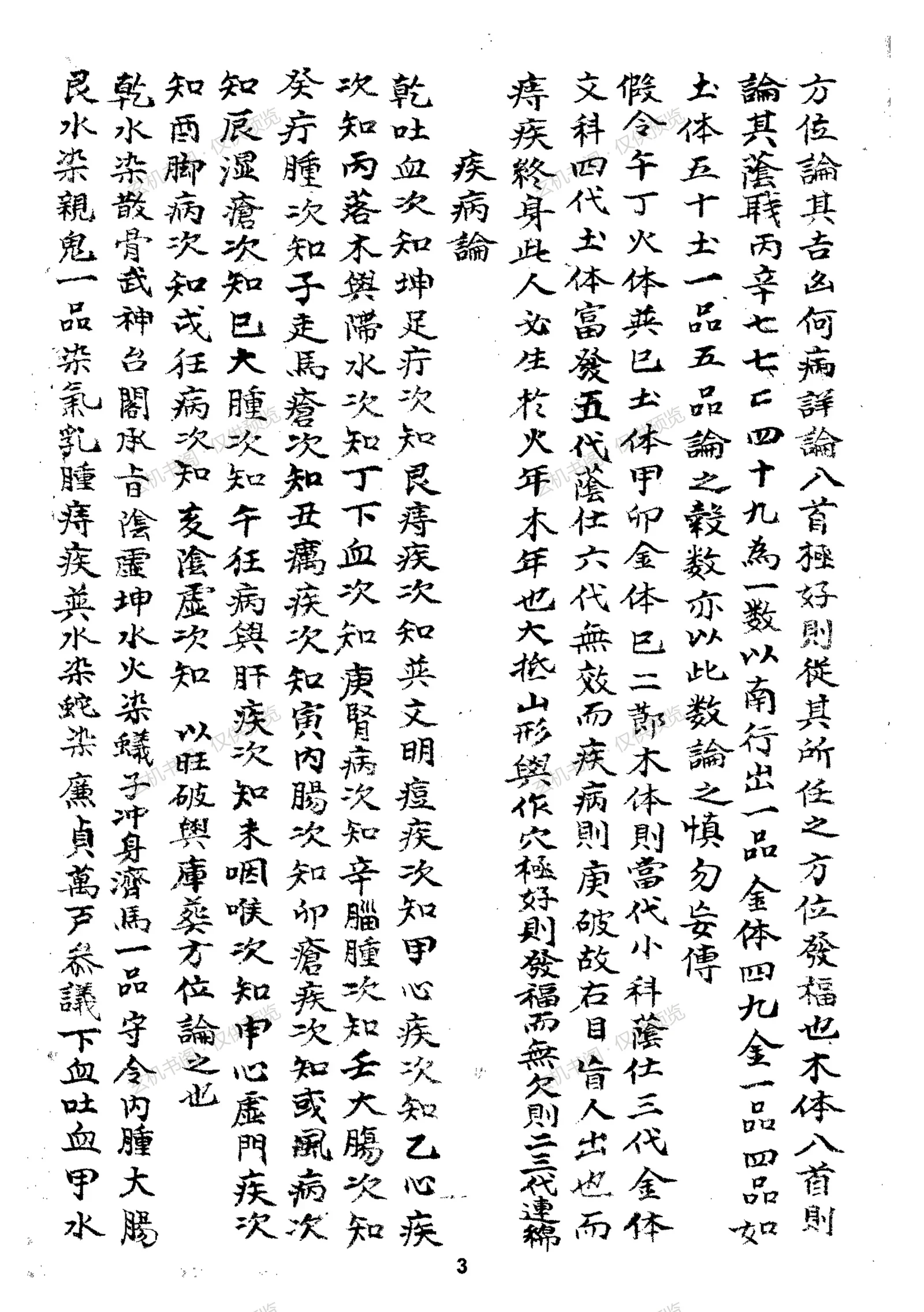
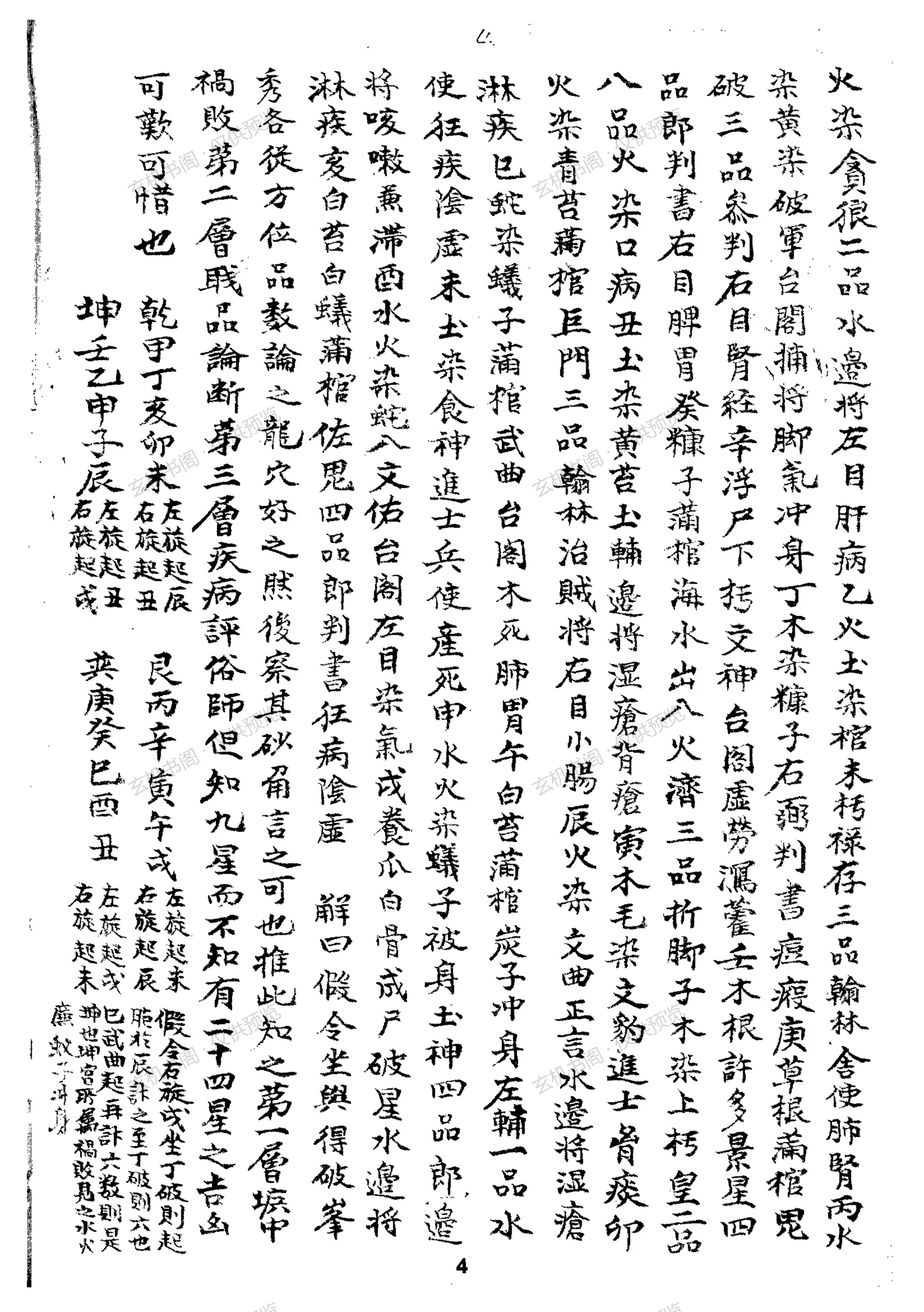
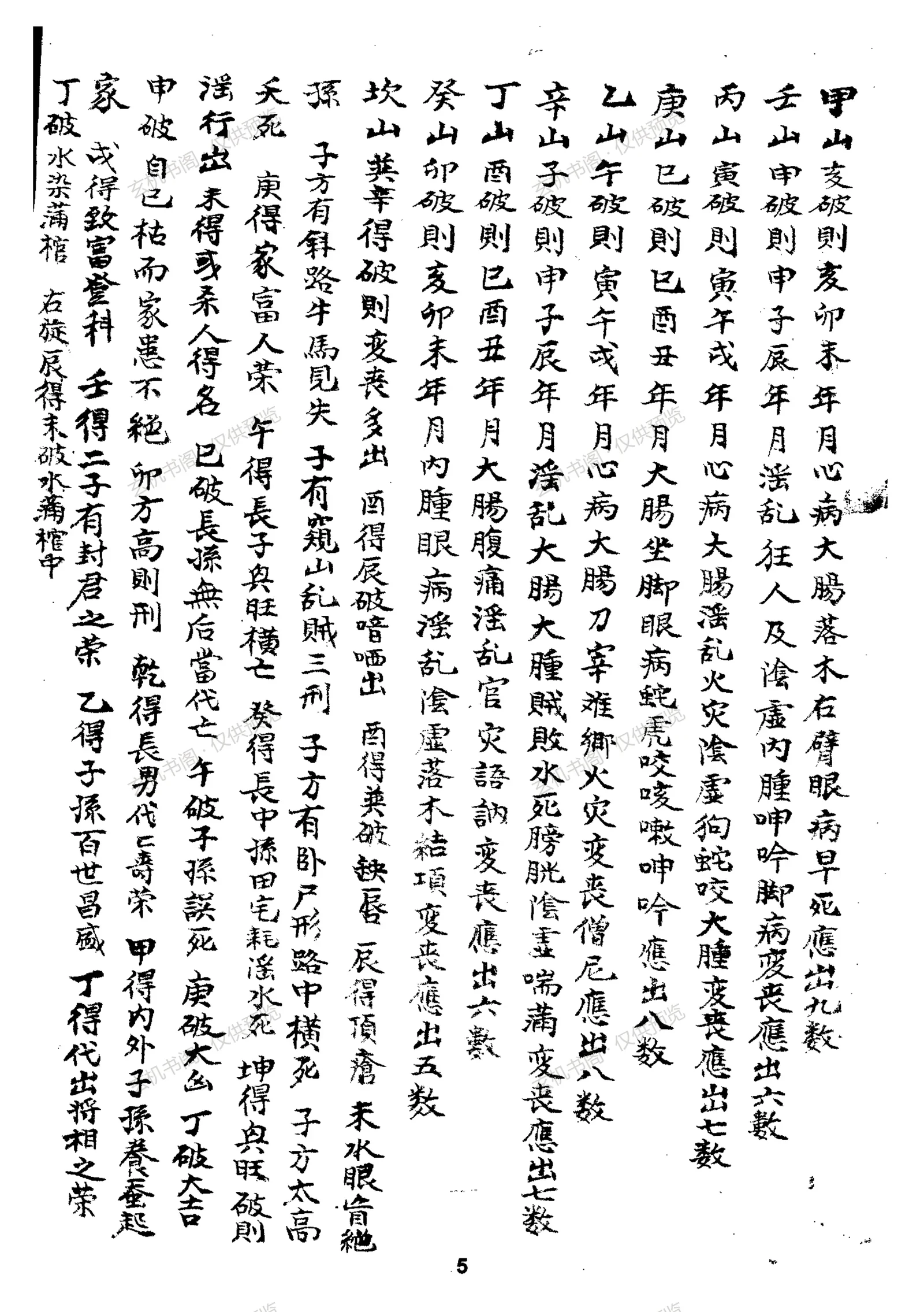
The visible pages identify the book as Fenjin Lun, a feng shui text that combines form analysis with directional and degree-based reasoning. Its main discussion centers on fenjin (degree division), sitting orientations, dragon vein entry, and surrounding sand-water formations. The text uses sexagenary stems and branches together with the twelve earthly branches to assess auspicious and inauspicious configurations, including illness, official success, descendants' fortunes, and outcomes for different branches of a family. It also refers to concepts such as the three harmonies, gestation, nurture, prosperity, tomb, and extinction, indicating a system that links landform and directional theory. The images do not show a title page with author, date, or edition information, and parts of the handwritten or block-printed text are damaged, so the book's exact provenance remains uncertain.
Contents
Basic judgment of fenjin sitting degrees and dragon vein entry
Clauses on sand-water disruptions and their outcomes
Illness section: formations and corresponding symptoms
Official rank and family rise and decline
Twenty-four mountain fenjin and disruption formulas
Key Points
Core method based on fenjin sitting degrees and dragon vein entry
Heavy use of stems, branches, and the birth-prosperity-tomb-extinction cycle
Correlates sand-water formations with illness, rank, and family fortune
Clause-based structure suited to lookup and diagnosis
Includes outcomes for senior and junior family branches