Reading guide
Content guideOverview
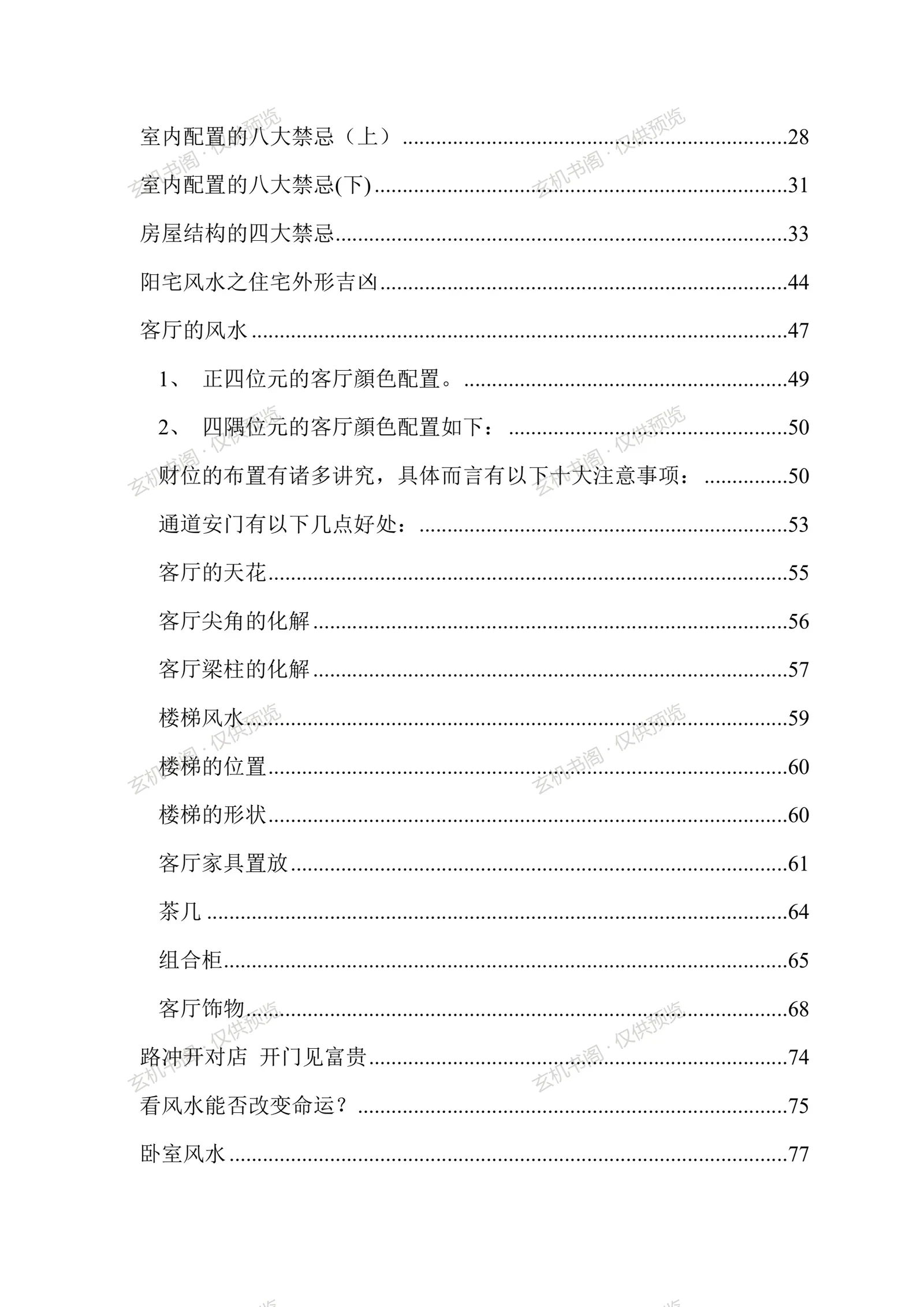
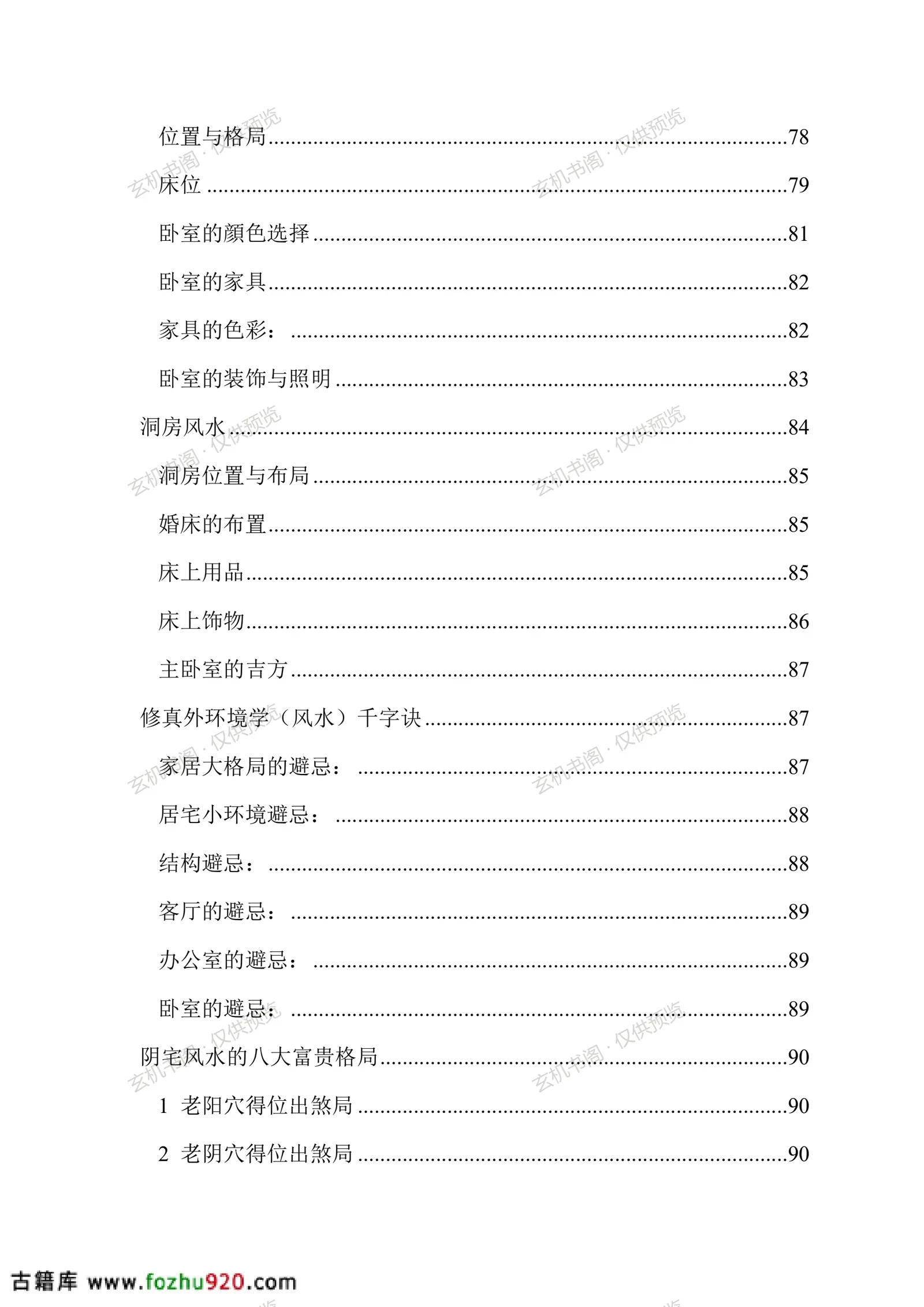
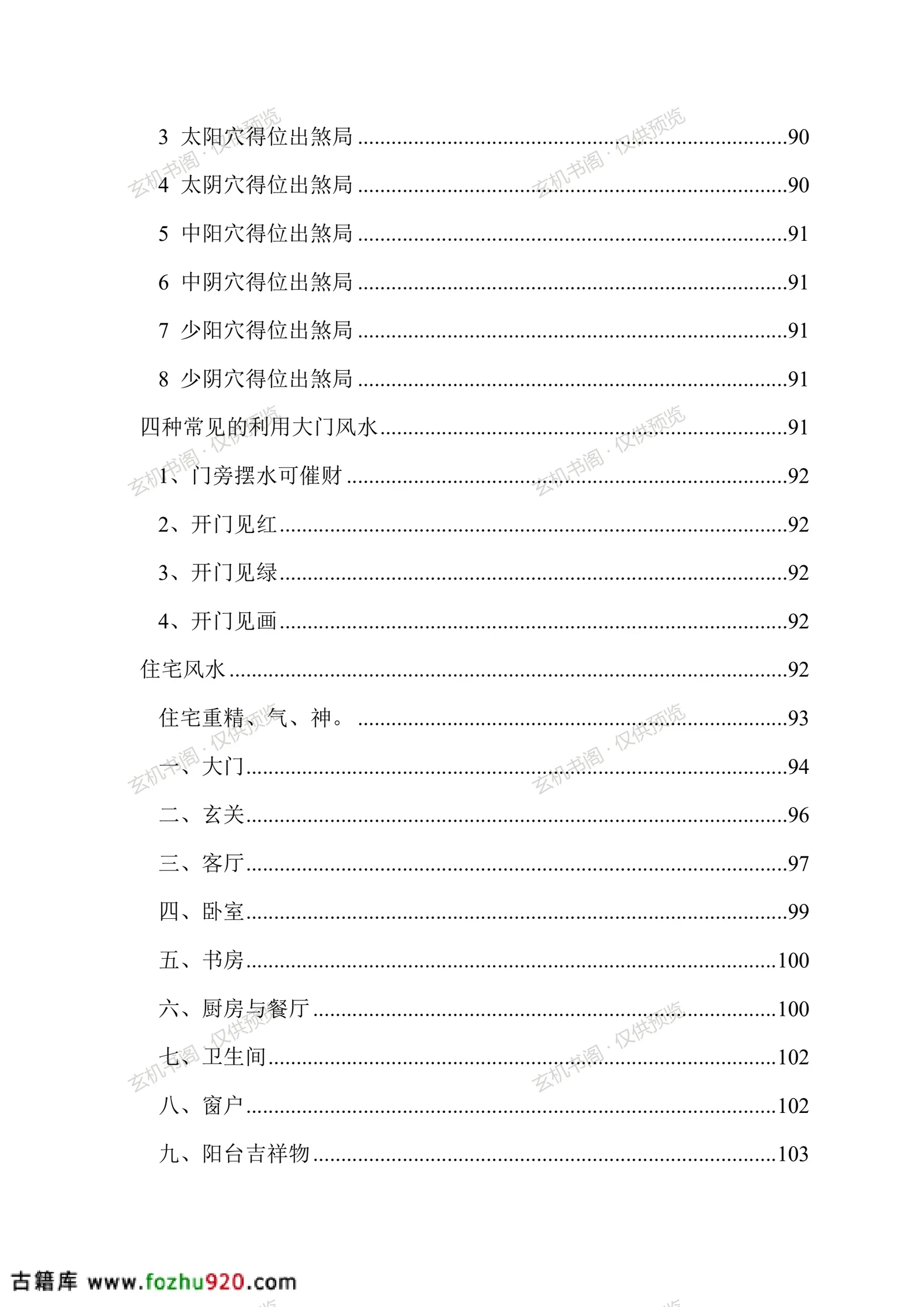
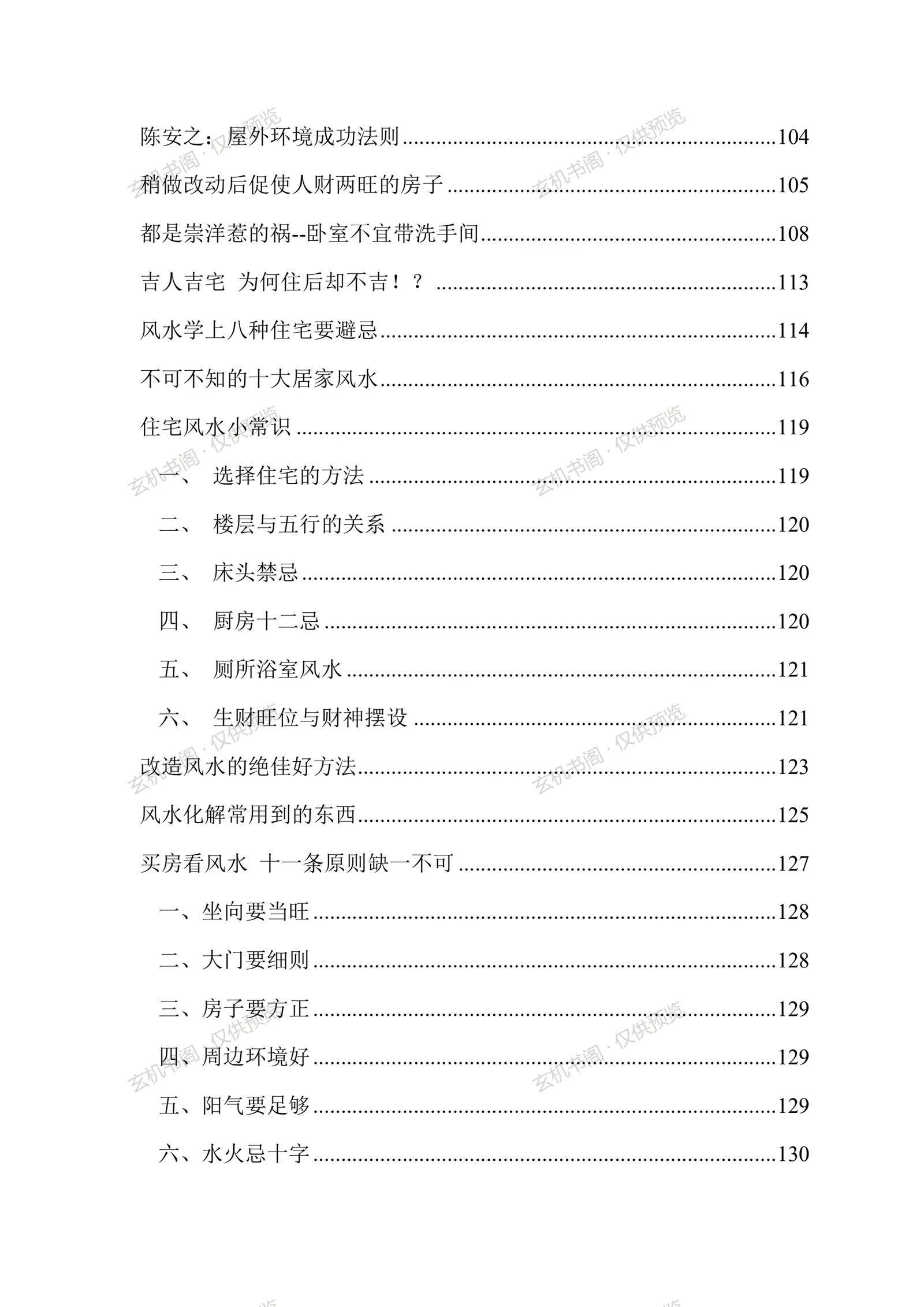
This book, titled Treasury of Feng Shui and described in the filename as an introduction to feng shui, is a practical primer on yang-dwelling (residential) feng shui. The opening chapters lay theoretical groundwork: the Hetu and Luoshu diagrams, an overview of feng shui studies, and the theories and schools of feng shui, followed by warnings about sha (malignant forms) and quick methods for judging fortune and misfortune. The middle section turns to interior practice, first listing eight taboos of indoor arrangement, four taboos of house structure, and auspicious versus inauspicious house exteriors, then working through spaces one by one. The living room chapters cover color schemes for the cardinal and corner positions, ten cautions for arranging the wealth position, doorway passages, ceilings, remedies for sharp corners and exposed beams, stair location and shape, furniture, tea tables, combination cabinets and ornaments. Bedroom chapters discuss position and layout, bed placement, color choice, furniture and lighting, with separate sections on bridal-chamber feng shui, wedding-bed arrangement and auspicious directions for the master bedroom. Later sections include a "thousand-character formula" for the external environment, taboos for the overall home layout and small environments, eight wealth-and-nobility configurations for yin dwellings (old yang, old yin, greater yang, greater yin, central yang, central yin, lesser yang and lesser yin positions releasing sha), four common uses of the main door, the importance of essence-qi-spirit in a residence, and guidance on the entryway, study, kitchen and dining room, bathroom, windows and balcony ornaments. The book closes with topics such as the relation between floors and the five elements, bed-head taboos, twelve kitchen taboos, wealth positions and deity placement, and eleven principles for judging feng shui when buying a home. Its itemized, reference-like format suits beginners who want to look things up by room.
Contents
Hetu, Luoshu and an overview of feng shui
Theories, schools and warnings about sha
Taboos for indoor arrangement and house structure
Living room: colors, wealth position, ceilings, stairs, furniture
Bedroom and bridal chamber: bed, colors, furniture, auspicious directions
A thousand-character formula and environmental taboos
Eight wealth-and-nobility configurations for yin dwellings
Room-by-room residential feng shui and eleven buying principles
Key Points
Uses Hetu, Luoshu and feng shui schools as theoretical grounding.
Lists rules and taboos room by room, from living room to windows.
Living room section stresses wealth position, colors and remedies for beams and sharp corners.
Bedroom section covers bridal chamber, wedding bed and master-bedroom directions.
Later chapters add eight yin-dwelling configurations and home-buying principles.