Reading guide
Content guideOverview
Written by Li Chunwen (Daoist name Chongtian Jushi), Physiognomy and Feng Shui is the third book following his earlier works on divination and yang house cases. It integrates hand and face physiognomy with yin-yang house feng shui, arguing that a person's facial features and living environment reflect each other. The book presents 100 practical cases covering ancestral graves, residences, shops, floors, roads, bridges, and temples, and their influence on marriage, children, illness, wealth, and legal matters. The prefaces describe the author's Daoist training and years of travel, emphasizing that the material is based on oral transmission from Daoist elders and empirical testing. The table of contents shows two main parts: foundational knowledge (annual fortune, thirteen facial regions, facial lines) and the 100 case studies, making it a reference for readers interested in combining physiognomy with feng shui.
Contents
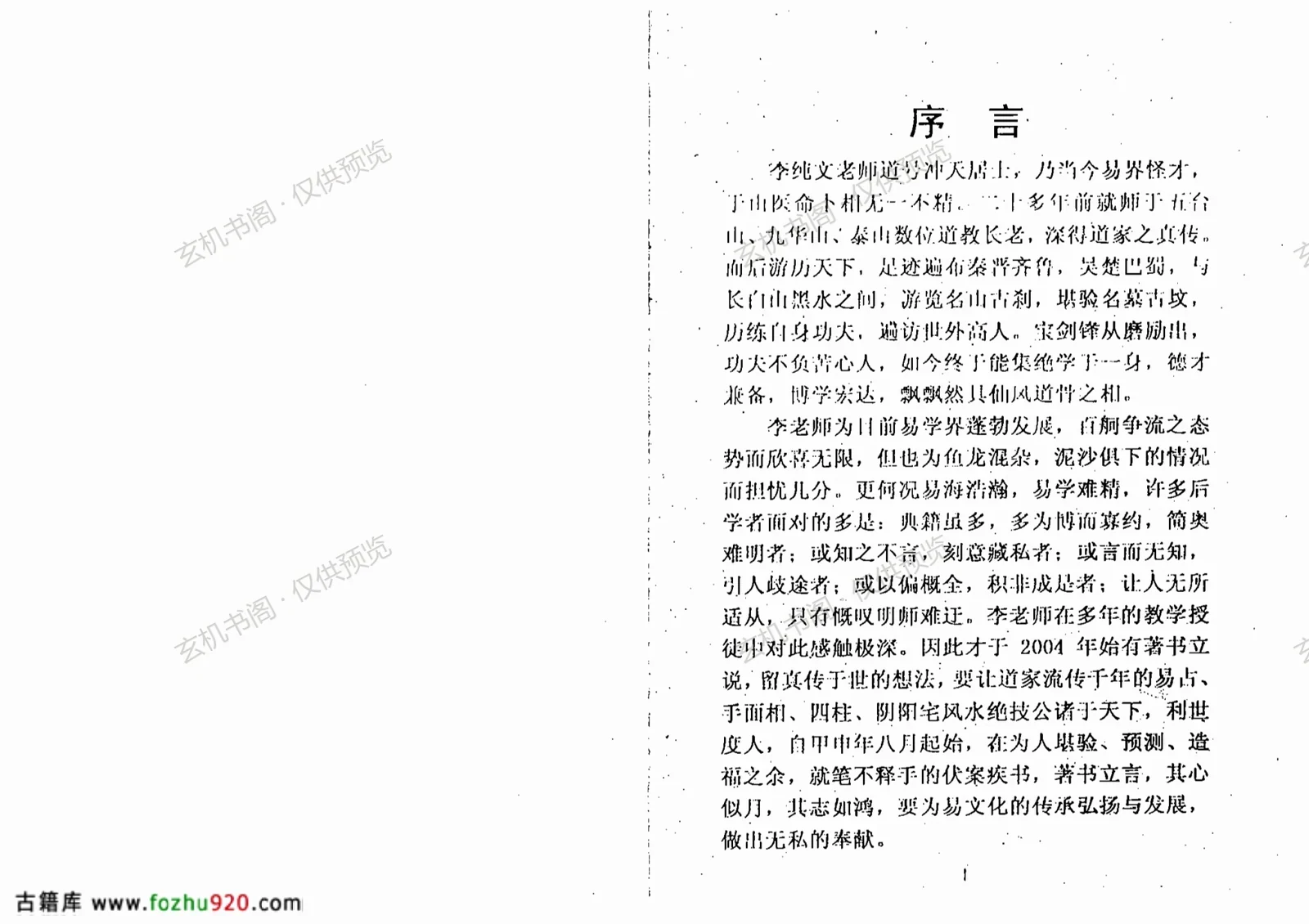
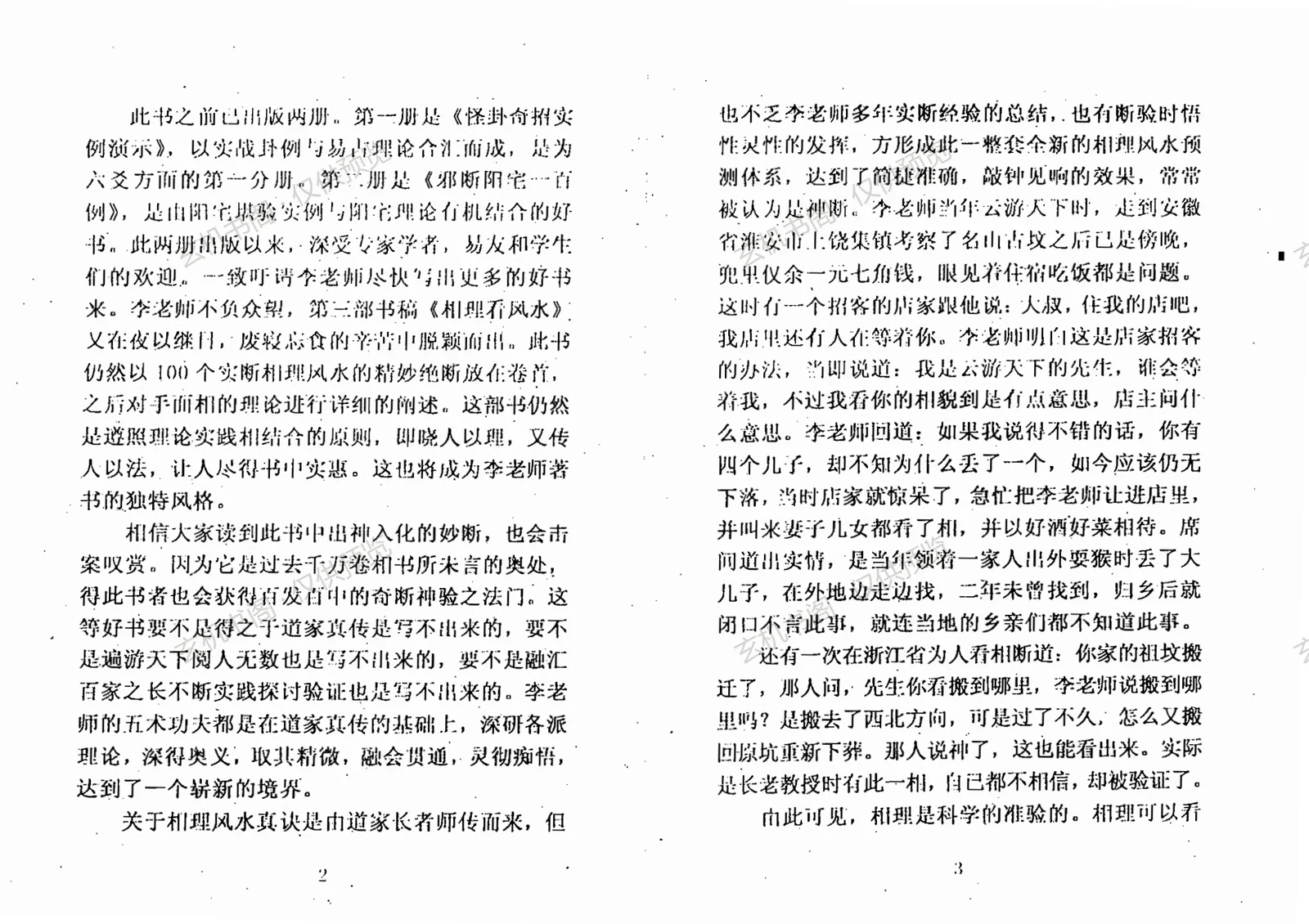
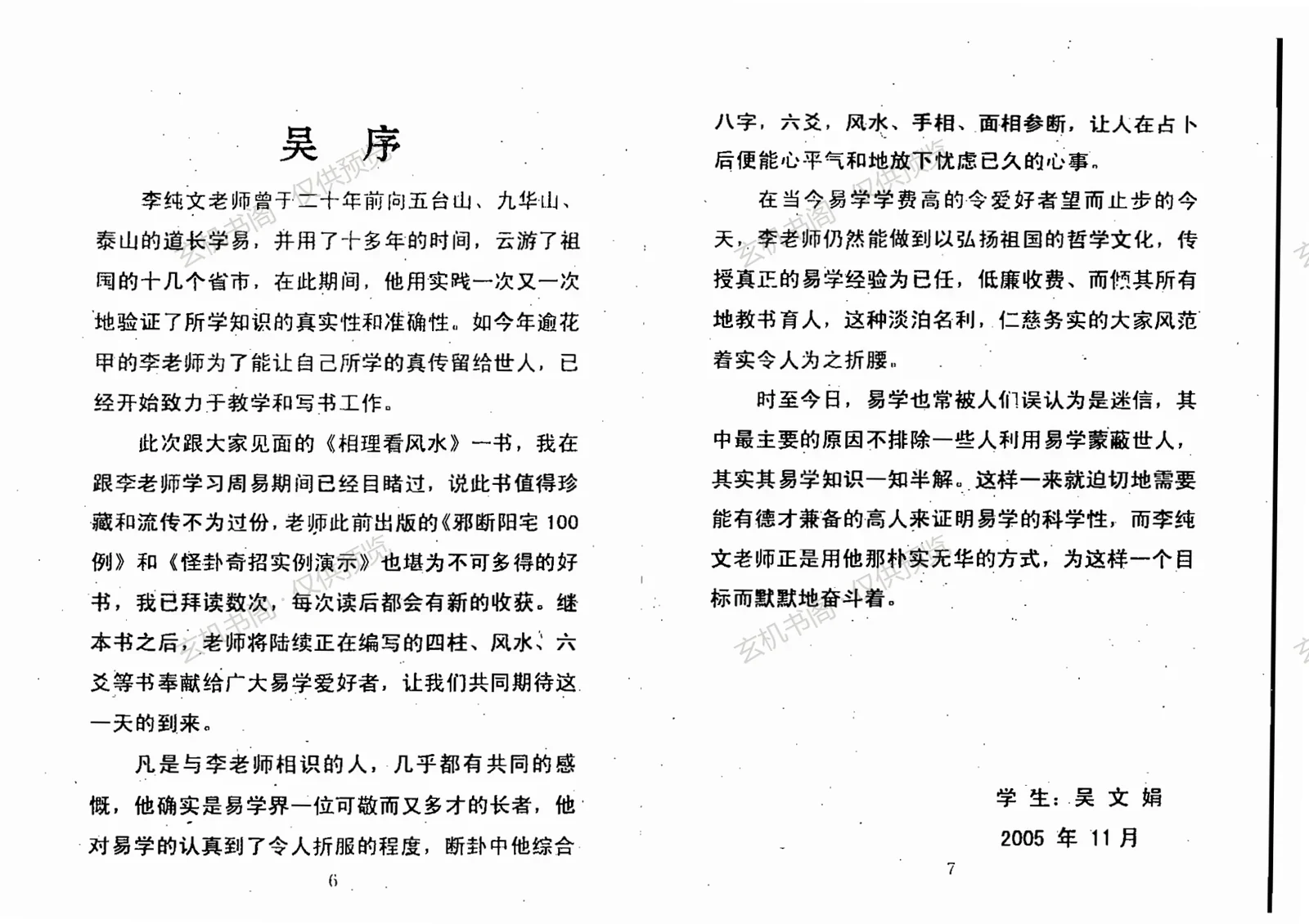
Prefaces: author background and reasons for writing
Chapter 1: Fundamentals—annual fortune, thirteen facial regions, facial lines
Chapter 2: 100 cases of physiognomy-based feng shui—graves, houses, shops, floors
Cases cover marriage, children, illness, wealth, and legal affairs
Key Points
Infers feng shui conditions from facial features, stressing inner-outer correspondence.
Includes 100 practical cases across graves, residences, and shops.
Fundamentals cover annual fortune verses, thirteen facial regions, and facial lines.
Prefaces highlight Daoist transmission and years of empirical travel.
Cases address marriage, children, illness, wealth, and legal issues.