Reading guide
Content guideOverview
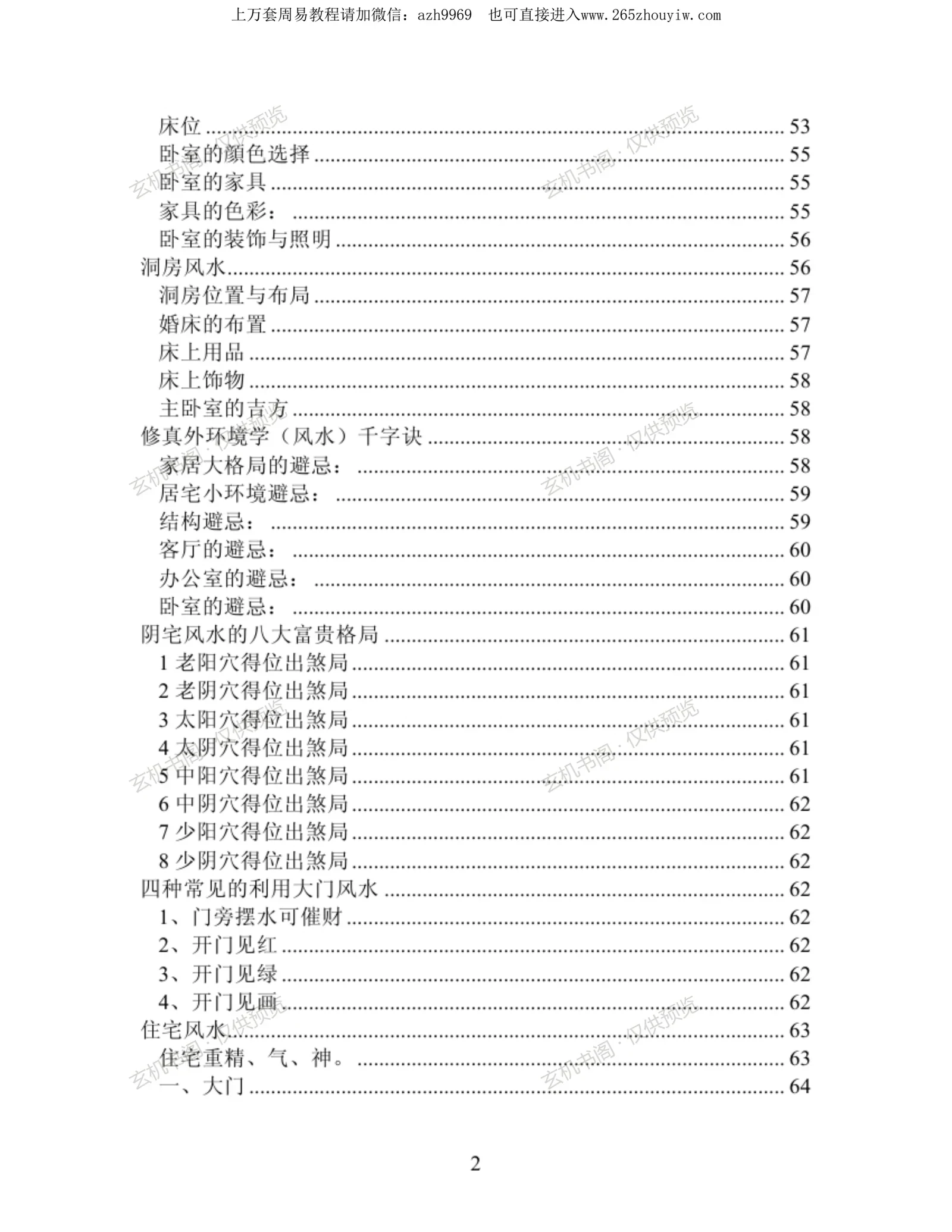
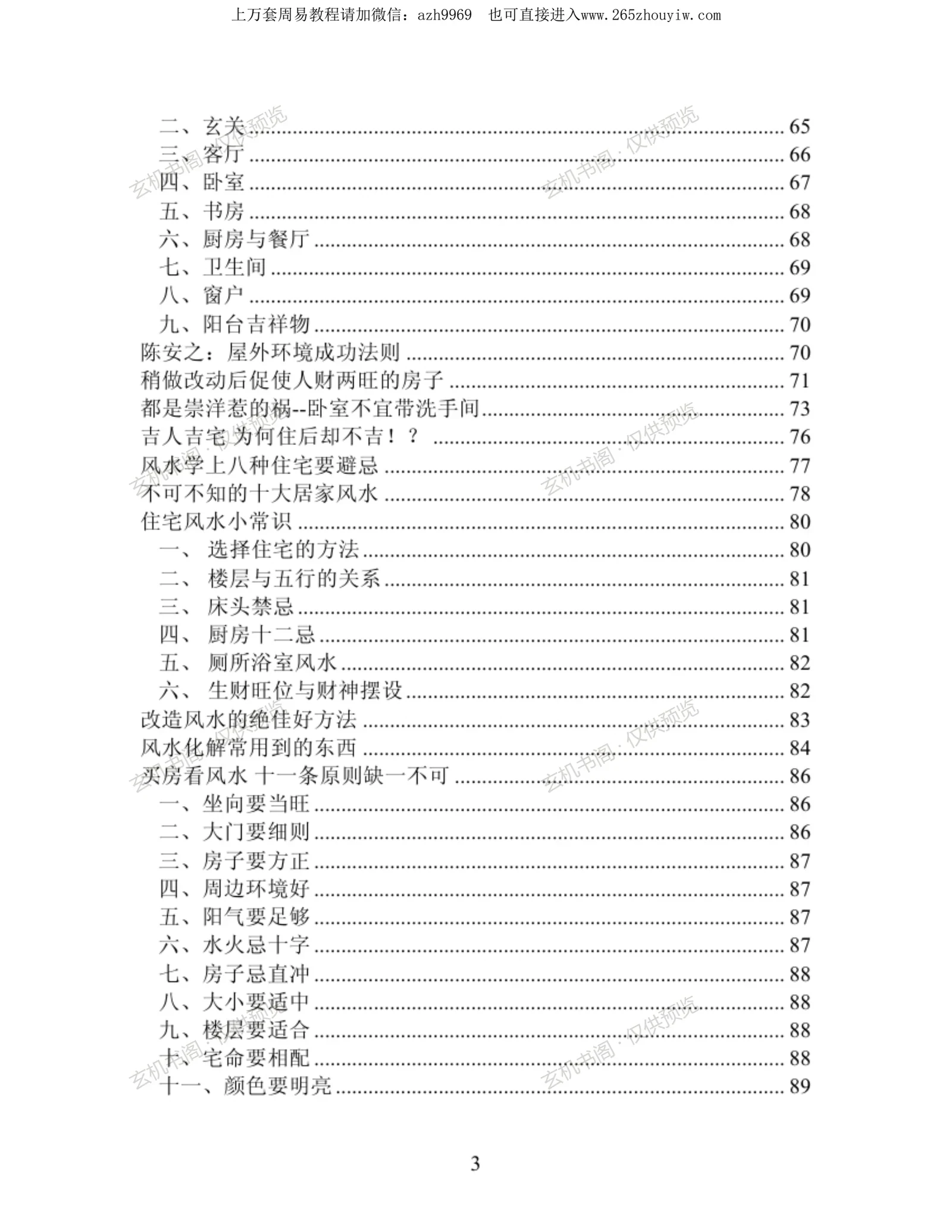
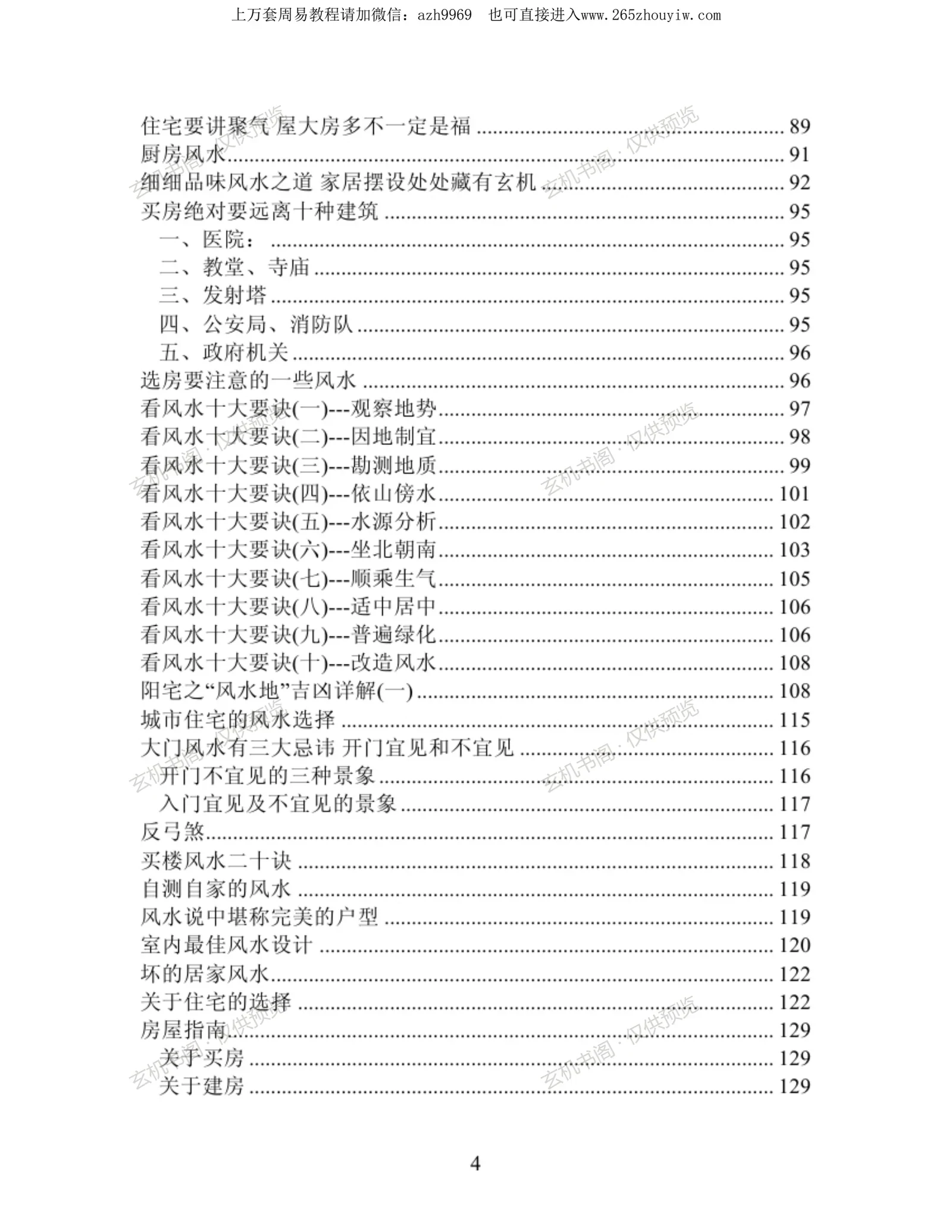
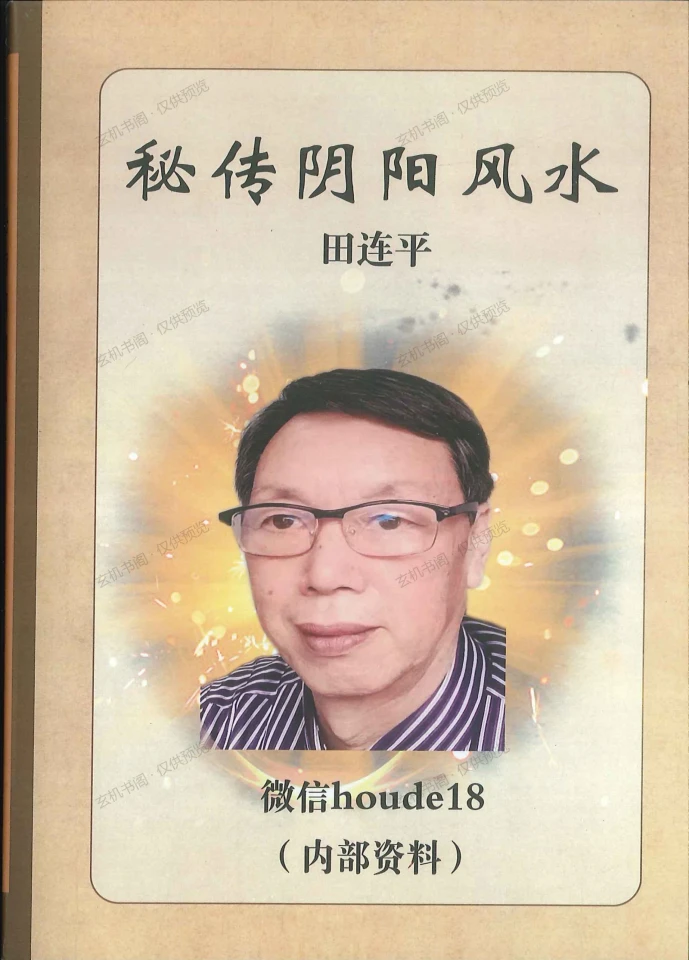
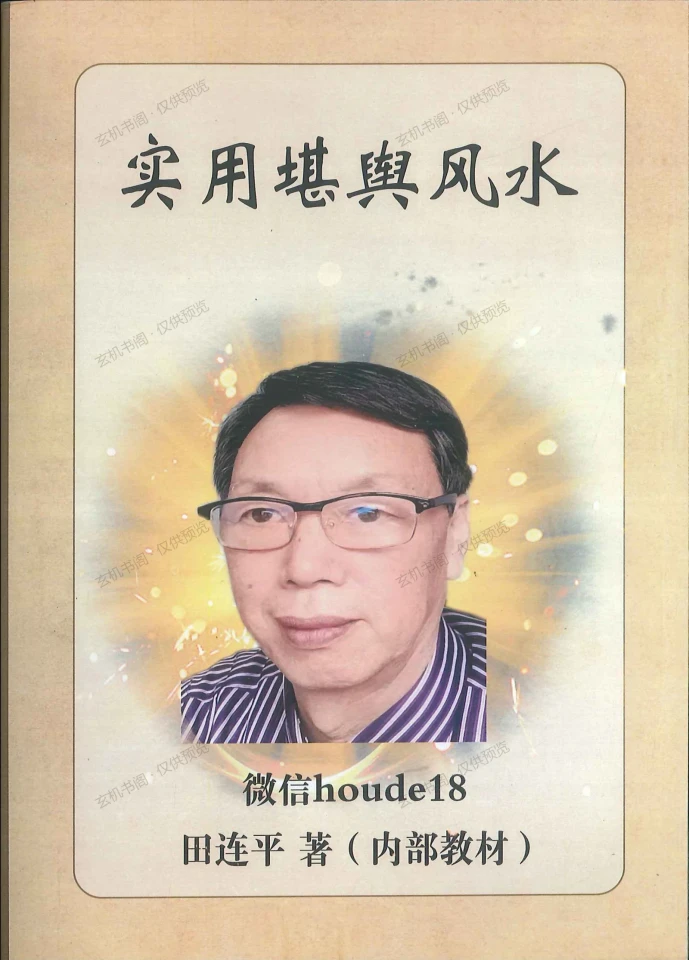
This is a practical feng shui compendium whose cover reads simply "A Treasury of Feng Shui." The table of contents shows the book centers on yang-dwelling (residential) feng shui. It opens with the Hetu and Luoshu diagrams, an overview of feng shui theory and its schools, then moves to eight taboos of interior arrangement, four structural taboos, and the auspiciousness of house shapes. The main body proceeds room by room: living room color schemes, wealth-position placement, ceilings, remedies for sharp corners and beams, stair location and form, furniture and ornaments; bedroom bed position, colors, furniture and lighting; bridal-chamber layout; then the main gate and entry, study, kitchen and dining room, bathroom, windows and balcony talismans. It also includes eight auspicious yin-dwelling formations, ten principles of site reading (observing terrain, adapting to locality, surveying geology, relying on mountains and water, analyzing water sources, and so on), eleven rules for buying a home, rental taboos, thirty-five common household "sha" and common cures. The structure is loose and itemized, a collection of household feng shui common sense for general readers, better used for lookup by room or problem than as a rigorous treatise on form or compass schools.
Contents
Hetu, Luoshu and an overview of feng shui theory and schools
Eight interior taboos and four structural taboos
Living room: colors, wealth position, ceiling, beams, furniture
Bedroom, bridal chamber and bed placement
Main gate, kitchen, bathroom and balcony feng shui
Eight auspicious yin-dwelling formations
Ten principles of site reading and house-buying rules
Rental taboos, thirty-five common sha and remedies
Key Points
Focuses on residential feng shui, organized by living room, bedroom, kitchen, bathroom and gate.
Itemized taboos and cures make it easy to look up a specific problem.
Also covers eight yin-dwelling formations and ten site-reading principles.
Includes principles for buying, renting, building and renovating a house.
Theory is brief; emphasis is on practical lists rather than rigorous derivation.