Reading guide
Content guideOverview
This Chinese edition of Kobayashi Sachia-ki's feng shui book presents a practical, home-centered approach to luck and spatial arrangement. The preface introduces 'Kobayashi-style feng shui,' while the main chapters address entrances and bathrooms, the demon gate, toilet taboos, Buddhist altar placement, detached houses, renovations, living rooms, bedrooms, floral decorations, irregular building shapes, and balcony arrangements. A section on 'storage feng shui' classifies homes into A, B, C, and D types and discusses storage quantities, ordering, directional color changes, and shelf height. Written for general readers, the book treats feng shui as a set of everyday household rules rather than a strict academic system. It is useful for understanding Japanese domestic feng shui and home-improvement lore, though its traditional claims should be read within cultural context.
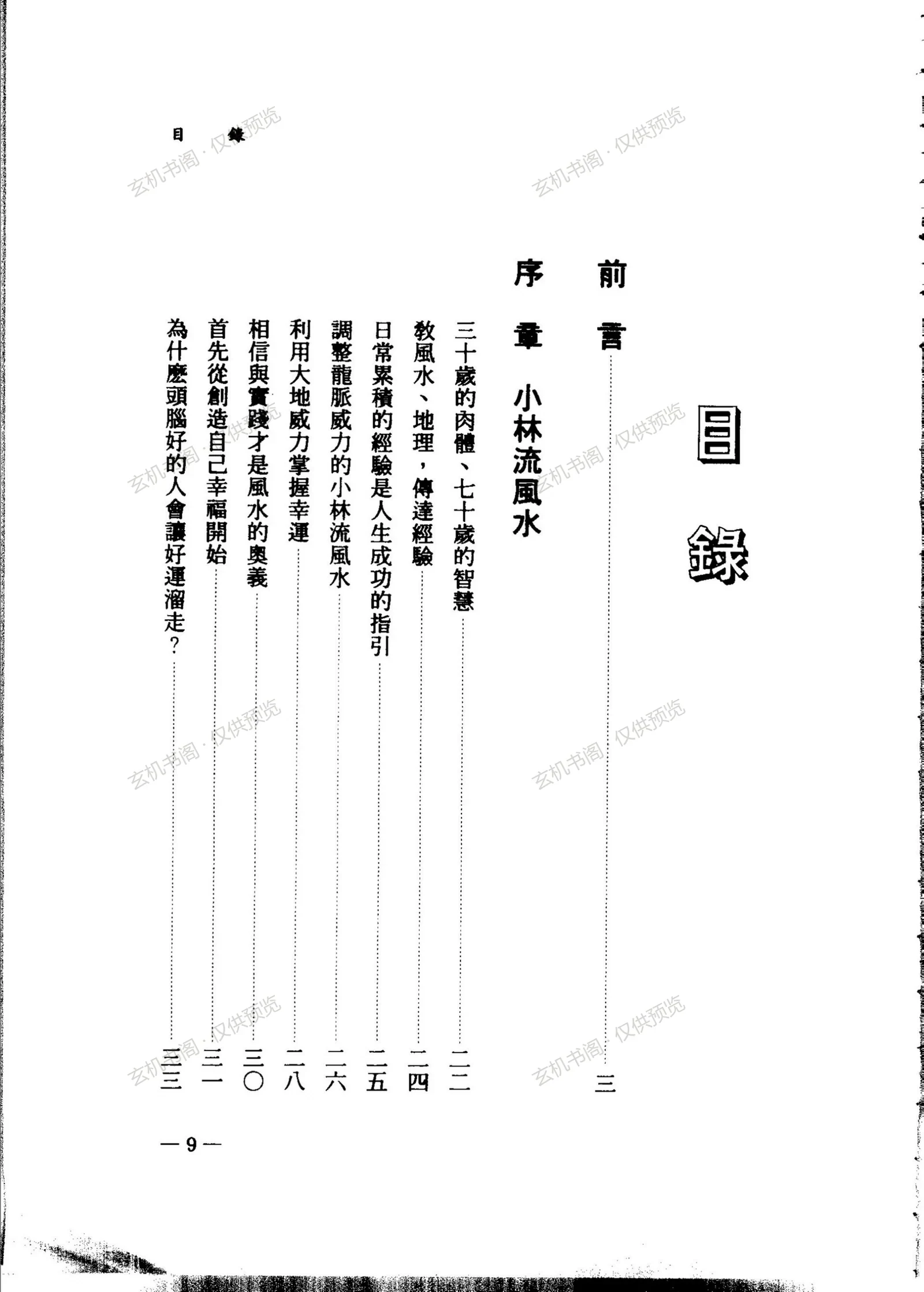
Contents
Preface: Kobayashi-style feng shui and everyday experience
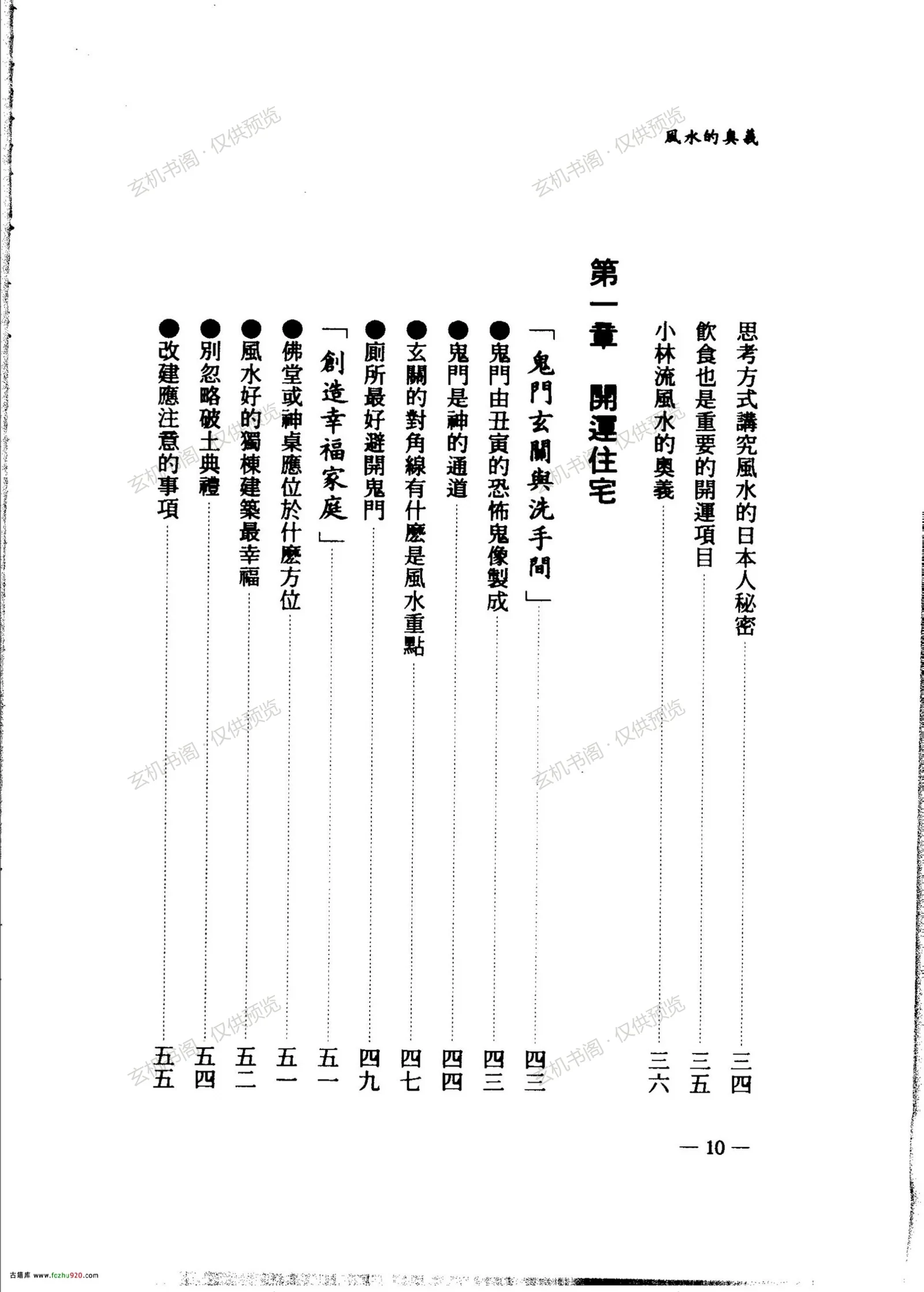
Chapter 1: Entrances, bathrooms, demon gate, and toilet taboos
Altar placement and detached-house selection
Renovation notes and happy-family layouts
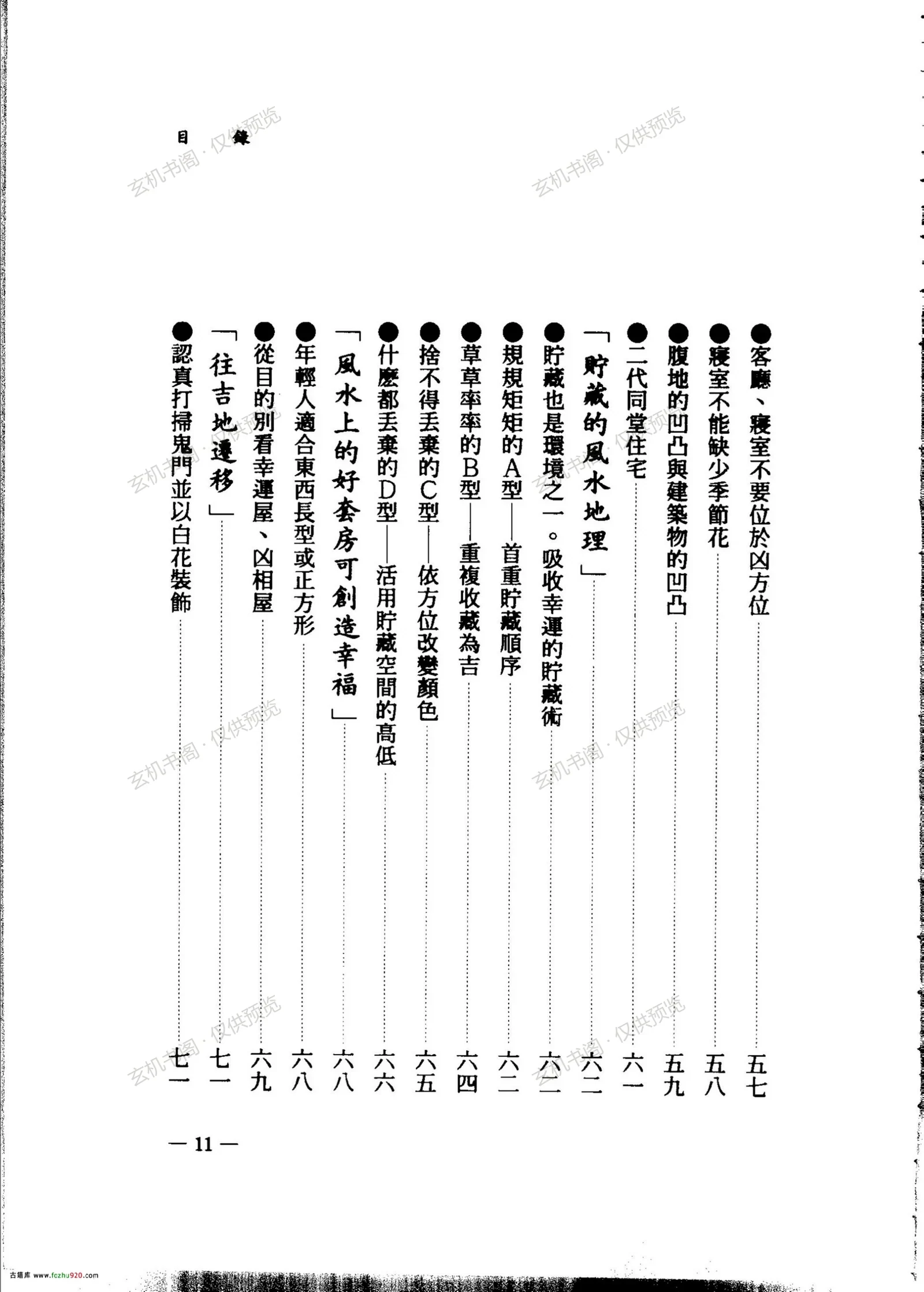
Living rooms, bedrooms, flowers, and irregular shapes
Storage feng shui: A/B/C/D types and space height
Auspicious relocation and demon-gate cleaning
Key Points
Explains feng shui through specific domestic spaces such as entrances, bathrooms, and bedrooms
Emphasizes the demon gate, directions, protrusions, and building shapes
Proposes four storage-feng-shui types based on quantity and order
Covers altars, renovations, and relocation in everyday life
Reads as Japanese domestic feng shui lore rather than academic theory