Reading guide
Content guideOverview
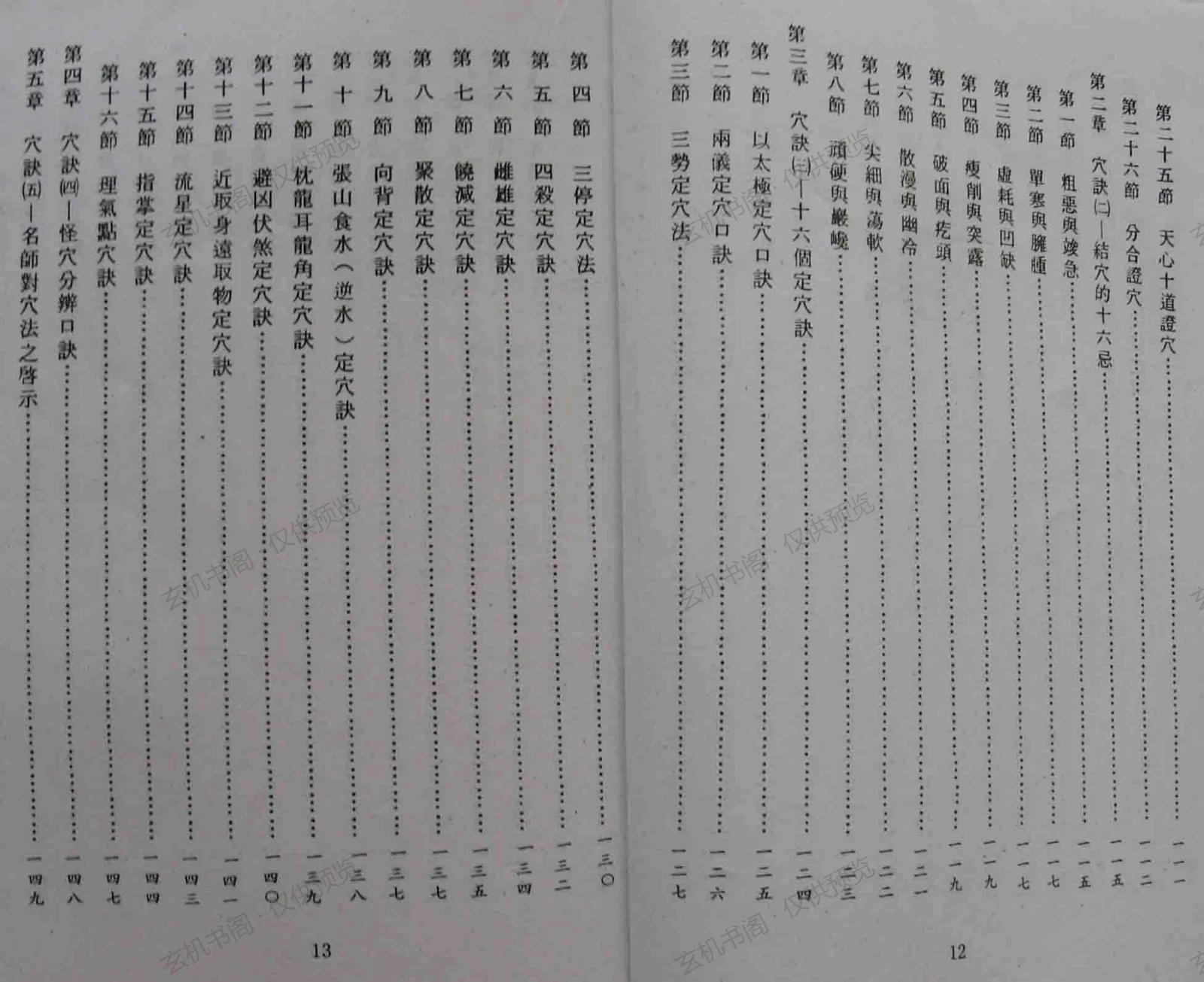
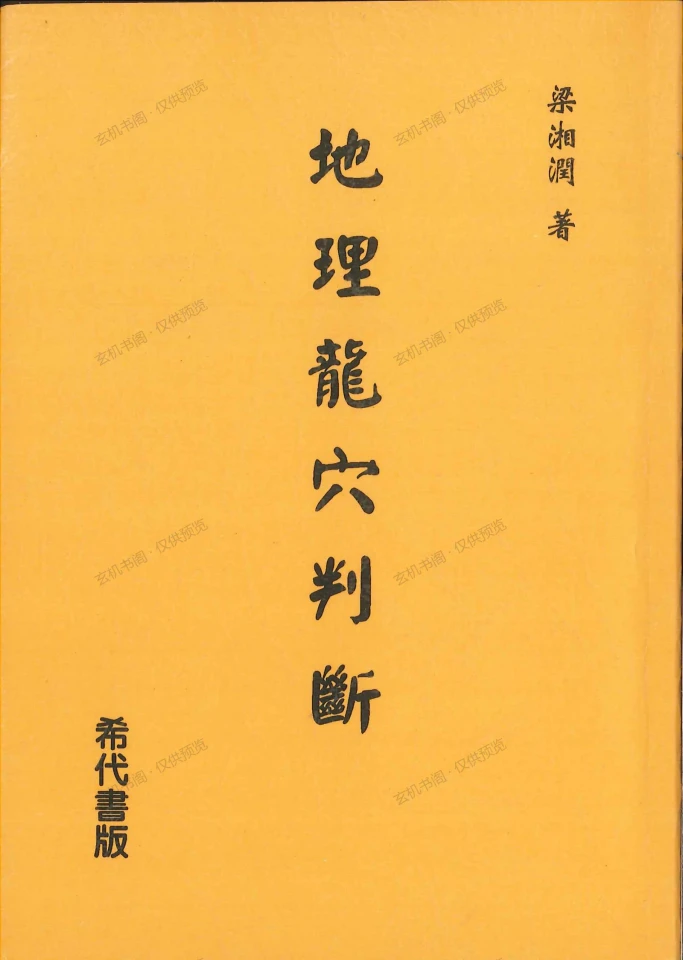
This book centers on the feng shui practice of point selection (dianxue). Part One introduces the study of landforms (luantou), explaining their supposed effects and the methods for studying them. Part Two discusses dragons (long), covering their meaning and application, the stem-branch associations, quality and classification. Part Three addresses points (xue): how穴 forms are constituted, the general principles of穴 method, and the formation and selection of窝 (nest), 钳 (pincer), 乳 (breast) and突 (mound)穴, followed by the five-element穴 shapes and their star types. Part Four gathers oral formulas for determining穴 by three停, four杀, male-female, subtraction-addition, gathering-dispersing, facing-backing, mountain-water, pillow-dragon-ear-horn, avoiding inauspiciousness, near-far objects, flowing stars, palm calculation, and理气. It also includes formulas for distinguishing strange穴 and lessons from famous masters. The emphasis is on practical identification and judgment through formulas and discussion.
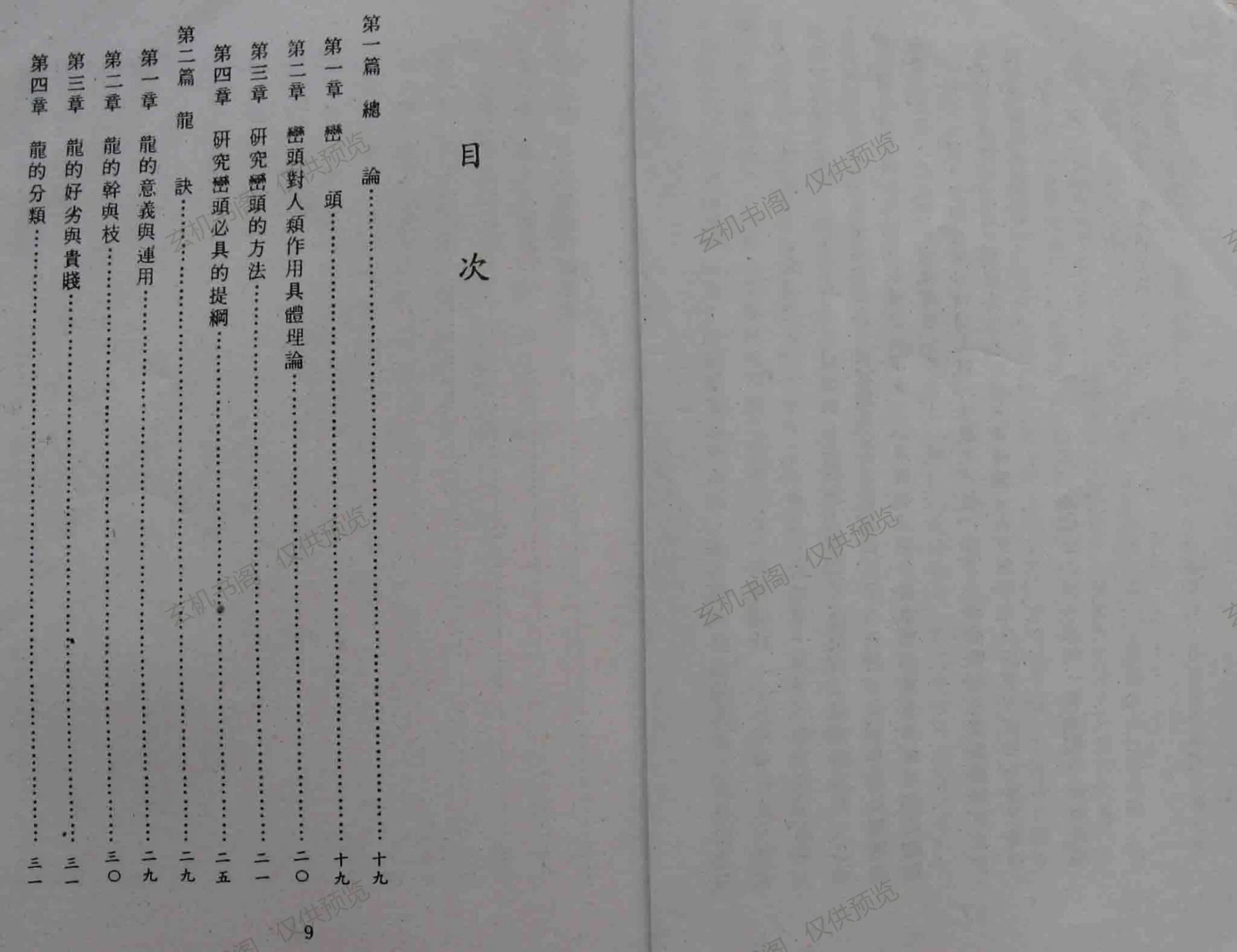
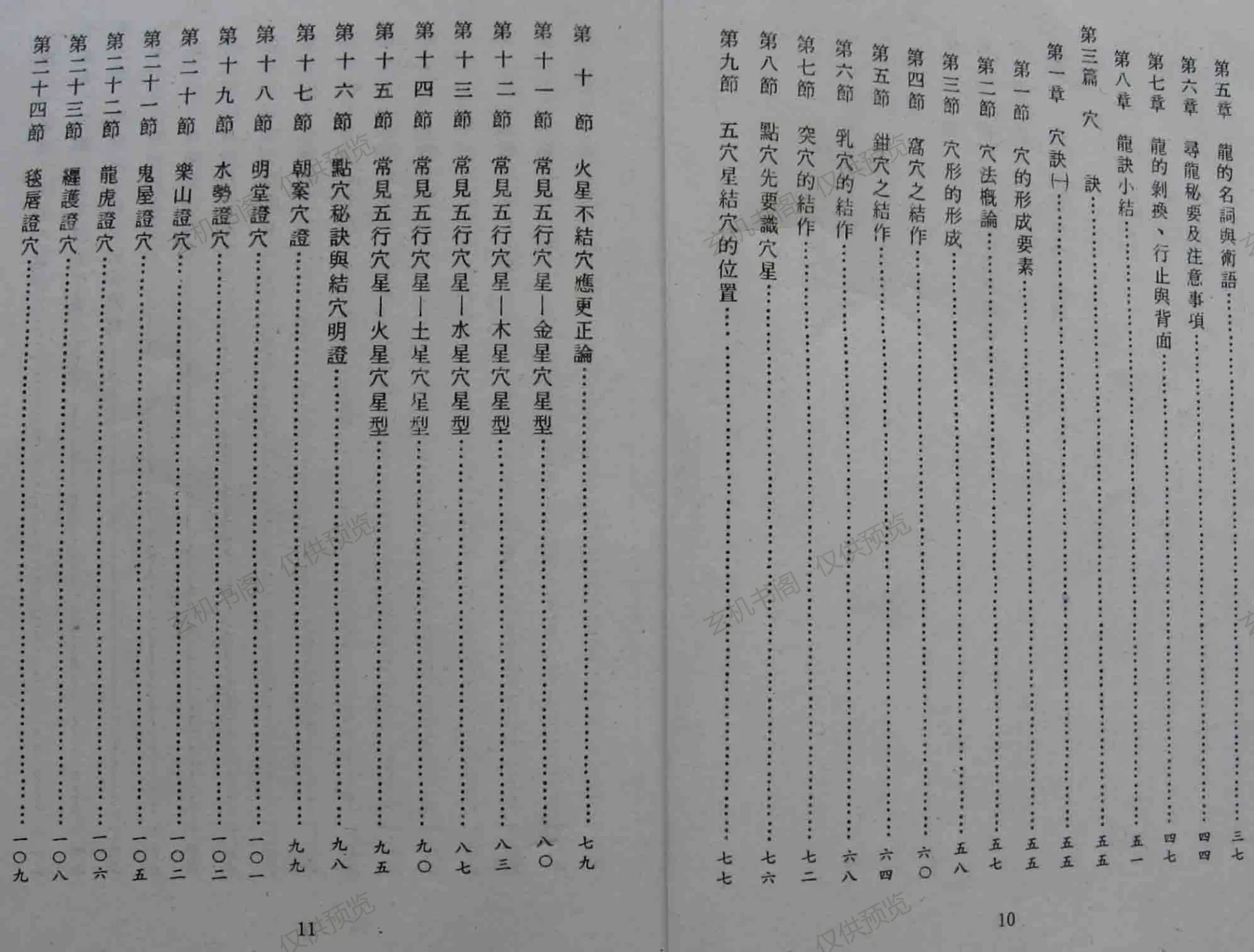
Contents
Part 1 General introduction: luantou theory and method
Part 2 Dragon formulas: meaning, stems, quality, types
Part 3 Point formulas I: formation and four穴 forms
Part 3: Five-element穴 shapes and star types
Part 4 Point formulas II: three停, four杀, male-female, etc.
More formulas: mountain-water, ear-horn, flowing stars, palm
Strange穴 distinction and masters' lessons
Key Points
Landform-centered: dragons first, then points
Separate treatment of nest, pincer, breast and mound穴
Dedicated section on five-element穴 shapes and star types
Collects many oral formulas for locating and verifying穴
Includes strange穴 distinction and master case lessons