Reading guide
Content guideOverview
This book presents Shao Weihua's summary of yin-yang feng shui. The cover raises questions about Shaoshan and the feng shui of Beijing as a capital. An author introduction recounts his military, factory and Yijing research background. The preface frames the Zhouyi as a science of harmony and prediction, and the author claims his main contribution is identifying that water flow and road height must accord with the requirements of the eight-palace sitting mountain. The main text proposes judging fortune by sitting mountain, rejecting complex methods such as the twenty-four mountains and forty-eight configurations, and simplifying the rule to standing with one's back to the gate or tombstone and raising the right hand: right hand higher means good fortune. It uses the Kan palace as an example and discusses cases such as Mao Zedong's birthplace and Beijing's capital siting. A 'book notice' section lists questions about cities, famous residences and imperial tombs. The work is practice-oriented and assertive, suitable for readers interested in eight-palace sitting-mountain and water methods, but its claims should be read alongside traditional feng shui literature.
Contents
Cover and title page: title, author, hardcover edition
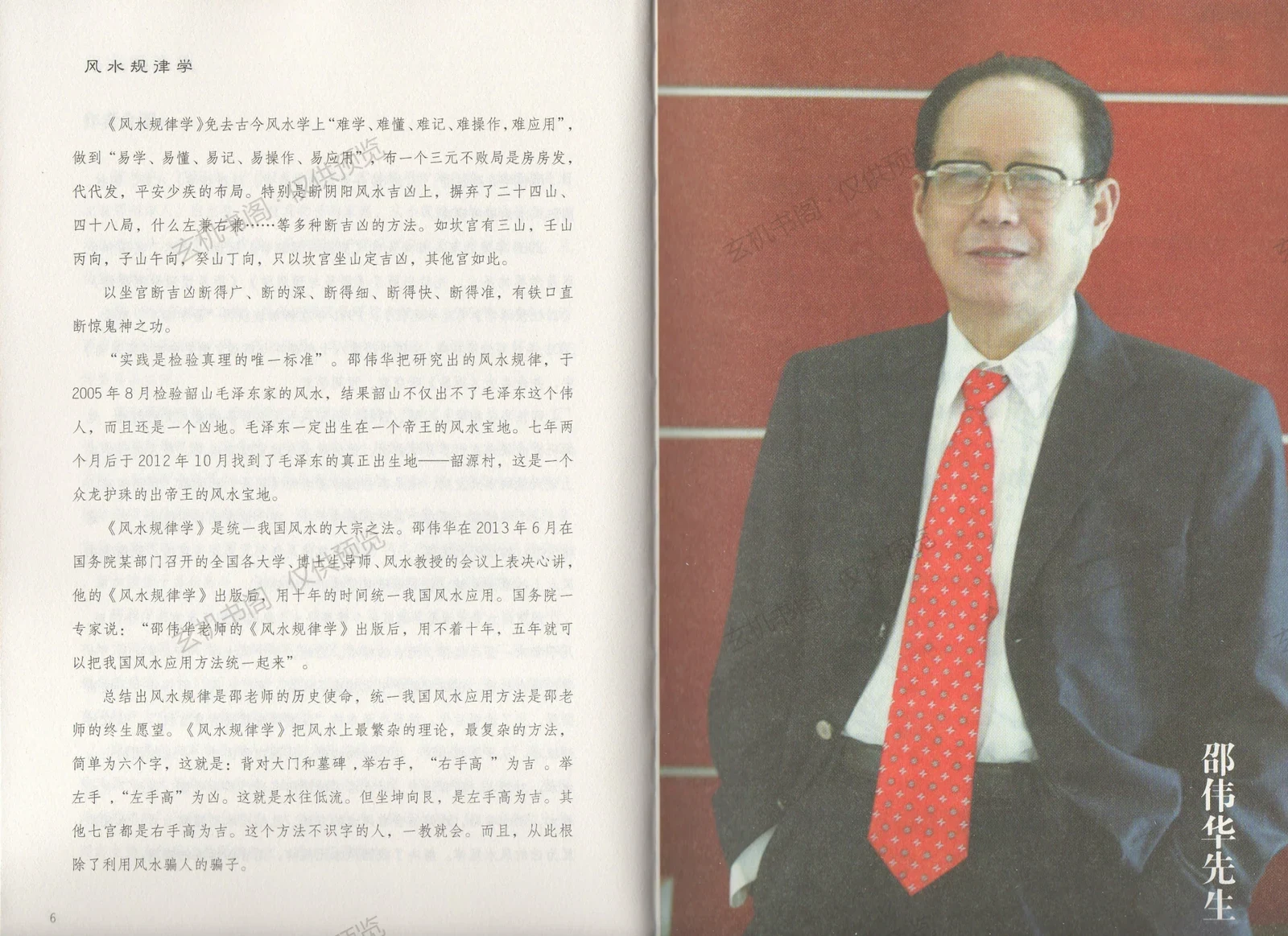
Author introduction: life and Yijing research
Preface: views on the Zhouyi and feng shui rules
Eight-palace sitting-mountain method and cases
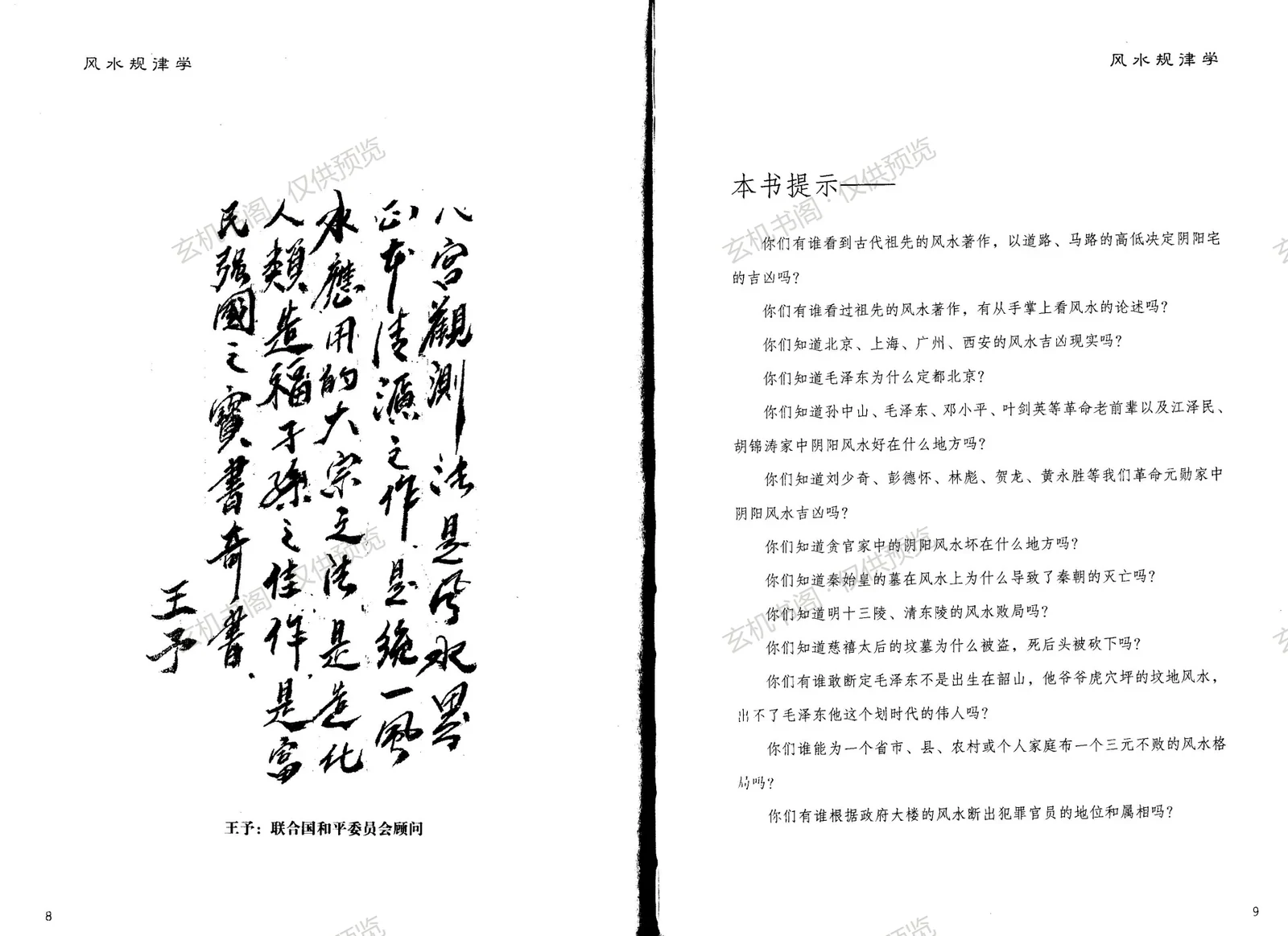
Book notice: cities, famous people and tombs
Key Points
Judges fortune by sitting mountain, simplifying traditional methods
Stresses water flow and road height must match eight-palace sitting mountain
Offers a simple rule: right hand higher is auspicious, left higher is inauspicious
Discusses cases such as Shaoshan and Beijing