Reading guide
Content guideOverview
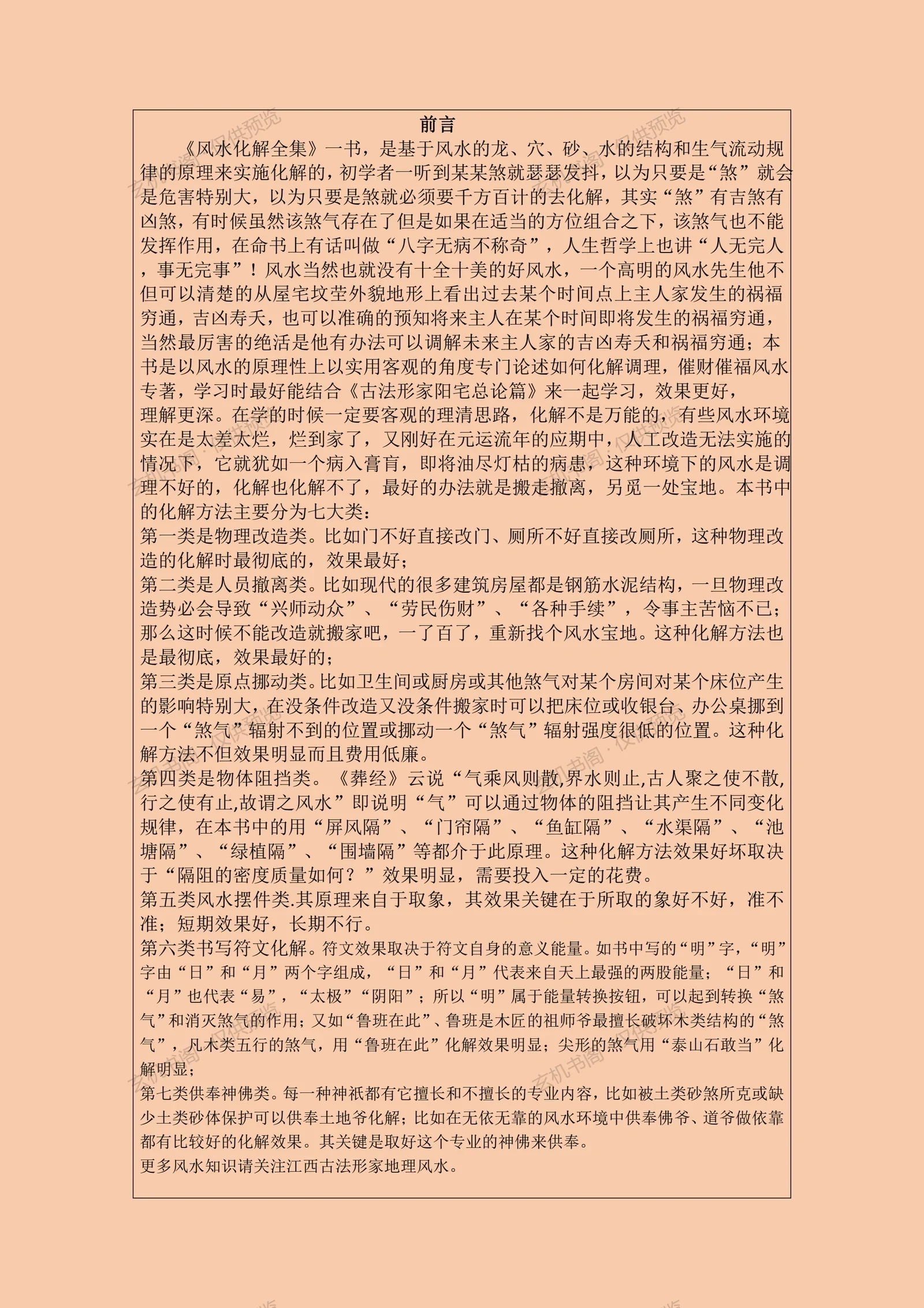
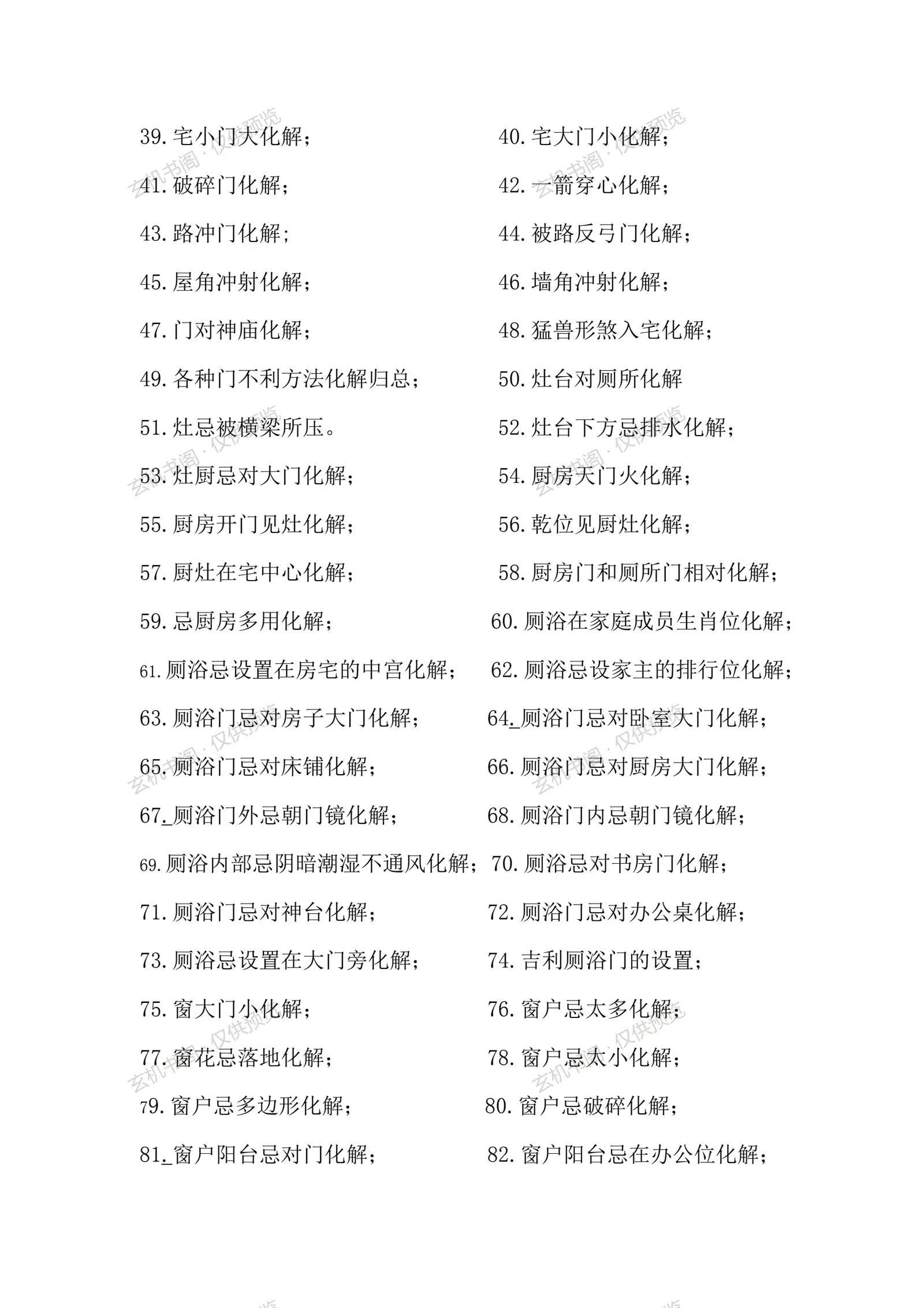
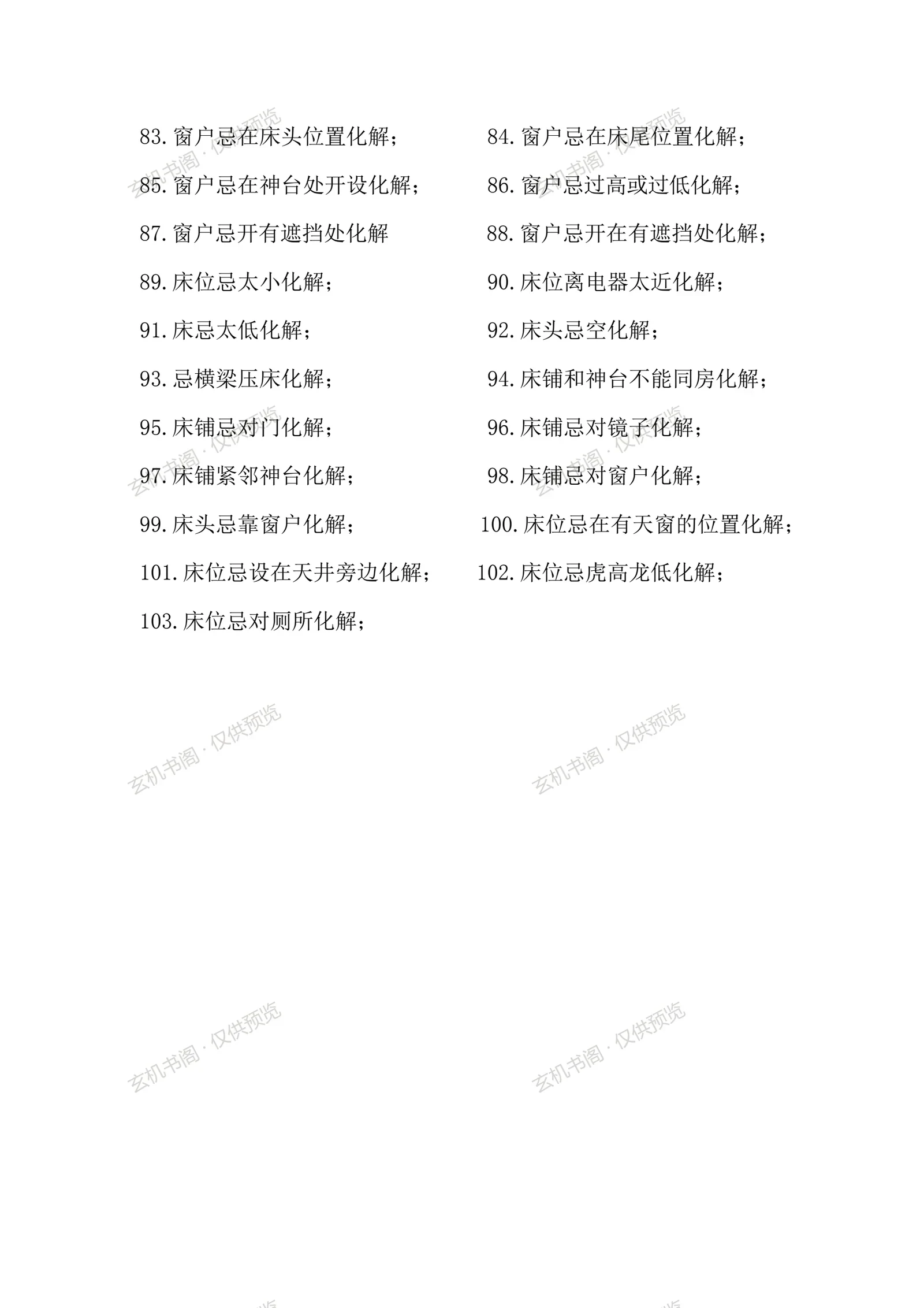
This volume by Lin Laijin belongs to the Ancient Form-School Geography Lecture Series and was issued in 2020 as internal material by the Jiangxi Research Center for Ancient Form-School Advanced Geography. The preface grounds the work in the structures of dragons, cavities, sand, and water and the movement of vital qi, arguing that sha is not always harmful and that remedy is not omnipotent—when the environment is truly poor, relocation beats forced correction. Seven categories of remedy are given: physical alteration, relocation, repositioning, blocking objects, feng shui ornaments, written talismans, and enshrining deities. The table of contents lists 103 entries in the form of 'remedy for X sha,' covering sky-cleaver, sickle, solitary peak, piercing-heart, flying eave, white tiger, white tiger reaching out, white tiger sinking, white tiger opening its mouth, rolling blind, foot-cutting, centipede, reflective light, and many more, plus door orientations such as arched doors, through-hall doors, slanted doors, backward doors, and stairs facing doors, as well as taboos around stoves, toilets, windows, and beds. Each entry explains the cause and supposed effect of the affliction before listing practical fixes.
Contents
Preface: sha has good and bad, seven remedy categories
Chapter 1: form-sha remedies (sky-cleaver, sickle, solitary peak, etc.)
Door-orientation remedies
Stove and kitchen remedies
Toilet and bathroom remedies
Window remedies
Bed-position remedies
Key Points
Distinguishes auspicious from inauspicious sha; only the latter needs remedy
Seven remedy categories from physical alteration to enshrining deities
103 numbered entries arranged by sha name for easy lookup
Each entry gives cause and effect first, then concrete fixes
Relocation recommended when the environment is beyond remedy