Reading guide
Content guideOverview
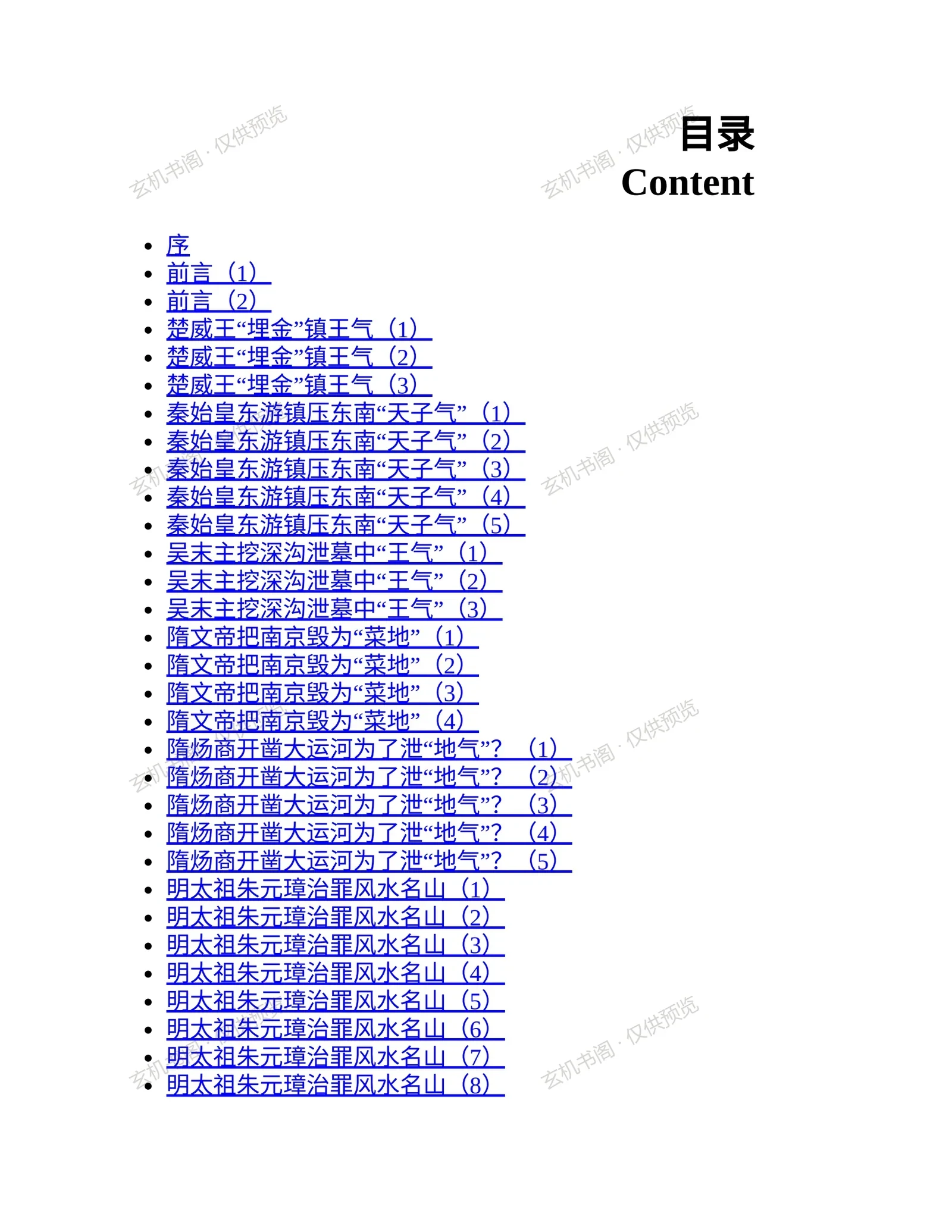
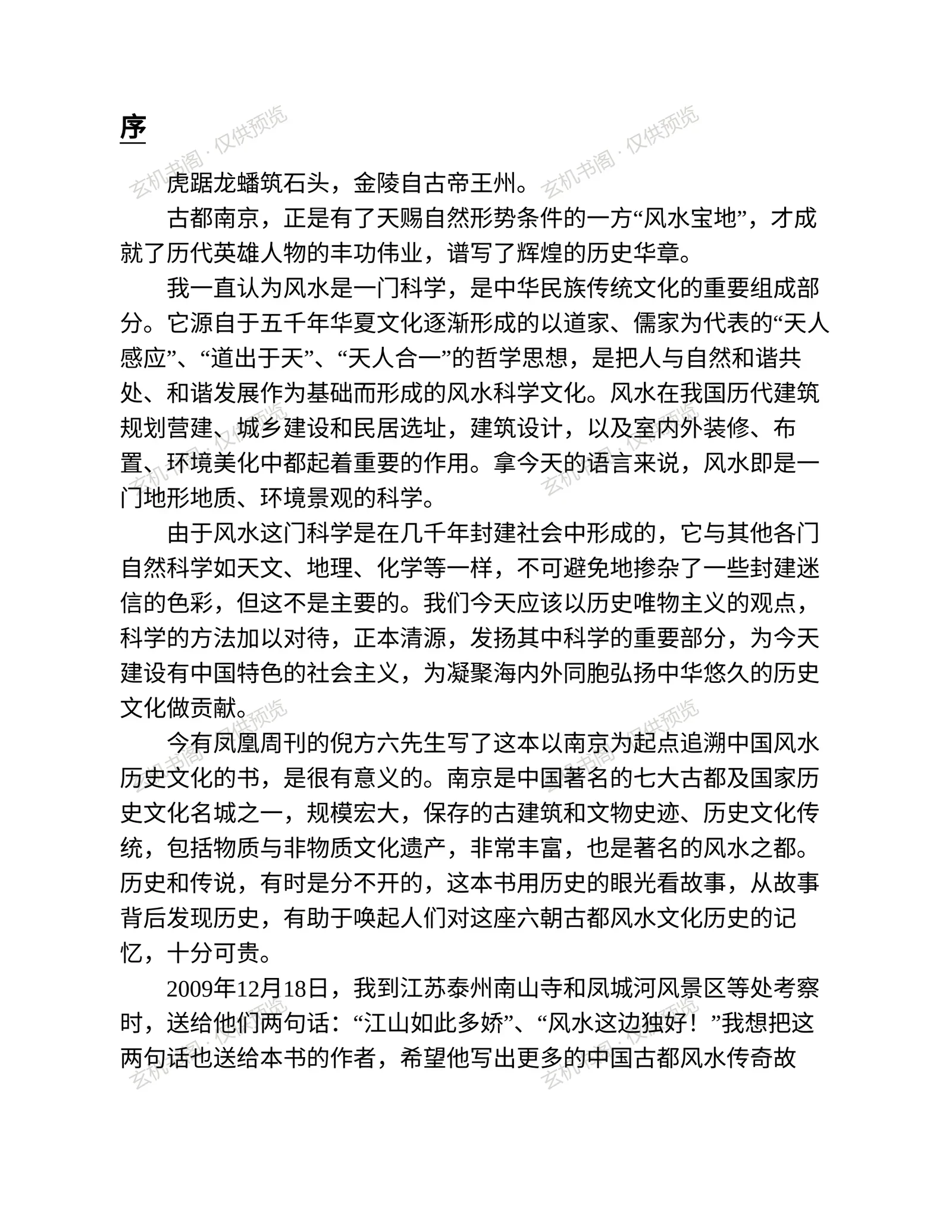
This book traces three thousand years of Chinese feng shui culture through the feng shui episodes associated with emperors. Its table of contents moves from King Wei of Chu burying gold to suppress royal qi and Qin Shi Huang's eastern tour to suppress the “son of heaven qi” in the southeast, to the last ruler of Wu digging deep ditches to drain tomb qi, Emperor Wen of Sui destroying Nanjing into “vegetable fields,” Emperor Yang of Sui opening the Grand Canal to release earth qi, and Zhu Yuanzhang, founder of the Ming, punishing renowned feng shui mountains. The preface, written by another hand, presents the author Ni Fangliu as tracing Chinese feng shui history from Nanjing as a starting point, and argues for viewing feng shui as part of traditional culture while approaching it scientifically and separating historical fact from legend. The book is narrative and case-based, suited to readers interested in the cultural history of feng shui, anecdotes of ancient capitals, and imperial history.
Contents
Preface and introduction: a historical view of feng shui culture
King Wei of Chu buries gold to suppress royal qi
Qin Shi Huang's eastern tour suppresses southeast “son of heaven qi”
The last ruler of Wu digs deep ditches to drain tomb qi
Emperor Wen of Sui turns Nanjing into “vegetable fields”
Emperor Yang of Sui opens the Grand Canal to release earth qi
Zhu Yuanzhang punishes famous feng shui mountains
Key Points
Links three millennia of feng shui culture through imperial episodes
Covers feng shui lore of Nanjing and other ancient capitals
Combines historical records with folk legends
The preface advocates a historical-materialist and scientific approach to feng shui
Serves as accessible reading on feng shui cultural history and ancient capital lore